November 3, 2024
For more than three decades, Cornerstone Timberframes has been designing and producing high-quality timber frames for clients across Canada. Over that time, we’ve developed a deep understanding of timber durability and long-term maintenance—and we apply that knowledge directly to how we design, fabricate, and finish every structure we build.
One of the most critical factors in outdoor timber performance is moisture management: limiting wetting, encouraging rapid drying, and preventing conditions that lead to decay over time.
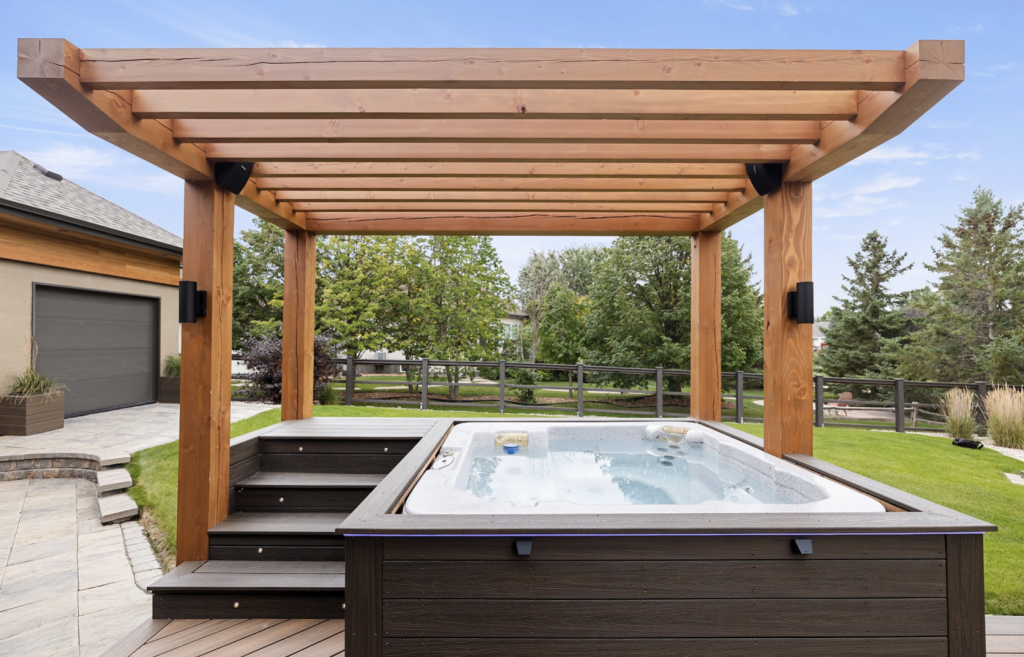
Pergolas are a perfect example of this challenge. By nature, they are fully exposed to rain, snow, sun, and seasonal temperature swings. So how do you maximize the service life of a timber frame pergola? Based on decades of experience, here are five practical, proven strategies.
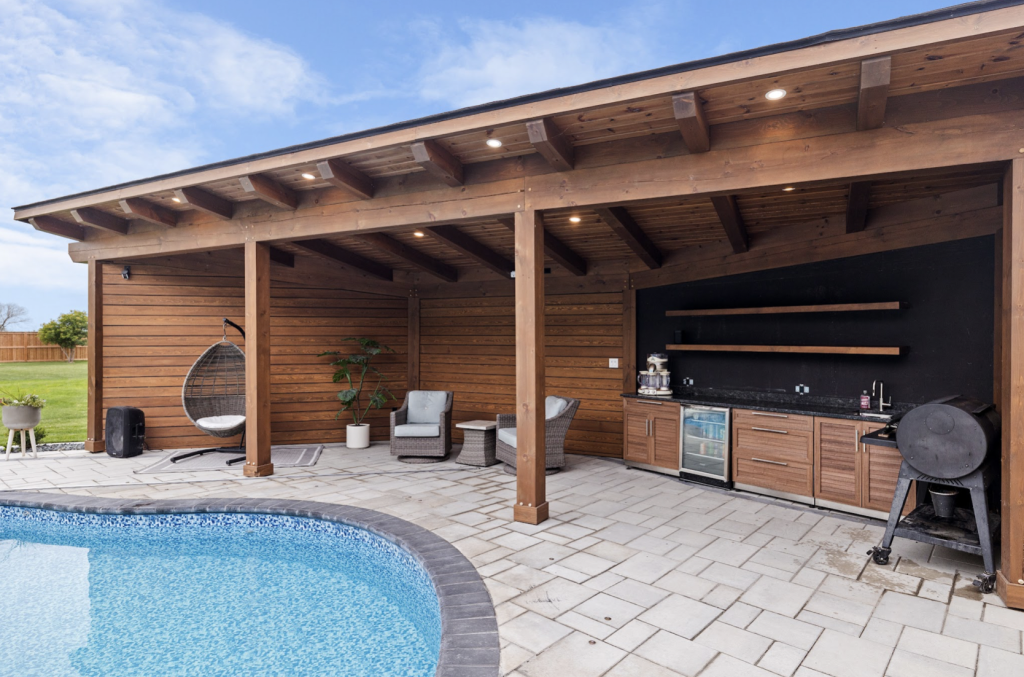
- Start with a water-resistant design.
Most moisture-related problems are avoided at the design stage—where changes are least expensive and most effective. Outdoor timber should incorporate sloped surfaces, bevels, and details that shed water quickly. Designs should also promote rapid drying, particularly at post-to-beam and post-to-base connections. Well-considered joinery limits water absorption and provides clear drainage paths. - Choose the right wood species.
As cedar trees grow, they produce natural extractives that resist decay and deter insects, making cedar our preferred species for exposed outdoor structures. Douglas fir also contains defensive compounds, though they are less effective; fir can perform outdoors when properly detailed and protected, often with capping. Pine and spruce are not suitable for exposed conditions unless fully sheltered beneath a roof. - Use high-performance finishes.
Our finishing shop specializes in durable stain and coating systems for exterior timber. We typically use a three-coat system designed to give wood fibre the best possible start: a penetrating coloured base coat, followed by two clear topcoats that provide protection and create a smooth satin surface that is easier to clean and maintain. To learn more about finishing options and long-term care, see our guide here. - Protect vulnerable details.
Wood posts that sit directly on concrete are highly susceptible to rot, which is why stand-offs are essential. In 2014, Cornerstone developed a custom stand-off base that satisfies structural requirements, enhances appearance, and—most importantly—keeps post ends dry. For timbers exposed to persistent moisture, capping can dramatically extend service life. Traditional approaches include sacrificial cedar boards or metal caps; more recently, self-healing asphalt/polyethylene membranes have proven effective. In all cases, proper installation is critical to performance. - Use an active defence when required.
In especially demanding environments, passive strategies alone may not be sufficient—or certain protective measures may conflict with aesthetic goals. In these cases, a borax-based treatment can provide an additional layer of protection. Borax (disodium tetraborate) is a naturally occurring mineral, widely regarded as low-toxicity for mammals, with strong antifungal and insect-deterrent properties. It is available as a brush-on liquid or as solid rods installed in drilled cavities. The system activates when wood moisture exceeds approximately 30%, dispersing through the wood fibre to inhibit decay fungi and insects.
There will always be days—and sometimes weeks—when rain is unavoidable. A well-designed timber structure, combined with thoughtful moisture-management strategies, allows you to enjoy your pergola with confidence.
If you’re considering a timber frame pergola, gazebo, or other outdoor timber structure in Manitoba or elsewhere in Canada, contact Cornerstone Timberframes for proven solutions designed to perform—and endure.