Mass Timber
A transformation in building design and materials is underway.
What is Mass Timber
“Mass timber” is an approach to building that uses large, laminated columns and beams and a new product called Cross-Laminated Timber (CLT). The breakthrough of CLTs is surprisingly simple: wood panels, up to 8’ wide and 60’ long, are made of between three to nine layers of wood, with each successive layer running crossways to its neighbours. This allows CLT panels to be used for floors and walls that span far beyond what traditional wood could previously achieve.
Planning a commercial, institutional, or multi-storey residential build? Early decisions about CLT, glulam, and hybrid systems can improve cost predictability and reduce schedule risk.
Need a quick feasibility gut-check? We support architects, builders, and developers across Manitoba, Canada, and U.S. projects with coordination, fabrication, and installation.
Cross-Laminated Timber (CLT)
Wood panels up to 8 feet wide and 60 feet long
Across the USA and Canada mass timber is turning heads with its amazing features and benefits:
CLT works best for floors, roofs, and wall panels where two-way stiffness matters. Glulam is typically used for columns, beams, and long spans most high-performing buildings combine CLT + glulam.
- Environment: uses sustainably forested trees, a renewable resource to capture CO2, creating a carbon sink for generations.
- Traffic: many fewer vehicles are needed on site, reducing noise and emissions by up to 90%.
- Efficiency: mass timbers come to the site ready to install. Fewer workers are required, making a more efficient site.
- Time: mass timber buildings go up ~25% faster, reducing carrying costs as well as a project’s carbon footprint.
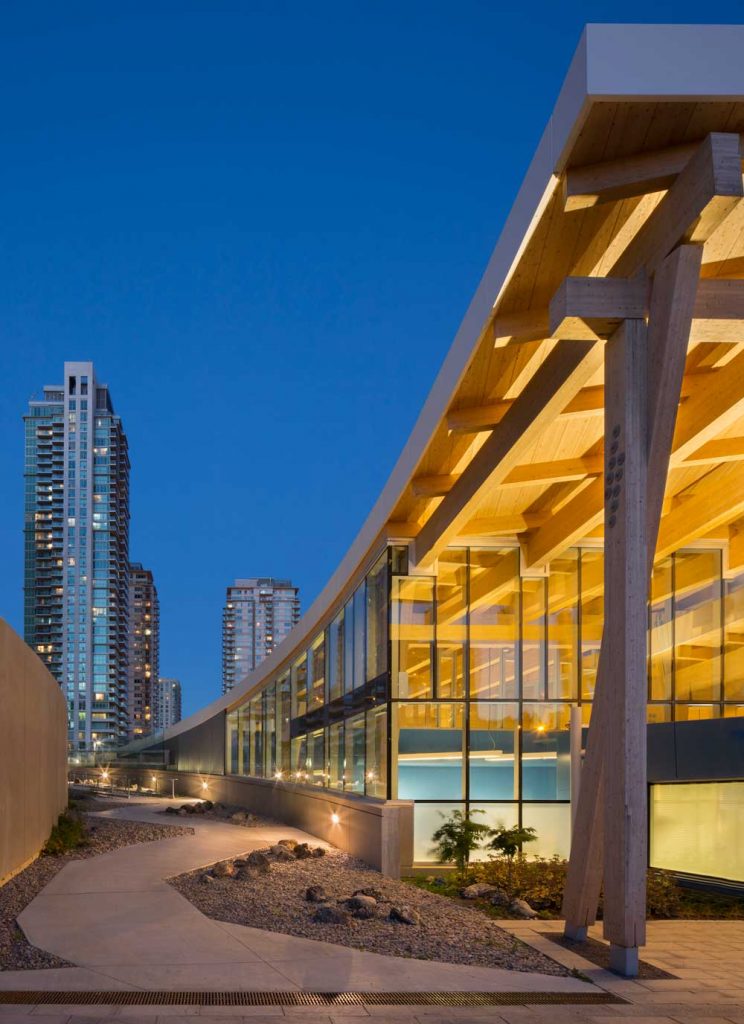
For our customers building contemporary-styled homes and cottages, mass timber is a perfect fit. It allows for a clean, minimalist look with large, open spaces. Longer spans between columns permit more glass, and the stability and strength of mass timber is a great match for wide fold-away doors and curtain-wall windows.
Next: compare systems in practice - Glulam vs CLT: What’s the Difference? and explore our Mass Timber Projects.
Sustainable Mass Timber Solutions
Cornerstone Timberframes is proud to collaborate with Nordic Structures, North America’s leading producer of sustainably harvested, mass timber products in Canada and the USA. Situated in the heart of Canada’s eastern Boreal Forest region, Nordic Structures has taken a principled stand on how they do business, and it makes all the difference:
- The forest is treasured as a place for plant and animal diversity to thrive. The 2.4 million hectares of Boreal Forest in Nordic’s care are carefully managed from planting to harvesting. Wetlands and areas of high biodiversity are preserved, undisturbed. The company is Canada’s first to adopt the new and most stringent standards for forest stewardship.
- Local communities and stakeholders have a say in how operations are conducted. First Nations are consulted, culturally important places are protected, priorities for land use are respected.
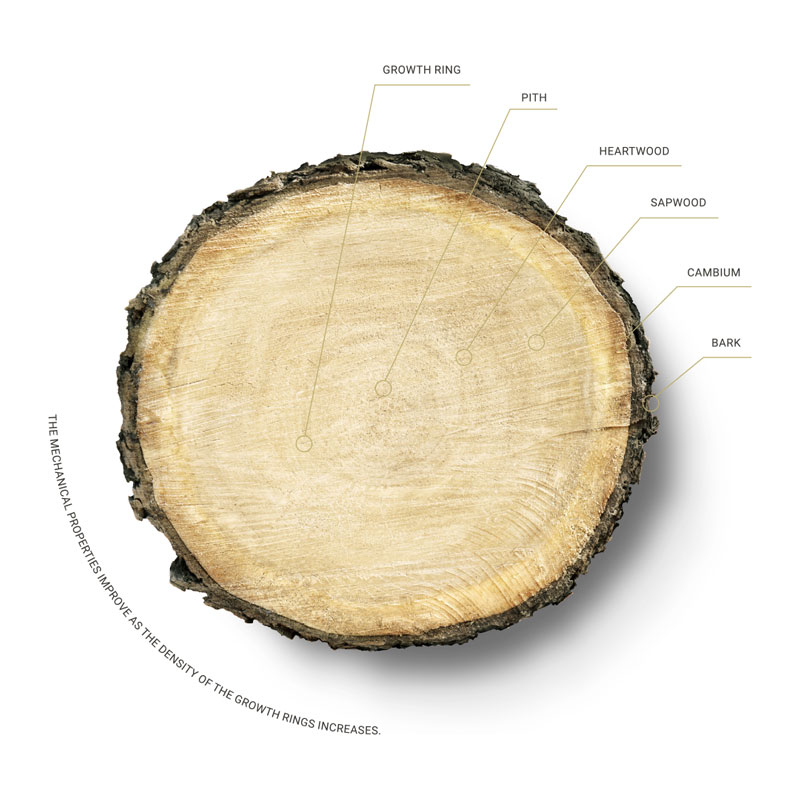
- Black Spruce is the dominant tree species in the Boreal Forest. It takes between 80 to 120 years for a seedling to grow into a mature tree with a trunk diameter of 75–150 mm (3–8”). This slow growth results in tight growth rings and exceptionally high strength-to-weight properties.
- Nordic Structures, always an innovator, has adapted to the resource, making their Enviro Lam products with small 25×50 mm (1×2”) lamella. More of each tree is used, parts previously considered unusable. The pay-back comes in the form of better-looking timbers, greater dimensional stability, and higher mechanical strength.
Black Spruce: Light, Straight, Strong
Black Spruce
Black spruce is the perfect wood for cross-laminated timber and glue-laminated timber, where stability, stiffness and weight are all key considerations.
Canada’s Boreal Forest contains 210 billion trees. About 70% are black spruce – an extraordinary tree that thrives in the northern swamp and rock of the Canadian Shield. Due to the short growing season of the Boreal Forest, black spruce grows slowly, resulting in dense growth rings which give this species a high strength-to-weight ratio. It is the perfect wood for cross-laminated and glue-laminated timber, where strength, stability and weight are key considerations.
Explore our Mass Timber Projects
Mass Timber Construction FAQ
Is mass timber allowed in the United States and Canada?
Yes. Code adoption varies by jurisdiction, but mass timber is widely used across Canada and increasingly across U.S. states for commercial, institutional, and multi-storey residential buildings.
What’s the difference between CLT and glulam?
CLT is typically used as large-format panels for floors, roofs, and walls. Glulam is used for beams and columns where long spans and architectural structure are desired.
Does mass timber reduce construction time?
Often, yes. Prefabricated components can shorten schedules and reduce site labour, especially when coordination and detailing are handled early.
Is mass timber more expensive than steel or concrete?
It depends on span requirements, local trades, and schedule constraints. Many projects offset material costs through faster erection, lighter foundations, and lower carrying costs.
Who should be involved early in a mass timber project?
Architects, structural engineers, and a timber coordinator/fabrication partner. Early coordination reduces clashes and improves predictability.