May 19, 2025
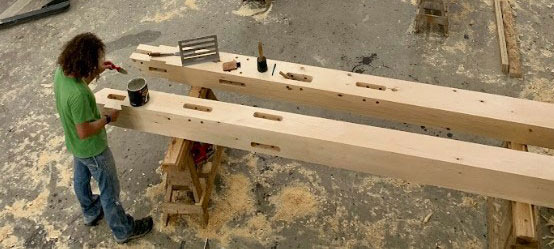
Mass timber finishing is the process of protecting, enhancing, and preparing exposed glulam, CLT, and other timber elements before they arrive on site. A good finish is not only cosmetic. It affects durability, cleanability, construction protection, long-term maintenance, and the final architectural quality of the building.
See how finishing fits into the full building process in our
Mass Timber Construction Guide.
Why This Matters
- Mass timber finishing protects exposed wood during transport, installation, and long-term building use.
- Glulam beams, columns, and large timber billets require controlled sanding, staining, and topcoat workflows.
- High-quality finishing improves durability, cleaning, maintenance, and the appearance of exposed structural wood.
- Finishing should be planned early because mass timber elements are large, heavy, and difficult to refinish once installed.
Why Mass Timber Finishing Matters
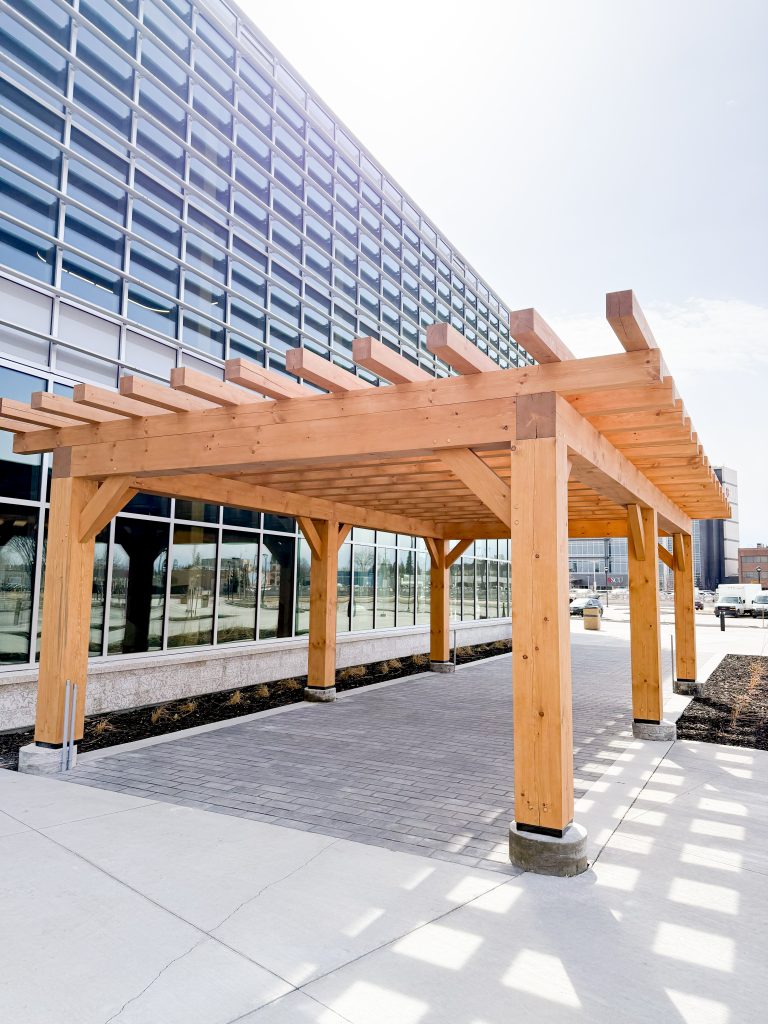
It’s easy to underestimate how much difference a fraction of a millimetre can make. Yet with a carefully selected and properly applied stain or finish, the natural character of wood can shift from “that’s nice” to “this is exceptional.” Beyond appearance, a well-executed finish plays a critical role in durability, cleanability, and long-term performance.
More than twenty years ago, Cornerstone’s CEO opened the first five-gallon pail of stain in our finishing shop. Her uncompromising focus on technical quality established a standard that continues to guide our finishing team today. As Cornerstone expanded into mass timber construction, our tools, processes, and methods evolved accordingly. The objective remains clear: create a finish that is durable, resilient during construction, easy to maintain over time, and worthy of the craftsmanship invested in every structure.
Handling Large Glulam and Mass Timber Elements
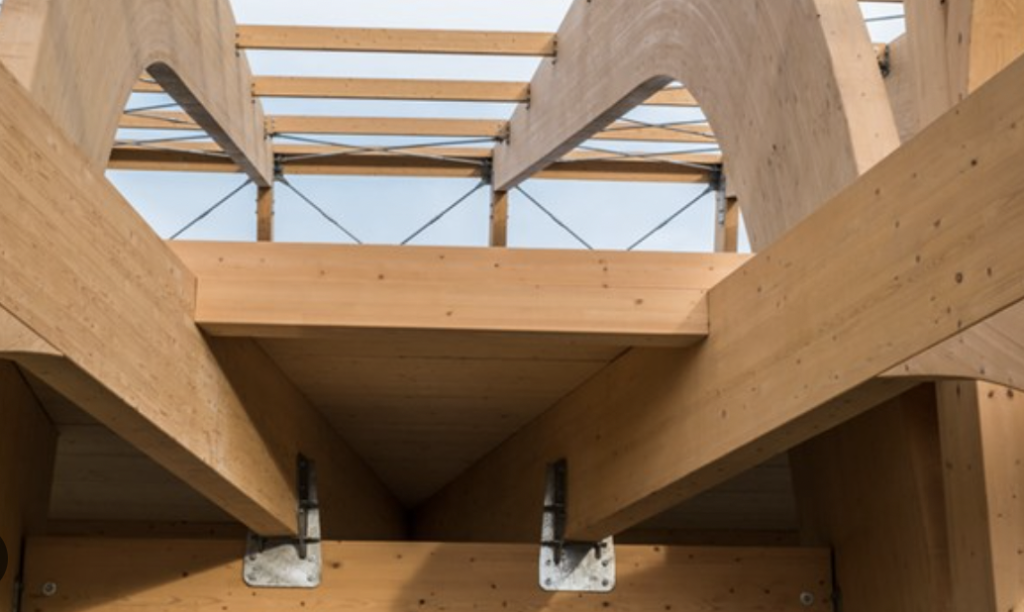
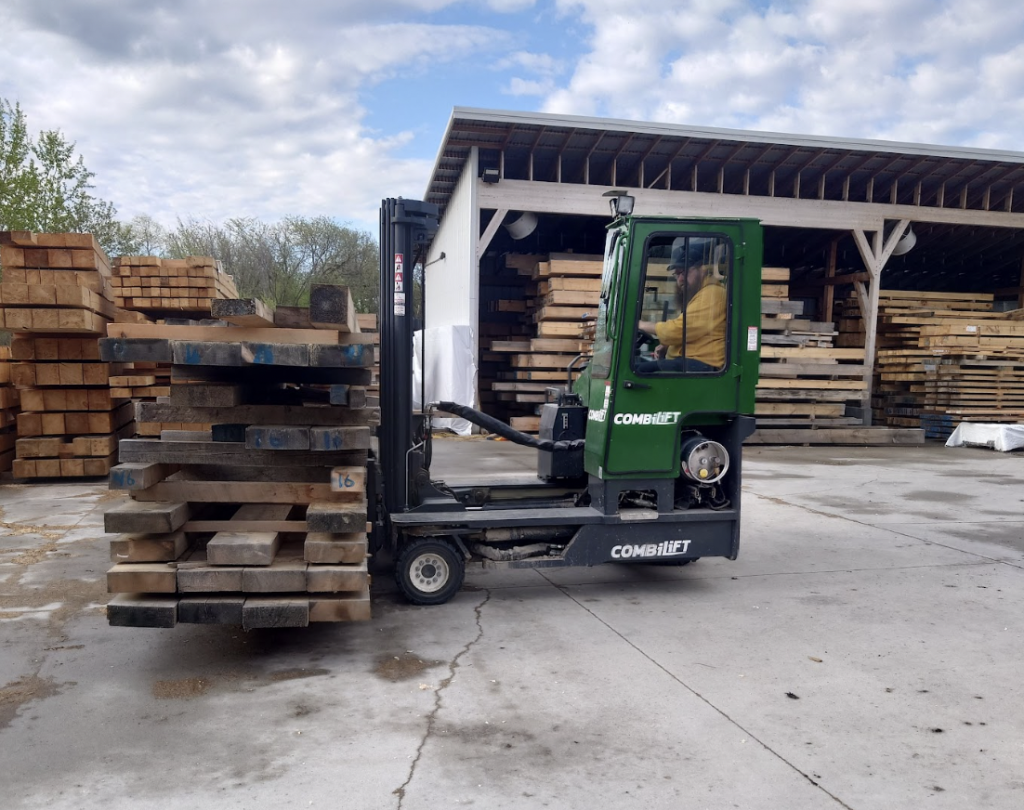
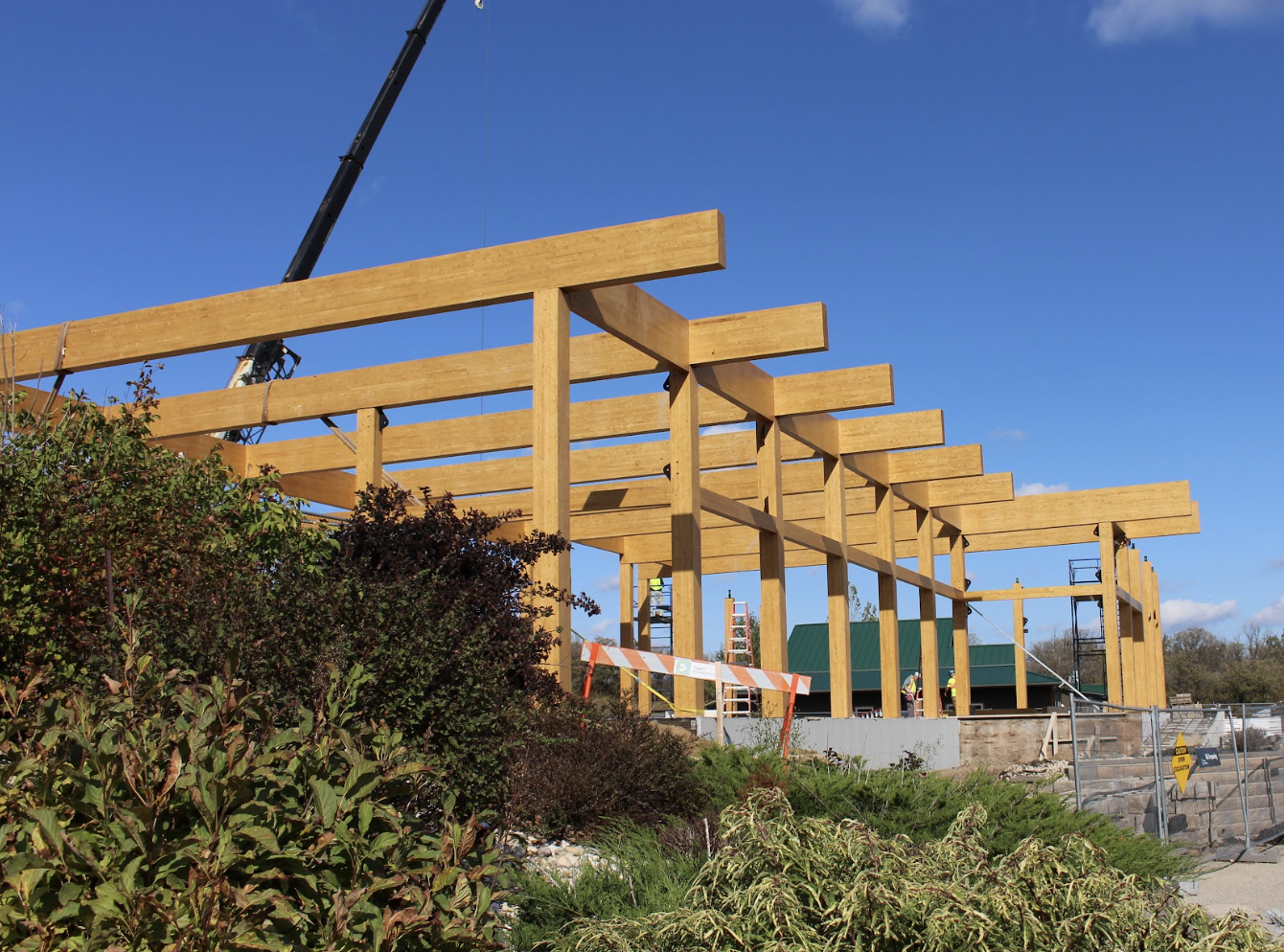
Mass timber finishing starts with scale. Glulam billets that become finished columns and beams can weigh several tonnes and reach lengths of 60 feet or about 20 metres. Handling components of this size safely and efficiently requires specialized equipment, trained operators, and carefully planned workflows.
Simply put, manoeuvring a 60-foot billet through a 24-foot-wide shop door with a conventional forklift is not feasible. Innovative material-handling solutions, such as sideloaders developed in Northern Ireland, have transformed how long timber elements are moved and processed.
Why Basic Sealers Are Not Enough
Industry-standard mass timber finishes are often limited to sprayed sealers intended primarily for short-term protection during storage, transport, and installation. While useful as undercoats, these products are not designed for long-term exposure. Left as the sole finish, they tend to scuff easily, appear dull, and break down within months, leaving timber vulnerable to moisture, ultraviolet exposure, and surface contamination.
Cornerstone’s finishing philosophy is rooted in craftsmanship. We approach mass timber structures much like fine furniture at an architectural scale. A finish should respect the material, protect the investment of time and skill, and perform reliably over the life of the building.
What a Proper Mass Timber Finish Must Do
| Finishing Requirement | Why It Matters |
|---|---|
| Enhance natural wood character | Exposed mass timber is both structure and finish, so visual quality is part of the final building experience. |
| Improve cleanability | A durable surface helps crews and owners remove dust, handling marks, and everyday contamination. |
| Protect during construction | Finished beams and panels must withstand transport, staging, lifting, and installation. |
| Support long-term maintenance | Proper topcoats reduce future repair, refinishing, and premature surface breakdown. |
Our Mass Timber Finishing Process
In practical terms, a proper finish must do three things: enhance the natural beauty of wood, simplify cleaning and maintenance, and maintain its appearance for years.
Our mass timber finishing process includes the following steps:
- Initial sanding of billets from the laminator to achieve a smooth, uniform surface
- Application of a penetrating base coat to establish the selected stain colour
- A first clear topcoat to protect the stained surface
- For exterior timbers, a second clear topcoat to enhance weather resistance and simplify future maintenance
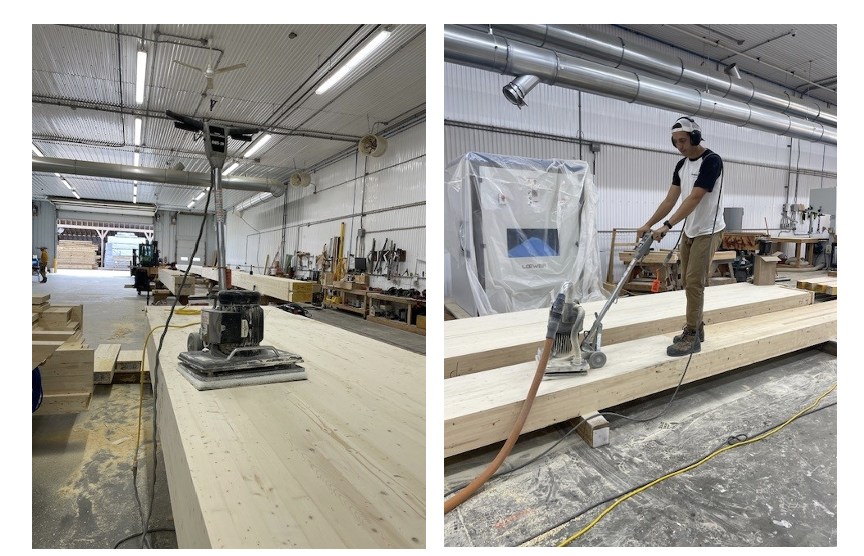
The result is a surface that resists wear, cleans easily, and continues to showcase the character of wood long after installation.
Why Finishing Should Be Planned Early
While we may be biased, the incremental cost of a high-quality finish is small compared to the long-term benefits. Proper finishing preserves visual quality, reduces future maintenance, and avoids unnecessary repair or refinishing. It is a modest investment that protects a significant one.
That half millimetre matters, and it deserves a place in every mass timber plan.