May 8, 2026
Mass timber schedule advantages are often credited to speed, but speed is the result, not the mechanism. The real advantage comes from resolved geometry, early fabricator involvement, CNC prefabrication, and fewer unresolved decisions reaching the jobsite.
See how schedule planning fits into the full process in our
Mass Timber Construction Guide.
he Real Schedule Advantages
- Mass timber does not become predictable simply because it is fast to install.
- The schedule advantage comes from resolving geometry, connections, penetrations, and sequencing before fabrication.
- CNC fabrication moves coordination problems into the model stage, where they are cheaper and easier to fix.
- Early fabricator involvement helps developers, architects, engineers, and GCs reduce RFIs, rework, and installation risk.
The Schedule Advantage in Mass Timber Is About Resolution, Not Speed
Speed gets the credit. When developers evaluate mass timber, the conversation eventually lands on erection schedules, compressed install windows, and days saved between delivery and enclosure. The claims are real. But speed is not the mechanism. It is the outcome.
What CNC prefabrication actually delivers, before anything reaches a site, is resolved geometry. Everything downstream flows from that.
The Machine Does Not Interpret. It Executes.
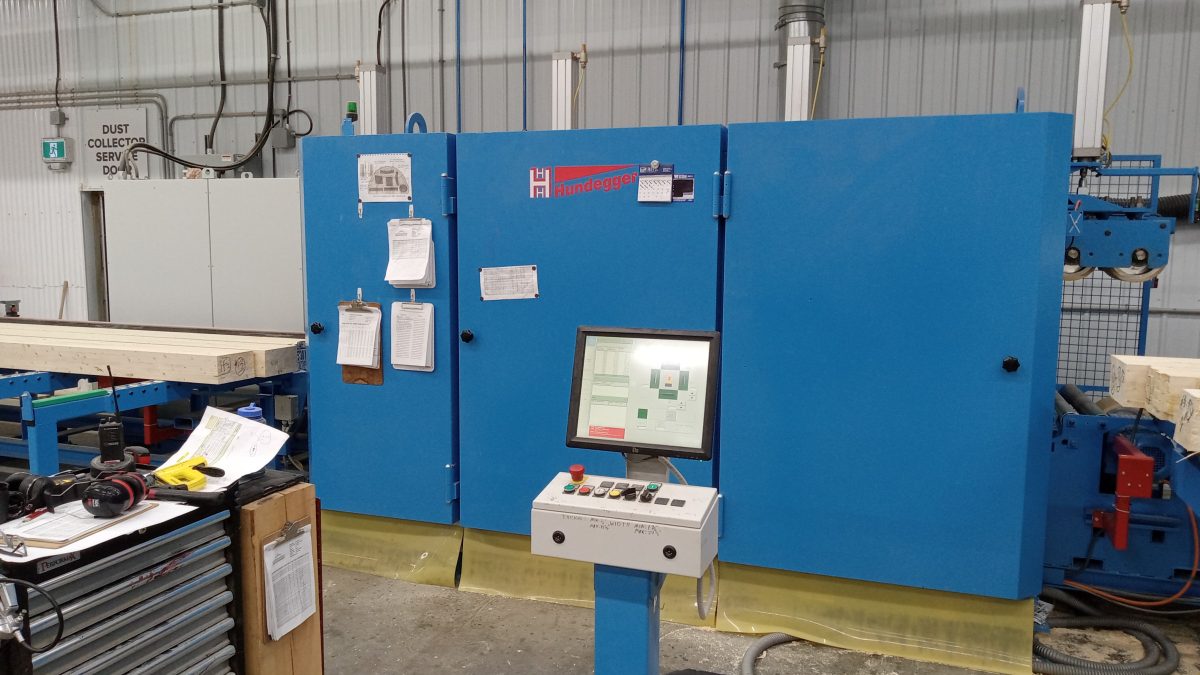
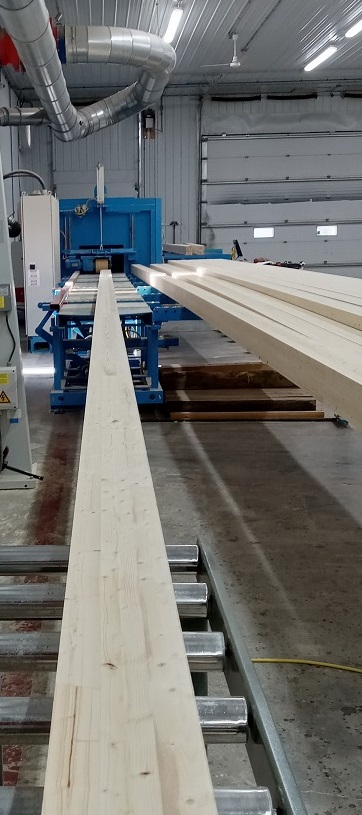
CNC fabrication improves mass timber schedules by forcing design decisions to be resolved before production. Every beam, column, connection point, pocket, notch, and bearing condition must be defined in the model before the machine cuts the timber.
In a mass timber project, the fabricator works from a structural model. CNC equipment reads coordinates directly from that model. It does not translate drawings. It does not rely on a machinist to interpret intent. It cuts to the number.
That requirement forces resolution at the model stage that conventional construction timelines often defer to the field. Bolt locations, pocket dimensions, notch depths, bearing conditions. All of it must be correct before the first cut is made. Tolerances under one millimetre are standard. That is not a marketing claim. It is the mechanical requirement of the process.
The implication is significant. If something is wrong in the design, CNC finds it. Not the crew on site. Not the GC during erection. The model, in the shop, weeks before shipping.
Every Project Has a Moment of Discovery. The Question Is When.
The biggest mass timber schedule risk is not the installation pace. It is late discovery. If coordination issues appear after the crane is booked and the crew is on site, the project pays for that discovery in delays, RFIs, rework, and lost sequencing.
A joint study by PlanGrid and FMI found that roughly 48 percent of all rework in construction is caused by poor data and miscommunication. Research across more than 1,300 projects found that the average cost to resolve a single RFI is over $1,000, and that total RFI costs on a given project averaged $859,000. Construction Industry Institute benchmarks put rework at five to twenty percent of total project cost, with higher figures on projects with dense coordination requirements.
Mass timber is a dense coordination environment. Connections, MEP penetrations, bearing conditions, and moment connections are not details that resolve themselves.
In a project without early fabricator involvement, those discoveries happen during install. The crane is on site. The crew is waiting. The RFI takes six to ten days to answer, on average. The schedule slips before anyone has a good answer for why.
In a well-run CNC prefab process, those discoveries happen at the model stage. The cost of resolution is a drawing revision and a conversation. That is the economic logic. The earlier a problem is found, the less it costs. CNC fabrication pulls discovery forward into a controlled environment where the fix is cheaper.
| Project Issue | Conventional Timing | Mass Timber Prefab Timing |
|---|---|---|
| Connection conflicts | Often found during field installation | Found during model review or shop drawing coordination |
| MEP penetrations | Resolved through RFIs or field adjustment | Coordinated before CNC cutting |
| Sequencing problems | Discovered when deliveries or crane picks conflict | Built into shop staging, labels, and install order |
| Schedule impact | Higher risk of delay and rework | More predictable installation window |
CNC Starts It. Craftsmen Finish It.
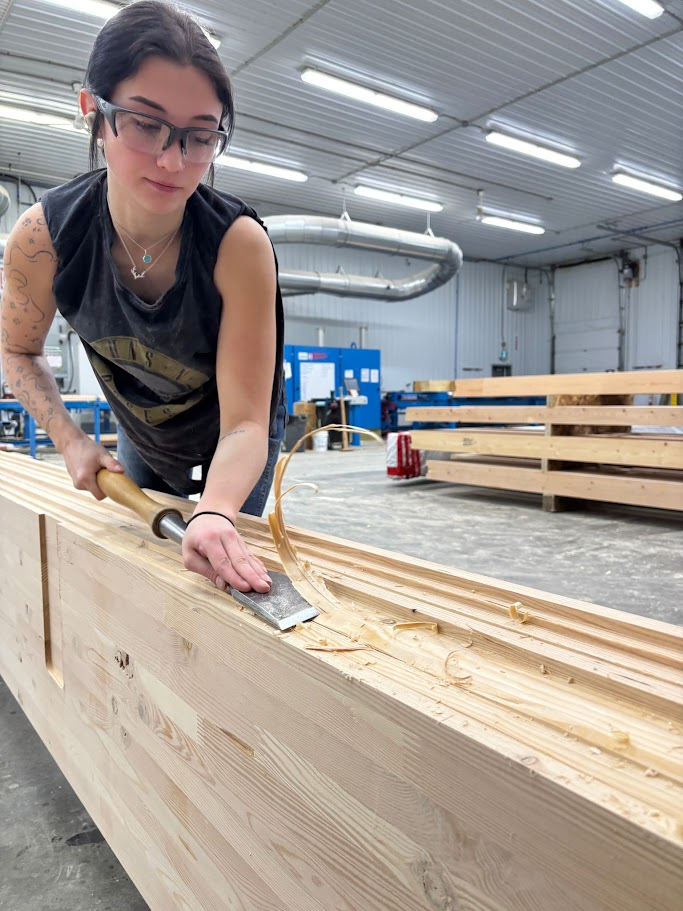
CNC precision is only one part of the schedule advantage. Mass timber still depends on experienced timber workers who understand material behaviour, joinery, finishing, fit-up, and real-world installation conditions.
Precision equipment is a starting point. CNC cuts to coordinate. It does not account for a timber with a slight bow, a connection that requires hand-fitting, or the judgment call that comes when real material meets a real structure.
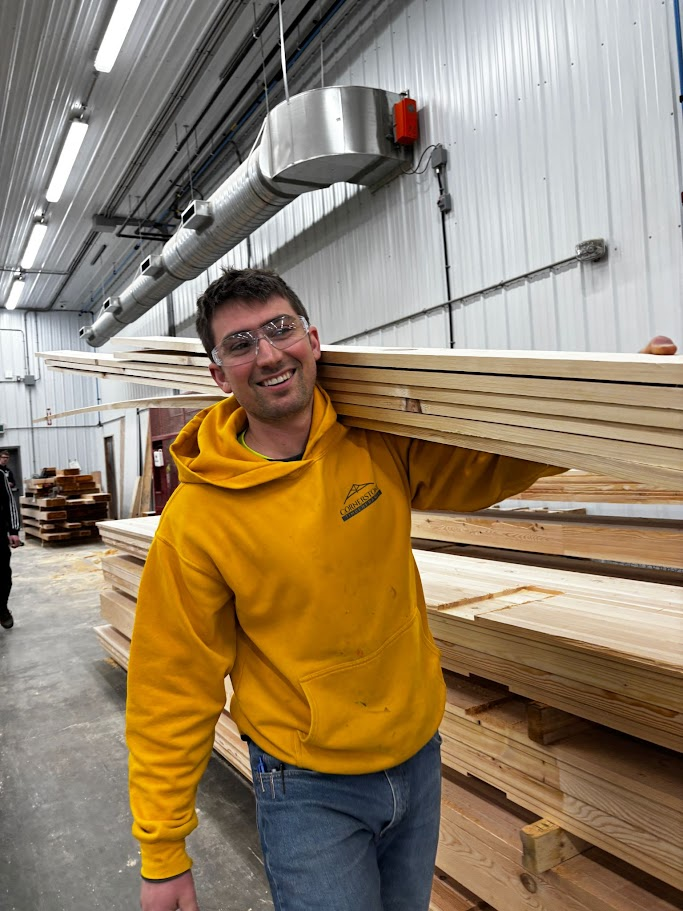
At Cornerstone Timberframes, CNC fabrication is one part of a production system built around 35 years of timber frame and mass timber work. A four-sided planer that mills square. A finishing process built for durability rather than throughput. Experienced timber workers making decisions at every stage.
The machine delivers a part. The craftsman delivers a component ready to build with. Both matter, and neither is optional.
The Right Question Is Not “What Is Your Lead Time?”
The stronger question is when the fabricator will be involved in the model. Early fabricator involvement allows CNC precision, connection review, sequencing logic, and installation planning to influence the project before the design is locked.
If you are an architect, developer, or GC evaluating a mass timber project, the question worth asking is when the fabricator will be in the model.
Early fabricator involvement means the CNC precision advantage applies across more of the project. Connections get resolved before the design is locked. Structural geometry is confirmed before the engineer stamps drawings. Coordination conflicts get caught at the point in the project timeline where fixing them costs the least.
The package that ships to the site has been verified against a model the fabricator helped build. That is the difference between a fast install and a predictable one.
Both outcomes are possible. The predictable one requires earlier coordination. It almost always does.
Cornerstone Timberframes designs, fabricates, and installs timber frame and mass timber structures across Canada and the United States. If you have a project in early design or pre-design, contact us to discuss how fabricator involvement at the right stage changes outcomes.