March 2, 2026
A Developer’s Guide to Lower Risk, Faster Schedules, and Smarter Carbon Strategy
The short answer: In 2026, mass timber in Canada is no longer experimental. When sourced responsibly and precision-manufactured off-site, mass timber systems can reduce installation schedules, lower foundation demands due to reduced structural weight, and improve long-term carbon strategy while storing carbon within the building envelope.
For developers facing labour shortages, financing pressure, and carbon reporting requirements, mass timber has become a serious structural alternative, not a niche material.
See how this fits into the full process in our Mass Timber Construction Guide.
What Developers Need to Know
- Mass timber reduces risk when design, engineering, fabrication, and installation are coordinated early.
- Responsible sourcing and FSC chain-of-custody support institutional, public-sector, and low-carbon project requirements.
- CNC fabrication moves many coordination issues from the jobsite into the model and shop environment.
- The strongest business case is usually total project value, not only material cost.
Why 2026 Is a Turning Point
Canadian construction is under pressure from skilled labour shortages, higher financing costs, schedule risk, and increasing embodied-carbon scrutiny. Mass timber addresses those pressures by shifting work off-site, reducing building weight, improving schedule predictability, and providing measurable carbon performance.
The question is no longer “Is wood strong enough?” The question is “Where does it reduce risk and improve return?”
Responsible Sourcing Starts in the Forest
A credible mass timber strategy begins with responsible forestry and a verified chain of custody. For developers, owners, and institutional project teams, sourcing is no longer a background issue. It is part of procurement, sustainability reporting, and public trust.
Black Spruce: Built by Harsh Conditions
In Northern Canada, Black Spruce grows slowly through short seasons, creating tight growth rings and strong, stable fibres. Properly graded and engineered, it performs well in structural mass timber applications.
FSC Chain-of-Custody
Cornerstone Timberframes maintains FSC chain-of-custody certification. Every timber component can be traced from a responsibly managed forest to final installation, which can be important for institutional and government projects.
Carbon Storage With Data
Wood products store carbon absorbed during growth. When incorporated into long-life structural systems, that carbon remains locked in the building envelope. When evaluated through a Life Cycle Assessment, mass timber systems often demonstrate lower embodied carbon than comparable concrete or steel systems, especially in mid-rise and institutional applications.
Digital Manufacturing Replaces Guesswork
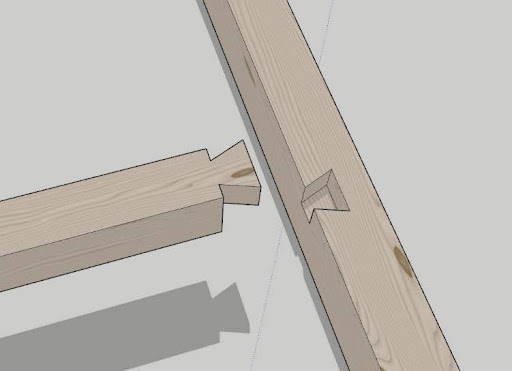
Mass timber is not traditional carpentry scaled up. It is digitally coordinated manufacturing. CNC fabrication converts coordinated models into physical components with defined geometry, connection points, openings, and tolerances.
Millimetre-Level Accuracy
Advanced CNC equipment, such as the Hundegger K2i Industry system, can fabricate structural components to tight tolerances. That level of precision means fewer field adjustments, reduced change orders, less on-site waste, lower labour volatility, and more predictable installation timelines.
Pre-Cut Mechanical and Structural Integration
Window openings, mechanical chases, and structural connections are cut in the shop, not improvised on site. The result is cleaner jobsites, less noise, reduced rework, and greater confidence in schedule adherence.
The Labour Shortage Advantage
Mass timber changes the labour equation because assembly replaces much of the field fabrication. A traditional framing operation on a mid-sized commercial project may require a larger skilled crew, while mass timber installation often uses a focused team supported by crane operation.
For developers, fewer workers can mean reduced exposure to skilled labour shortages, lower on-site supervision overhead, less schedule volatility due to crew availability, and greater installation consistency.

Speed and Schedule: A Real Competitive Advantage
On many projects, structural mass timber can shorten installation compared to conventional steel or concrete systems. Faster enclosure can allow earlier interior trades, reduced carrying costs, lower weather exposure risk, and faster occupancy.
In high-interest-rate environments, time is not only convenience. It is capital.
Performance Beyond Perception
Mass timber has faced skepticism around fire, acoustics, and long-term energy performance. Modern engineering addresses these concerns through char-layer design, acoustic assemblies, envelope detailing, and integrated building systems.
Fire Performance: The Char Layer Principle
Large-section mass timber develops a predictable char layer in fire exposure. That char layer insulates the core, allowing engineers to design assemblies that meet required fire-resistance ratings.
Acoustic Control
Through layered assemblies, decoupling systems, and engineered wall systems, mass timber buildings can meet acoustic requirements for residential and institutional occupancy.
Thermal Stability and Phase Shift
Solid wood assemblies can delay temperature transfer compared with lighter wall assemblies. In energy-conscious developments, this thermal moderation can reduce HVAC cycling, improve occupant comfort, support peak-load reduction, and improve energy modelling outcomes.

Total Cost of Ownership: The Real Conversation
Material cost comparison alone misses the bigger picture. Mass timber value often appears through foundation savings, schedule compression, operational performance, carbon reporting, and market positioning.
| Value Area | Developer Impact |
|---|---|
| Foundation savings | Lighter structural weight can reduce foundation size, excavation, and concrete volume. |
| Schedule compression | Shorter structural duration can reduce general conditions, financing carry, equipment rental, and supervision overhead. |
| Energy performance | Thermal stability and high-performance envelopes can reduce long-term heating and cooling demand. |
| Carbon and procurement | Mass timber can support embodied-carbon disclosure and competitive procurement requirements. |
The 2026 Opportunity
Mass timber is not a trend. It is an operational shift: off-site precision over on-site improvisation, smaller and more efficient crews over manpower-heavy framing, predictable timelines over schedule drift, measurable carbon data over assumptions, and long-term ownership thinking over the lowest initial bid.
Ready to Evaluate Your Project?
If you are planning a commercial, institutional, or multi-family project, a structured feasibility conversation can help evaluate structural cost comparison, schedule impact, carbon performance, labour impact, and site suitability.
Call: 204-377-5000
Email: marketing@cstf.ca