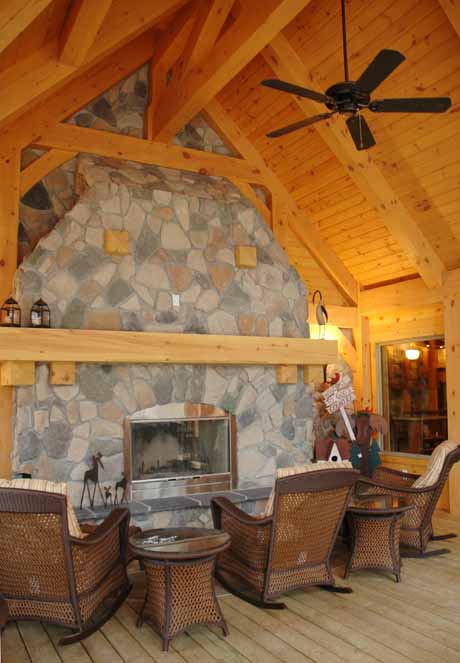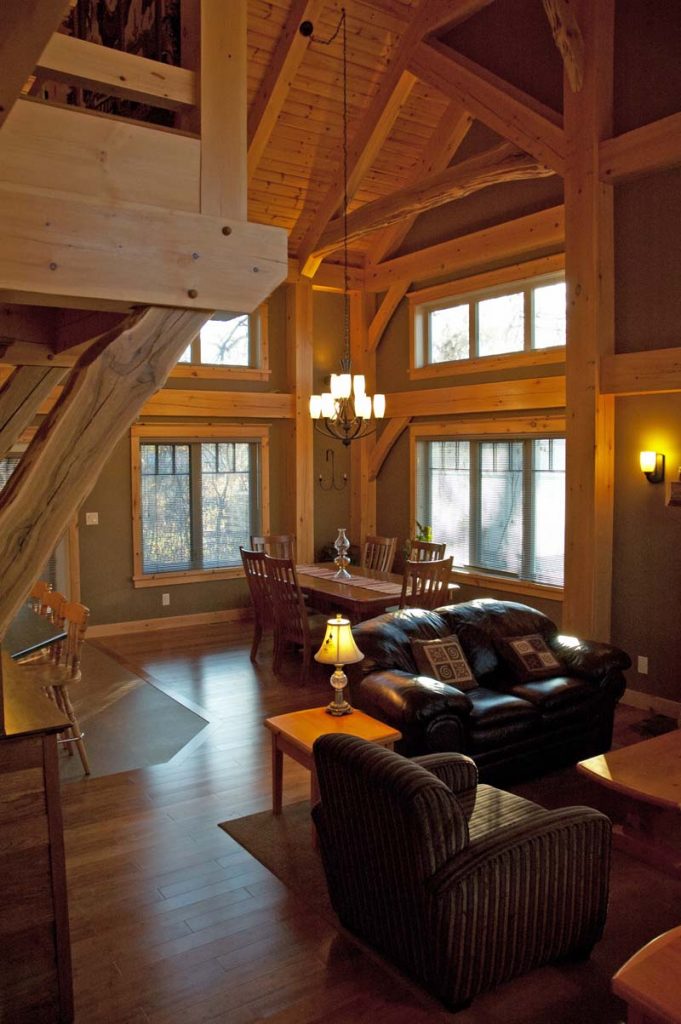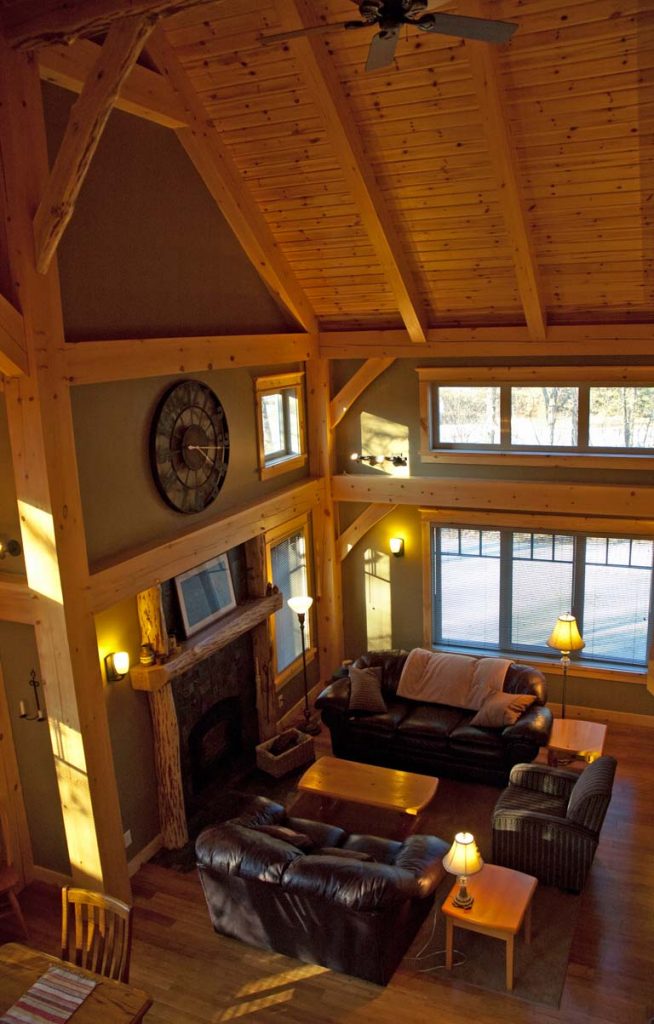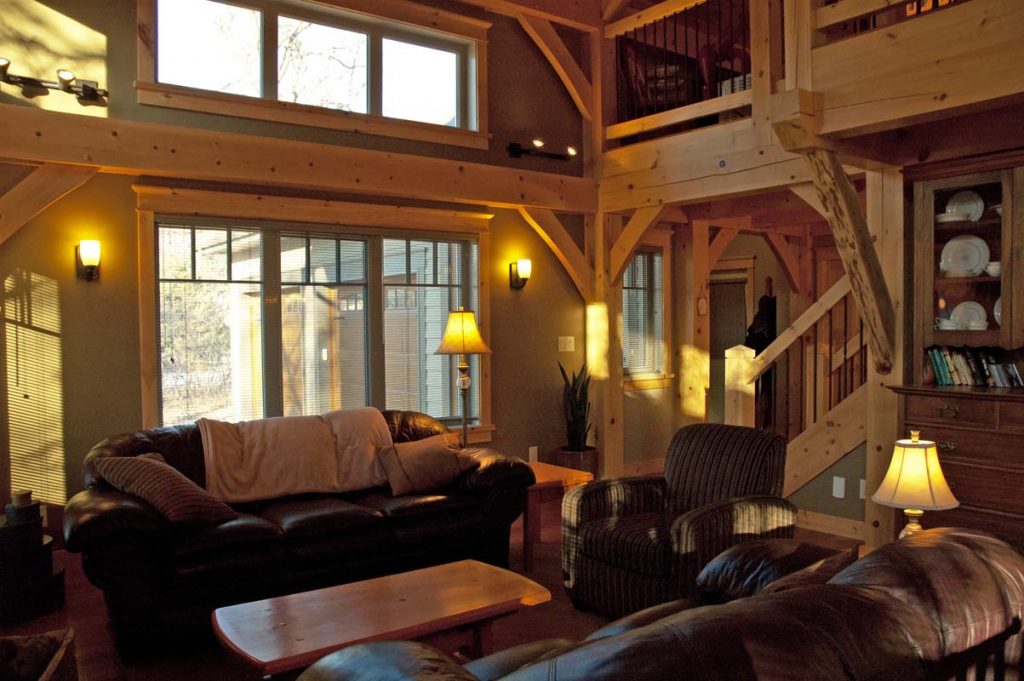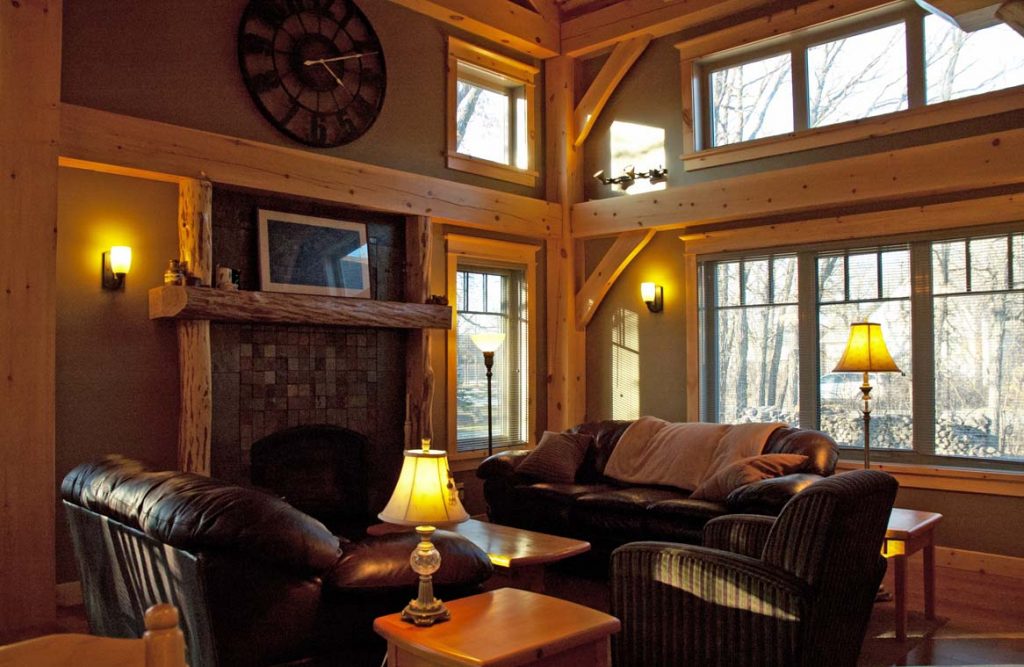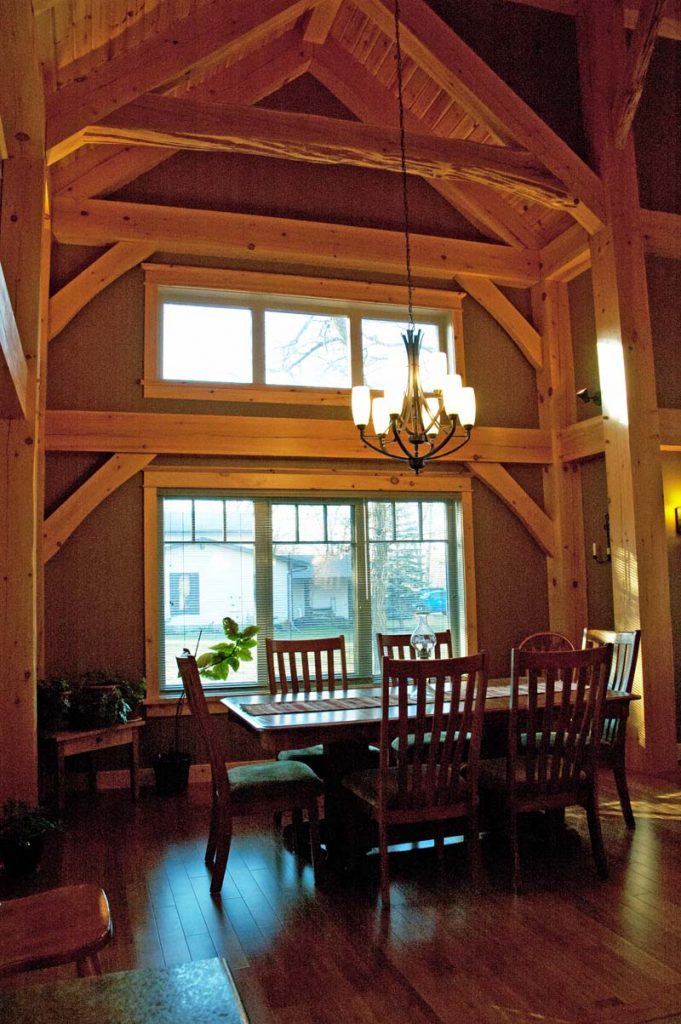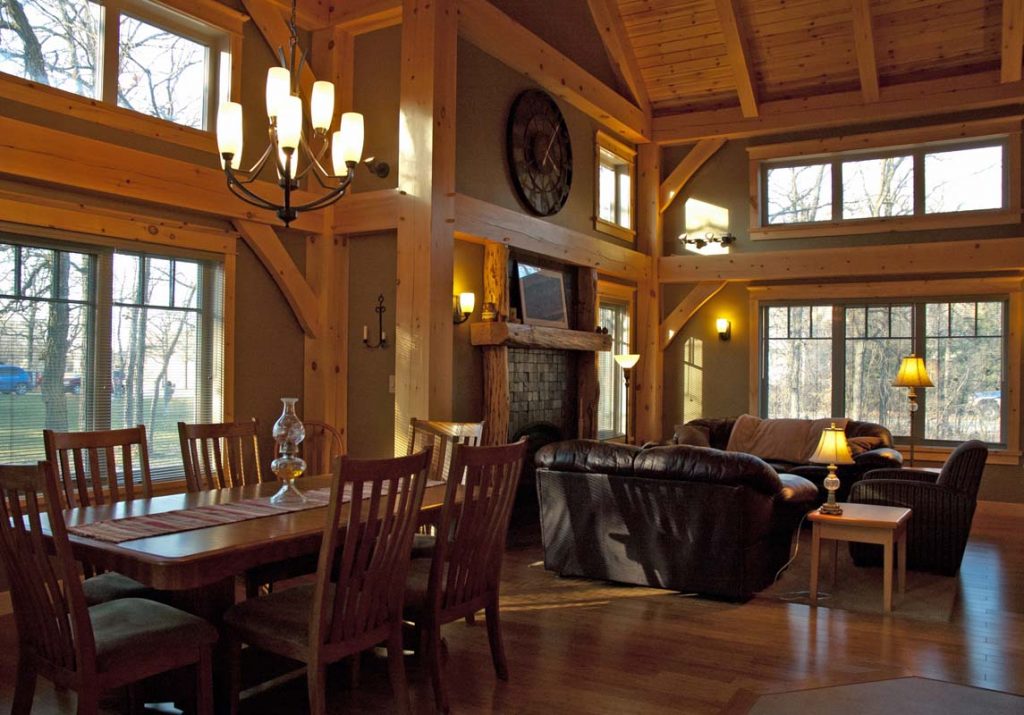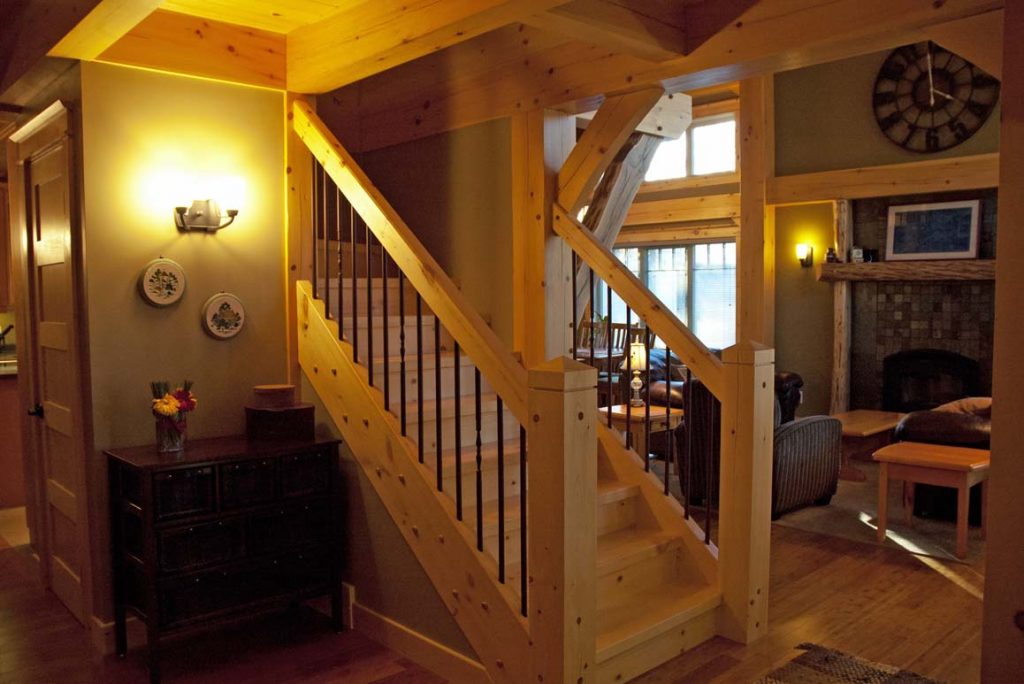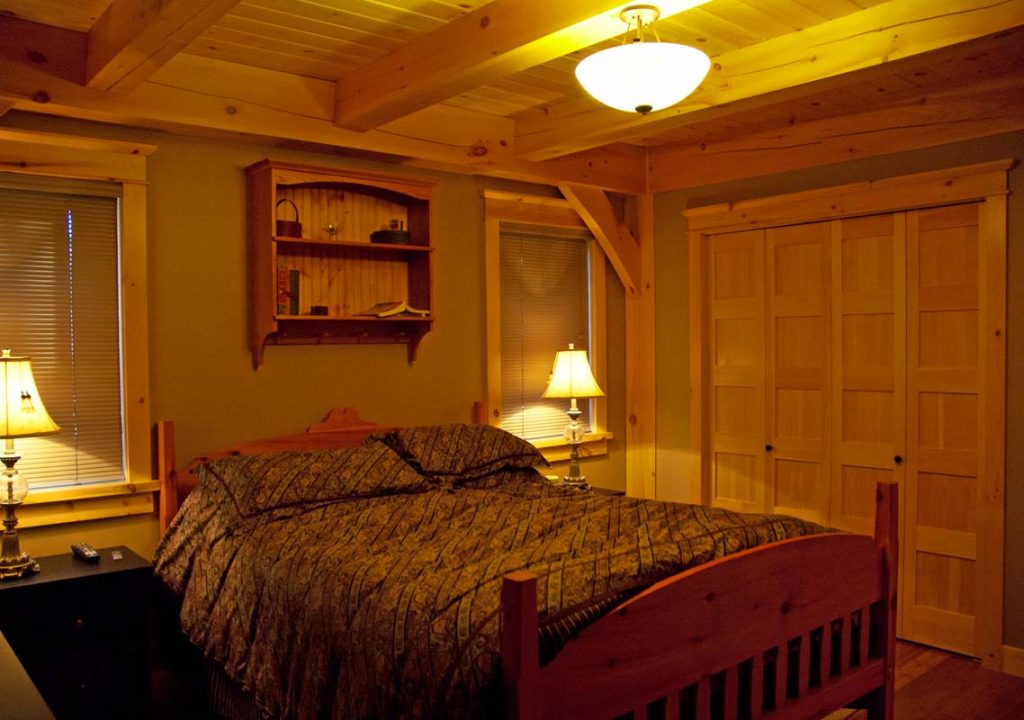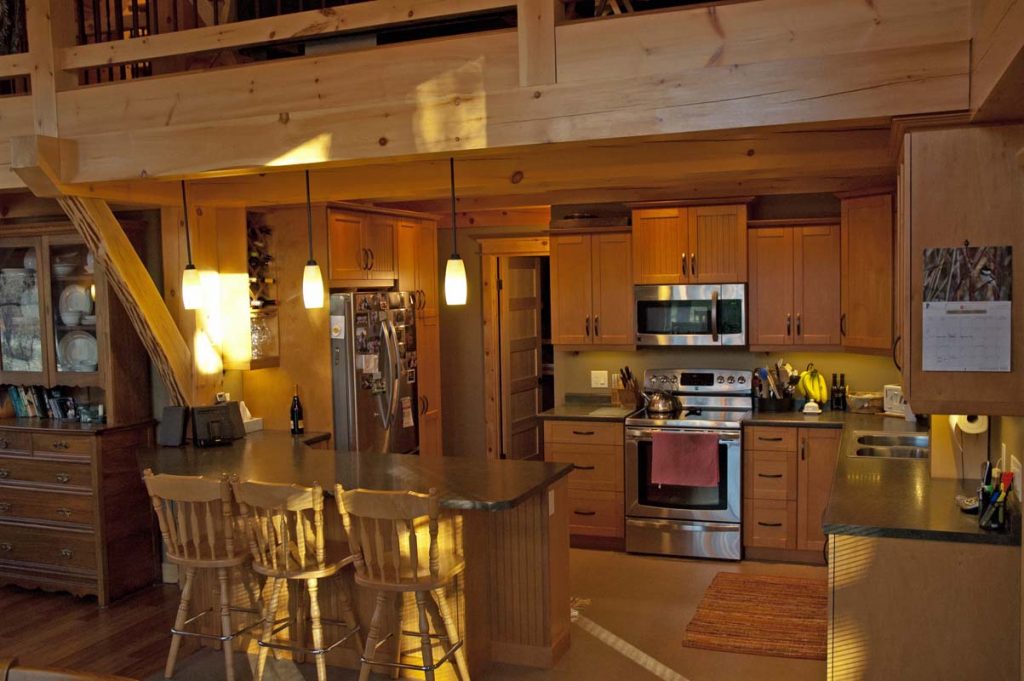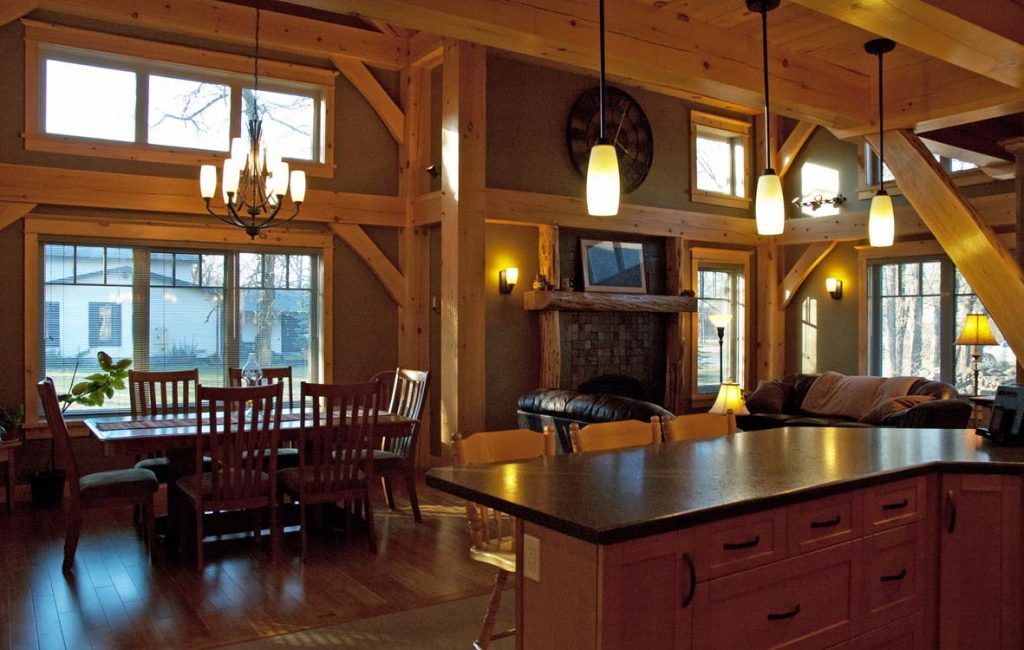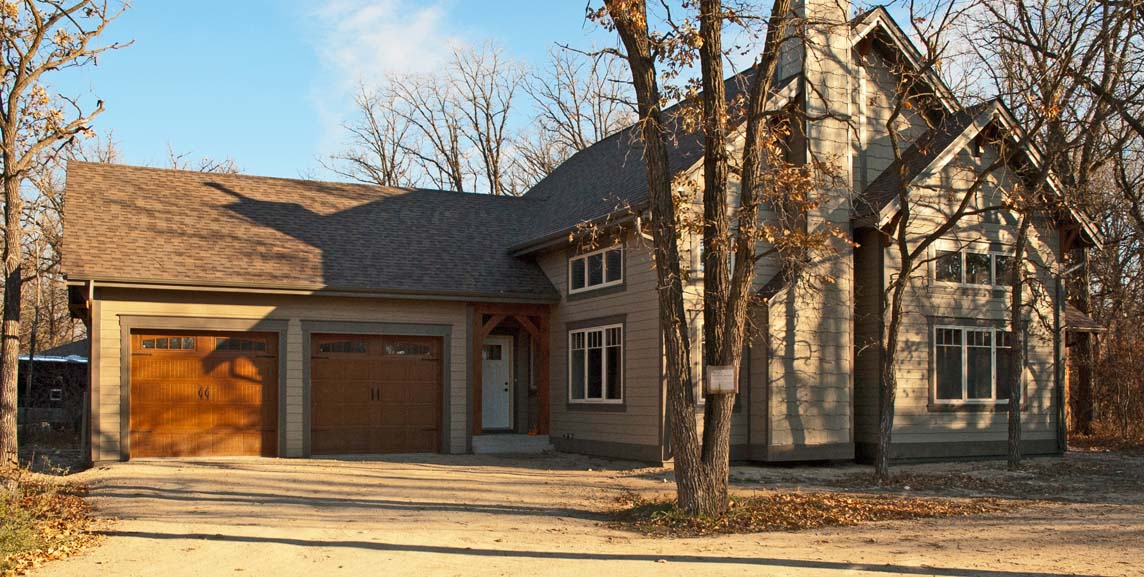
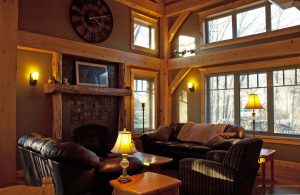
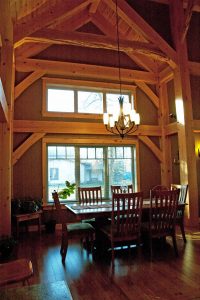
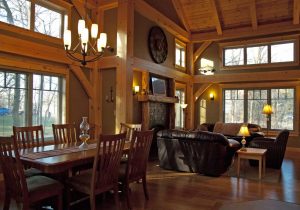
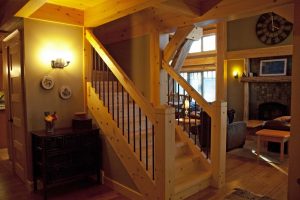
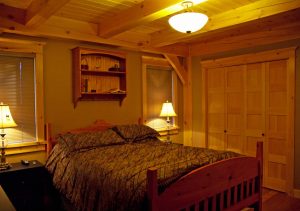
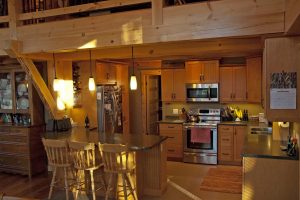
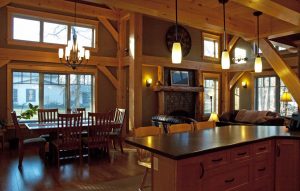
The Oak Haven is situated on a mature, treed lot in Mitchell, Manitoba. Tree cover influences wind exposure patterns and snow drift behavior, requiring roof geometry and anchorage systems designed for variable environmental loading.
This residence is engineered as a full timber frame structure. Primary vertical and horizontal load-bearing elements are heavy timber members rather than conventional stud framing. Exterior cladding utilizes fibre cement board, providing low-maintenance durability while allowing structural timber to remain visually expressive.
All timber elements are finished with Sansin ENS UV Clear Optimum, ensuring UV resistance and vapor permeability suitable for Manitoba’s seasonal climate cycles.
Full Timber Frame System: Load Path and Structural Continuity
The structural system consists of aligned posts, beams, braces and trusses forming uninterrupted load paths from ridge to foundation.
Structural mechanics include:
-
Axial compression in vertical posts
-
Bending resistance in primary beams
-
Shear transfer at mortise and tenon joints
-
Roof diaphragm stabilization
Member sizing accounts for:
-
Regional snow load values
-
Dead load from roof deck and insulation
-
Wind uplift forces
-
Long-term creep deformation
All bearing points are vertically aligned to prevent eccentric loading. Foundation anchorage incorporates frost protection and uplift resistance.
Live Edge Oak Timber Integration
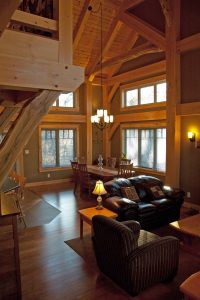
A defining feature of The Oak Haven is the incorporation of live edge oak timbers throughout the structure. Unlike dimensioned beams, live edge members retain natural curvature and irregular geometry.
Engineering considerations include:
-
Evaluation of net section capacity after accounting for irregular edges
-
Grain orientation analysis to prevent stress concentration
-
Moisture content stabilization prior to installation
-
Reinforced joinery at natural taper points
Live edge oak provides high density and compressive strength, making it structurally viable when properly graded and sized.
Structural integration ensures aesthetic irregularity does not compromise axial or bending capacity.
Open Concept Living Core
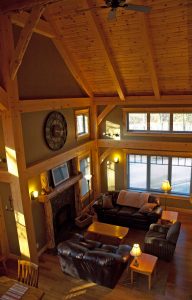
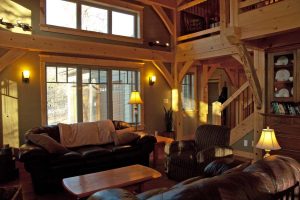
The kitchen, living and dining areas are arranged in an open plan configuration supported entirely by timber framing.
Engineering implications include:
-
Long-span beam sizing
-
Deflection control to protect glazing and finishes
-
Reinforced floor framing beneath concentrated loads such as kitchen islands
Eliminating interior load-bearing partitions increases demand on primary beams and trusses. Serviceability limits are maintained to prevent vibration and finish cracking.
Second Storey Loft and Custom Timber Bar
The second-storey loft includes a custom timber bar featuring intricate joinery.
Structural considerations include:
-
Floor framing reinforcement for concentrated bar loads
-
Guardrail anchorage integrated into timber posts
-
Diaphragm continuity across loft floor
Load stacking from loft framing aligns with primary posts to maintain direct vertical load transfer.
The loft contributes lateral stiffness by tying roof planes and vertical supports together.
Timber Staircase and Loft Railing
Handcrafted timber stairs and loft railings are integrated into the structural frame.
Engineering priorities include:
-
Reinforced stair stringer attachment to beams
-
Thru-tenon or concealed steel anchorage where required
-
Lateral bracing to prevent torsional movement
Timber railings must meet structural performance requirements for lateral load resistance while maintaining aesthetic continuity.
Timber Frame Sunroom
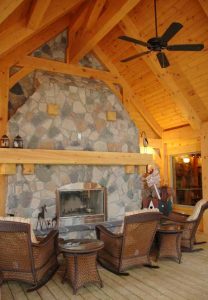
A full timber sunroom overlooks the yard and functions as an independent framed volume.
Structural considerations include:
-
Increased glazing exposure
-
Reinforced headers
-
Uplift-rated anchorage
Roof framing within the sunroom is engineered to resist snow load accumulation and wind pressure.
Ventilation within roof cavities prevents condensation in transitional seasons.
Fireplace Assembly: Live Edge Oak Mantle and Slate Tile
The fireplace features a live edge oak mantle integrated into a slate tile surround.
Engineering implications include:
-
Reinforced floor framing beneath masonry mass
-
Thermal separation between stone and timber
-
Secure anchorage of mantle
Masonry introduces significant dead load and must transfer directly to foundation or reinforced support framing.
Exterior Materials and Envelope Performance
Fibre cement board siding provides durability and resistance to freeze-thaw cycles.
Exterior timber elements require:
-
End grain sealing
-
Flashing at all penetrations
-
Moisture isolation from cladding
Lake-influenced humidity and Manitoba winter conditions necessitate controlled vapor permeability and drainage detailing.
Environmental Load Considerations
Mitchell, MB conditions impose:
-
Snow load accumulation
-
Freeze-thaw cycling
-
Seasonal humidity variation
-
Variable wind patterns due to tree coverage
Structural countermeasures include:
-
Continuous load paths from ridge to footing
-
Reinforced truss and brace connections
-
Uplift-rated hold-down anchors
-
Frost-protected foundations
Creep deformation in long-span members is evaluated to preserve alignment and structural performance over time.
Structural Summary
The Oak Haven demonstrates advanced full timber frame engineering characterized by:
-
Structural integration of live edge oak timbers
-
Open concept living volume supported by heavy timber beams
-
Custom second-storey loft bar within structural grid
-
Timber staircase and railing anchored to primary frame
-
Independent timber sunroom framing
-
Reinforced fireplace assembly with live edge mantle
This residence combines structural integrity, engineered load transfer and natural timber expression within a durable cold-climate framework suited to Manitoba conditions.