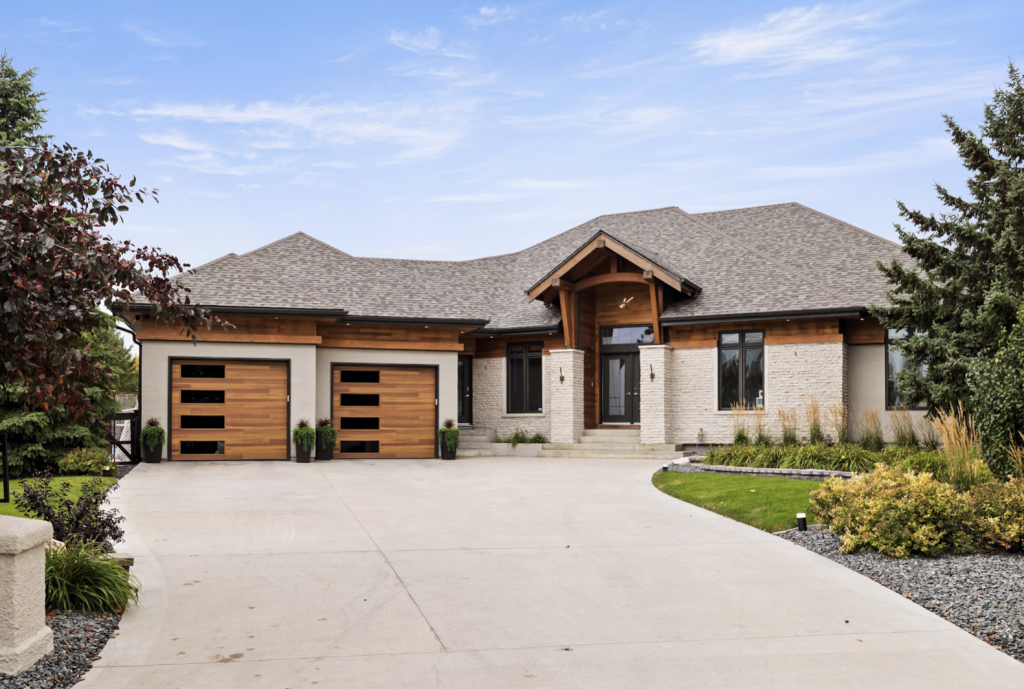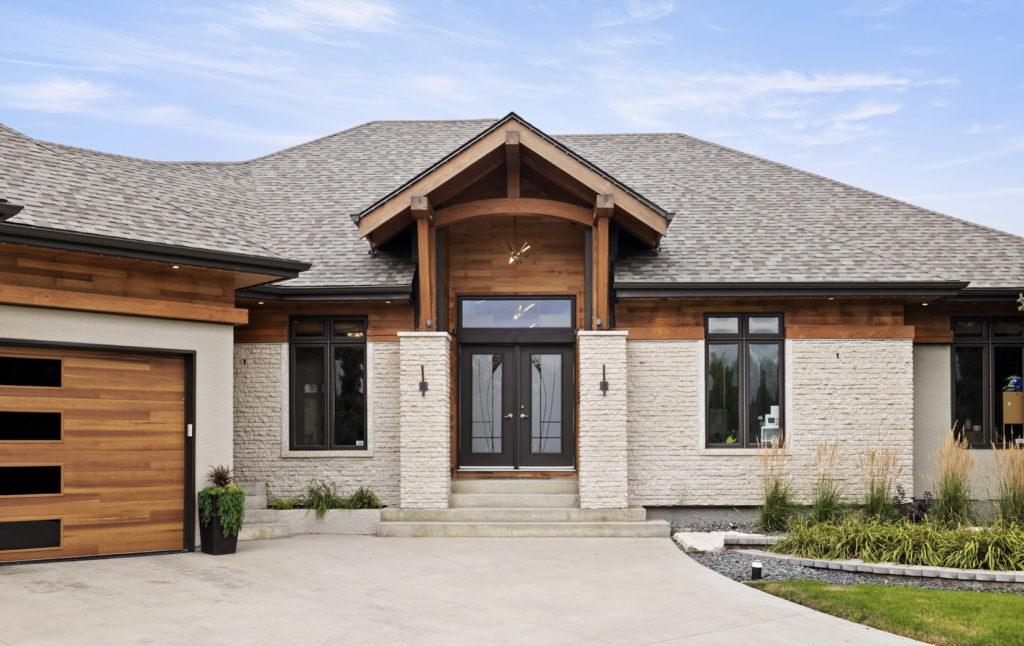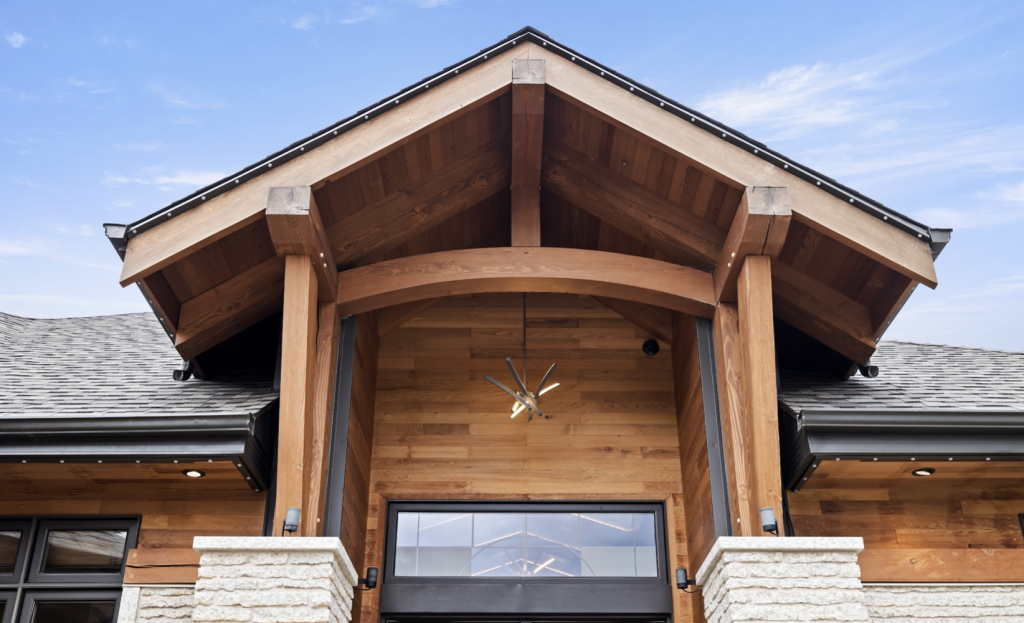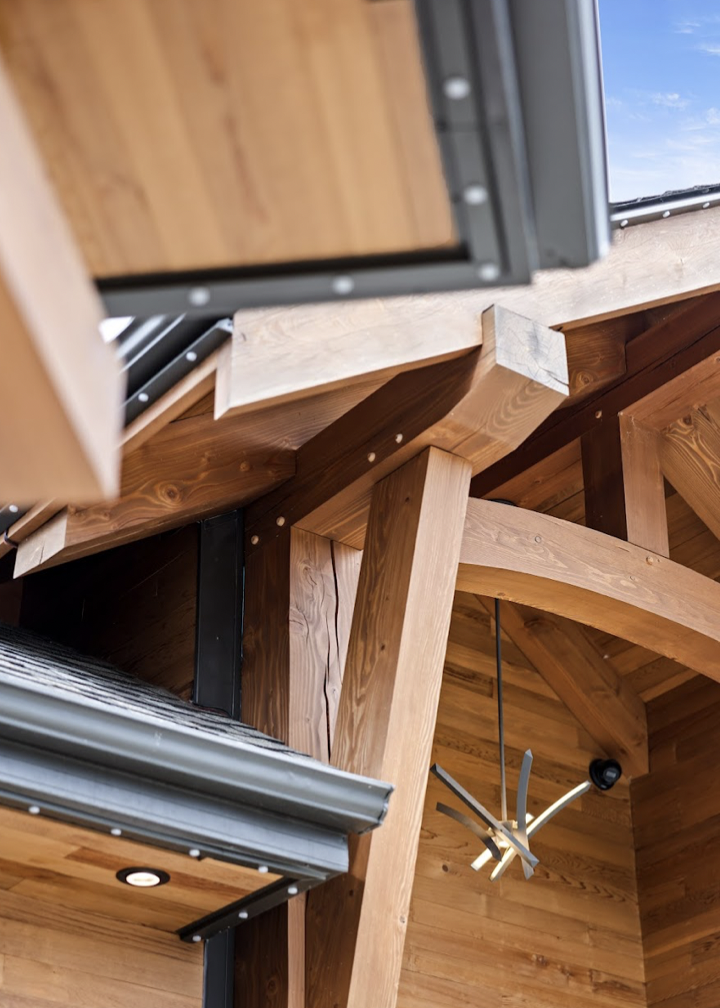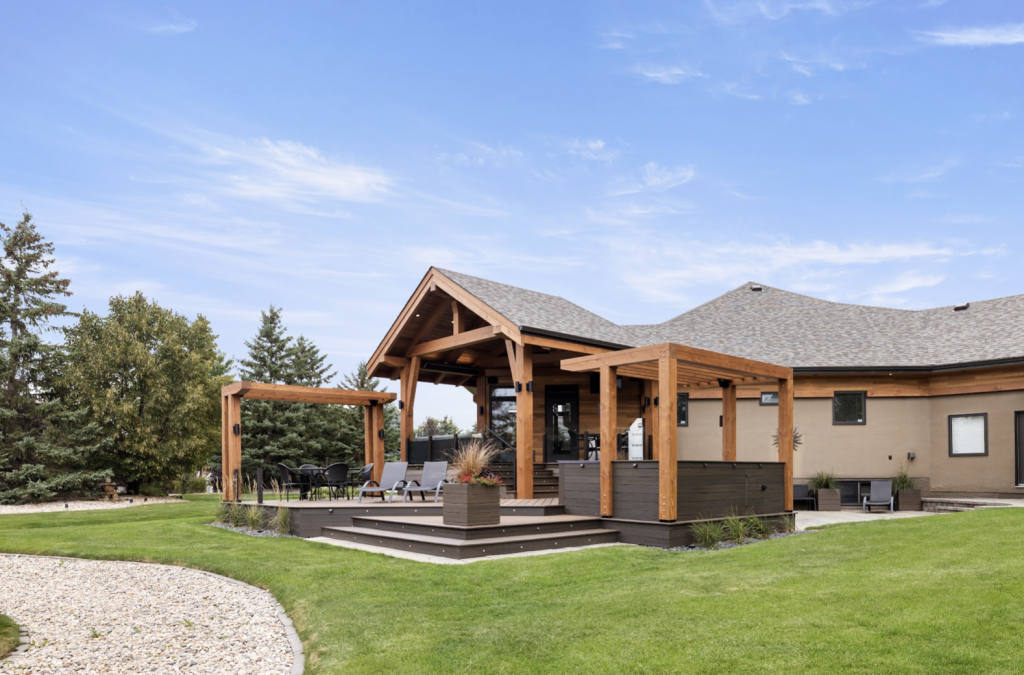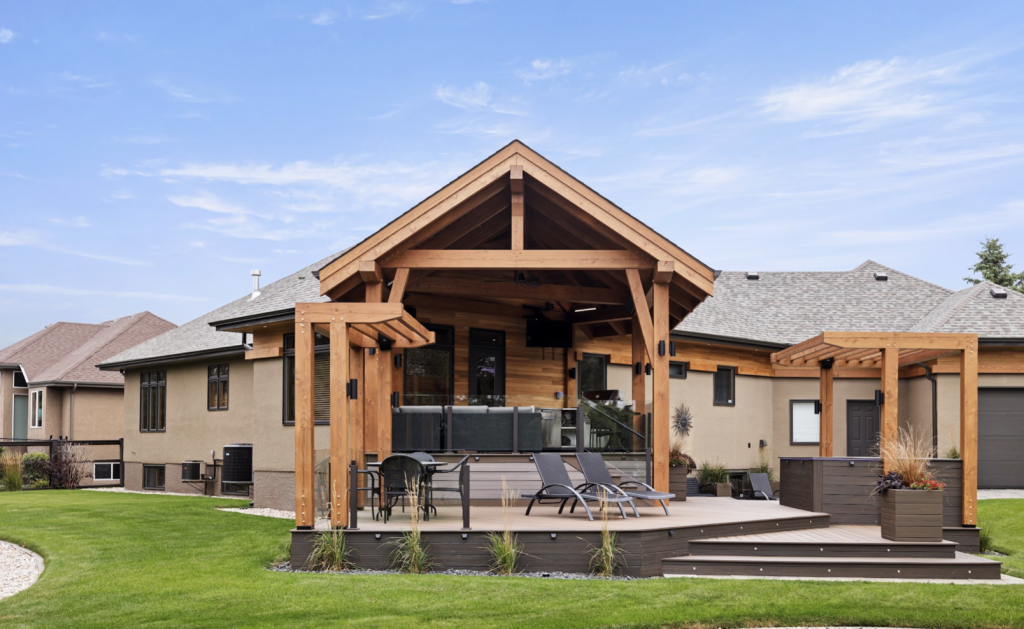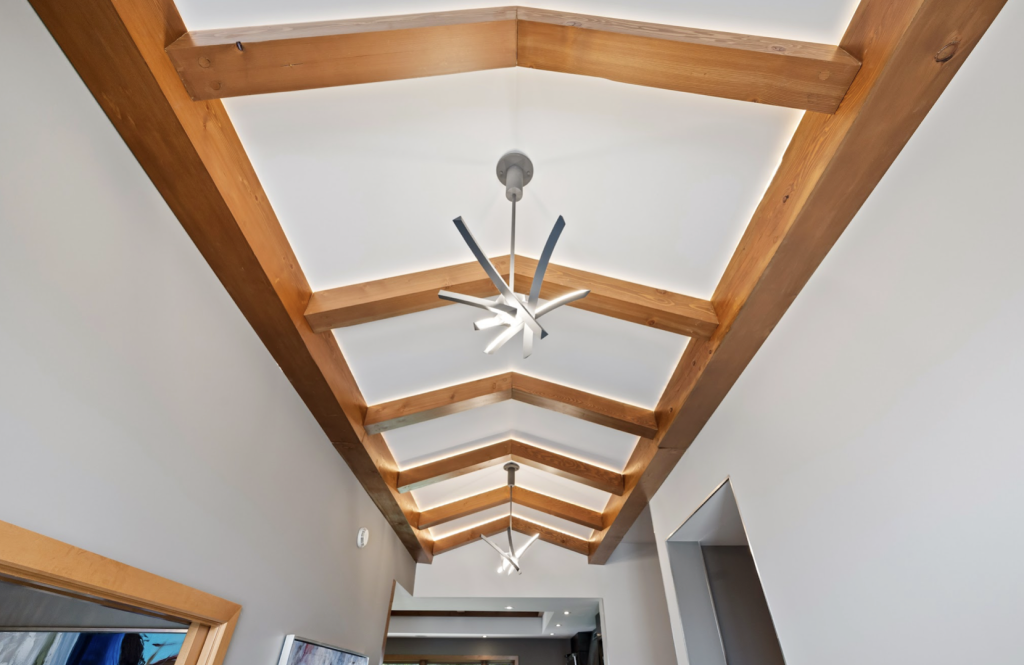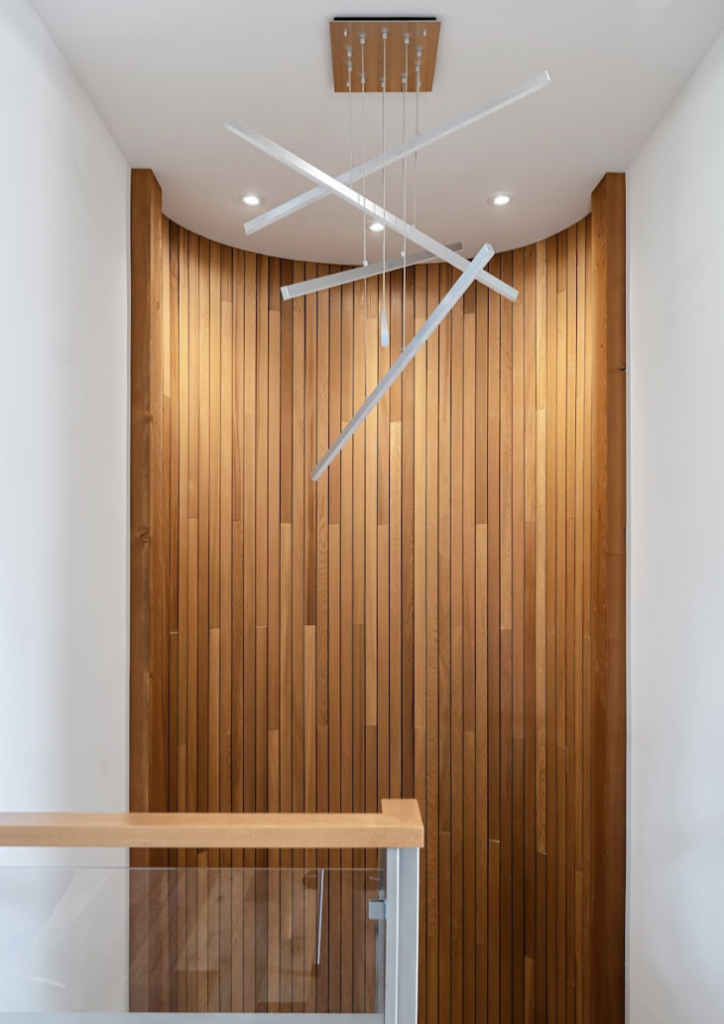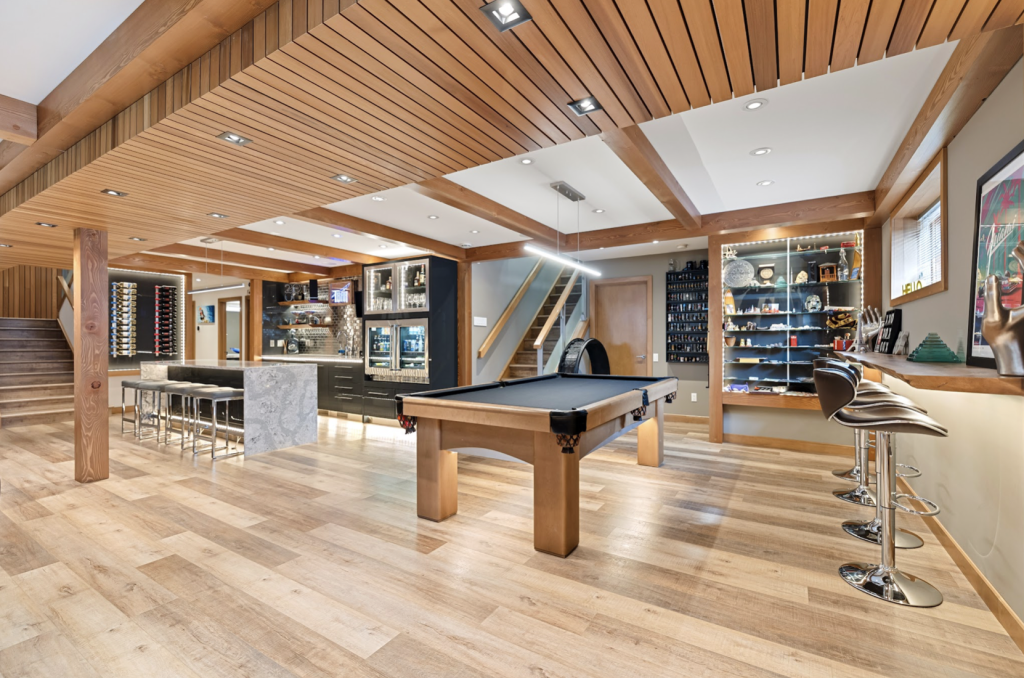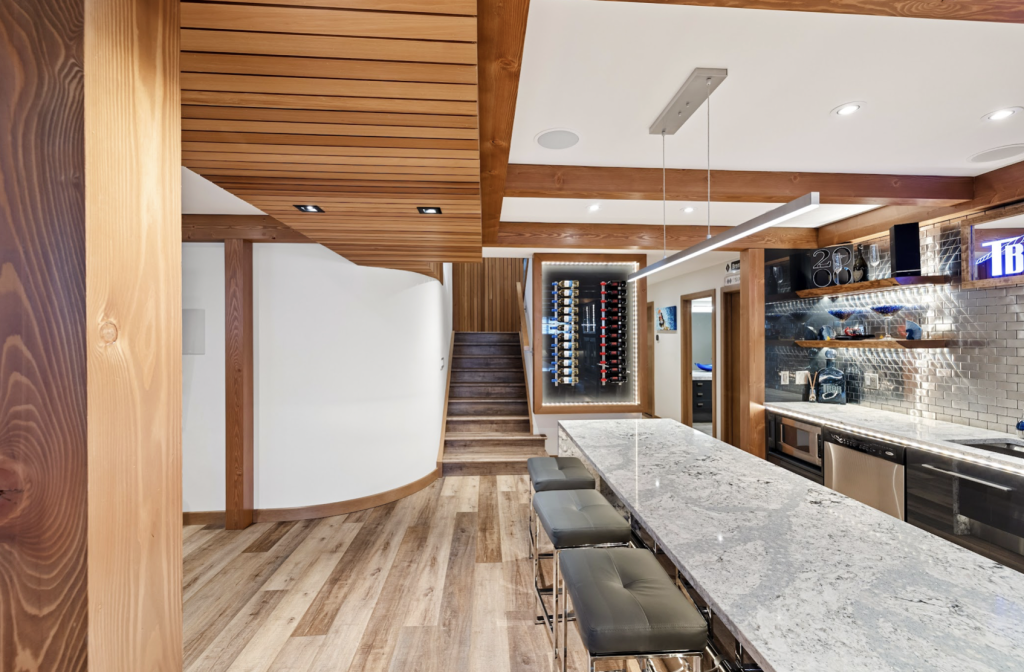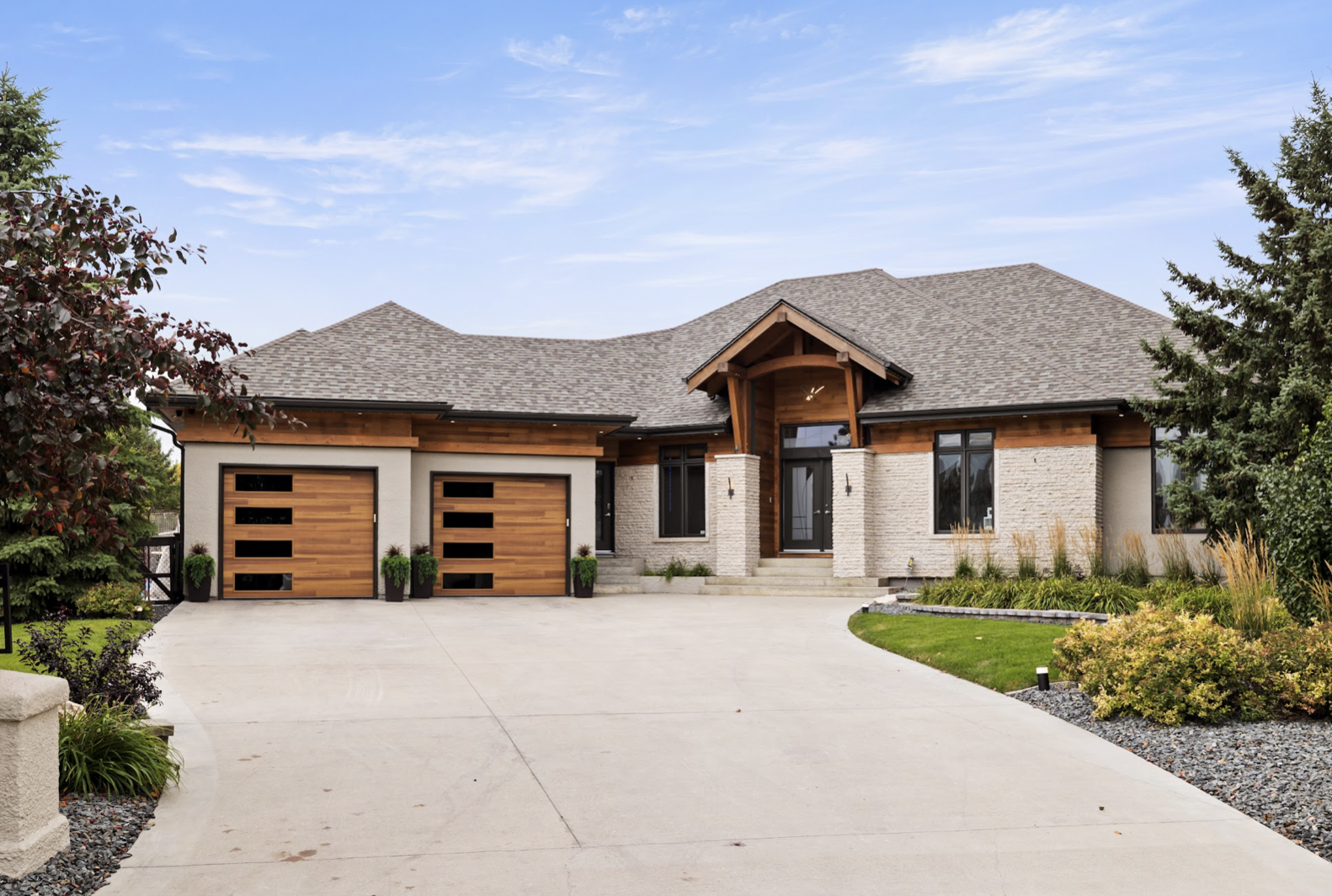
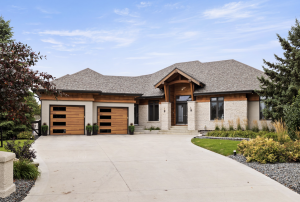
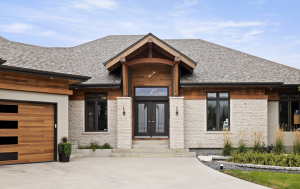
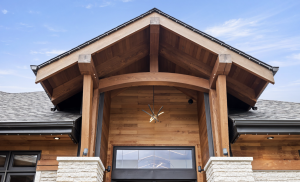
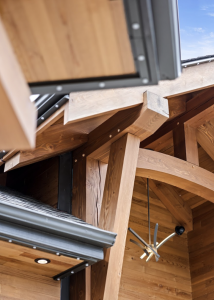
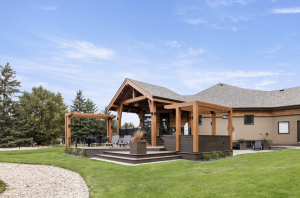
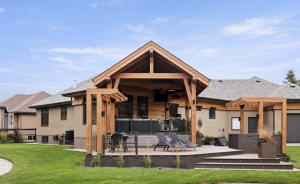
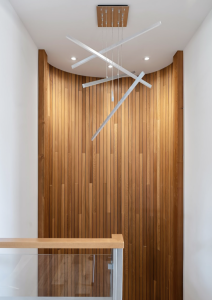
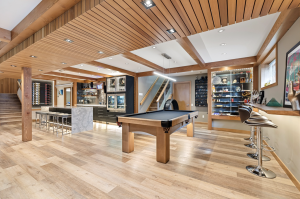
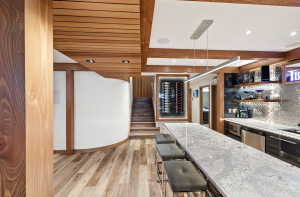
The Glenwood residence demonstrates deliberate integration of structural Douglas fir timber framing with Western red cedar cladding systems. The architectural intent is contemporary, yet the performance logic is grounded in material science, environmental exposure control, and long-term durability.
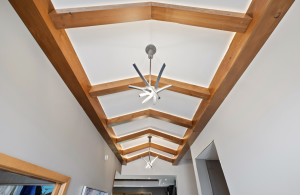
The structure incorporates exposed timber accents on the main floor and lower level, a cedar-wrapped exterior envelope, and engineered outdoor living assemblies including a covered kitchen and satellite pergolas. Each element contributes to structural continuity, moisture management, and load transfer clarity.
Douglas Fir Structural Timber and Load Path Continuity
Douglas fir is selected for primary timber accents due to its favorable strength-to-weight ratio and predictable structural performance. With high modulus of elasticity and compressive strength parallel to grain, it is well suited for beams, posts, and exposed framing components.
Structural integration considerations include:
-
Continuous vertical load paths from roof diaphragm to foundation
-
Proper bearing length at post-to-beam connections
-
Control of creep deformation under sustained roof load
-
Moisture content management at installation to limit shrinkage stress
Timber accents are not superficial additions. They are aligned with structural axes to preserve axial load transfer efficiency. Connection detailing accounts for shear resistance and long-term serviceability limits.
In interior conditions, controlled humidity minimizes differential movement between timber and adjacent finishes.
Western Red Cedar Cladding and Soffit Systems
Western red cedar is utilized for exterior cladding and soffits due to its natural decay resistance and dimensional stability. Cedar contains extractives that inhibit fungal growth and reduce moisture absorption relative to many other softwoods.
Durability performance depends on installation strategy rather than species alone.
Best practice implementation includes:
-
Back-ventilated rainscreen assembly
-
Drainage plane behind cladding
-
Stainless or hot-dip galvanized fasteners
-
End grain sealing at cut edges
The rainscreen cavity promotes pressure equalization and moisture evaporation, reducing risk of rot. Soffit detailing must allow airflow while preventing pest intrusion.
Cedar soffits contribute to envelope ventilation by supporting continuous air intake at eaves. This airflow is critical in cold climates to prevent condensation within roof assemblies.
UV exposure gradually alters cedar surface coloration. Protective finishes must balance vapor permeability with surface protection to maintain dimensional stability.
Building Envelope Physics and Moisture Control
The combination of cedar cladding and heavy timber accents requires careful interface detailing. Timber elements penetrating the building envelope create potential thermal bridges and air leakage paths.
Mitigation strategies include:
-
Air barrier continuity at structural penetrations
-
Flashing integration at beam-to-wall interfaces
-
Thermal break components where steel connectors intersect exterior plane
Moisture cycling, freeze-thaw exposure, and wind-driven rain are primary durability risks. Proper flashing geometry directs water away from horizontal bearing surfaces to prevent capillary absorption.
Envelope design must accommodate differential movement between cladding and structural timber due to seasonal moisture variation.
Covered Outdoor Kitchen: Structural and Environmental Considerations
The contemporary outdoor living space includes a covered kitchen and gathering area. This structure must resist snow load, wind uplift, and vibration from mechanical systems.
Engineering requirements include:
-
Roof framing sized for regional snow load
-
Lateral bracing to resist wind shear
-
Corrosion-resistant connectors for exterior exposure
-
Drainage slope to prevent standing water accumulation
Electrical wiring for sound systems and infrared heaters must be routed through protected conduits. Infrared heating systems produce localized radiant energy, requiring clearance from combustible materials.
Infrared heat enhances occupant comfort without raising ambient air temperature significantly. This improves energy efficiency in partially enclosed outdoor environments.
The covered structure also reduces hydrostatic impact on adjacent decking by limiting precipitation exposure.
Satellite Pergolas: Secondary Timber Structures
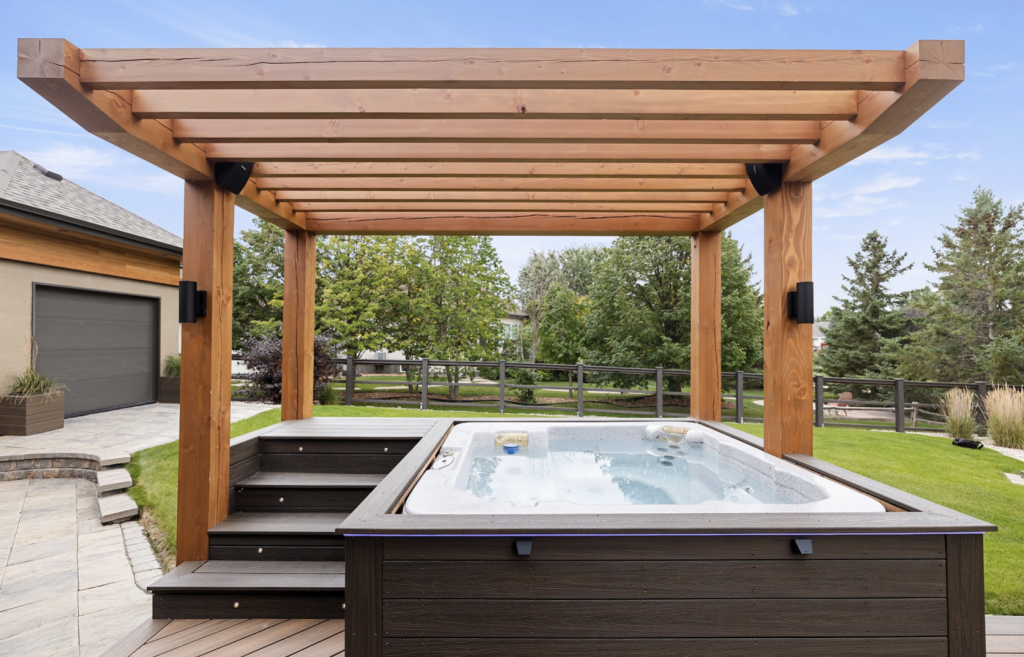
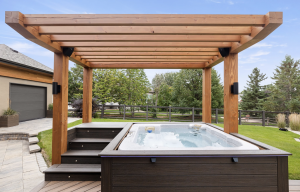
Satellite pergolas extend the timber expression to hot tub and sun deck areas. Though visually lighter than primary framing, pergolas are subject to environmental forces and require structural logic.
Key considerations include:
-
Anchoring posts to resist uplift and lateral displacement
-
Braced connections to limit sway under wind load
-
Load capacity for mounted lighting and audio components
Hot tub proximity introduces elevated humidity and vapor exposure. Timber protection must address increased moisture cycling and potential chemical exposure from treated water.
Mounting of lighting and audio equipment introduces point loads and vibration. Structural members must maintain adequate section modulus to prevent excessive deflection.
Thermal and Environmental Performance
Exterior timber systems are exposed to:
-
Freeze-thaw cycling
-
UV radiation
-
Wind-driven rain
-
Seasonal humidity variation
Douglas fir structural members remain protected within the envelope, while cedar cladding absorbs environmental stress. The separation of structural and sacrificial layers enhances durability.
Creep deformation in heavy timber is accounted for during design. Long-span beams supporting outdoor structures must maintain deflection within acceptable serviceability limits under sustained load.
The integration of outdoor heating and audio systems requires coordination between structural, electrical, and fire safety considerations.
Durability Strategy and Long-Term Performance
The Glenwood residence illustrates how material compatibility and structural engineering align to create a cohesive system.
Douglas fir provides structural backbone through predictable load paths and compressive performance. Western red cedar functions as a ventilated protective envelope layer with inherent decay resistance.
Outdoor structures extend the structural logic beyond the primary footprint while maintaining:
-
Uplift resistance
-
Lateral stability
-
Moisture management integrity
By separating structural mass from weather-exposed cladding and integrating controlled ventilation, the design enhances long-term durability in variable climate conditions.
The result is a contemporary residence where timber framing, cedar envelope systems, and engineered outdoor assemblies operate as a unified, performance-driven architectural system.