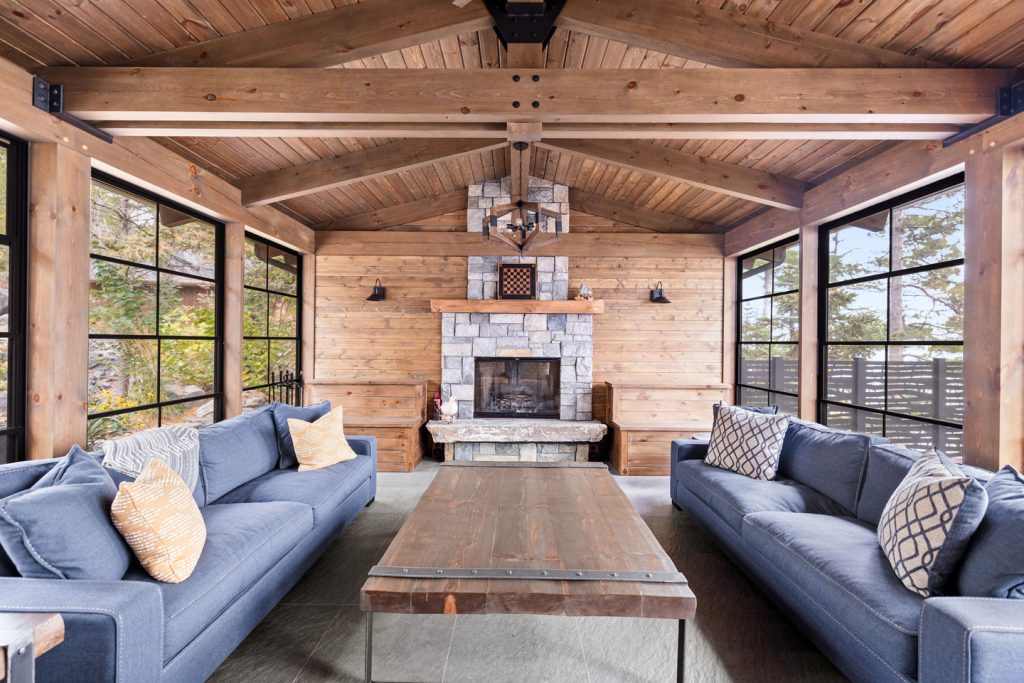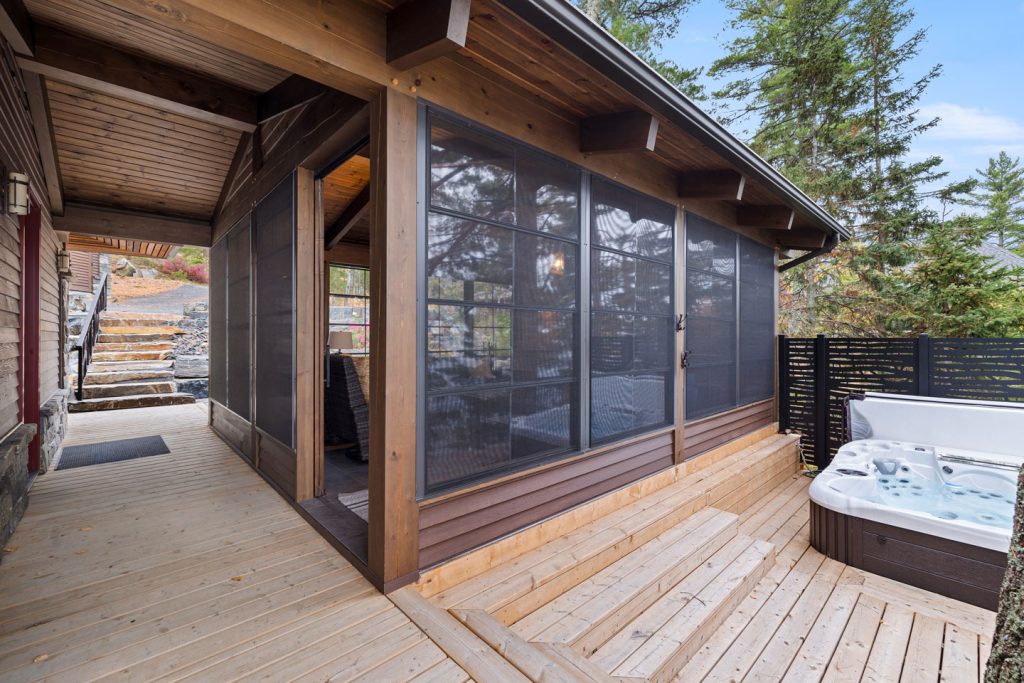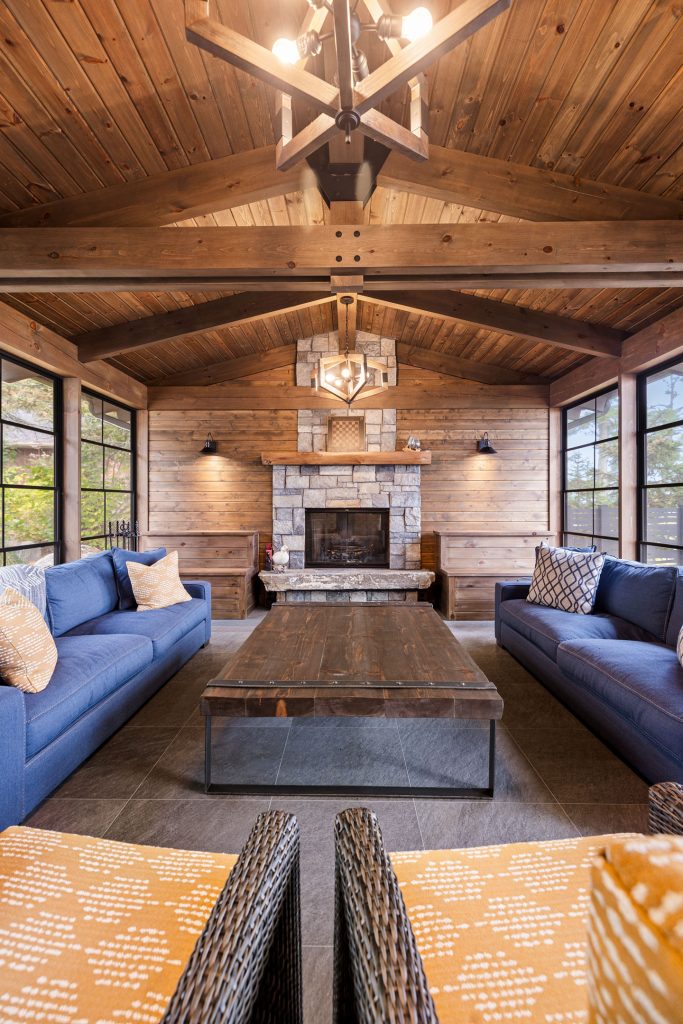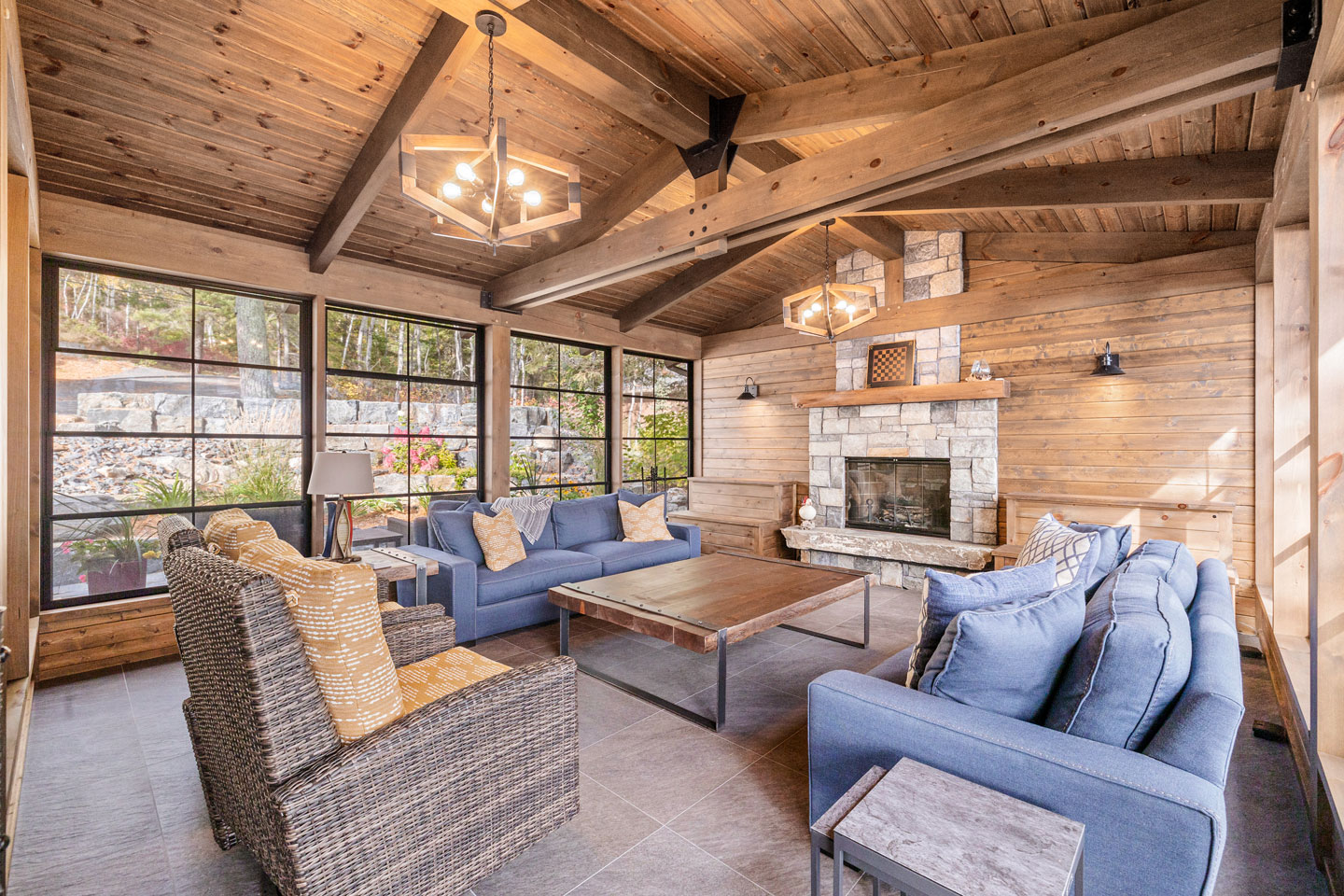
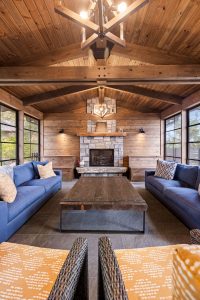
Southern Exposure is organized around a three-season sunroom connected to the main cottage by a breezeway that links lakeside access to entry and parking. The structure is located in a granite-dominant landscape characterized by exposed bedrock, pine and birch forest, and pronounced seasonal variation.
Three-season construction in lake environments must balance openness with structural durability. Snow load, wind uplift, freeze-thaw cycling, and elevated humidity remain relevant even if the space is not fully conditioned year-round.
The structural strategy integrates timber framing with localized steel reinforcement to achieve span efficiency under low-slope roof geometry.
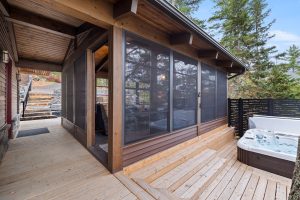
Breezeway as Structural and Environmental Transition
The breezeway functions as a transitional structural connector between the main cottage and the sunroom. It must accommodate differential movement between two structural volumes.
Engineering considerations include:
-
Independent foundation support to prevent load transfer distortion
-
Expansion joint accommodation for seasonal timber movement
-
Continuous roof drainage to prevent water accumulation
Breezeways in lake climates act as pressure equalization zones. By reducing direct wind entry into the primary envelope, they contribute indirectly to energy efficiency.
Structural framing within the breezeway maintains continuous load paths while allowing thermal isolation between volumes.
Three-Season Sunroom: Structural Envelope Logic
The three-season sunroom is designed as a partially conditioned space exposed to wide temperature variation. Structural elements must tolerate moisture fluctuation without compromising integrity.
Key performance factors include:
-
Snow load design for extended roof planes
-
Wind pressure resistance on glazing or screen assemblies
-
Moisture drainage at slab or deck interfaces
-
Corrosion-resistant fasteners
Because three-season spaces may not be heated continuously, vapor drive can reverse seasonally. Envelope detailing must allow controlled drying in both directions.
Timber framing remains visible, reinforcing structural honesty while providing axial compression support from roof to foundation.
Steel-Reinforced King Post Truss Under Low-Slope Roof
The low-sloping roof is supported by a steel-reinforced king post truss. Low-slope geometry increases uniform snow retention compared to steep roofs, raising sustained compressive loading.
The king post truss functions through:
-
Compressive force in rafters
-
Tensile force in the central king post
-
Horizontal thrust resistance in the tie beam
Steel reinforcement is introduced to:
-
Increase tensile capacity of the king post
-
Limit deflection under sustained snow load
-
Improve long-term creep performance
Hybrid timber-steel assemblies must account for differential thermal expansion. Steel connectors are detailed to prevent stress concentration within wood fibers.
Low-slope roofs require careful waterproofing and flashing integration to prevent hydrostatic pressure buildup during snow melt events.
Material Integration: Timber and Stone
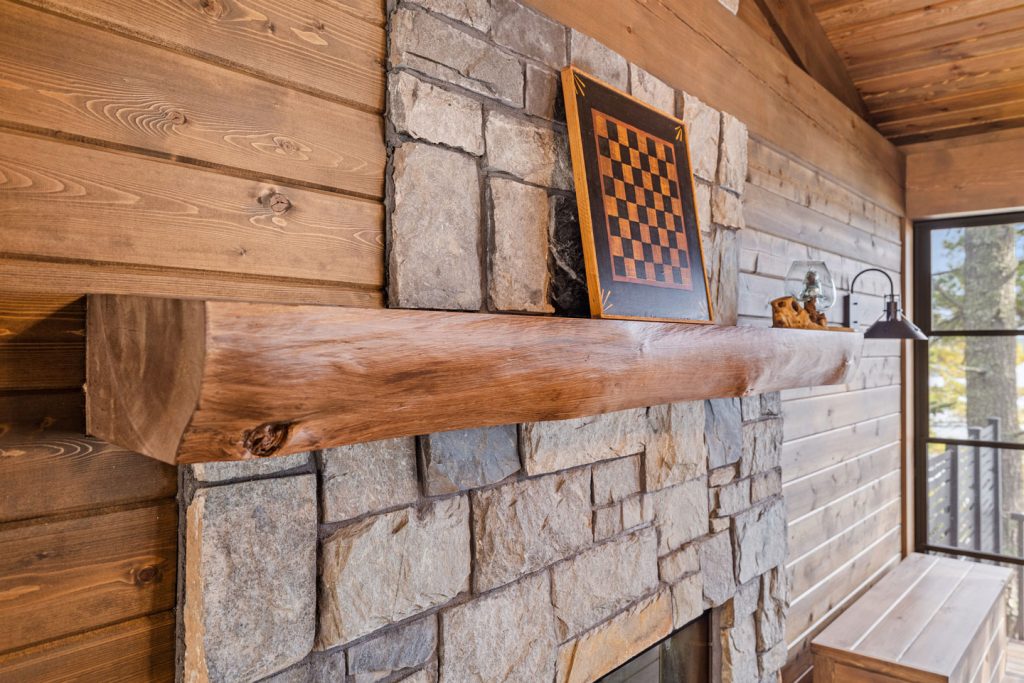
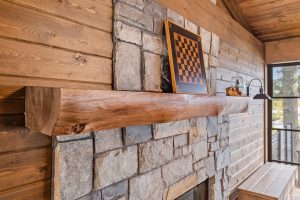
The sunroom integrates timber and stone in both interior and exterior finishes. Stone cladding introduces additional dead load that must be accounted for in wall framing.
Engineering integration includes:
-
Veneer anchorage rated for freeze-thaw cycling
-
Drainage cavity behind stone to prevent moisture accumulation
-
Flashing at all horizontal transitions
Timber and stone interface detailing prevents capillary water intrusion into structural members. Granite-rich regional conditions demand precise drainage management due to limited soil absorption capacity.
Mechanical Integration: Concealed Motorized Television System
The motor-mounted television integrated within a firewood storage box introduces mechanical load and vibration considerations.
Engineering factors include:
-
Reinforced framing within cabinet cavity
-
Load rating for dynamic motion
-
Secure anchorage to prevent torsional stress
Electrical routing must be isolated from moisture pathways. Because the unit is near a fireplace, heat exposure must be evaluated to prevent material degradation.
While recreational in nature, integration of mechanical systems must not compromise structural or fire safety performance.
Environmental Durability and Seasonal Performance
The Southern Exposure sunroom is subject to:
-
Snow load accumulation
-
Wind uplift over open water
-
Freeze-thaw cycling
-
Seasonal humidity variation
Durability strategies include:
-
Elevated timber clearances from grade
-
Sealed end grain surfaces
-
Corrosion-resistant steel reinforcement
-
Continuous drainage slopes
Creep deformation under sustained roof loading is evaluated in truss design. Steel reinforcement mitigates long-term deflection risk.
Because the space may remain unheated in winter, structural materials must withstand temperature cycling without excessive movement or joint separation.
Structural Summary
Southern Exposure demonstrates how a three-season lake sunroom can achieve structural reliability through hybrid timber and steel engineering.
Key performance attributes include:
-
Steel-reinforced king post truss supporting low-slope roof
-
Defined load paths from roof to foundation
-
Breezeway integration accommodating movement
-
Moisture-managed stone and timber interfaces
-
Mechanical integration without structural compromise
The result is a resilient transitional space engineered for seasonal variation while maintaining architectural warmth and structural clarity in a granite-dominated lake environment.