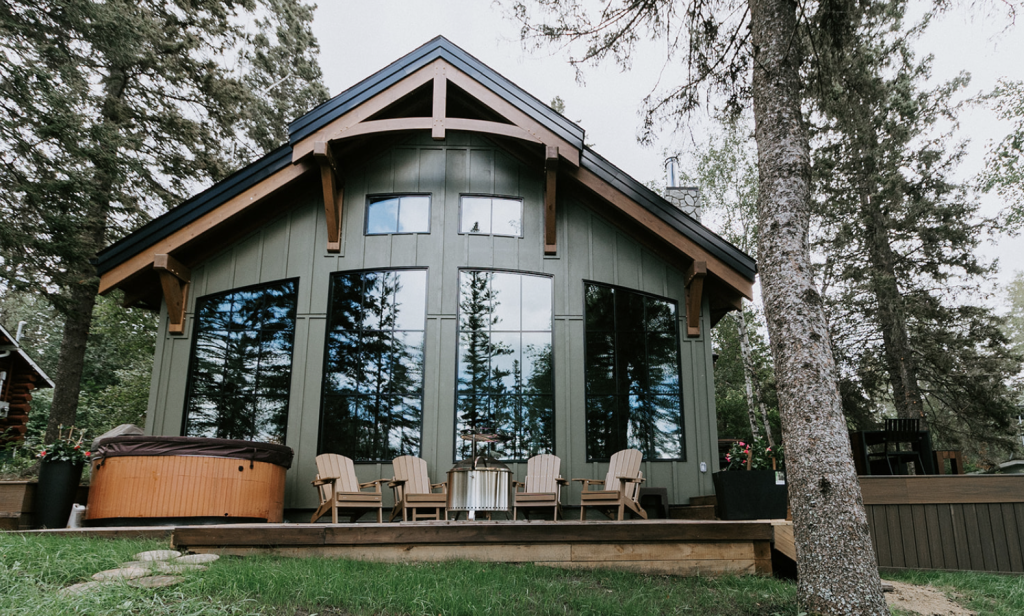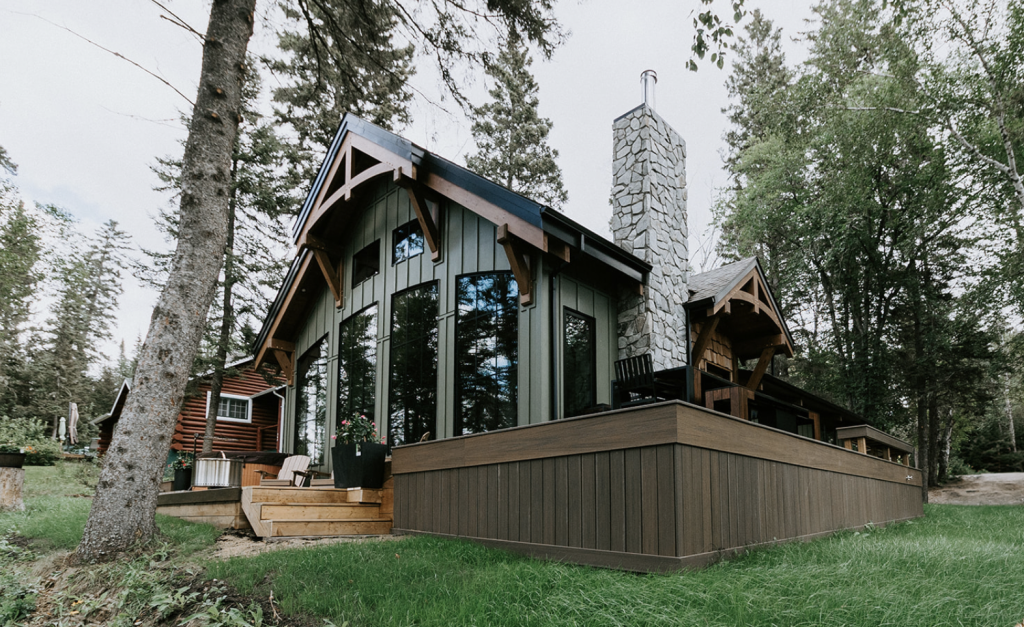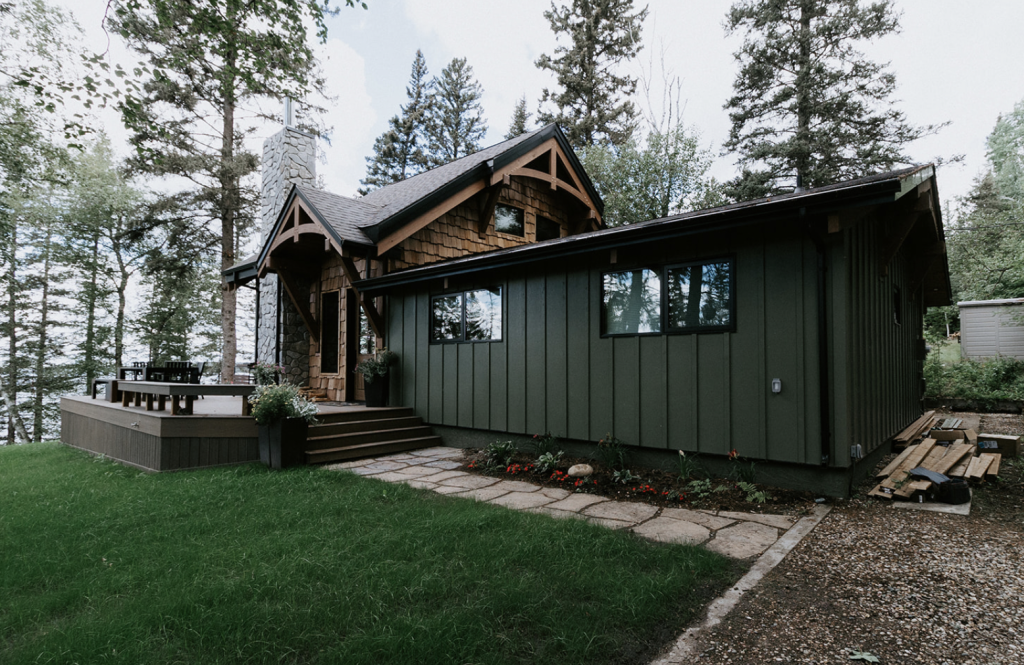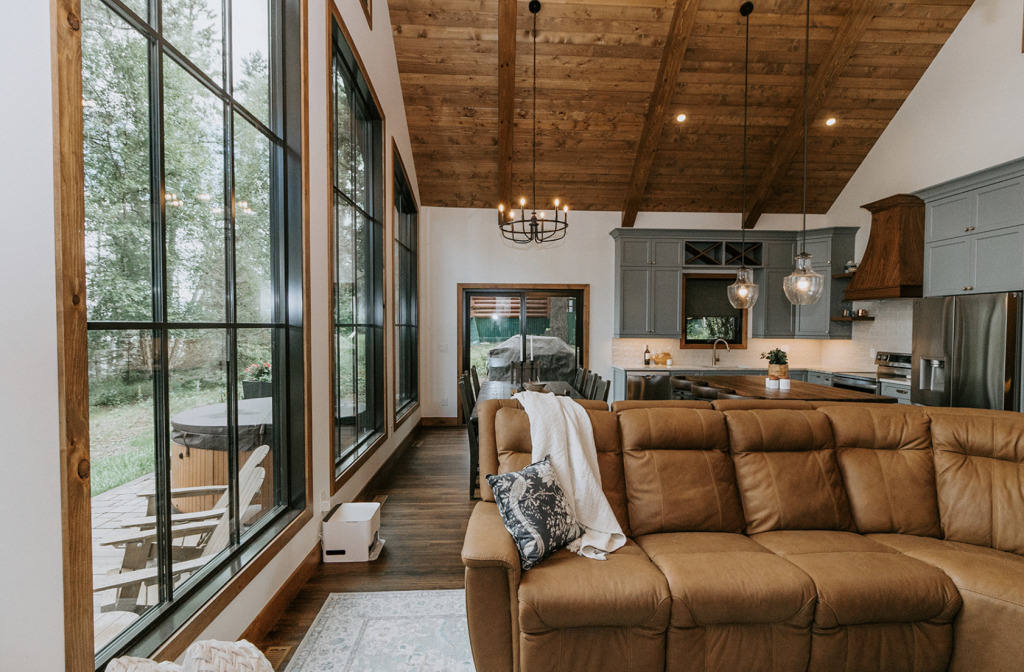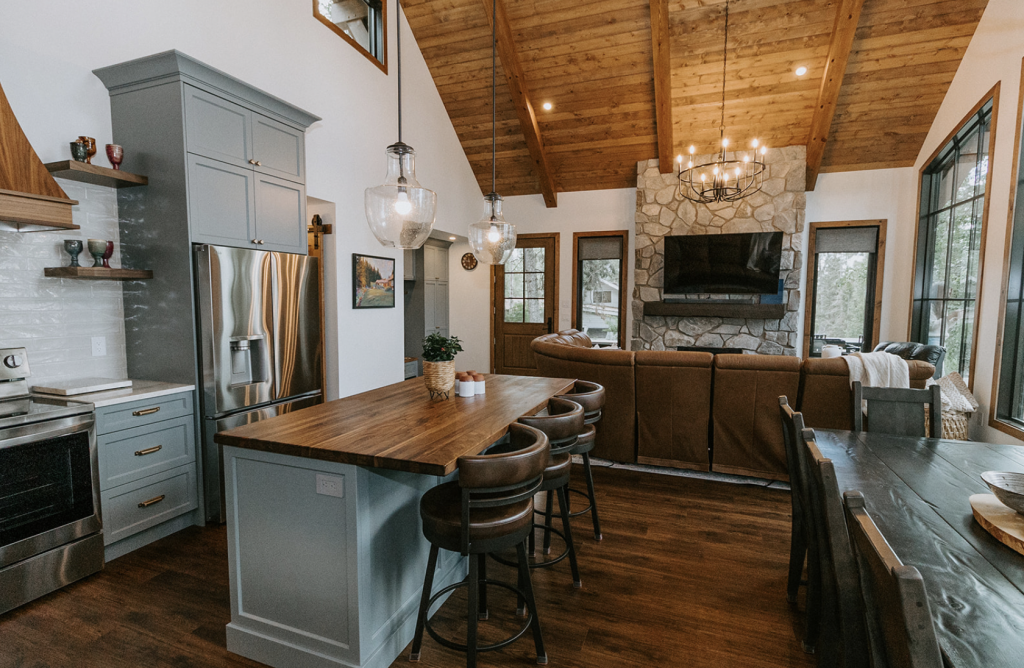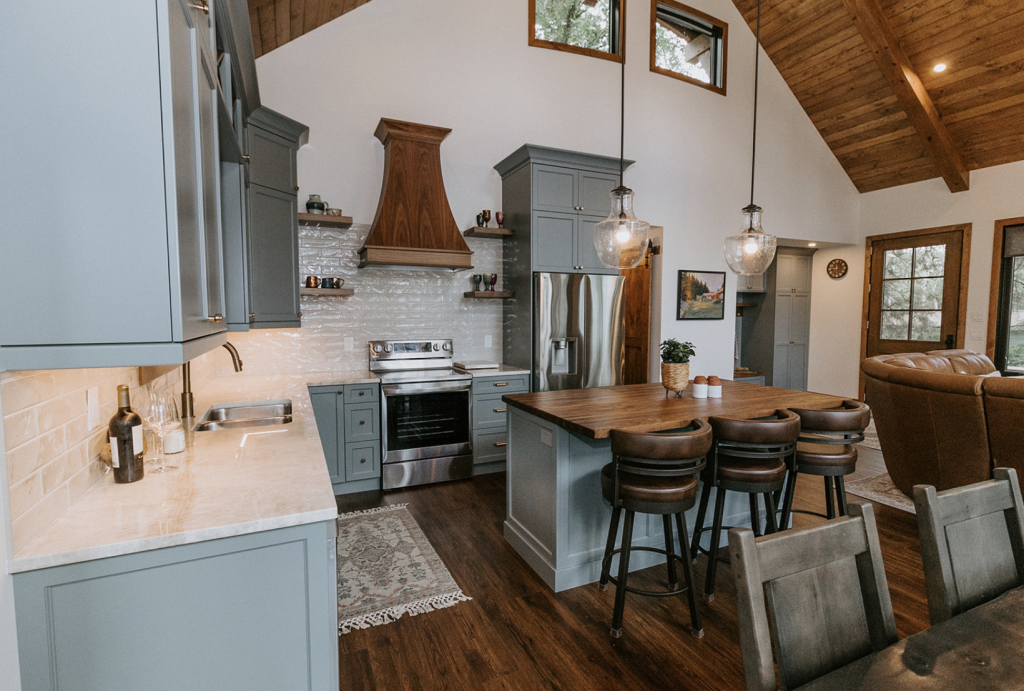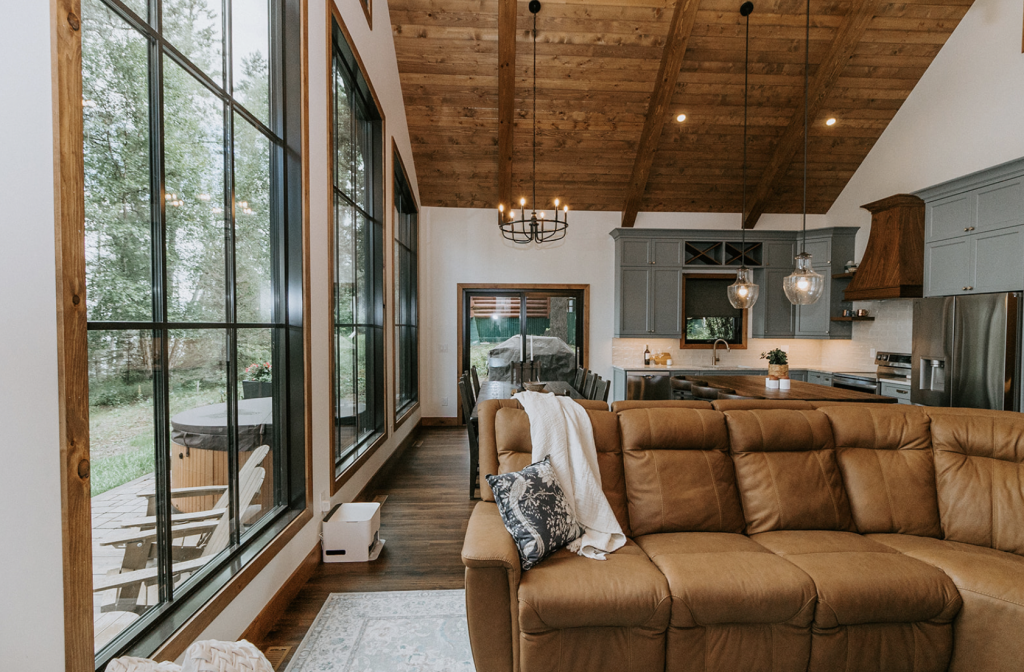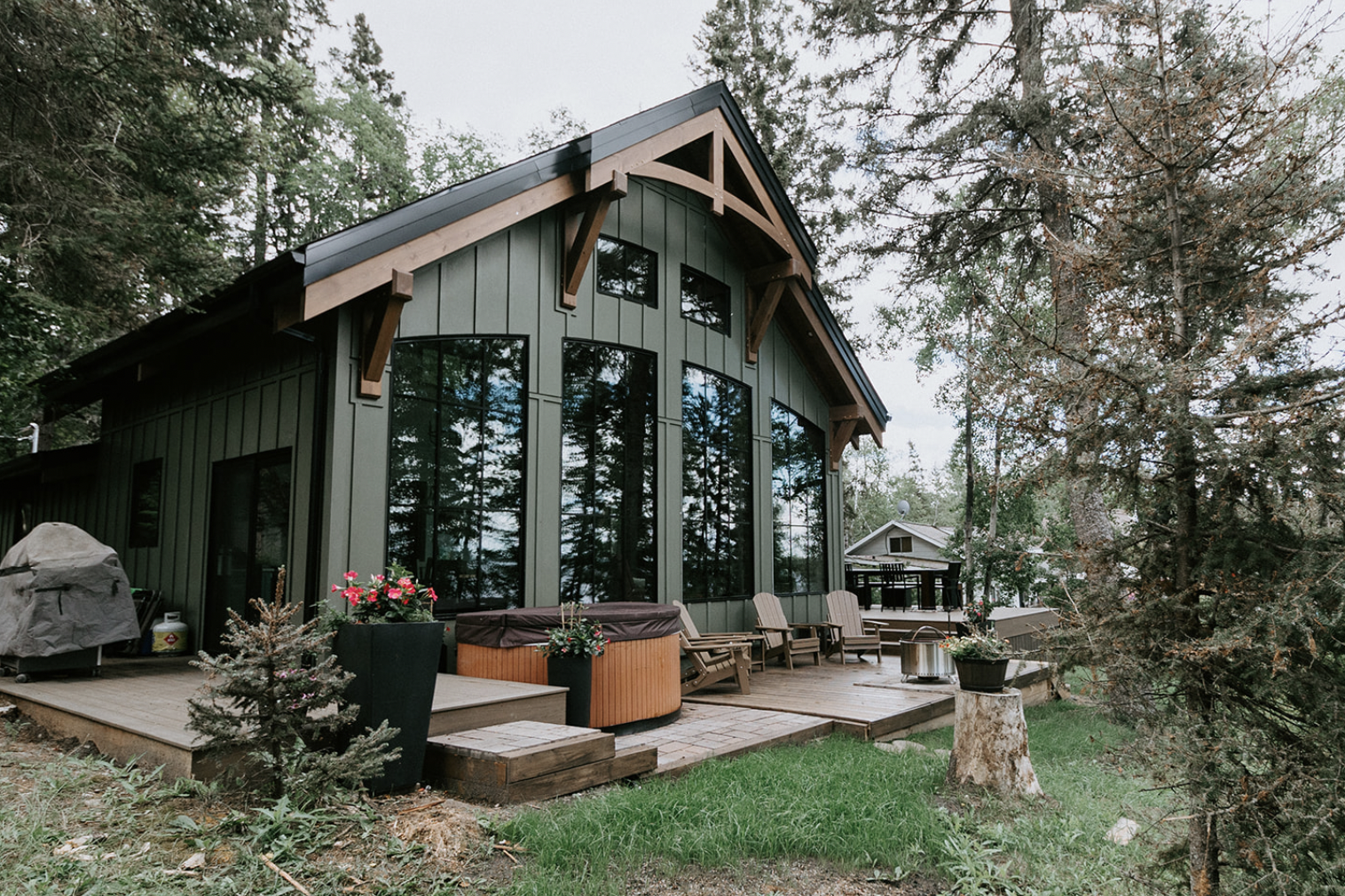
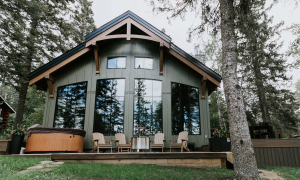
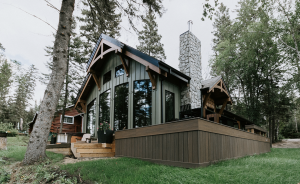
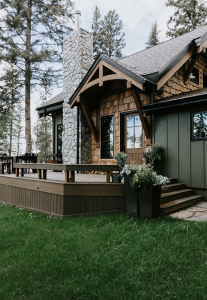
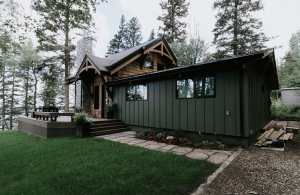
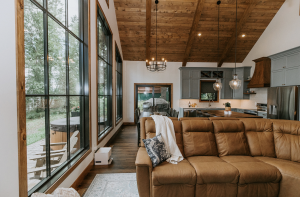
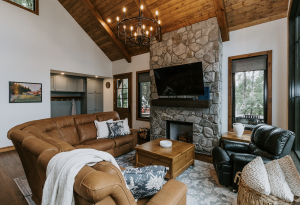
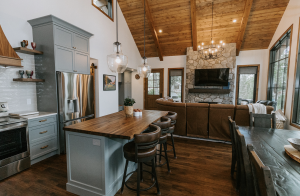
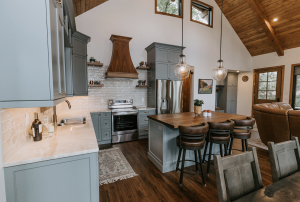
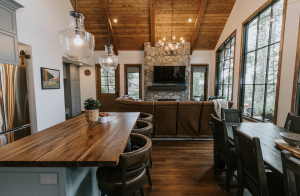
The Wasagaming cottage is located on a protected lakefront lot within Riding Mountain National Park. Development in this jurisdiction is governed by strict heritage and environmental controls. Construction is limited to redevelopment within the exact existing building footprint. Height, lot coverage, and hard surface expansion are regulated to preserve historical character and ecological balance.
These constraints impose structural and architectural limitations that directly affect:
-
Foundation geometry and load distribution
-
Maximum ridge elevation
-
Roof pitch and structural depth
-
Exterior material specification
From an engineering standpoint, footprint preservation eliminates lateral expansion options for load redistribution. Structural optimization must therefore occur vertically and within envelope thickness rather than through plan enlargement.
Material selection is curated to align with historically documented park structures. Timber detailing is encouraged, which aligns naturally with heavy timber framing systems.
Structural Planning Within a 28 ft x 48 ft Footprint
The main floor dimension of 28 ft by 48 ft accommodates four bedrooms, two bathrooms, laundry, kitchen, living room, and dining area. Achieving this program within a constrained footprint requires efficient structural grid planning.
Load-bearing strategy includes:
-
Primary longitudinal beams distributing roof and floor loads
-
Regular post spacing to minimize unsupported spans
-
Concentrated load alignment from upper roof modifications
With limited expansion potential, interior load paths must be vertically continuous to avoid introducing eccentric loading or differential settlement stress.
Foundation systems are either reinforced concrete perimeter walls or piers designed to match existing bearing zones. Where legacy foundations are replaced, bearing capacity must be verified and adjusted to meet current structural codes.
Raised Roof Structure and Volume Optimization
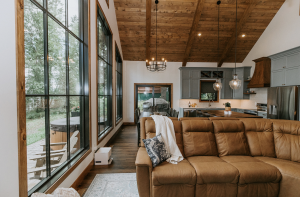
The roof over the main living area has been raised to increase interior volume while respecting height restrictions. This operation requires careful structural recalculation.
Engineering considerations include:
-
Increased bending moment in rafters
-
Revised uplift forces under wind exposure
-
Adjustment of ridge beam sizing
-
Redistribution of load into supporting posts
Raising a roof within a restricted footprint concentrates vertical loads. Ridge beam and truss connections must resist additional axial compression and lateral thrust.
The introduction of exposed timbers and a tongue and groove ceiling adds dead load to the roof assembly. Dead load calculations account for wood density, moisture content, and long-term creep behavior.
Proper ventilation above the T&G ceiling is essential. A ventilated roof cavity mitigates condensation risk and preserves timber integrity in a region subject to freeze-thaw cycles.
King Post Trusses in 9/12 Gable Geometry
The 9/12 gable roof pitch generates significant vertical rise within limited horizontal span. King post trusses are employed to manage load efficiently while maintaining architectural clarity.
Structural functions of the king post truss include:
-
Transfer of compressive forces from rafters to tie beam
-
Reduction of mid-span deflection
-
Stabilization of gable end under wind pressure
The tie beam counters outward thrust generated by roof pitch. The king post carries vertical tension forces from ridge intersection.
Connection detailing must resist cyclic loading from wind and snow accumulation. Mortise and tenon joinery or concealed steel connectors are selected based on required shear capacity and long-term durability.
Snow load calculations are critical in this region. A 9/12 pitch promotes snow shedding but valley intersections and overhang transitions must still account for potential drift accumulation.
Entry Canopy Within Dimensional Limits
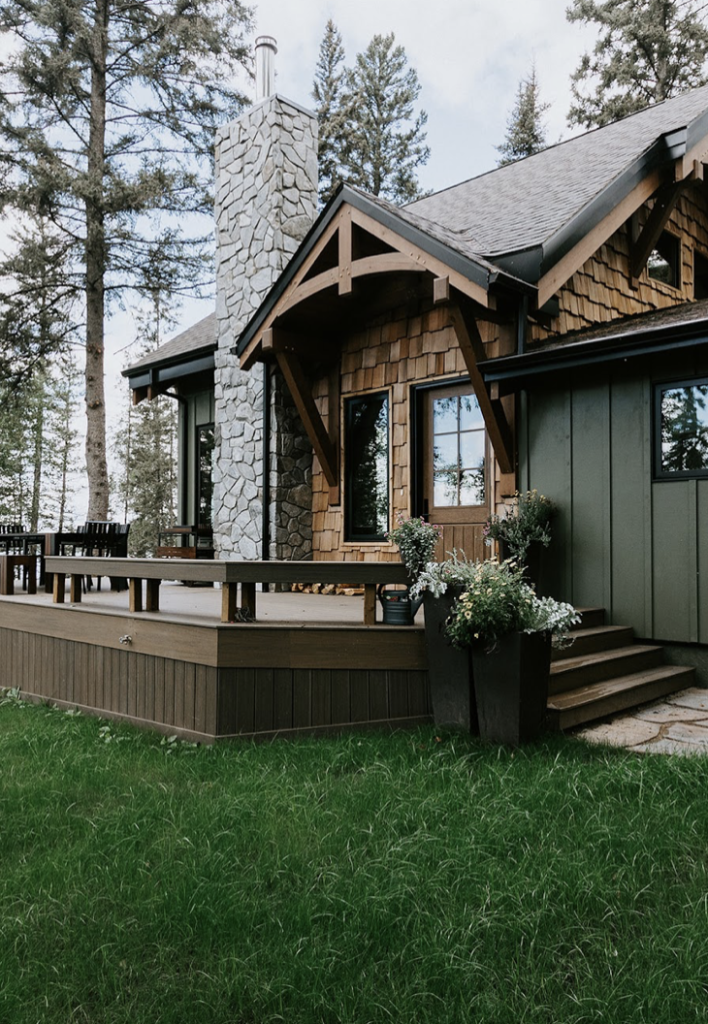
A 10 ft by 4 ft entry canopy is integrated into the structure while remaining compliant with park-imposed coverage rules. Because footprint expansion is restricted, canopy projection must not violate hard surface limitations.
Large timber brackets support the canopy, converting cantilever bending into compressive force through angled geometry. This triangular load transfer system reduces deflection and mitigates long-term creep deformation.
Engineering controls include:
-
Uplift-resistant fasteners
-
Corrosion-resistant connectors suitable for humid lake environments
-
Flashing integration at wall interfaces
The canopy protects the primary entrance from wind-driven rain and snow accumulation, extending envelope durability.
Exterior Materials and Environmental Performance
White cedar shakes are used at the entry and west gable. Cedar provides natural decay resistance due to inherent extractives and low density. However, durability depends on proper installation.
Best practices include:
-
Back-ventilated rainscreen cavity
-
Stainless or hot-dip galvanized fasteners
-
End grain sealing
-
Controlled exposure at horizontal transitions
West-facing surfaces experience increased UV exposure and reflected solar radiation from the lake. UV degradation accelerates surface weathering. Proper finish selection balances vapor permeability and moisture shedding.
Structural Integrity Under Environmental Cycling
The Wasagaming cottage operates within a national park environment characterized by:
-
Freeze-thaw cycling
-
Elevated humidity near shoreline
-
Snow load and wind exposure
-
Seasonal temperature variation
Heavy timber framing accommodates dimensional change more predictably than light framing due to mass and structural redundancy. However, creep deformation under sustained load remains a design consideration.
Continuous load paths from roof diaphragm through king post trusses into primary posts and foundation ensure structural integrity despite regulatory constraints.
Engineering Summary
The Wasagaming project demonstrates that strict regulatory frameworks do not limit structural performance. Instead, they require precise engineering within fixed parameters.
By optimizing vertical volume, employing king post trusses within 9/12 gable geometry, and integrating brace-supported canopy systems, the design achieves:
-
Structural coherence within unchanged footprint
-
Compliance with height and coverage limits
-
Environmental durability under lake climate exposure
-
Architectural continuity aligned with park heritage standards
This redevelopment exemplifies how heavy timber engineering can adapt to heritage regulations while preserving structural logic, load path clarity, and long-term durability.