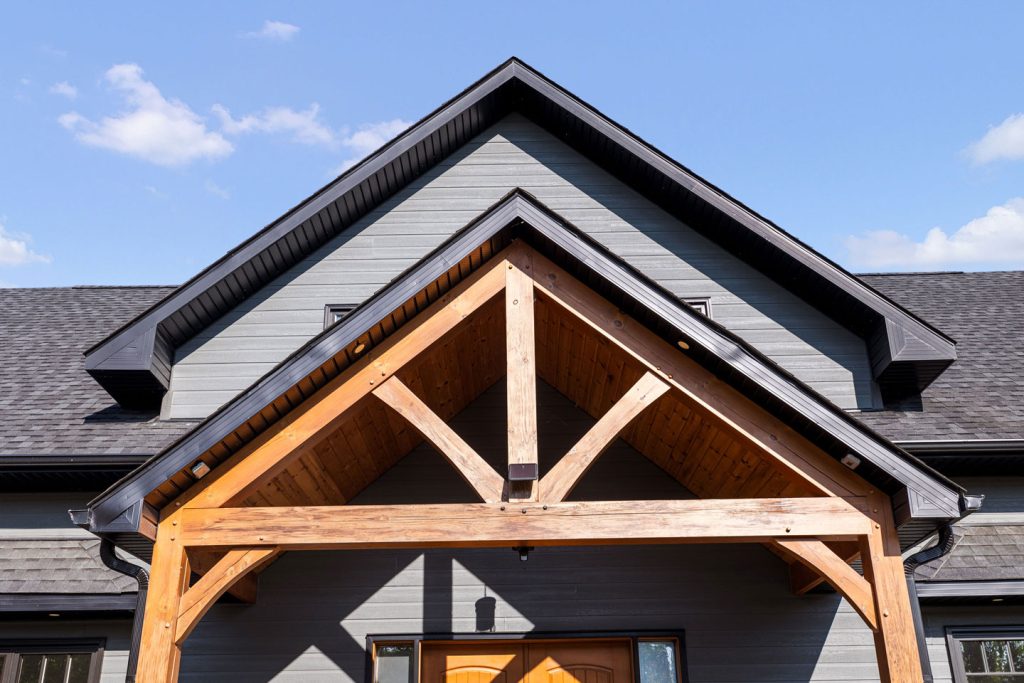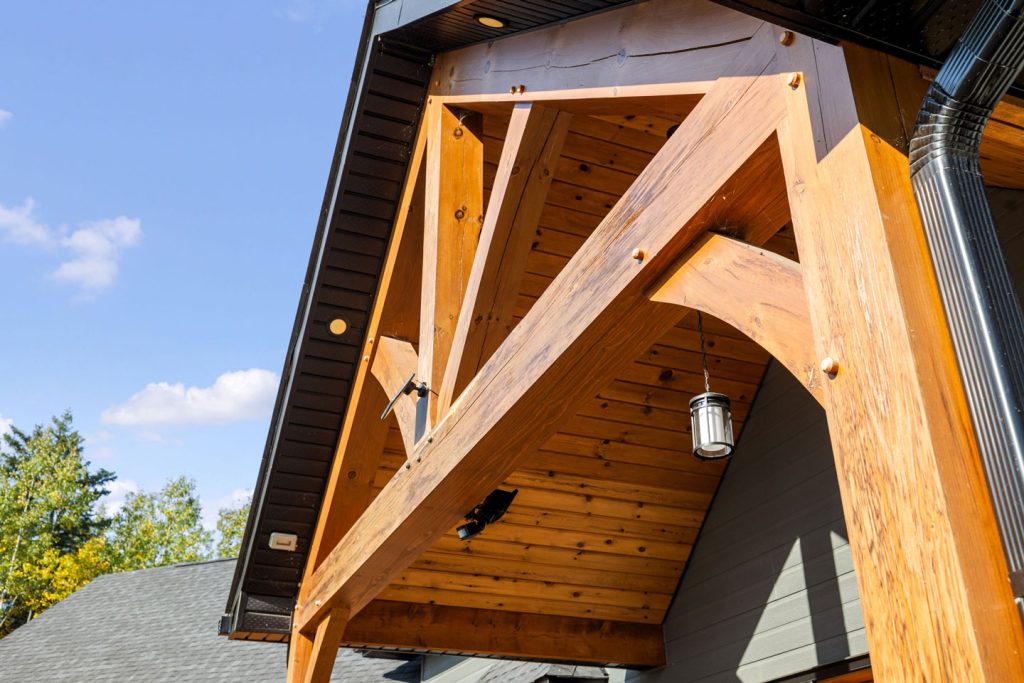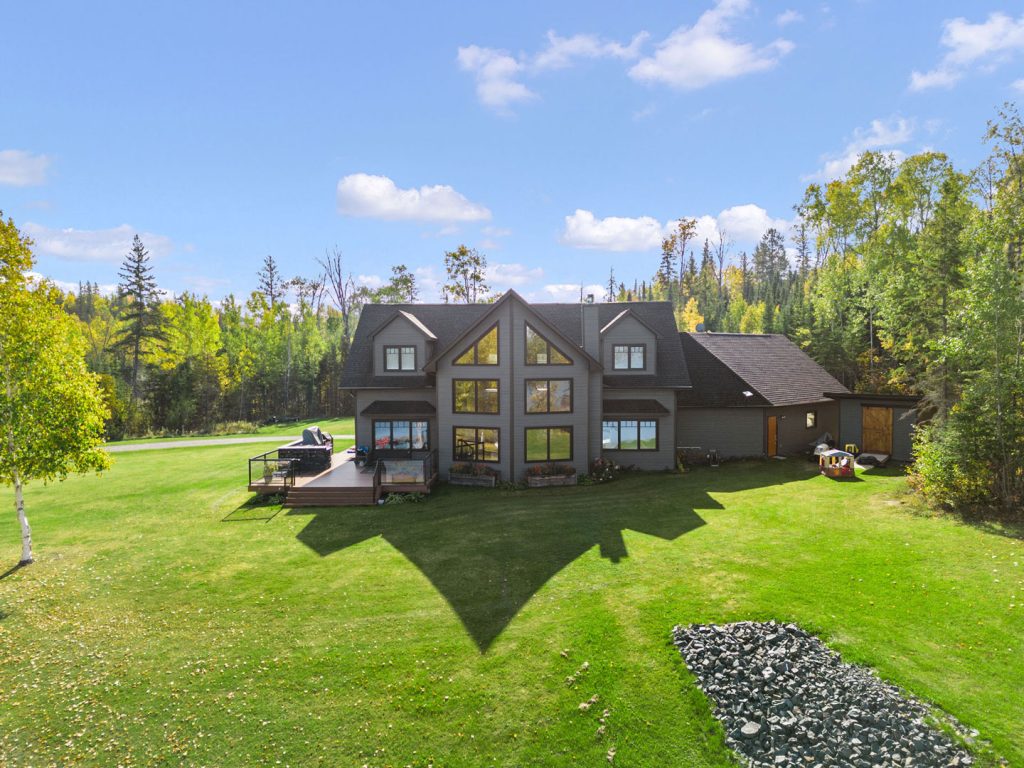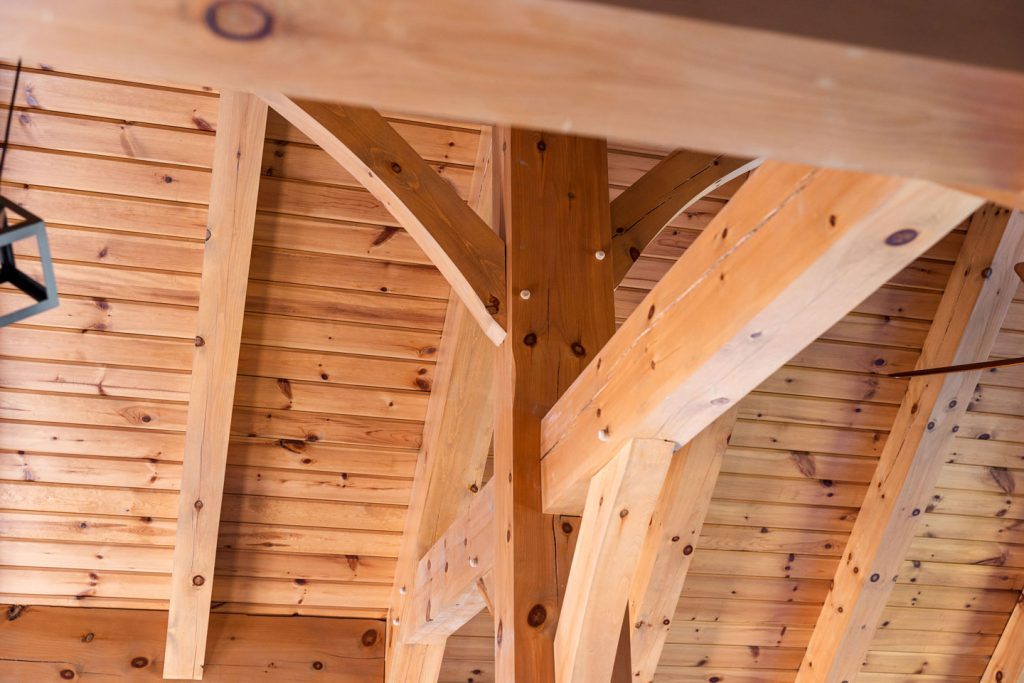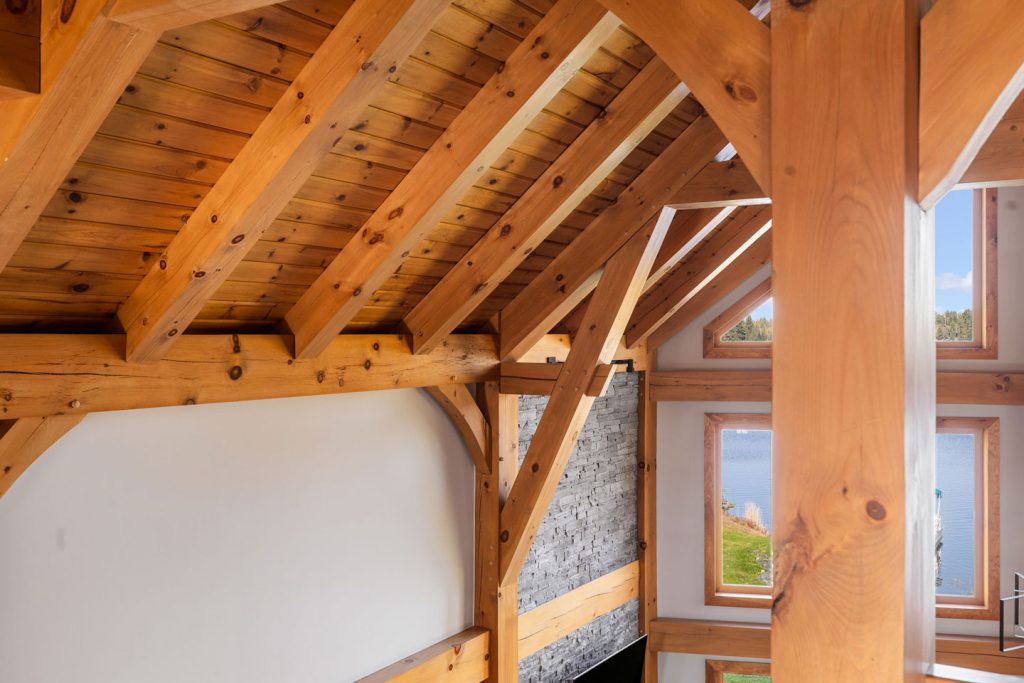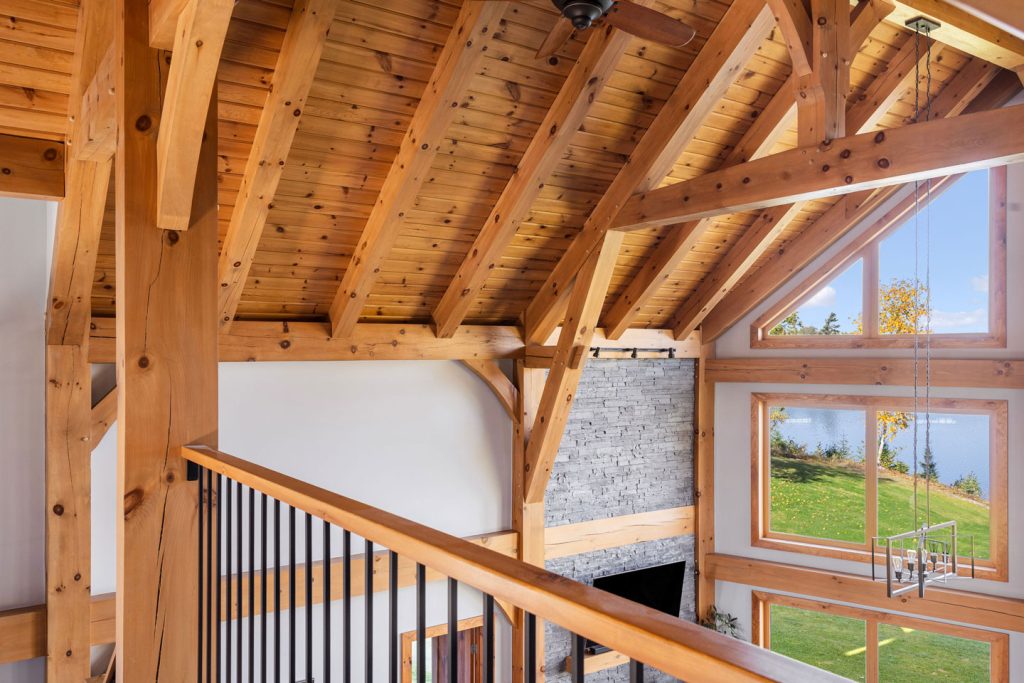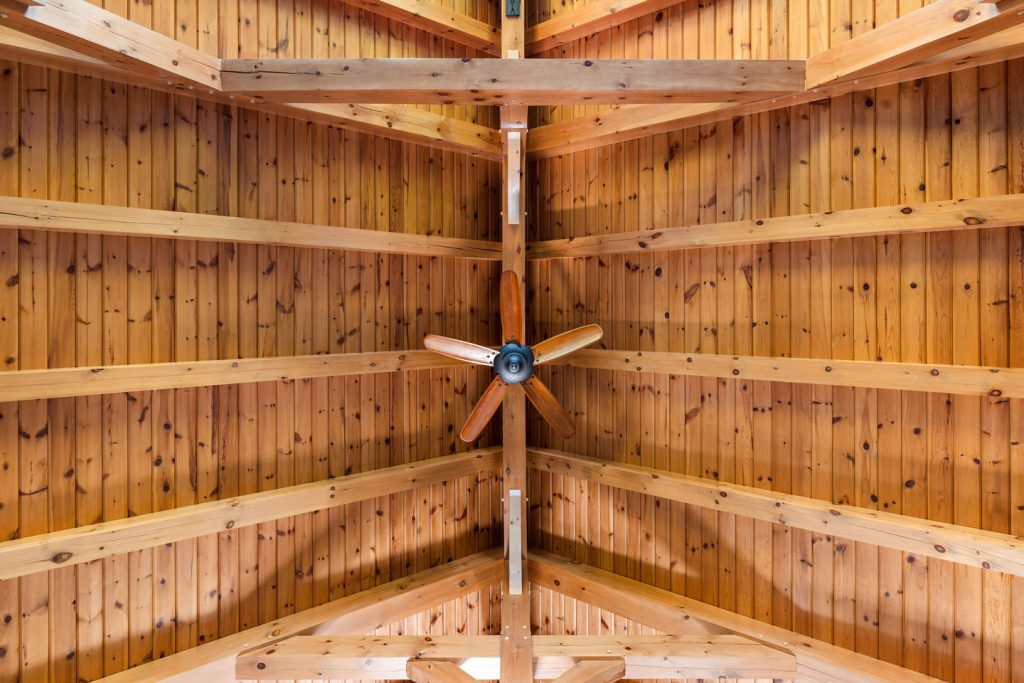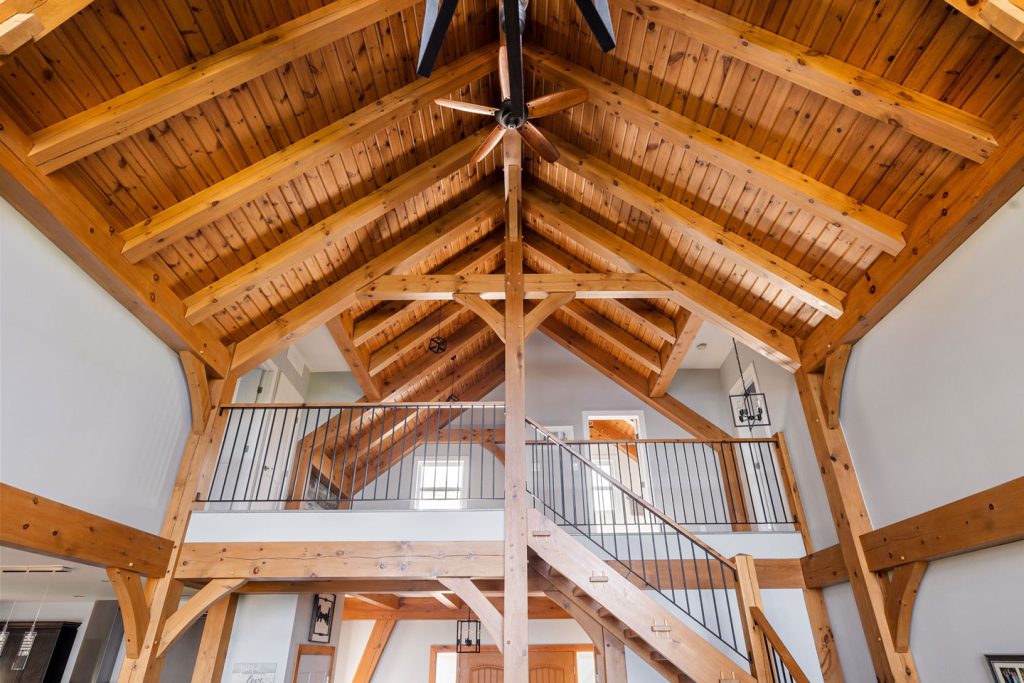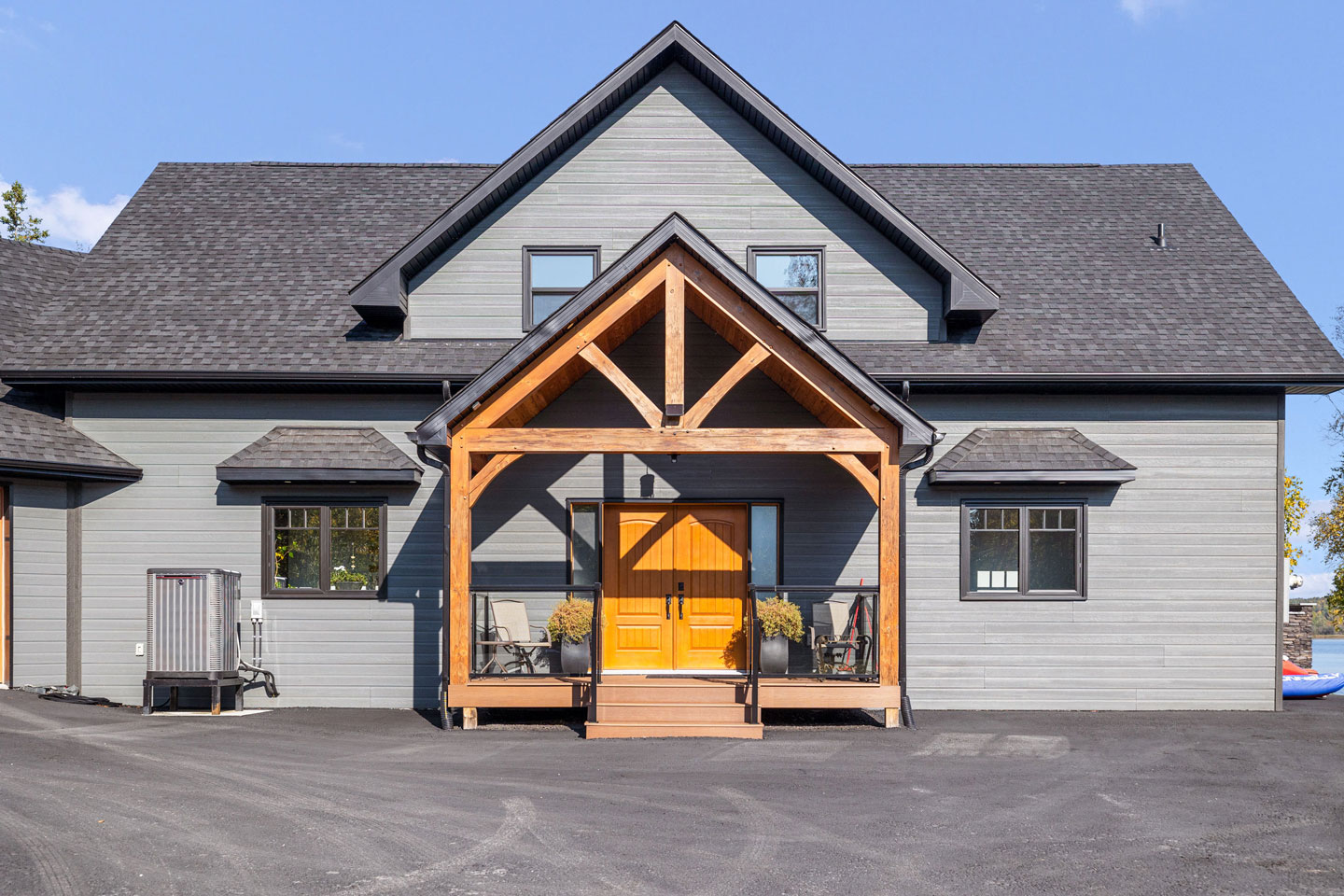
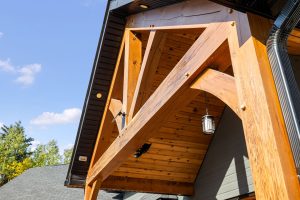
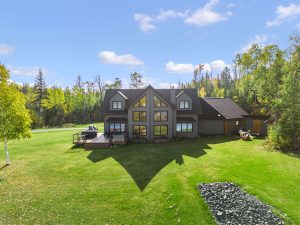
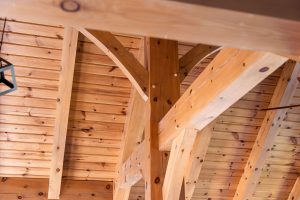
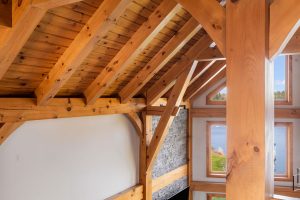
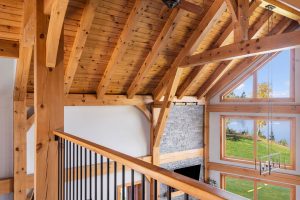
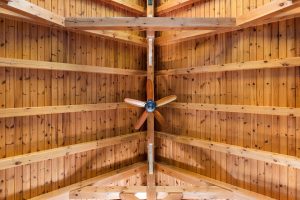
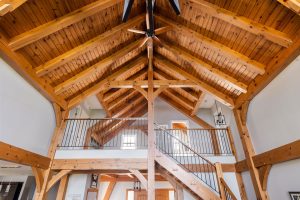
The Glen is a year-round lake residence designed as a hybrid structural system. The central living volume is engineered as a heavy timber frame, while the flanking bedroom wings utilize conventional wood framing. This hybrid strategy optimizes structural efficiency, cost control, and spatial performance without compromising load path clarity.
The design allows timber to perform where long-span structural demand is highest, while conventionally framed assemblies manage repetitive room layouts in secondary zones.
This approach reflects disciplined structural zoning rather than aesthetic blending.
Hybrid Structural Strategy: Timber Core with Framed Wings
The central timber frame living area carries the primary roof loads and defines the architectural volume. The bedroom wings are conventionally framed but remain structurally integrated through aligned floor and roof diaphragms.
Engineering advantages of the hybrid system include:
-
Concentration of heavy timber where span and volume demand structural depth
-
Reduced material redundancy in private wings
-
Efficient mechanical routing in conventionally framed walls
-
Controlled cost without sacrificing long-span performance
Continuous load paths are maintained between timber core and framed wings. Structural interfaces are detailed to prevent differential settlement or movement under seasonal moisture variation.
Great Room Span: Raised Chord Truss Engineering
The 21 ft wide great room is spanned by a raised chord truss that carries the roof ridge beam across a 24 ft distance from lakeside prow to loft edge.
Raised chord trusses modify bottom chord geometry to increase interior ceiling height while maintaining thrust resistance. Structurally, the system performs as follows:
-
Rafters carry compressive roof loads
-
The raised chord redistributes axial forces
-
Vertical and diagonal members stabilize geometry
-
Ridge beam loads transfer into truss assembly
The 24 ft ridge beam span introduces bending stress and potential deflection risk. Beam sizing is based on regional snow load, dead load from roof assembly, and long-term creep deformation factors.
Because lakefront exposure increases wind uplift, connection detailing must resist both compression and tension forces. Concealed steel plates or engineered joinery are specified according to calculated shear values.
Vertical Volume and Roof Geometry
The structure features 16 ft sidewall height combined with a 10/12 roof pitch. This geometry creates substantial vertical volume while promoting snow shedding efficiency.
Engineering implications include:
-
Increased lateral force exposure on tall wall assemblies
-
Buckling considerations in vertical posts
-
Roof thrust management through truss system
-
Enhanced loft usability through increased headroom
A 10/12 pitch reduces prolonged snow retention compared to lower slopes. However, drift accumulation at transitions must still be evaluated.
Lateral stability is achieved through diaphragm action at roof and floor levels. Shear transfer into foundation anchorage maintains resistance to wind loads amplified by open-water fetch.
Loft and Upper Wing Integration
The loft space sits above the central living area, benefiting from the raised chord truss geometry and ridge beam support.
Structural performance considerations include:
-
Live load design for sleeping and circulation areas
-
Guardrail anchorage strength
-
Vibration control in elevated walkways
Unhindered access to upper bedroom wings requires consistent structural elevation alignment. Floor diaphragm continuity prevents differential movement between core and wings.
Timber elements remain visible within loft spaces, reinforcing structural transparency while performing load-bearing roles.
Timber Accents in Bedroom Wings
While bedroom wings utilize conventional framing, timber accents are integrated intentionally. These elements are either structural in localized spans or non-structural but aligned with structural axes to preserve coherence.
Integration strategies include:
-
Post alignment with load-bearing walls
-
Beam overlays that do not compromise framing load paths
-
Moisture isolation between heavy timber and light framing assemblies
Seasonal moisture cycling affects heavy timber differently than kiln-dried stud framing. Joint detailing allows controlled movement to prevent cracking or stress transfer.
Year-Round Performance and Environmental Durability
As a full-time residence, The Glen must maintain performance across seasonal extremes including:
-
Snow load accumulation
-
Freeze-thaw cycling
-
Elevated lake humidity
-
Wind uplift
Durability measures include:
-
Ventilated roof cavity for condensation control
-
Continuous air barrier at timber-to-frame transitions
-
Flashing at all beam penetrations
-
Corrosion-resistant connectors
Creep deformation in the raised chord truss and ridge beam is accounted for in structural calculations to maintain long-term serviceability.
Foundation systems are designed to resist frost heave and soil moisture fluctuation.
Structural Summary
The Glen demonstrates disciplined hybrid timber engineering.
Key structural attributes include:
-
Central heavy timber core for long-span performance
-
Raised chord truss spanning 21 ft width
-
24 ft ridge beam supported by engineered truss assembly
-
16 ft wall height and 10/12 pitch optimized for loft volume and snow shedding
-
Integrated conventional wings maintaining continuous load paths
This is not a stylistic hybrid but a structural strategy. Timber is deployed where structural demand requires span efficiency and visual clarity. Conventional framing supports functional zoning.
The result is a year-round lake residence engineered for durability, load management, and long-term performance in a cold-climate waterfront environment.