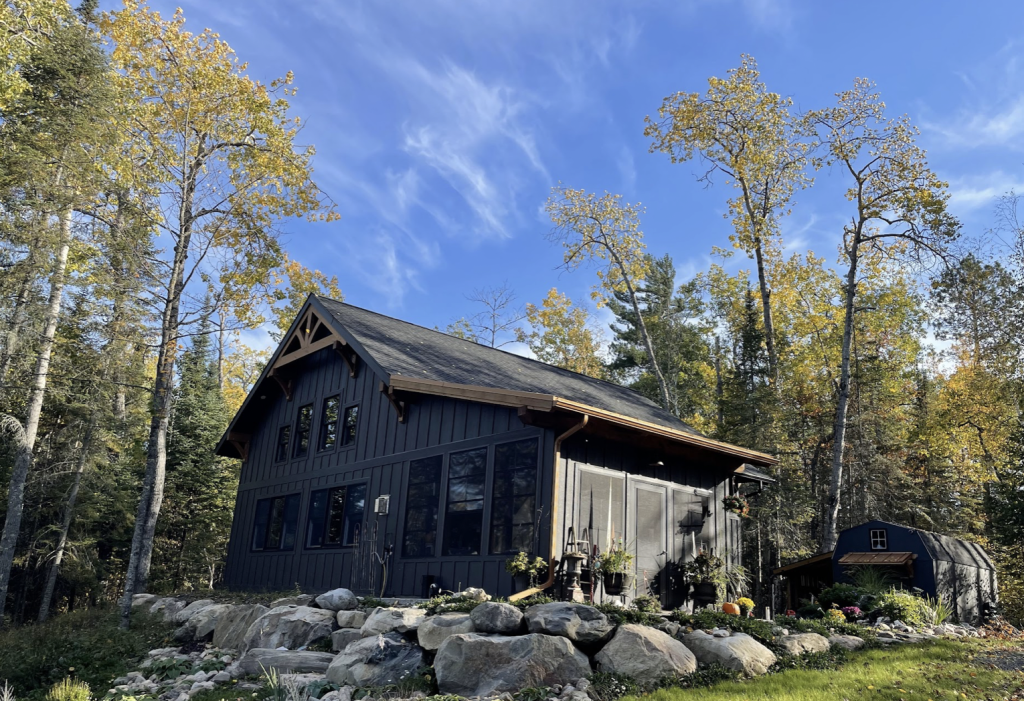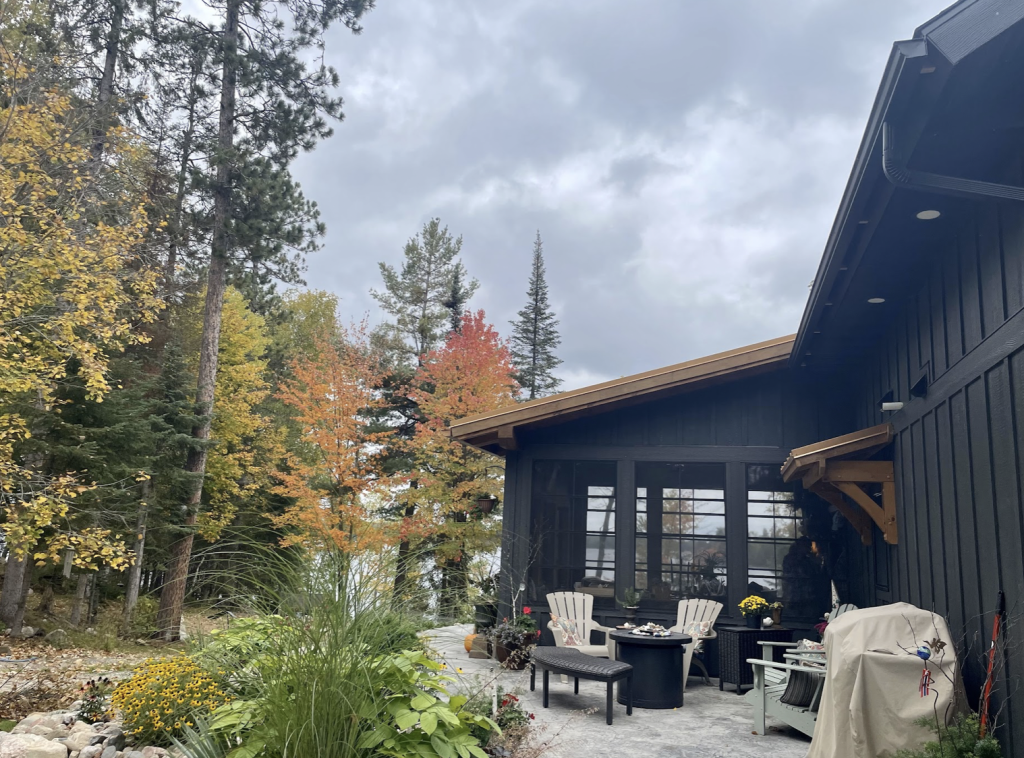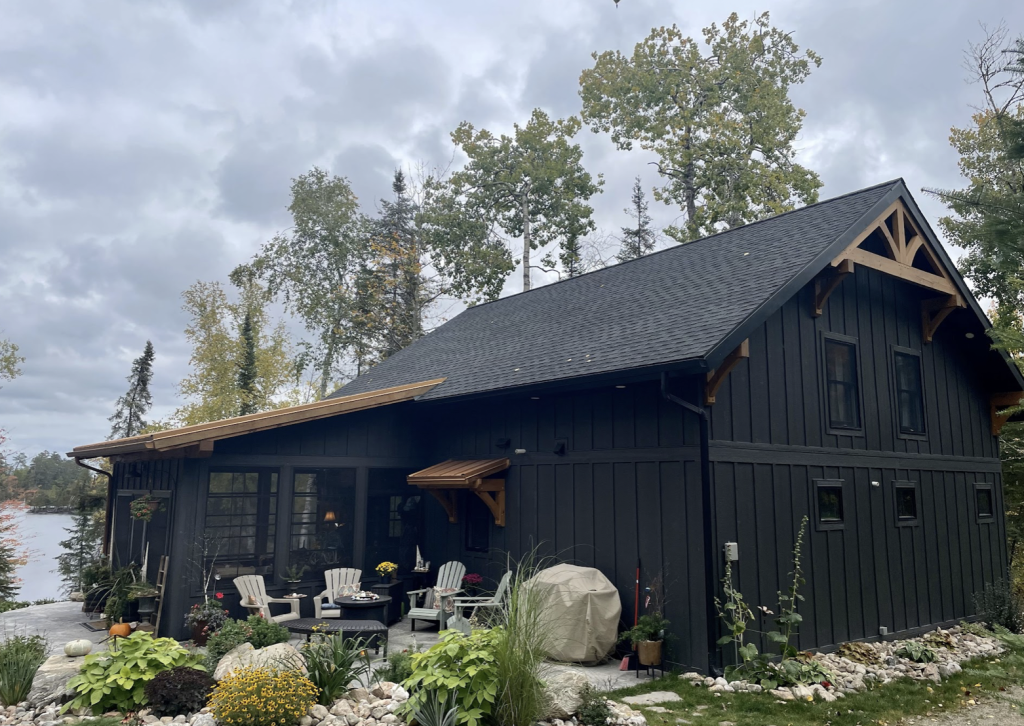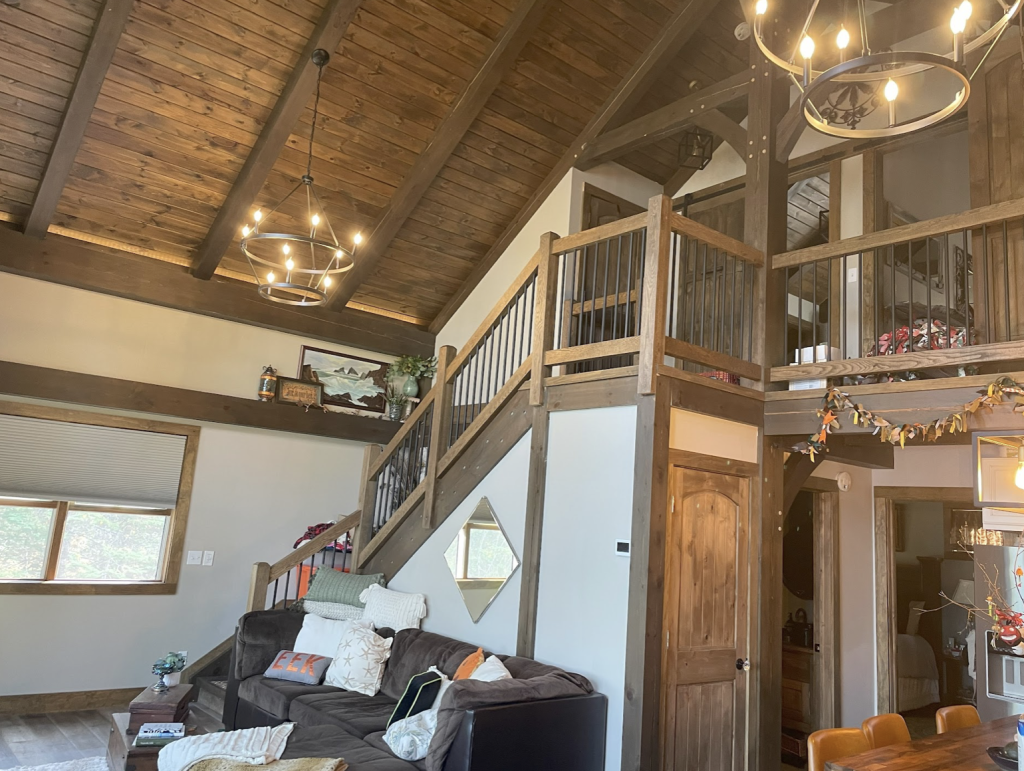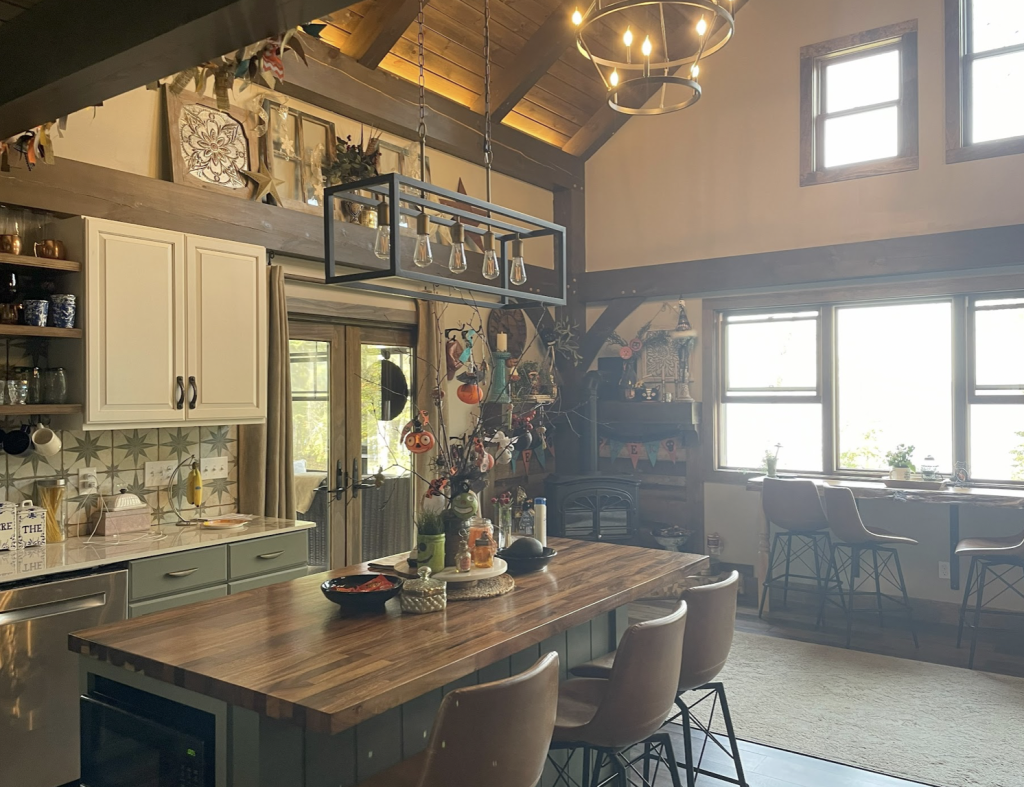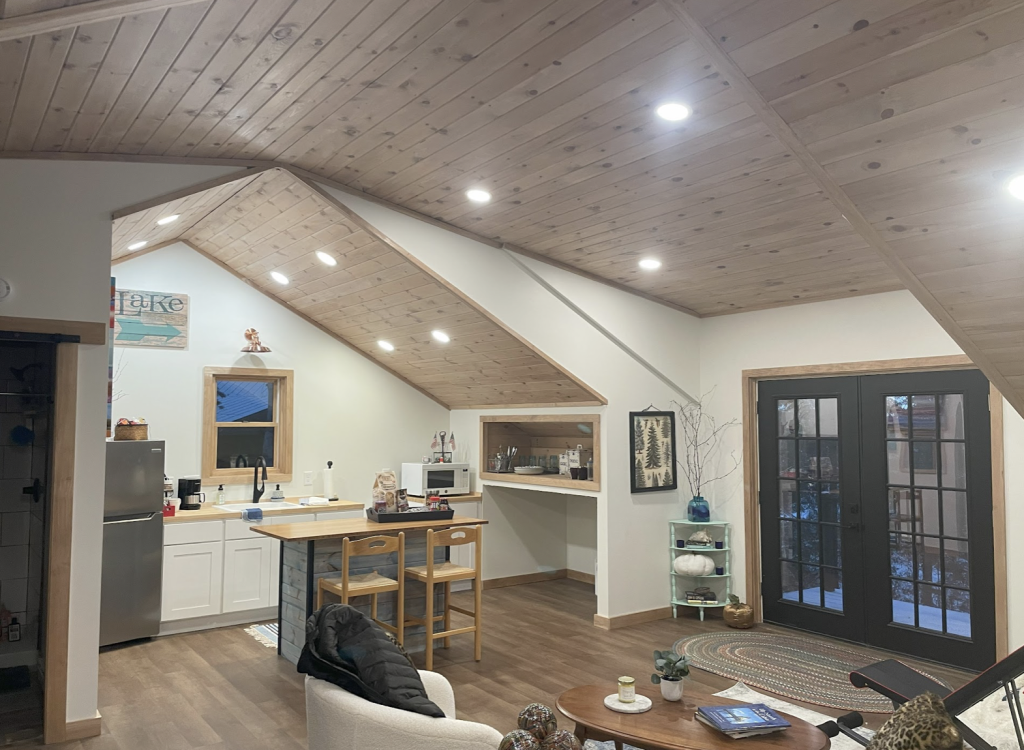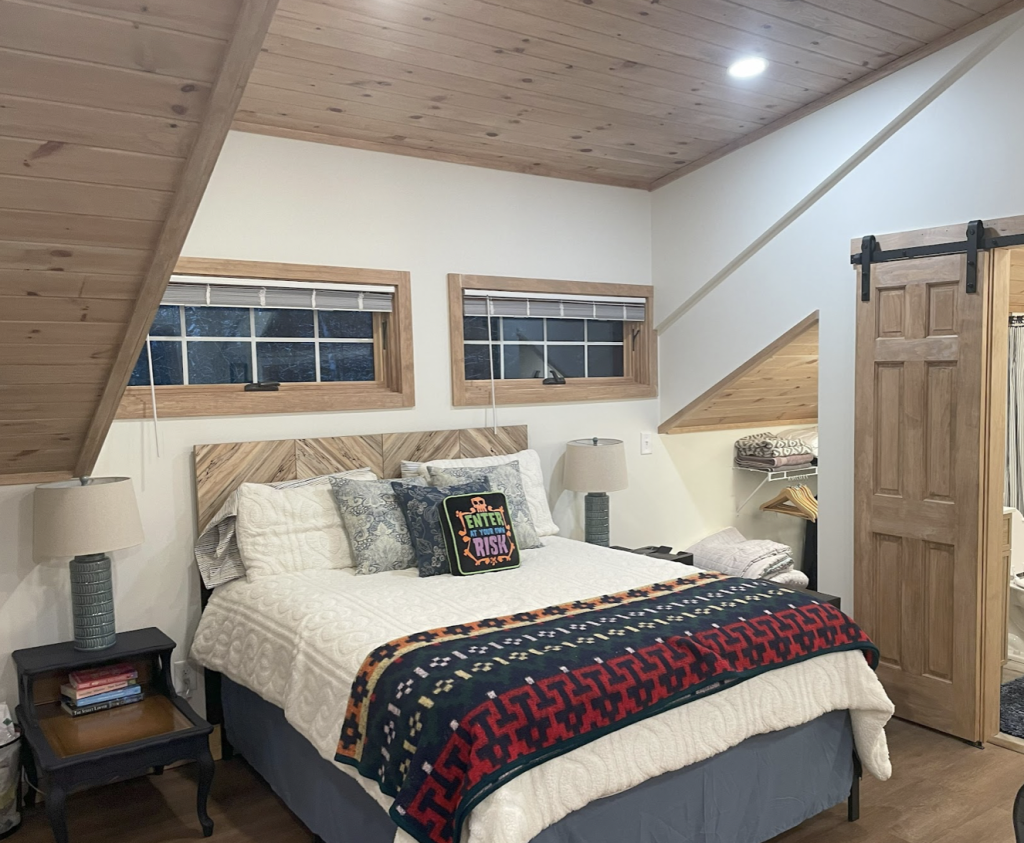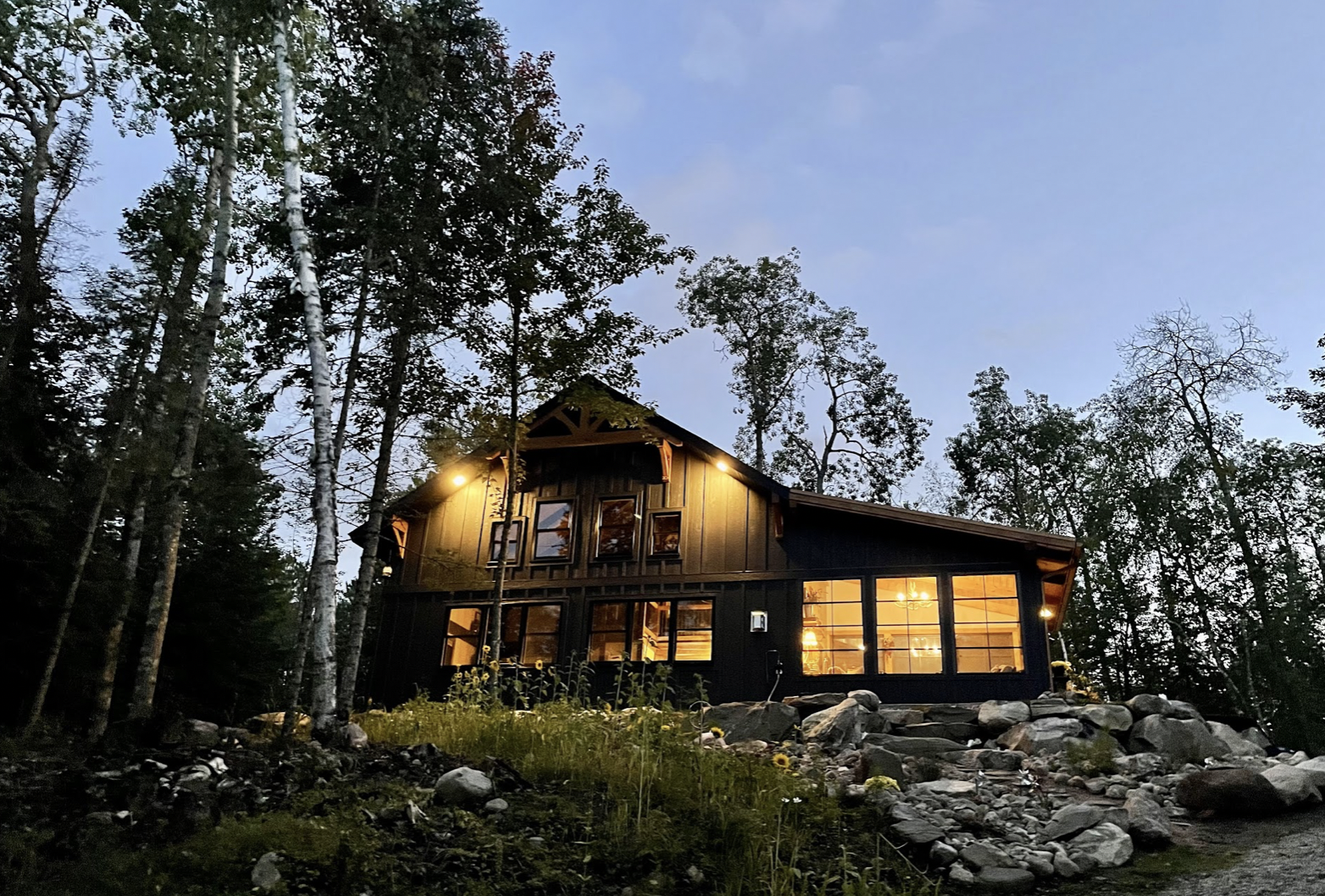
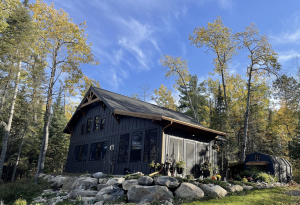
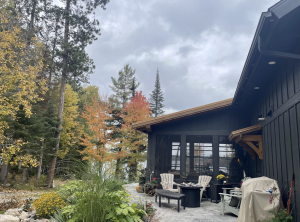
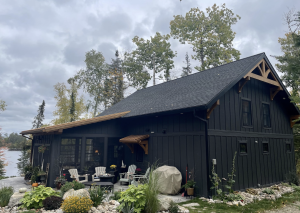
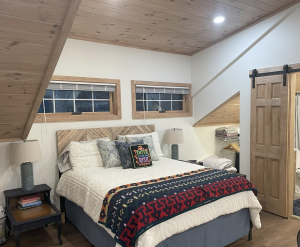
The Kabetogama lake residence is engineered as a compact 28 ft x 34 ft timber frame structure designed for efficient load distribution, functional zoning, and long-term durability in a waterfront climate. The program accommodates a main-floor owner’s suite, two bathrooms, kitchen, dining, and living area within a constrained footprint, while a loft level increases usable square footage without expanding foundation area.
Compact lakefront construction requires structural optimization rather than footprint expansion. The building’s geometry supports clear load paths, vertical stacking of services, and efficient envelope performance.
Foundation and Primary Structural Grid
A 28 ft x 34 ft plan dimension enables rational timber grid spacing. Primary beams span along the longer axis, transferring roof and loft loads into aligned posts and down to foundation supports.
Key structural principles include:
-
Direct vertical load transfer from ridge to foundation
-
Reduced eccentric loading through stacked framing members
-
Beam sizing calibrated to span length and snow load
-
Control of creep deformation in heavy timber
Lakefront climates introduce freeze-thaw cycling and elevated humidity. Foundation systems must resist moisture intrusion and seasonal ground movement. Proper drainage, capillary breaks, and perimeter insulation protect structural performance.
Main Floor Structural Configuration
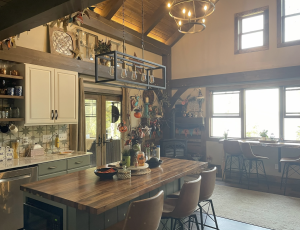
The main floor integrates living functions within a continuous structural volume. The owner’s suite, kitchen, dining, and living areas are arranged to maintain uninterrupted load transfer.
Engineering considerations include:
-
Concentrated loads at bathroom plumbing clusters
-
Localized reinforcement beneath kitchen appliance zones
-
Floor system stiffness to prevent perceptible vibration
Timber framing supports roof loads while minimizing interior bearing walls. This maintains spatial openness while preserving structural integrity.
Mechanical systems are routed to avoid excessive penetrations through primary beams. Any required penetrations are reinforced to preserve section modulus and shear capacity.
Loft Integration and Vertical Load Transfer
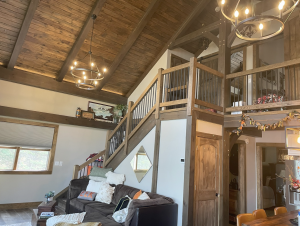
The loft positioned above the lower suite and kitchen introduces secondary floor loading within the same footprint. Structural continuity between main floor beams and loft supports is critical.
Design factors include:
-
Live load calculations for sleeping areas
-
Guardrail anchorage strength at loft perimeter
-
Deflection limits for occupant comfort
The loft floor diaphragm contributes to lateral stiffness. Proper connection detailing between loft joists and primary beams ensures shear transfer and limits differential movement.
Roof framing above the loft must account for combined dead load from ceiling finishes and potential snow accumulation.
Screen Room as Environmental Buffer
The 14 ft x 14 ft screen room functions as both entry porch and insect barrier. Structurally, it operates as a transitional envelope element.
Key engineering considerations:
-
Wind load on screened surfaces
-
Uplift resistance for roof projection
-
Moisture drainage at deck interface
Although screened walls reduce solid wind pressure, framing must still resist lateral forces and torsion under gust conditions.
Screen rooms in lake environments experience high humidity and insect exposure. Timber protection strategies include:
-
Elevated framing clearance from grade
-
Drainage slope away from threshold
-
Corrosion-resistant connectors
The screen room also acts as a thermal buffer, reducing direct infiltration of humid summer air into the conditioned interior.
Garage and Accessory Studio Apartment
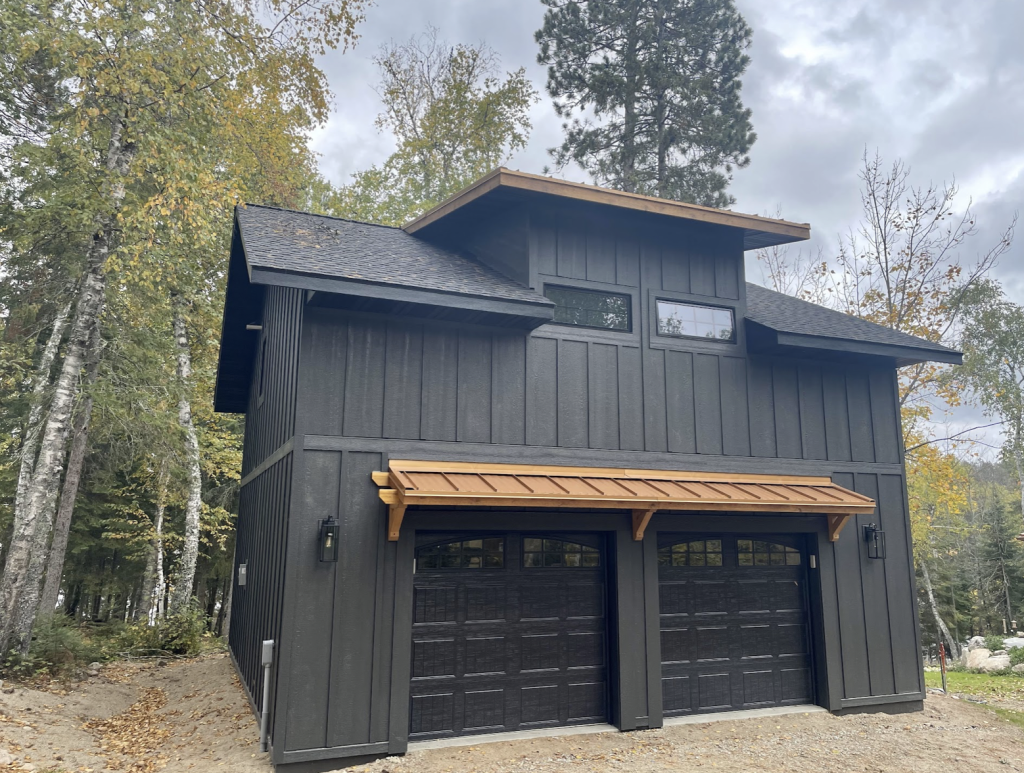
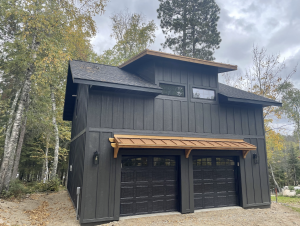
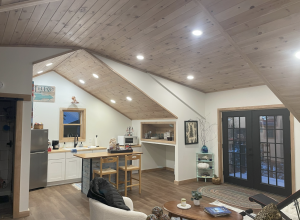
The detached or semi-detached garage and workshop include a fully equipped studio apartment above. This introduces mixed-use load profiles and increased structural complexity.
Engineering aspects include:
-
Vehicle load rating for garage slab
-
Vibration isolation between workshop and living space
-
Fire separation between garage and studio apartment
-
Independent load path for upper-level occupancy
The upper studio introduces residential live load above a potentially open-span garage bay. Beam and column sizing must account for concentrated load over vehicle openings.
For short-term rental adaptability, acoustic separation and independent mechanical zoning improve occupant comfort.
Moisture management in the garage level is essential to prevent vapor migration upward into the living unit. Air sealing and vapor control layers must remain continuous at floor assembly transitions.
Environmental Performance and Durability
The Kabetogama residence operates in a lake-adjacent climate characterized by:
-
Snow load accumulation
-
Wind exposure
-
Elevated seasonal humidity
-
Freeze-thaw cycling
Timber framing accommodates dimensional change due to moisture variation. However, creep deformation under sustained roof and loft load is accounted for during structural sizing.
Roof assemblies must provide continuous ventilation to prevent condensation above insulation layers. Overhangs protect siding and reduce precipitation impact at wall surfaces.
Screen room and garage connections must maintain flashing continuity to prevent water intrusion at structural interfaces.
Structural Summary
The Kabetogama project illustrates how a compact timber frame home can achieve spatial flexibility without compromising structural integrity.
Within a 28 ft x 34 ft footprint, the design accomplishes:
-
Efficient vertical load stacking
-
Loft integration without additional foundation area
-
Environmental buffering through a screened entry volume
-
Accessory dwelling above a structurally rated garage
Continuous load paths, moisture management detailing, and careful span optimization ensure long-term performance in a demanding waterfront setting.
The result is a durable, adaptable lake residence where structural logic supports both daily family use and extended guest accommodation.