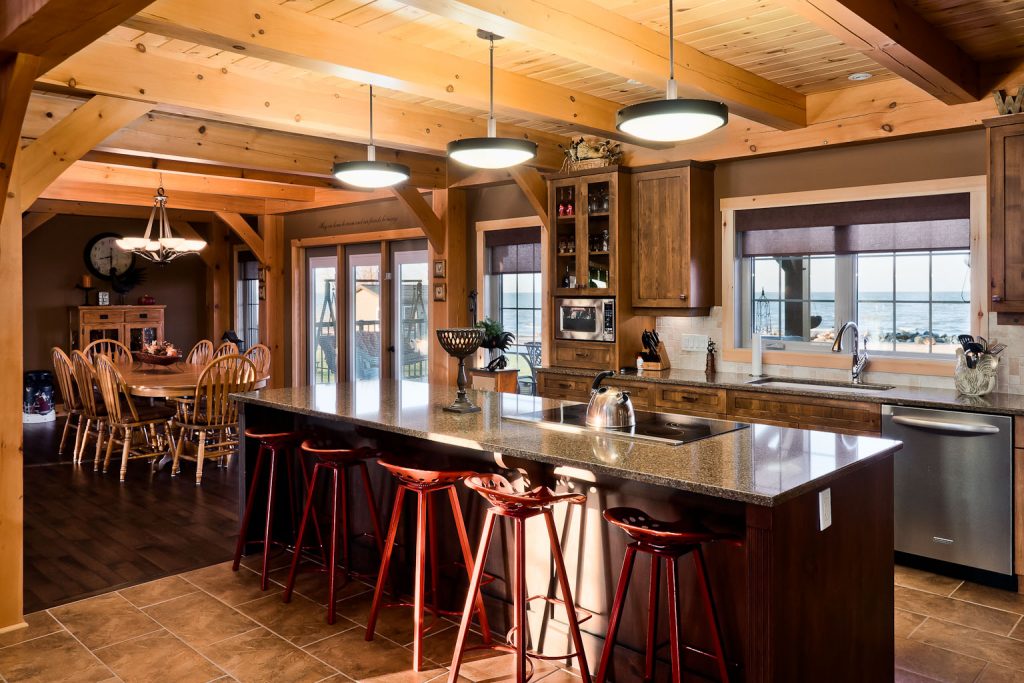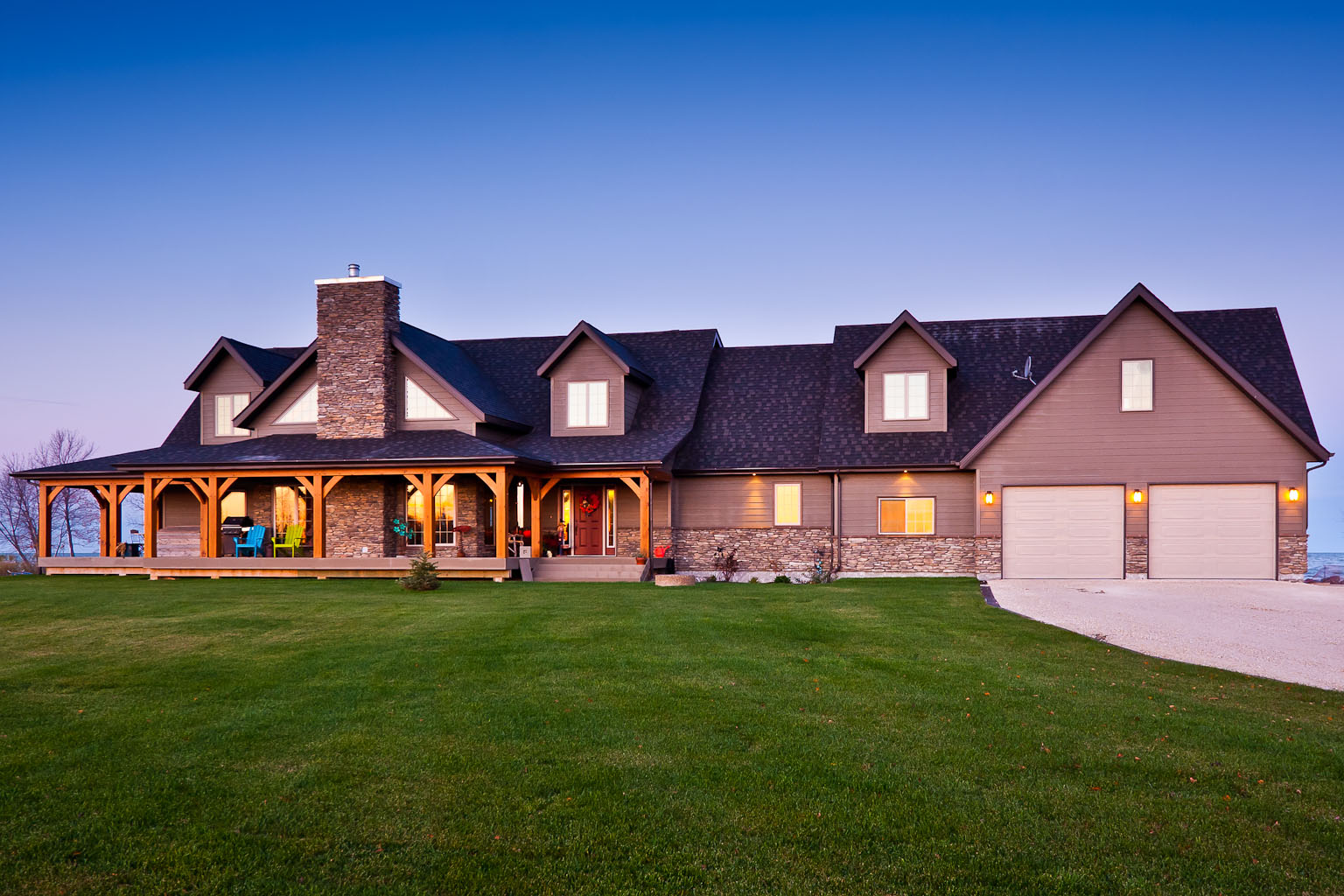
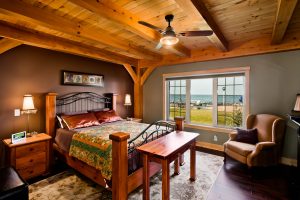
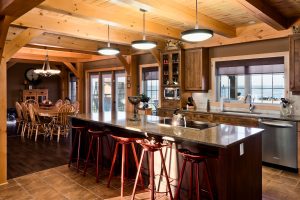
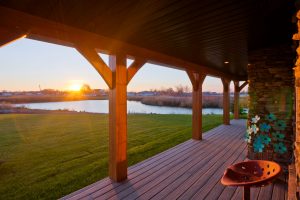
Located directly on Lake Manitoba, St. Laurent Farm House is engineered for open-water exposure, sustained wind pressure and seasonal snow accumulation. Lake-facing construction requires continuous load paths, reinforced anchorage and roof assemblies designed for drift control.
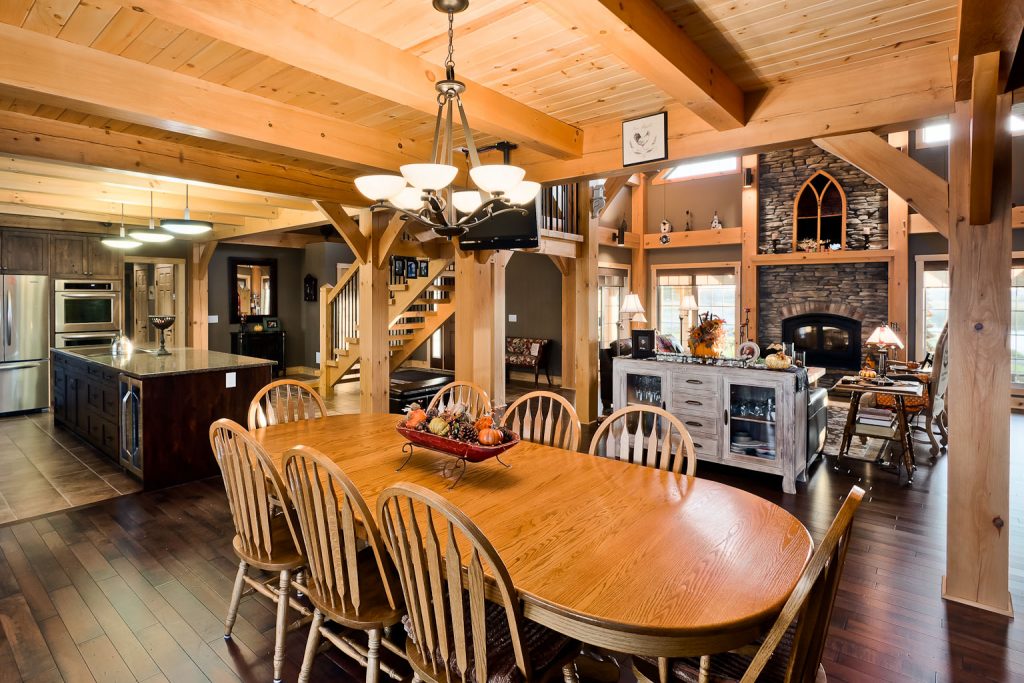
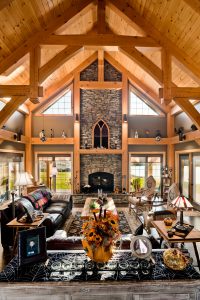
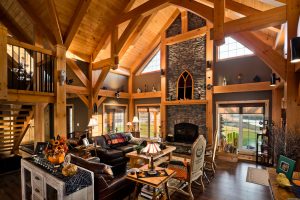
The structural system integrates a timber frame core with a wrap-around post and plate veranda, pitched dormers and a hammer beam truss defining the great room.
Primary finish protection utilizes Sansin ENS UV Clear Optimum, preserving timber surface integrity while allowing vapor permeability.
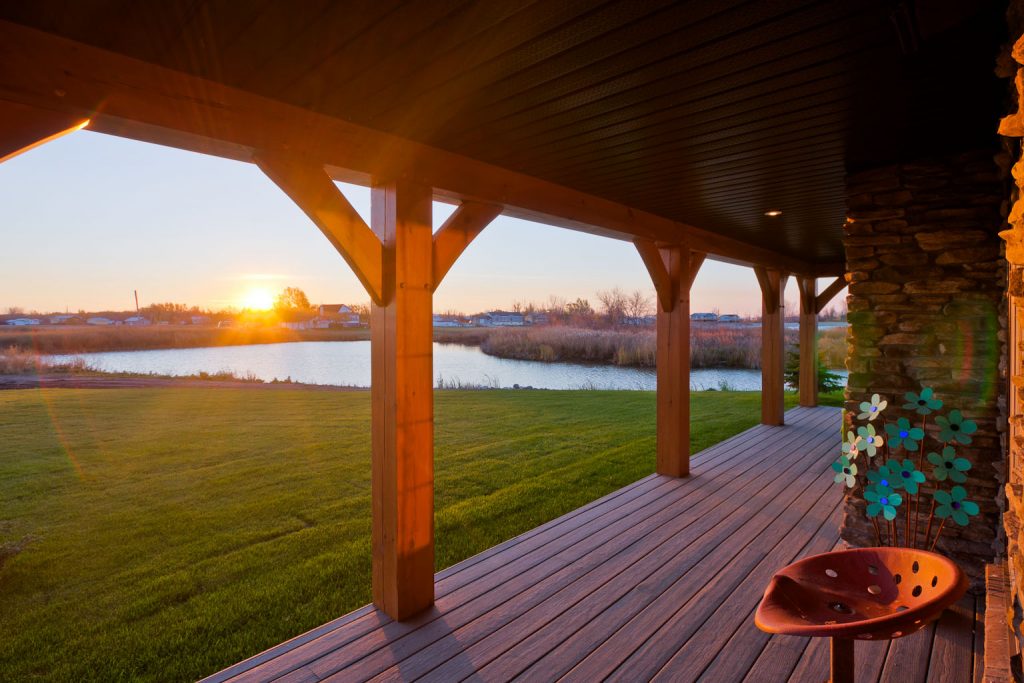
Wrap-Around Post and Plate Veranda
The wrap-around veranda uses a post and plate timber frame configuration. This system distributes vertical roof load through aligned posts into foundation supports.
Structural behavior includes:
-
Axial compression in posts
-
Horizontal load distribution through plates
-
Lateral stabilization through roof diaphragm action
The covered barbeque deck and balcony above introduce additional vertical and uplift forces.
Engineering considerations include:
-
Uplift-rated anchorage at post bases
-
Reinforced beam-to-post connections
-
Snow load accumulation at roof intersections
-
Drainage detailing to prevent moisture infiltration
Balcony loads are transferred directly into veranda posts to prevent eccentric loading of exterior walls.
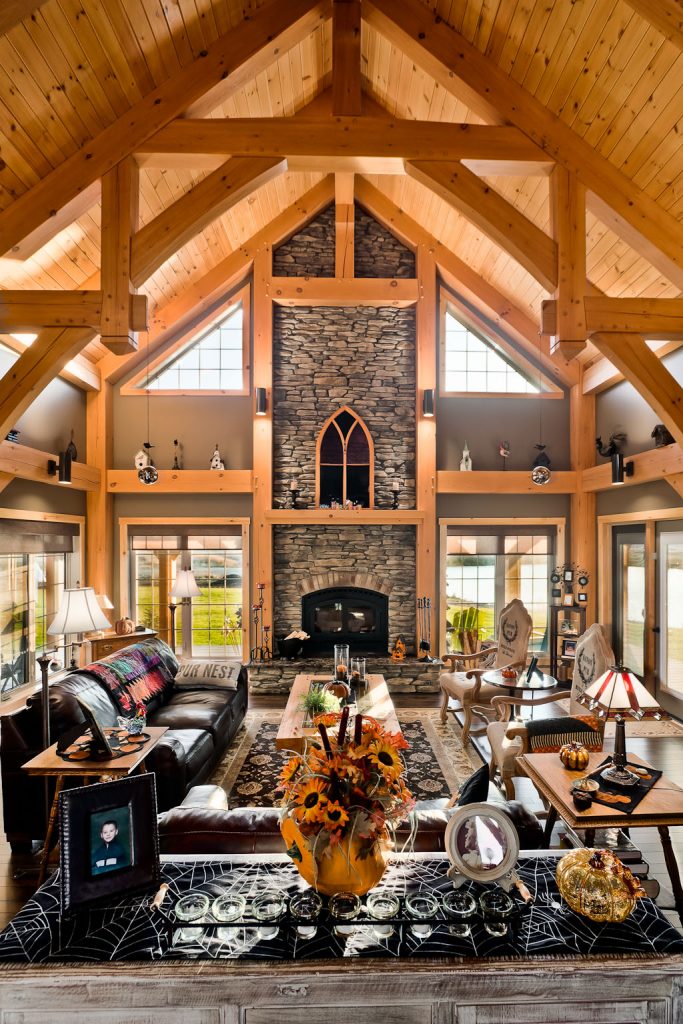
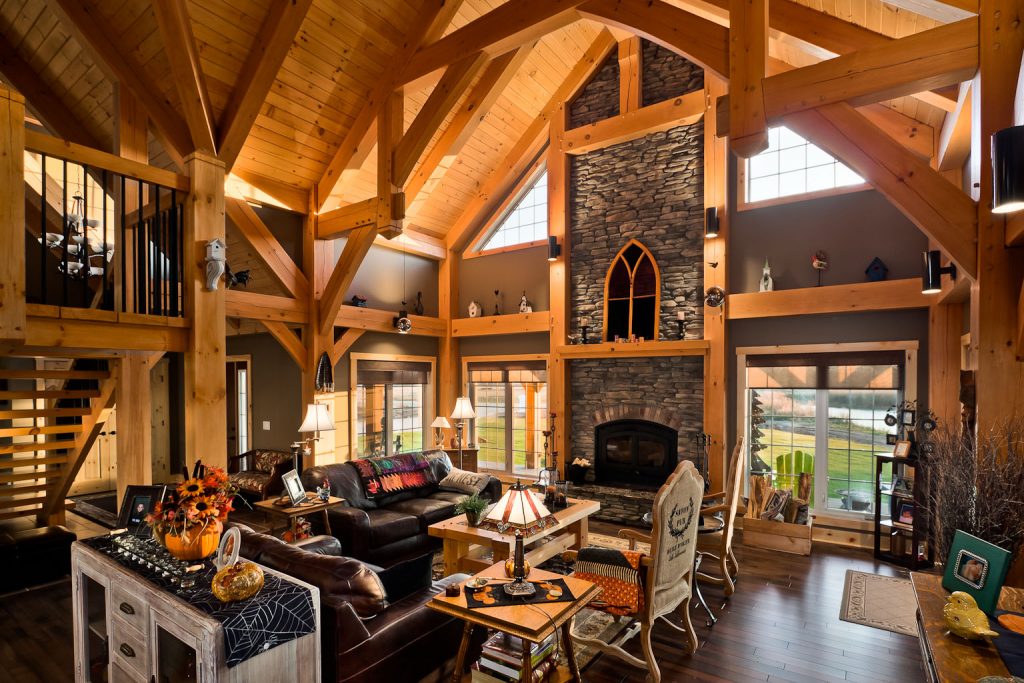
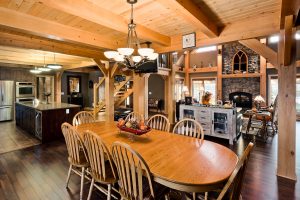
Great Room: Queen Post Bent and Central Fireplace
The great room is structured around a queen post bent with a centrally located fireplace. Queen post systems distribute roof load through two vertical posts connected by a straining beam and tie beam.
Structural mechanics include:
-
Compression in rafters
-
Tension in tie beam
-
Axial load in queen posts
-
Shear transfer at mortise and tenon connections
Positioning the fireplace at the center of the bent introduces concentrated dead load.
Engineering measures include:
-
Reinforced floor framing beneath hearth
-
Thermal isolation between masonry and timber
-
Vertical alignment of bent posts with foundation
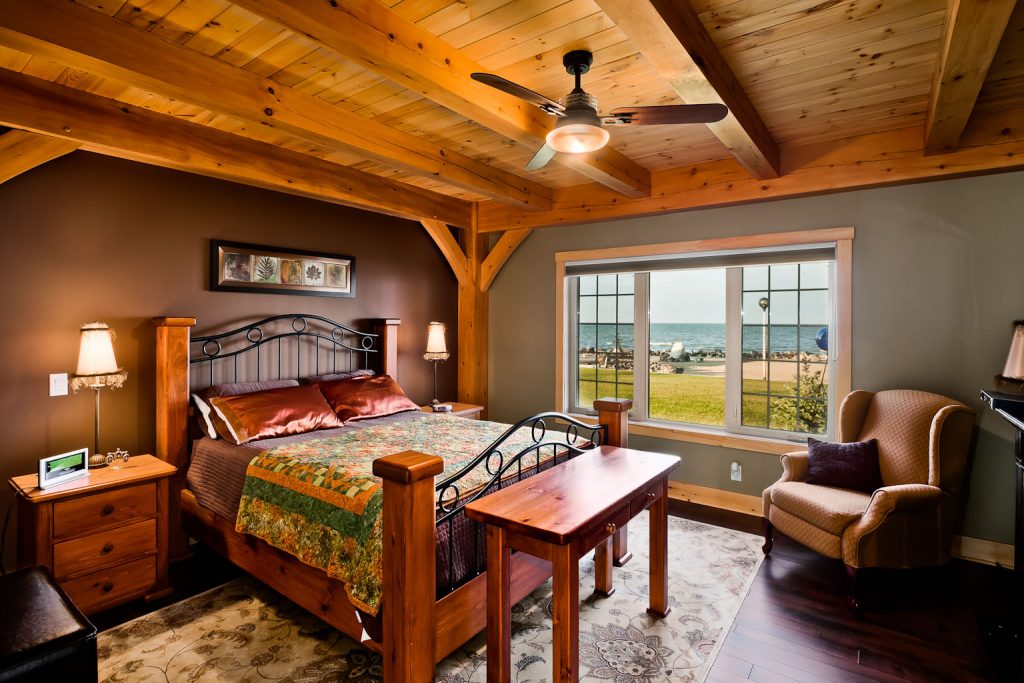
Perfectly placed windows on all sides allow 180 degree views of Lake Manitoba. Large glazing areas reduce shear wall capacity and require reinforced headers and post alignment to maintain structural stiffness.
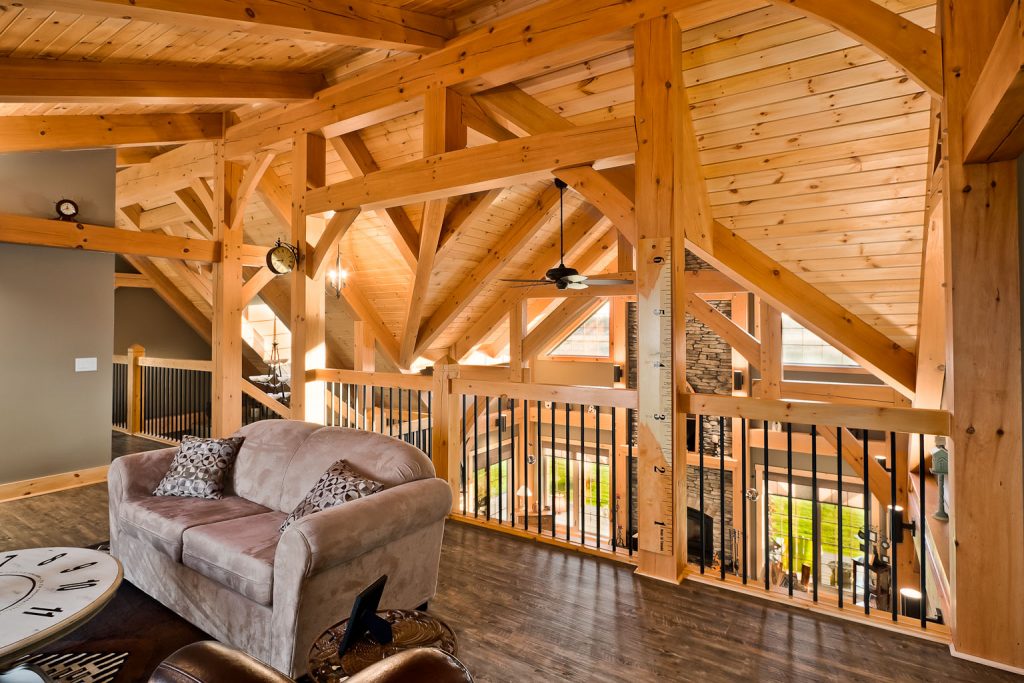
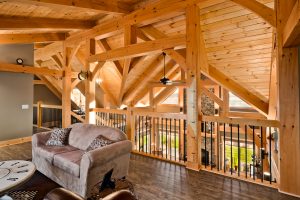
Traditional Hammer Beam Truss
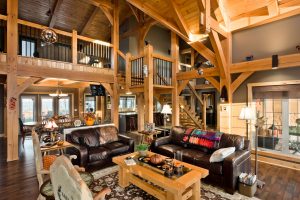
A traditional hammer beam truss defines the vertical volume of the great room. Hammer beam geometry allows increased ceiling height without a full-span tie beam.
Structural behavior includes:
-
Compressive forces along rafters
-
Horizontal thrust resolved through hammer beams
-
Axial forces in struts
-
Reinforced anchorage at post bases
For open-water exposure, wind uplift and lateral pressure are evaluated in conjunction with snow load.
Deflection control ensures glazing alignment and prevents long-term joint separation due to creep deformation.
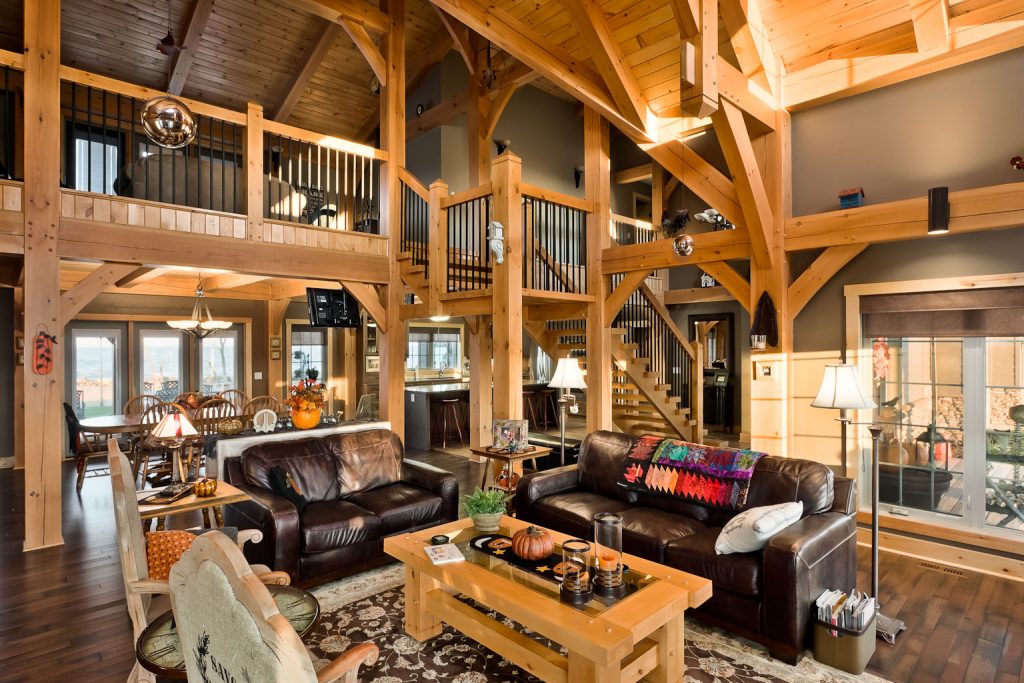
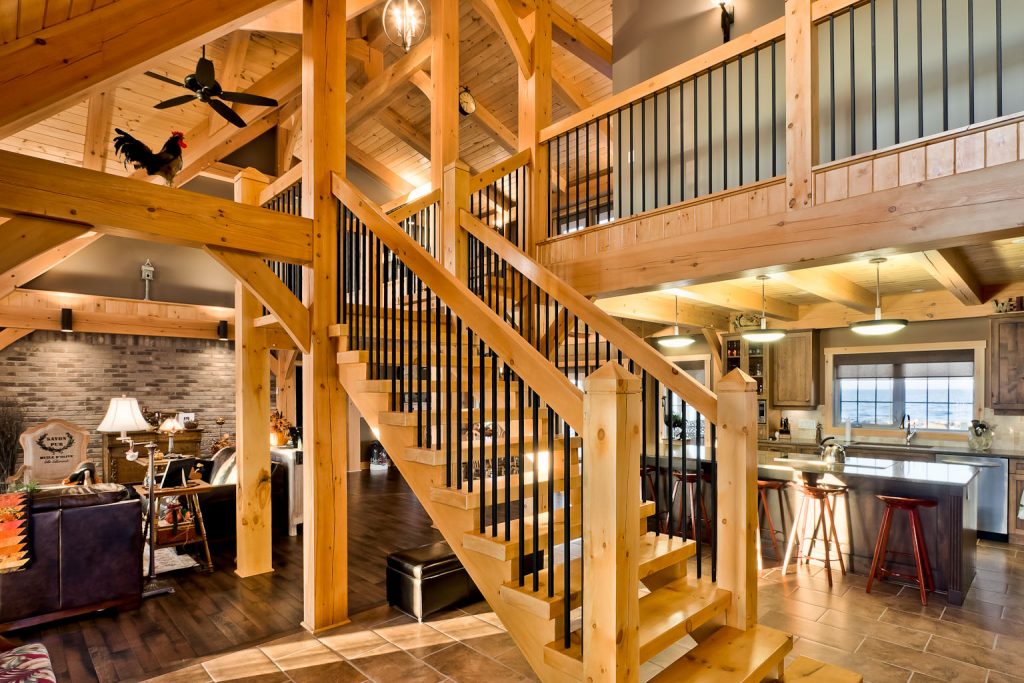
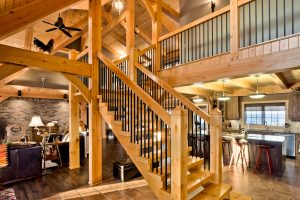
Curving Interior Staircase
The interior stair set curves upward to the second floor, providing views of the great room below.
Structural implications include:
-
Torsional load along curved stringers
-
Reinforced anchorage at floor diaphragm
-
Guardrail integration with timber posts
Curved geometry requires careful load transfer to prevent eccentric stress on floor framing.
The stair contributes to lateral stiffness by tying levels together within the structural grid.
Lakeside Dormers with Curved Principal Rafters
Two timber framed pitched dormers face the lake. Each dormer incorporates curved principal rafters.
Engineering considerations include:
-
Combined axial and bending stress in curved members
-
Reinforced connections at ridge and wall plates
-
Snow drift accumulation at dormer-roof transitions
Curved principal rafters require increased member depth to maintain structural capacity after shaping.
Dormer integration into the primary roof diaphragm ensures lateral stability under wind exposure.
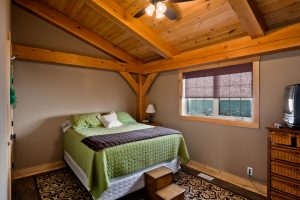
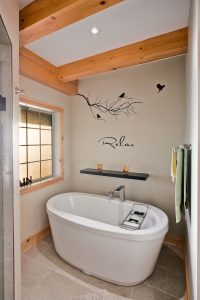
Timber and Tongue and Groove Assemblies
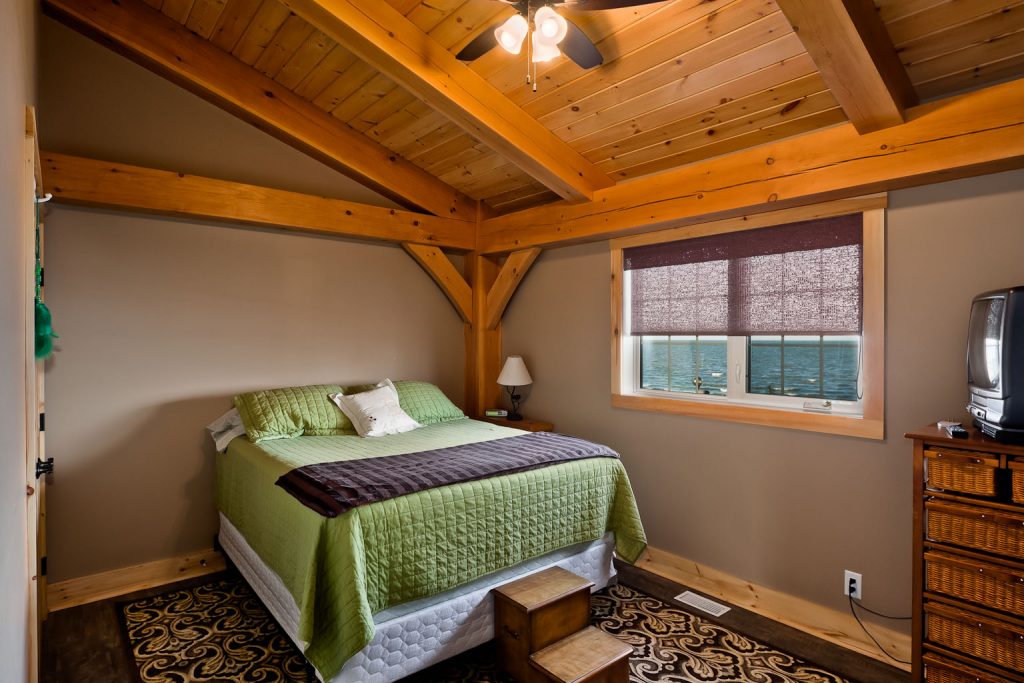
Timber members and tongue and groove boards are finished with Sansin ENS UV Clear Optimum.
From a structural perspective:
-
T+G boards contribute minor diaphragm stiffness
-
Moisture content control prevents shrinkage-induced joint movement
-
Fastening patterns maintain ceiling integrity
Finish systems must resist UV exposure while preserving vapor permeability.
Environmental Load Management
Lake Manitoba exposure imposes:
-
Elevated wind uplift
-
Snow drift accumulation
-
Freeze-thaw cycling
-
Seasonal humidity variation
Structural countermeasures include:
-
Continuous load paths from ridge to foundation
-
Uplift-rated hold-down anchors
-
Reinforced queen post and hammer beam connections
-
Ventilated roof cavity
Foundation systems incorporate frost protection and drainage control to prevent differential settlement.
Structural Summary
St. Laurent Farm House demonstrates integrated timber engineering with:
-
Wrap-around post and plate veranda and balcony
-
Queen post bent supporting central fireplace load
-
Traditional hammer beam truss defining great room
-
Curved principal rafters in lakeside dormers
-
Reinforced glazing integration for 180 degree water views
The residence achieves structural clarity, open interior volume and environmental resilience within a high-exposure Lake Manitoba setting.