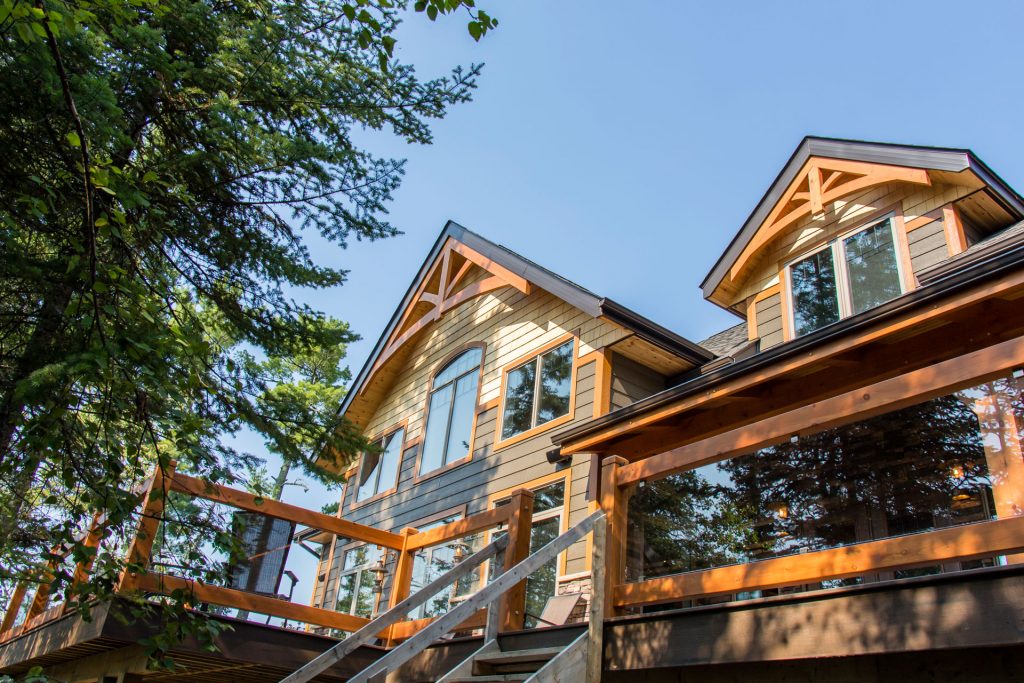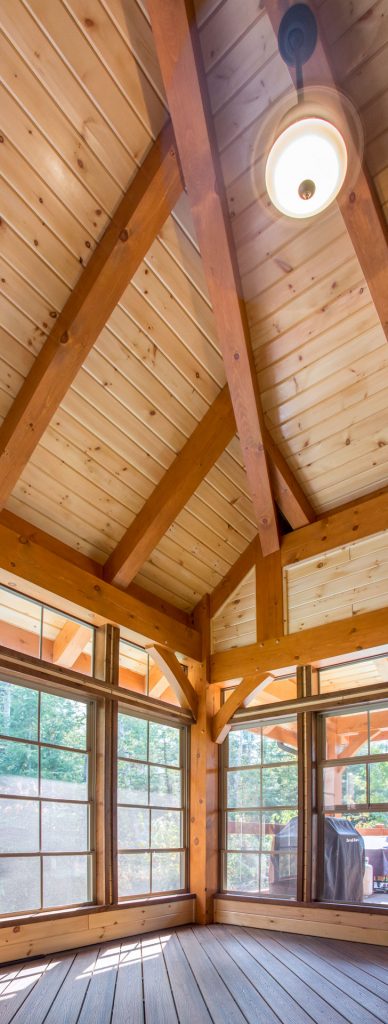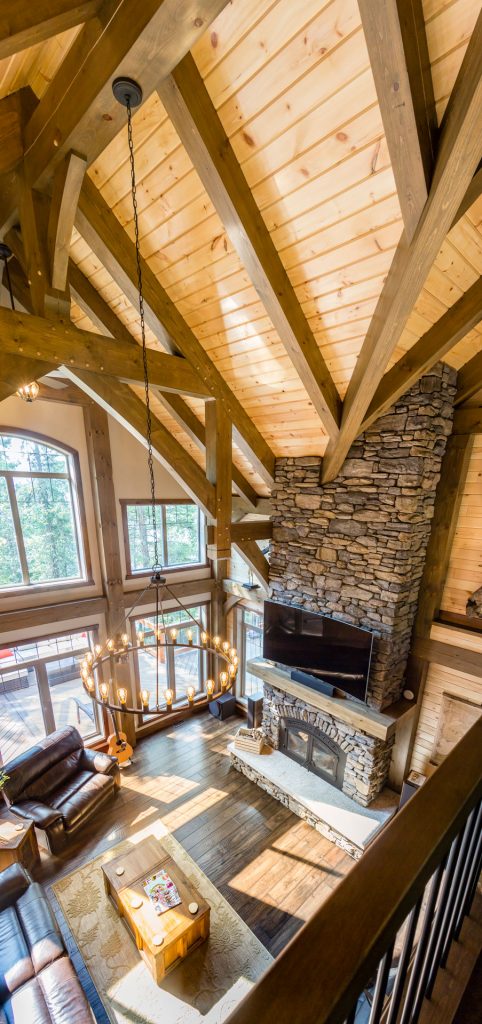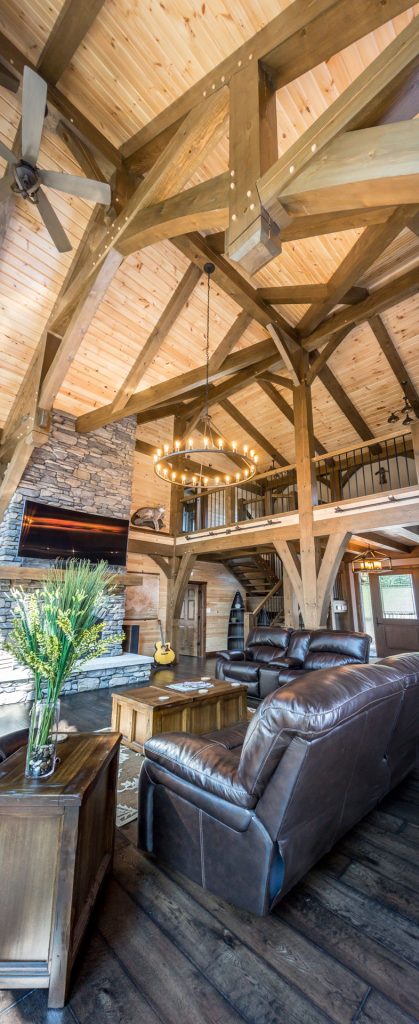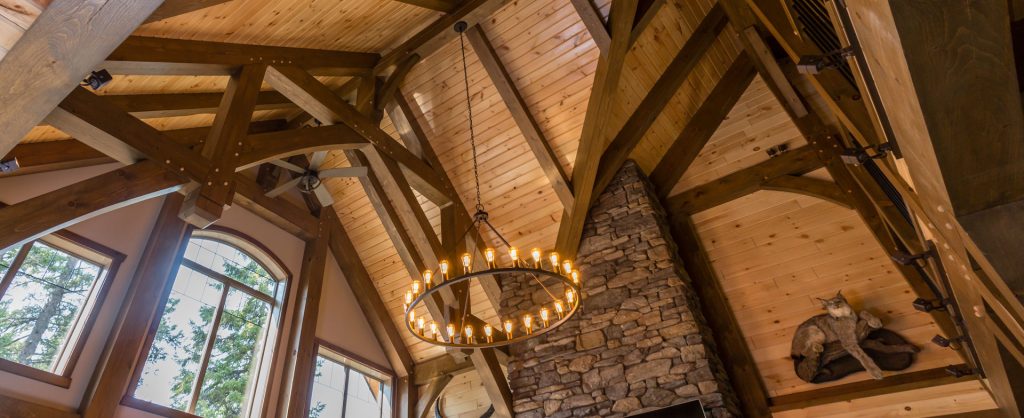
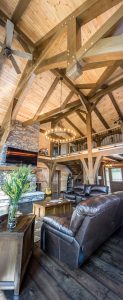
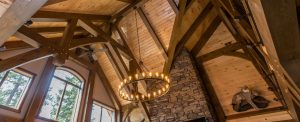
Pines by the Bay is a timber frame lake residence oriented toward panoramic views over Pine Portage Bay. The structural system is organized around a long-span hammer beam truss defining the great room, supported by an Eastern white pine heavy timber frame.
The architectural goal of clear sight lines and uninterrupted visual connection to the bay is achieved through disciplined load path alignment and minimized interior bearing walls.
This is a structurally expressive lake home engineered for span efficiency, environmental durability and multi-level occupancy.
Primary Structural System: Eastern White Pine Timber Frame
The structural frame utilizes Eastern white pine. While lighter than Douglas fir, properly dimensioned pine provides adequate compressive and bending strength for residential spans.
Engineering considerations include:
-
Increased section sizing relative to denser species
-
Controlled installation moisture content
-
Evaluation of creep deformation under sustained snow load
Vertical load transfer follows a direct path from roof diaphragm through hammer beam supports into foundation anchorage.
Connection detailing incorporates either reinforced joinery or concealed steel plates to ensure shear resistance at beam-to-post interfaces.
28 ft Hammer Beam Truss: Long-Span Performance
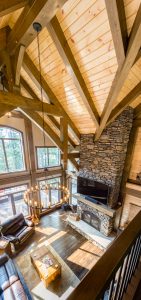
The great room is spanned by a 28 ft hammer beam truss. Hammer beam systems eliminate a full-span tie beam, creating increased ceiling height while resolving horizontal thrust through shorter projecting beams.
Structural behavior includes:
-
Compressive forces in rafters
-
Tension and compression distribution through hammer beams and struts
-
Outward thrust resisted at post bases
-
Reinforced joint connections controlling rotation
A 28 ft span requires careful deflection control. Member sizing is based on:
-
Regional snow load values
-
Dead load from roof deck and insulation
-
Wind uplift
-
Long-term creep factors
Post anchorage must resist both vertical compression and horizontal thrust forces generated by hammer beam geometry.
Timber Gable Trusses with Curved Ties
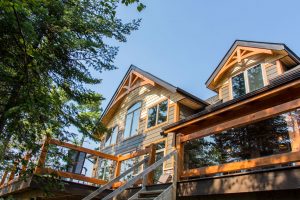
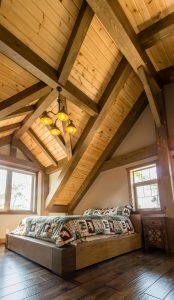
Gable elevations feature timber trusses incorporating curved tie beams. Curved members introduce combined bending and axial stress conditions.
Engineering measures include:
-
Increased member depth to maintain section modulus
-
Reinforced connection detailing at curved interfaces
-
Evaluation of stress concentration at radius transitions
These gable trusses contribute to lateral stability and resist wind load at exposed roof edges.
Proper flashing integration prevents moisture intrusion at gable penetrations.
Open Living Plan and Sight Line Engineering
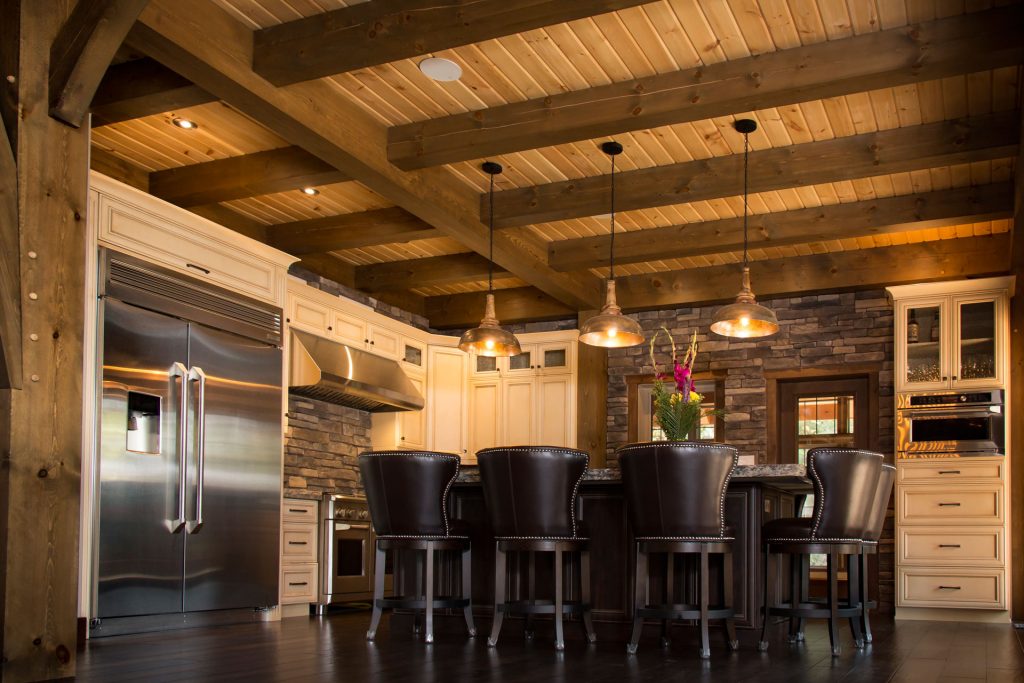
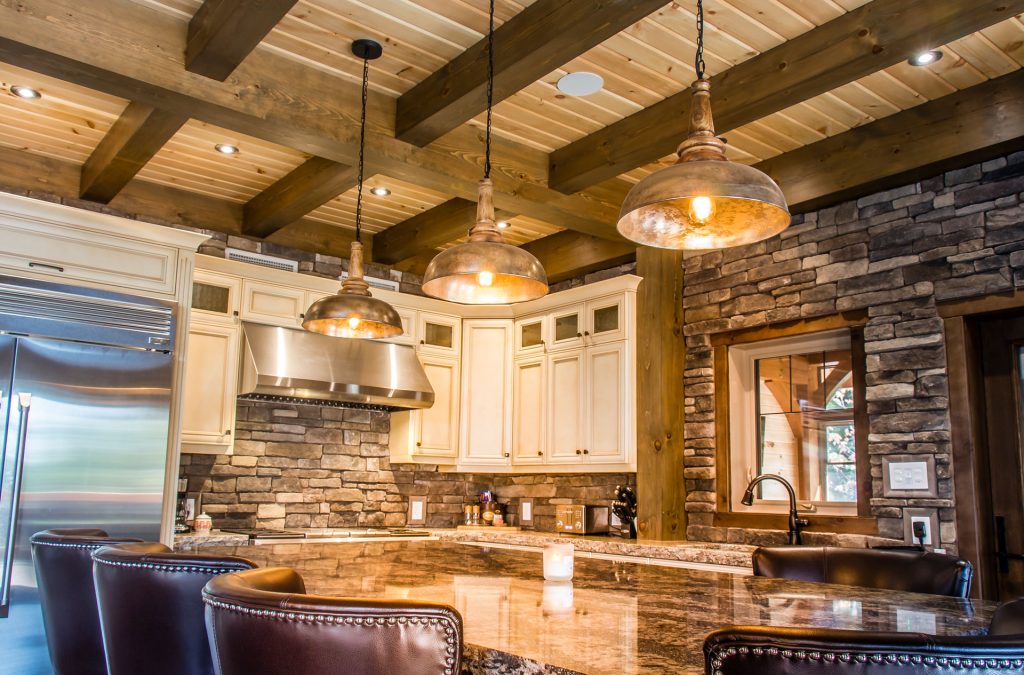
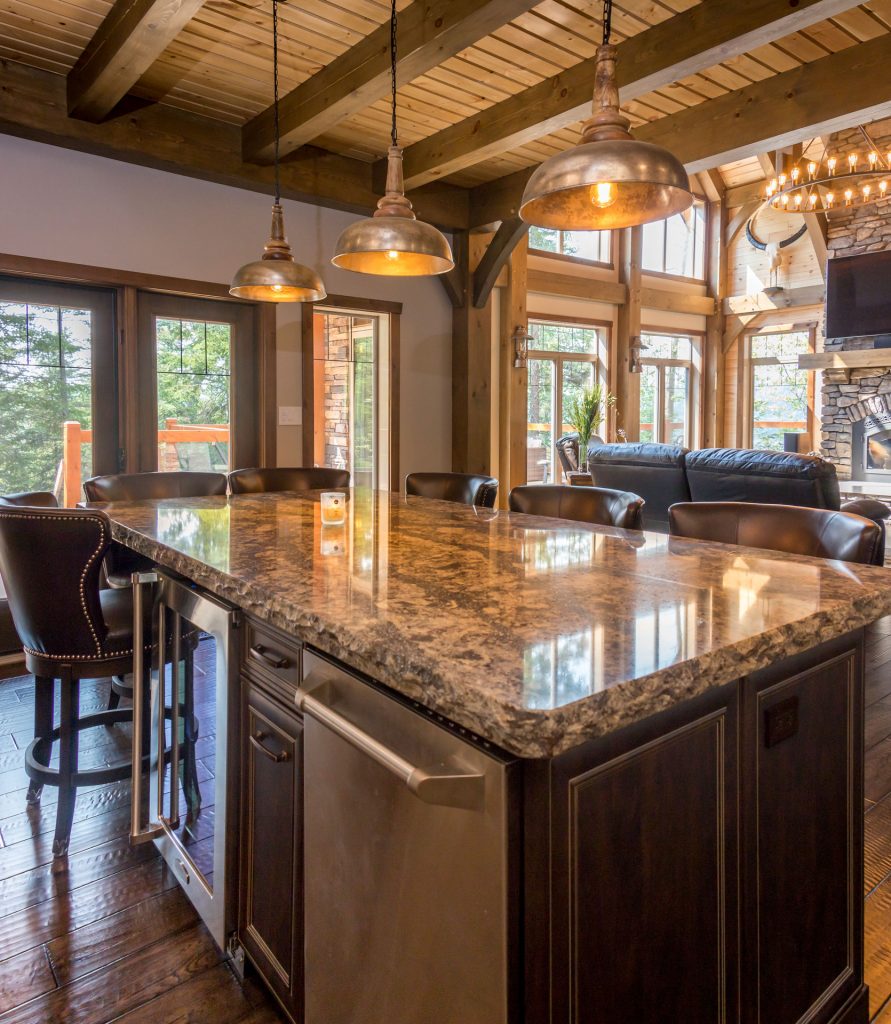
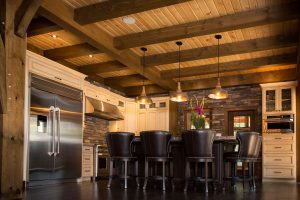
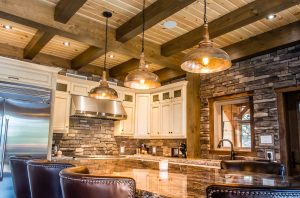
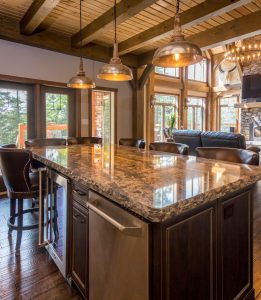
The main living area integrates a country kitchen with large dining island, adjacent to the great room and sunroom.
Structural benefits of the open configuration include:
-
Reduced interior shear wall interruptions
-
Flexible space planning
-
Continuous roof diaphragm action
The large dining island introduces localized floor loading. Floor framing beneath the island is reinforced to limit deflection and vibration.
Clear sight lines are achieved through long-span truss support without intermediate columns.
Unique Sunroom and Deck Integration
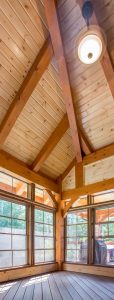
The sunroom is positioned adjacent to the kitchen and main deck. This extension toward the bay increases glazing exposure and wind pressure demand.
Engineering priorities include:
-
Reinforced headers at glazing openings
-
Shear transfer through roof and floor diaphragms
-
Uplift-resistant anchorage at perimeter posts
Extensive covered and open deck areas require:
-
Joist spacing rated for occupant live load
-
Corrosion-resistant fasteners
-
Drainage slope to prevent water accumulation
-
Lateral bracing against wind shear
Cantilevered roof extensions over decks are engineered for negative bending moment and snow load accumulation at transition zones.
Dual-Level Master Suites and Load Distribution
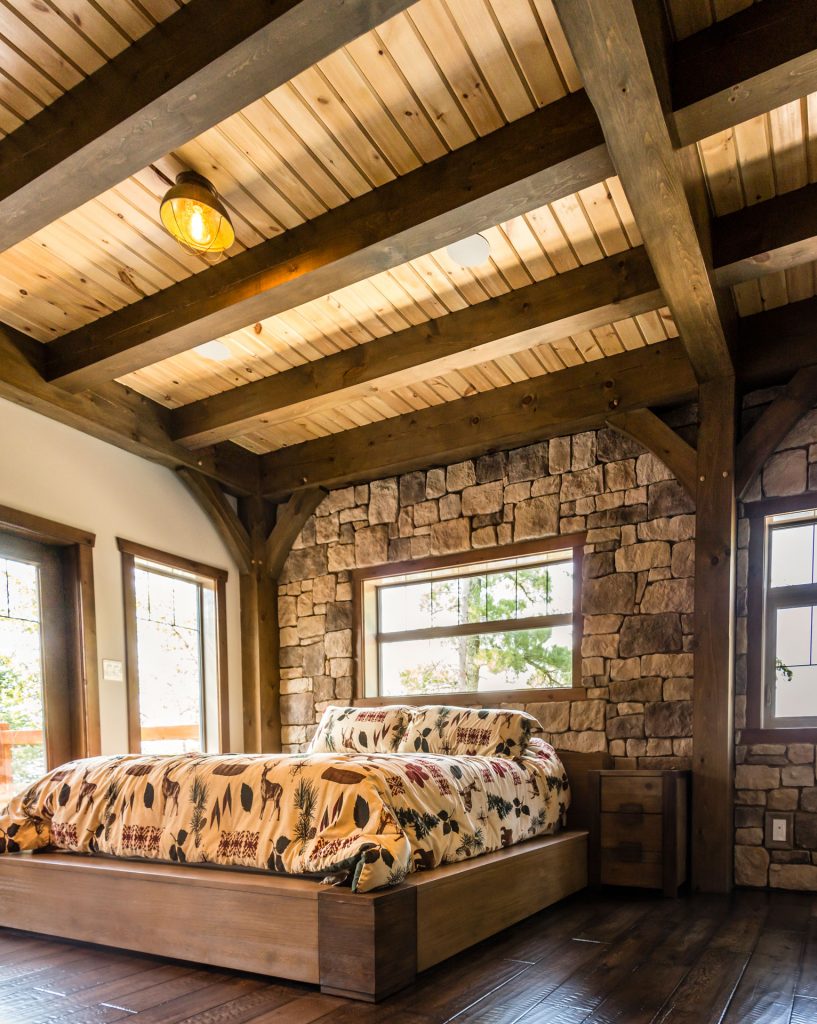
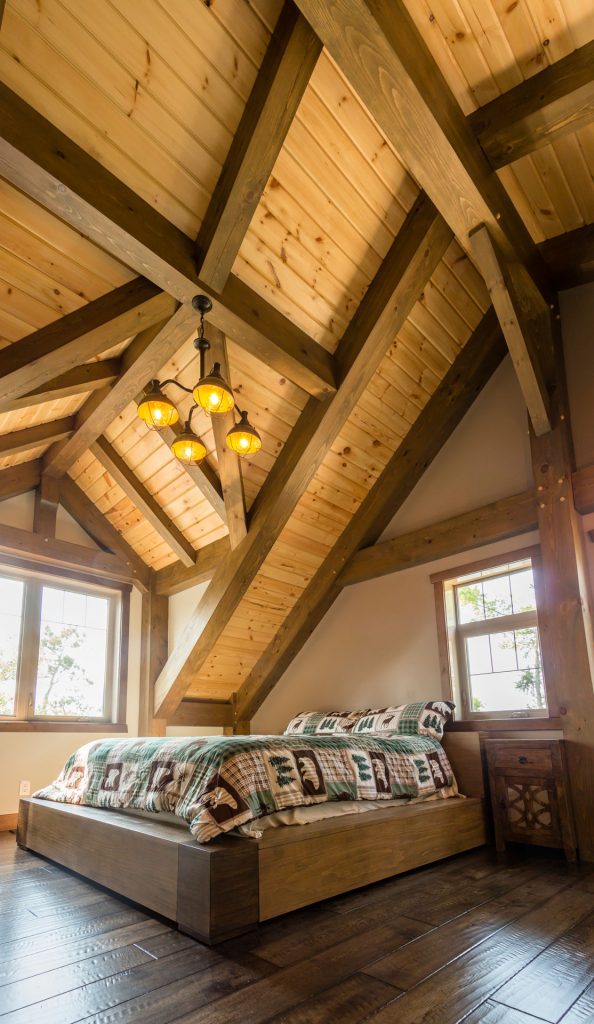
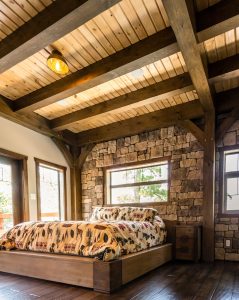
Master bedrooms are located on both main and upper floors. Multi-level occupancy introduces vertical load stacking considerations.
Structural measures include:
-
Reinforced floor framing beneath upper master suite
-
Alignment of bearing walls between levels
-
Vibration control in upper floor assemblies
Balcony or loft zones connecting levels contribute to diaphragm stiffness and lateral stability.
Interior and Exterior Finishes
Interior timbers are finished with Sansin Stone Brown, exterior timbers with Butternut. Protective finishes must:
-
Resist UV degradation
-
Allow vapor permeability
-
Reduce surface moisture absorption
Exterior timber elements require sealed end grain and proper flashing to maintain durability in lakefront humidity conditions.
Environmental Load Considerations
Pine Portage Bay exposure imposes:
-
Snow load accumulation
-
Wind uplift across open water
-
Freeze-thaw cycling
-
Elevated seasonal humidity
Structural countermeasures include:
-
Continuous load paths from ridge to foundation
-
Uplift-rated hold-down anchors
-
Ventilated roof assemblies
-
Reinforced beam-to-post connections
Creep deformation in the 28 ft hammer beam truss is incorporated into long-term deflection calculations to preserve serviceability.
Foundation systems include frost protection and drainage measures to prevent differential settlement.
Structural Summary
Pines by the Bay demonstrates disciplined heavy timber engineering with:
-
28 ft hammer beam truss spanning the great room
-
Curved tie gable trusses enhancing lateral stability
-
Eastern white pine structural frame
-
Extensive deck and sunroom integration
-
Dual-level master suite load stacking
The residence achieves structural clarity, long-span performance and environmental resilience while preserving unobstructed views over Pine Portage Bay.