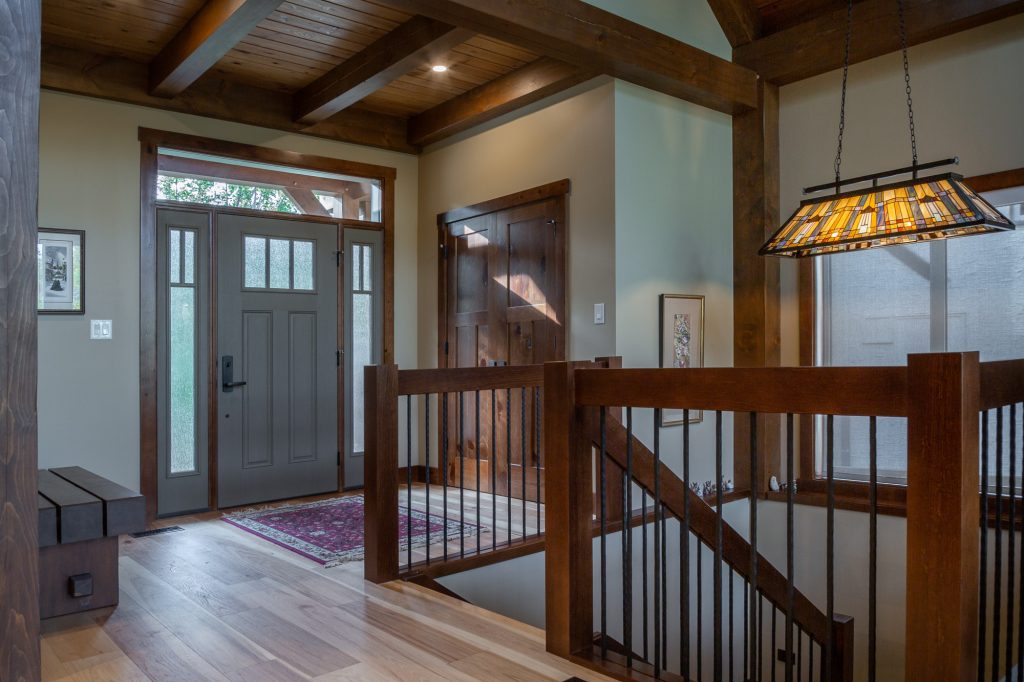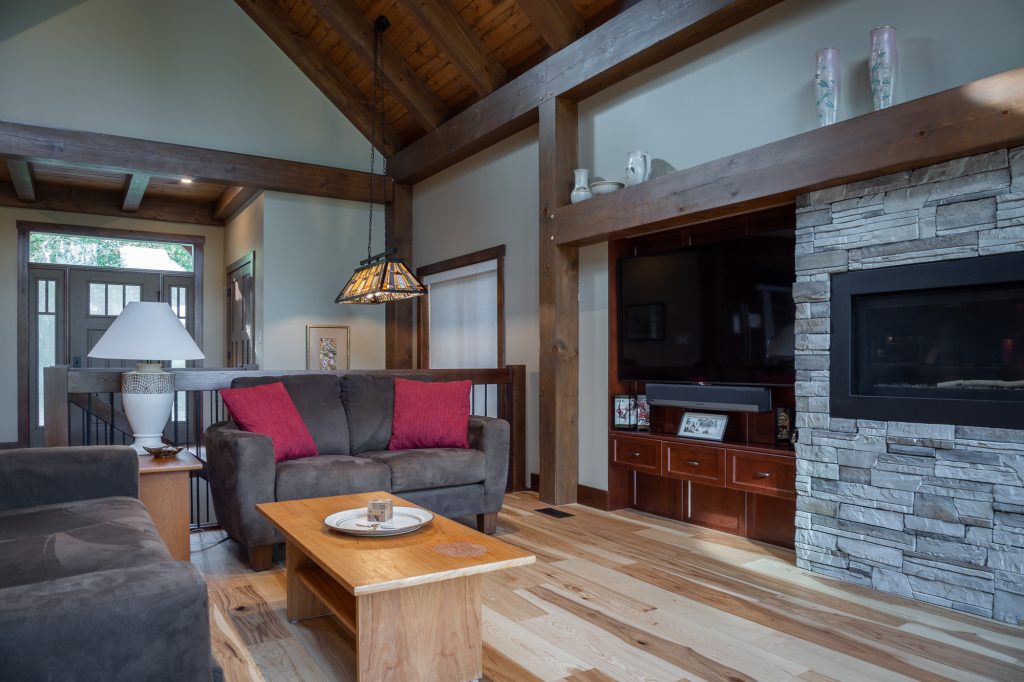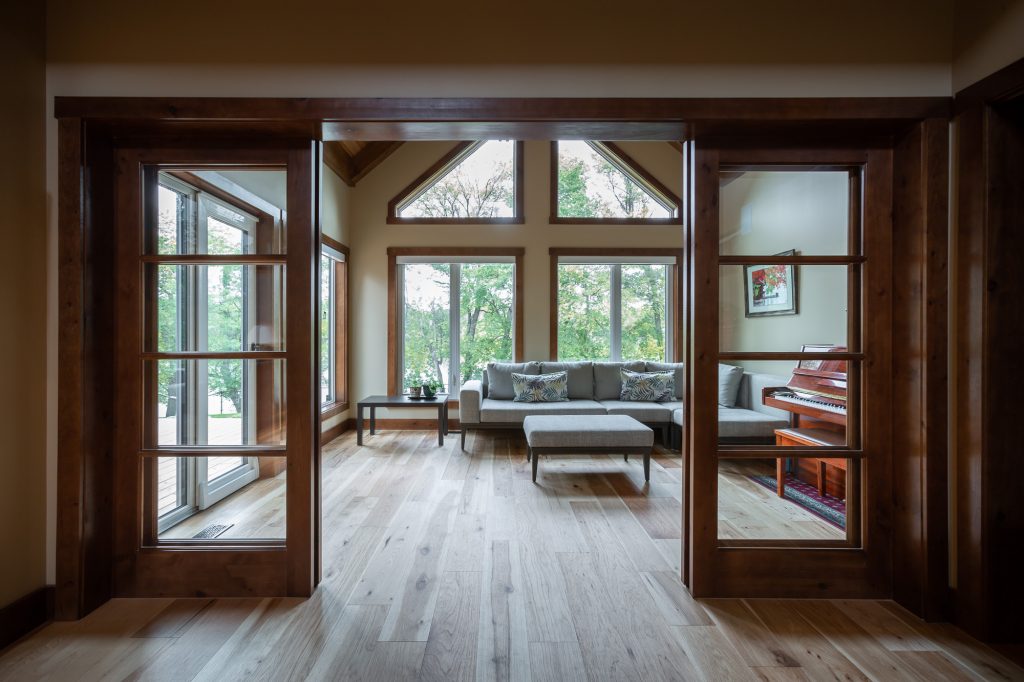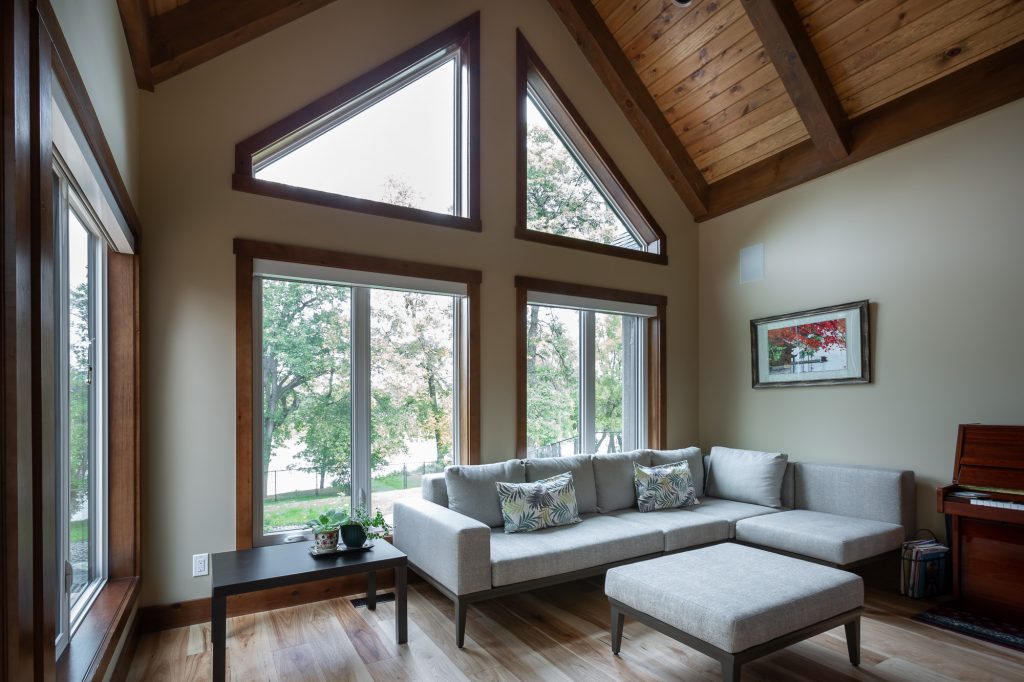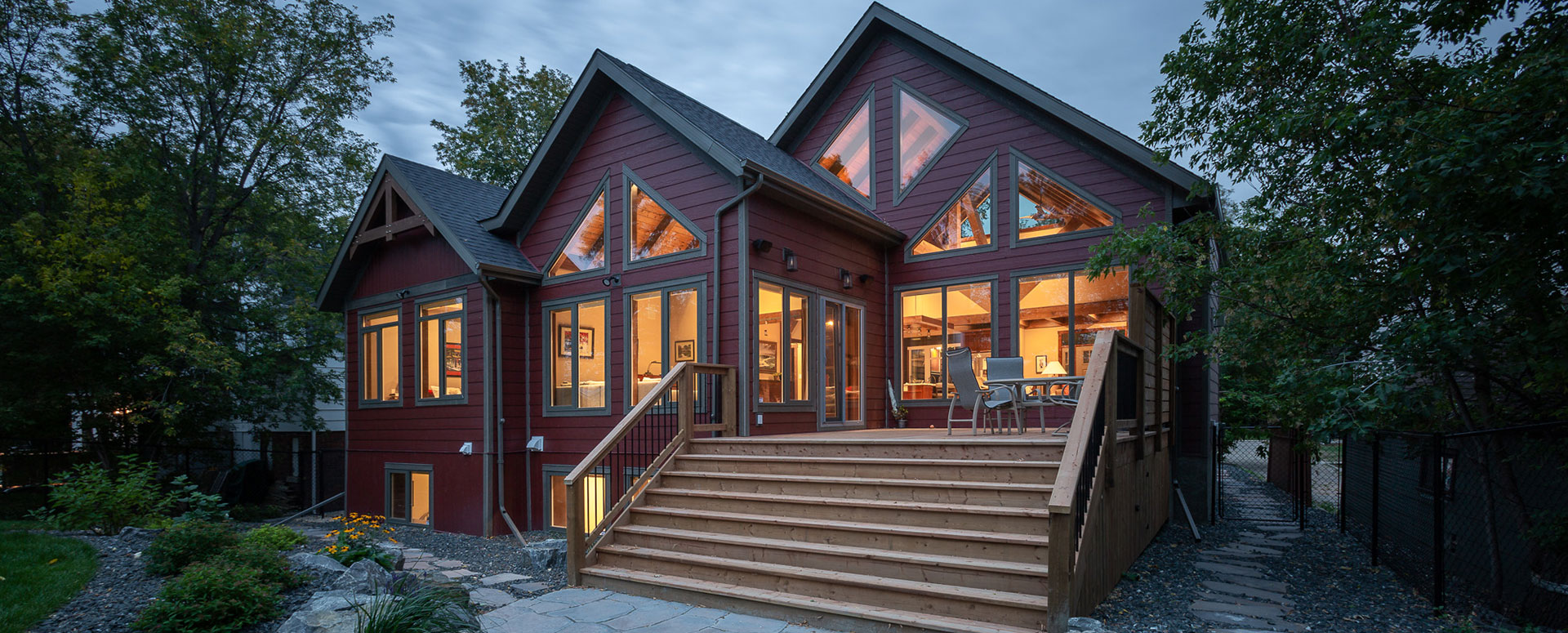
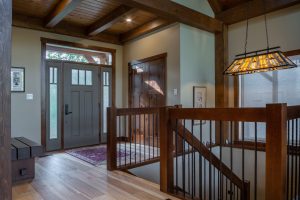
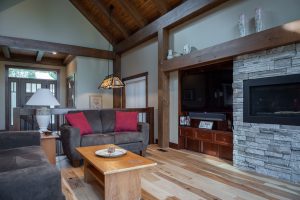
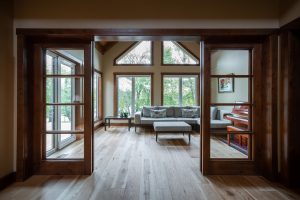
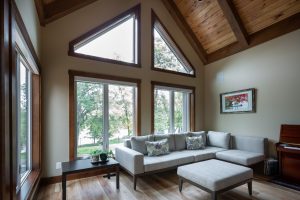
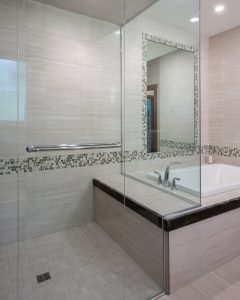
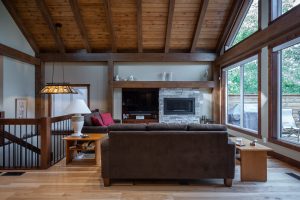
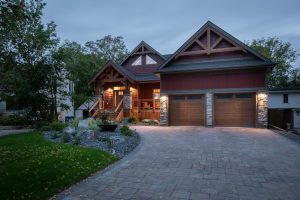
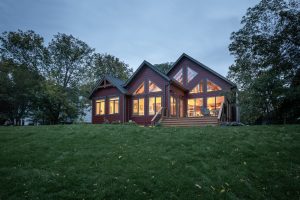
House on the Red is a hybrid timber residence designed to concentrate structural timber framing in primary living zones while integrating conventional framing in secondary areas. Timber elements define the living room, master bedroom and sunroom, forming a coherent structural core oriented toward views of the Red River.
The structural strategy balances span efficiency, open interior planning and envelope integration while maintaining clear vertical load paths from ridge to foundation.
Hybrid Structural Configuration
The hybrid approach allocates heavy timber where structural demand and visual emphasis are highest. The main living area and sunroom utilize engineered timber trusses and beams, while adjacent spaces employ conventional framing for cost efficiency and simplified mechanical routing.
Engineering advantages include:
-
Concentration of long-span timber systems in central zones
-
Reduced timber volume in low-span areas
-
Reinforced bearing points at timber-to-frame transitions
-
Continuous diaphragm action across roof and floor assemblies
Conventional wall assemblies supporting timber trusses are reinforced at bearing locations to resist concentrated vertical load.
Open Living Volume with River Orientation
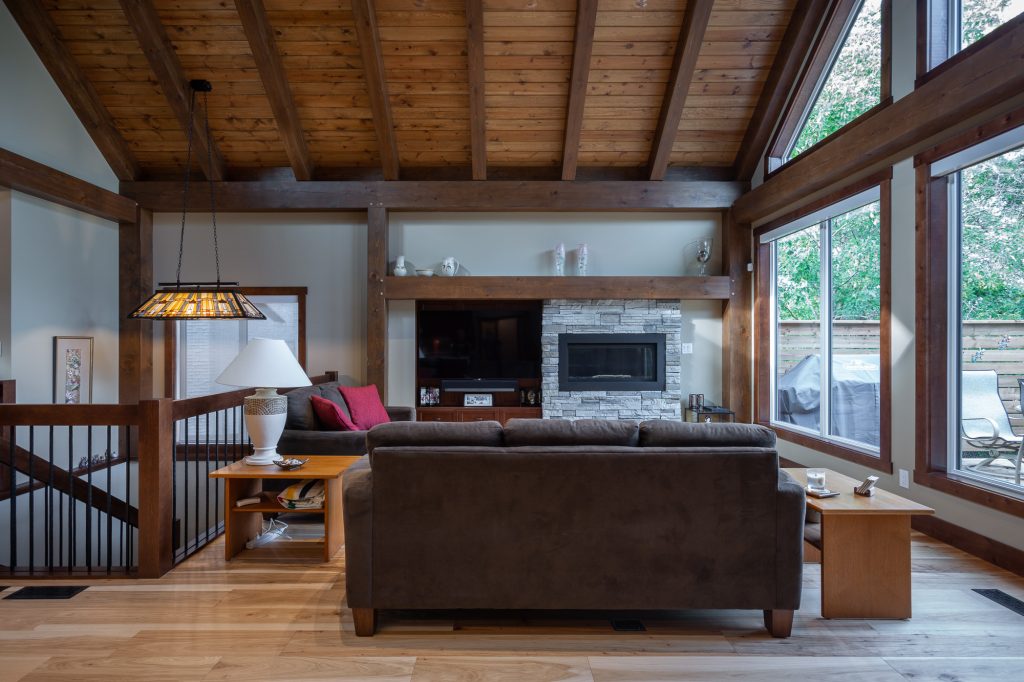
The main living area integrates kitchen, breakfast island and dining zone under a vaulted timber ceiling. Structural alignment ensures unobstructed sightlines to the river through the sunroom glazing.
Engineering considerations include:
-
Clear-span roof support without intermediate columns
-
Controlled deflection to protect glazing interfaces
-
Balanced load transfer across beam lines
Floor framing beneath the kitchen island is reinforced to accommodate appliance loads and localized live load.
The open-plan configuration relies on long-span structural members sized for bending stress limits and long-term creep performance.
Parallel Chord Truss: Primary Load-Bearing Element
The defining structural feature is a large parallel chord truss spanning from foyer through living area to sunroom.
Parallel chord trusses distribute load evenly across top and bottom chords connected by vertical and diagonal web members. Structural behavior includes:
-
Uniform bending distribution along chord members
-
Efficient load sharing across web elements
-
Reduced mid-span deflection compared to simple beams
This configuration allows vaulted ceiling geometry without excessive horizontal thrust.
Snow load and dead load calculations determine chord dimensions and web spacing. Creep deformation under sustained load is incorporated into deflection analysis to maintain serviceability.
Connection detailing must resist shear and axial force at web-to-chord interfaces.
Sunroom Integration and Load Transfer
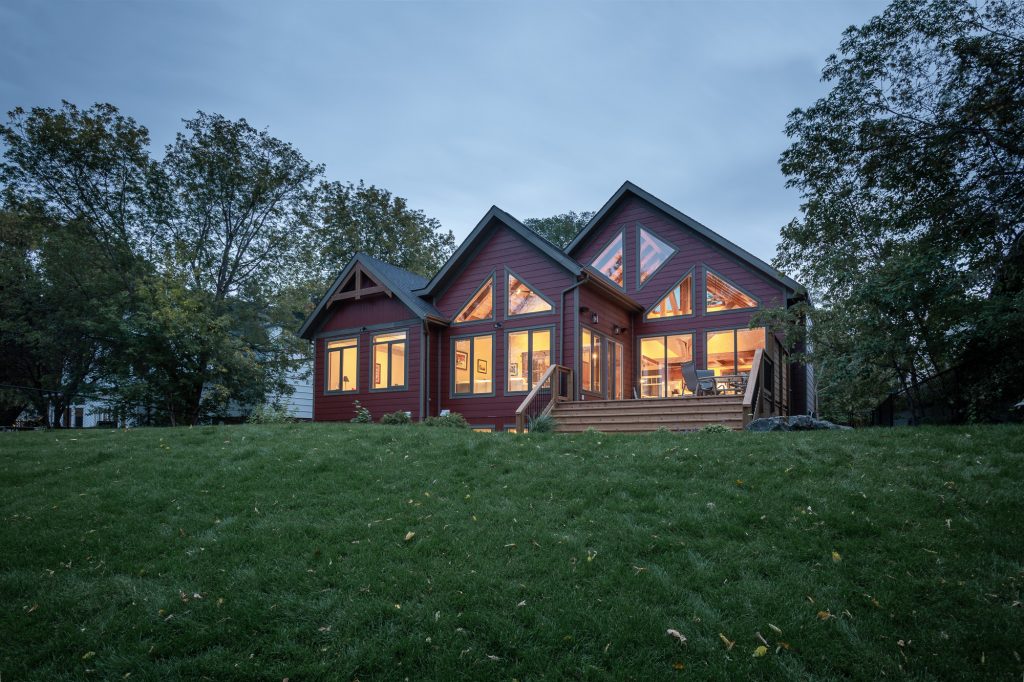
The sunroom extends the structural volume toward the river. Large glazing areas increase lateral wind exposure.
Engineering measures include:
-
Reinforced headers at glazing openings
-
Shear transfer through roof diaphragm
-
Uplift-resistant anchorage at perimeter posts
Thermal expansion between timber and glazing frames is accommodated through flexible connection detailing.
Ventilated roof cavities above the sunroom ceiling reduce condensation risk during seasonal temperature fluctuation.
Exterior Timber Accents and Gable Trusses
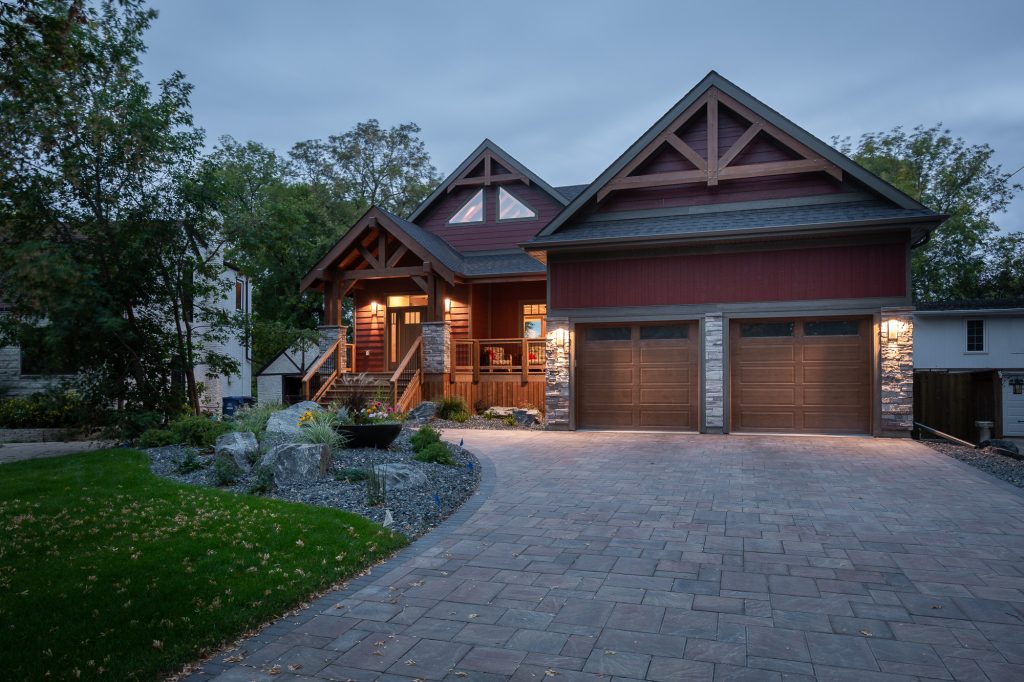
Exterior expression includes three king post gable trusses and a four-posted timber entry structure.
King post gable trusses function structurally by stabilizing gable walls under wind load. The vertical king post carries tensile force while tie beams resolve horizontal thrust.
The four-posted entry provides:
-
Vertical load support for canopy roof
-
Uplift resistance at exposed corners
-
Defined axial load transfer into foundation
Exterior timber elements must be sealed at end grain and flashed properly at penetrations to prevent moisture intrusion.
Environmental Load Considerations
The Red River environment introduces:
-
Snow load accumulation
-
Wind uplift along open river corridor
-
Freeze-thaw cycling
-
Elevated seasonal humidity
Structural countermeasures include:
-
Continuous load paths from ridge to footing
-
Uplift-rated hold-down anchors
-
Roof diaphragm stabilization
-
Corrosion-resistant connectors
Foundation systems incorporate frost protection and drainage to prevent soil movement affecting load alignment.
Structural Summary
House on the Red demonstrates disciplined hybrid timber engineering with:
-
Parallel chord truss spanning the primary living volume
-
Reinforced sunroom integration facing the river
-
King post gable trusses providing lateral stability
-
Four-posted timber entry anchoring exterior structure
The residence achieves open-plan clarity, structural efficiency and environmental resilience through defined load paths and engineered timber performance.