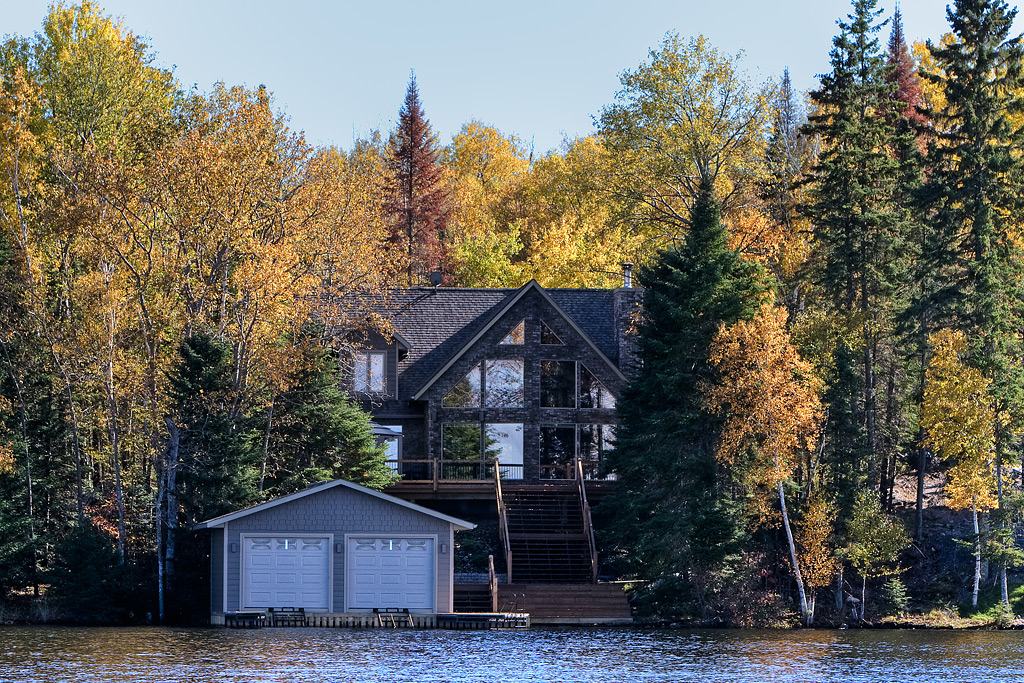
Falcons North Shore is positioned within a wooded lakeside setting, requiring structural design responsive to snow load accumulation, wind uplift through tree corridors and seasonal moisture variation. The residence is engineered as a hybrid timber frame system, combining heavy timber framing in primary living volumes with conventional framing in bedrooms and kitchen areas.
The structural objective is to deliver open sightlines toward the lake while maintaining defined load paths and long-term serviceability in a cold-climate environment.
Primary structural material is Eastern white pine, protected with Sansin ENS UV Clear Optimum for UV resistance and moisture management.
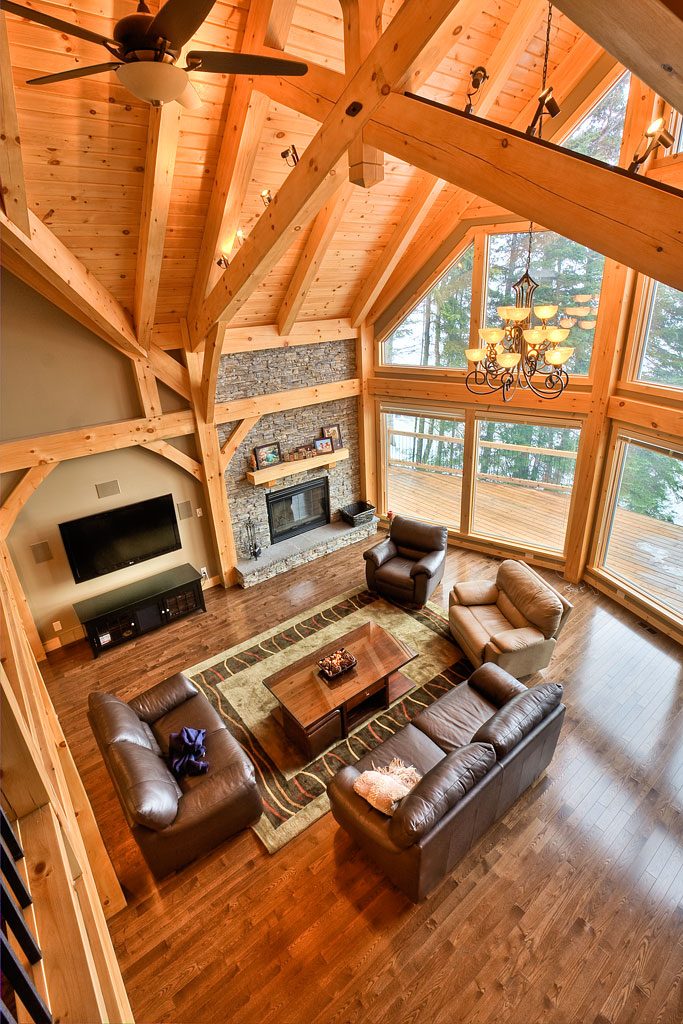
Prow Front Great Room: King Post and Scissor Brace Truss Mechanics
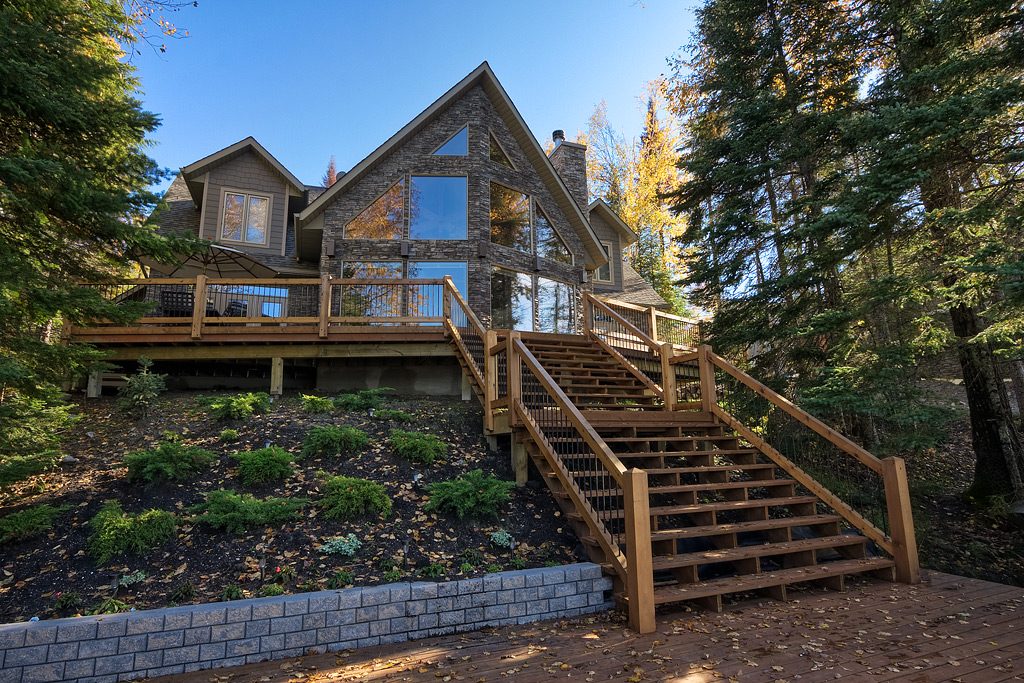
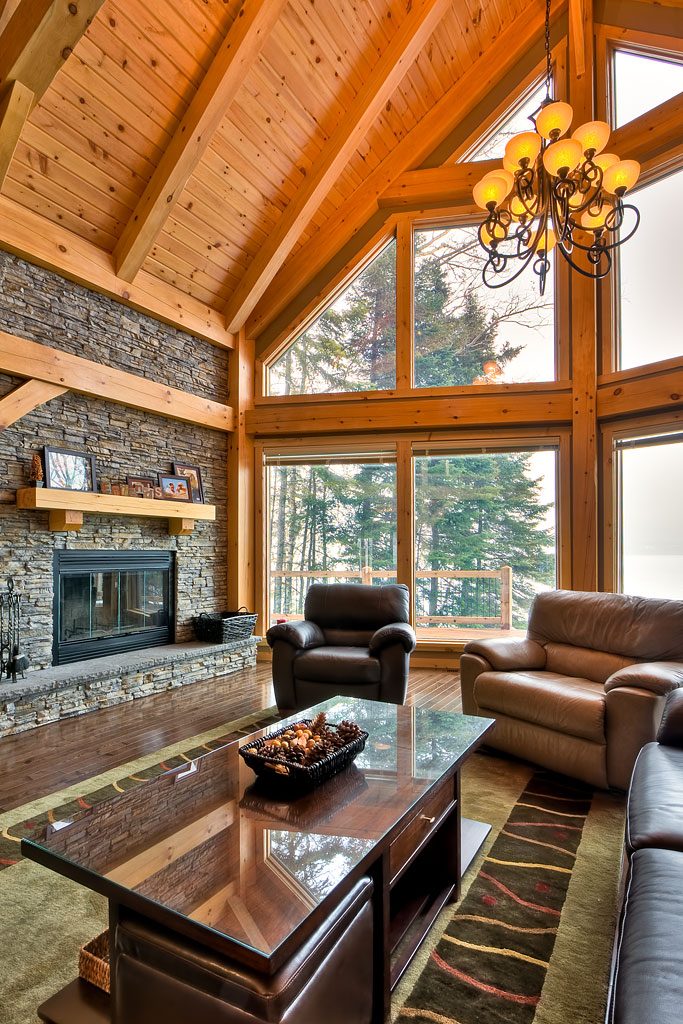
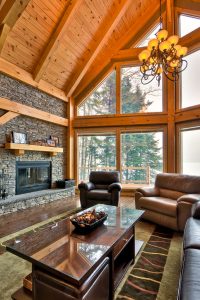
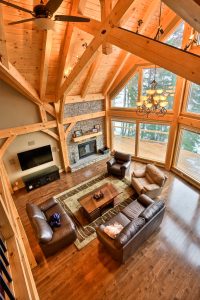
The lakeside elevation features a king posted prow front timber frame great room. Prow geometry introduces angled roof planes converging at the lake-facing apex, increasing wind exposure and concentrated load at the prow junction.
Structural mechanics include:
-
Axial compression along rafters
-
Tensile force within the king post
-
Thrust resolved through tie beam and post anchorage
-
Lateral stabilization via roof diaphragm
A scissor brace truss further enhances vertical volume while reducing horizontal thrust at bearing points. Scissor geometry introduces intersecting lower chord members that must resist combined tension and compression forces.
Engineering calculations incorporate:
-
Regional snow load
-
Dead load from roof deck and insulation
-
Wind uplift at prow face
-
Long-term creep deformation
Connection detailing at scissor intersections is reinforced to resist shear in multiple axes.
Large Picture Window and Glazing Integration
A large picture window at the lakeside elevation requires reinforced framing due to reduced shear wall area.
Structural measures include:
-
Reinforced timber headers
-
Post alignment with foundation supports
-
Concentrated load transfer around glazing openings
Because prow geometry increases exposure, uplift-rated anchors secure the timber frame to foundation elements.
Differential movement between timber and window framing is accommodated through controlled joint detailing.
Parallel Chord Truss at Upper Gable
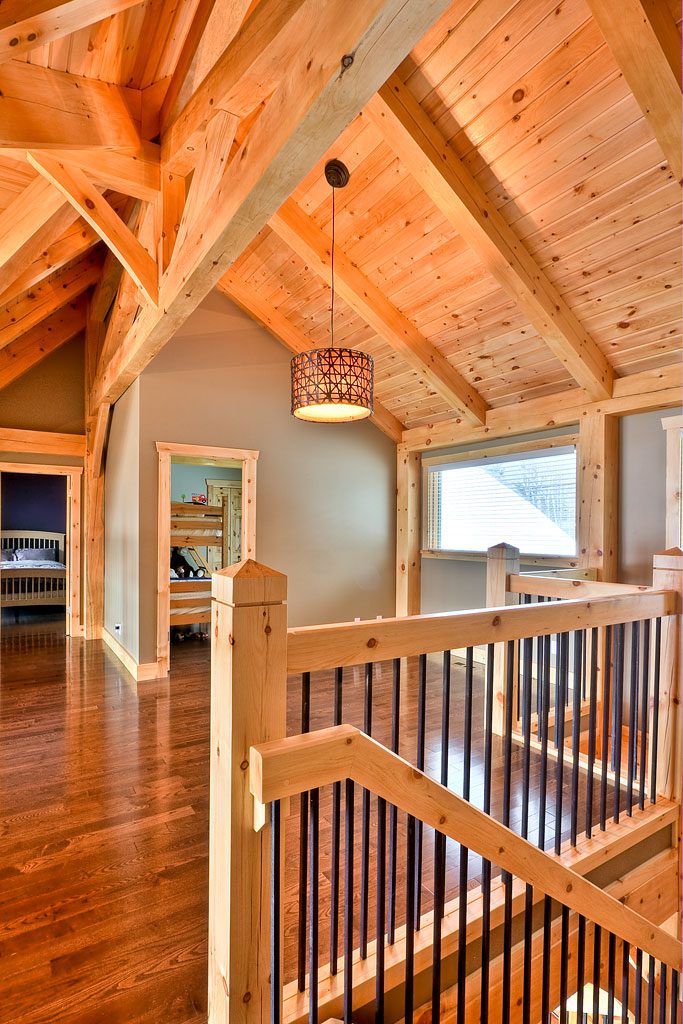
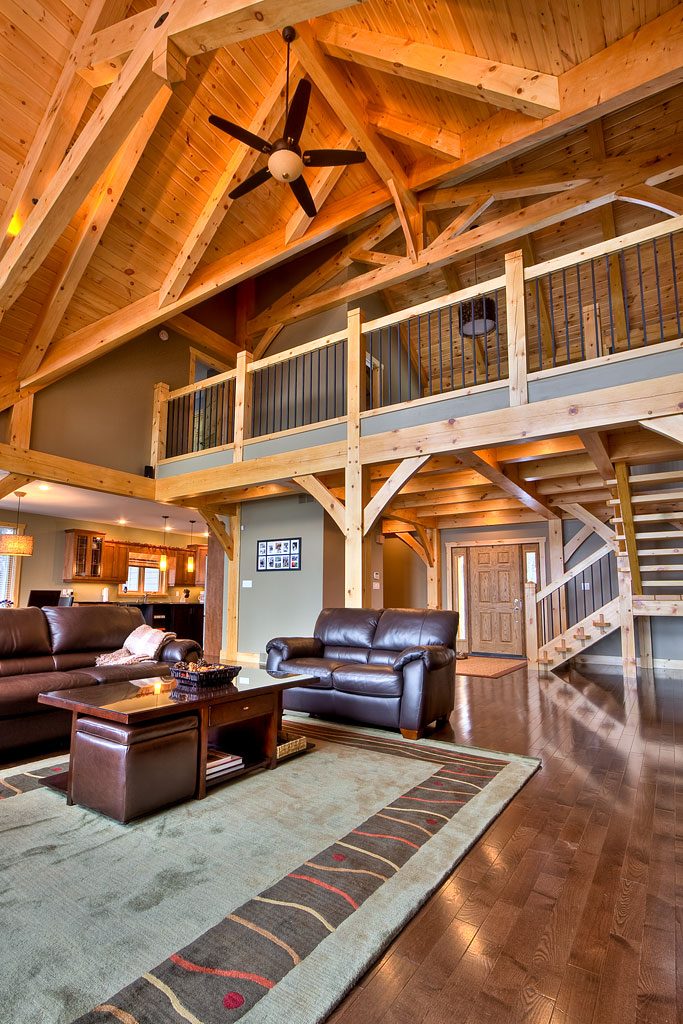
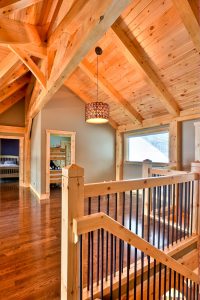
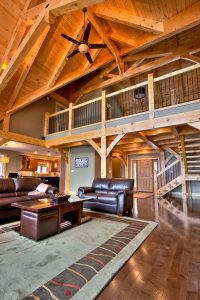
The second floor loft area incorporates a parallel chord truss supporting the third gable.
Structural advantages of the parallel chord system include:
-
Uniform load distribution along top and bottom chords
-
Reduced mid-span deflection
-
Controlled load transfer to supporting posts
The truss supports both roof load and loft floor interaction while maintaining open interior volume.
Member sizing accounts for snow drift at gable intersections and long-term deformation.
Hybrid Structural Configuration
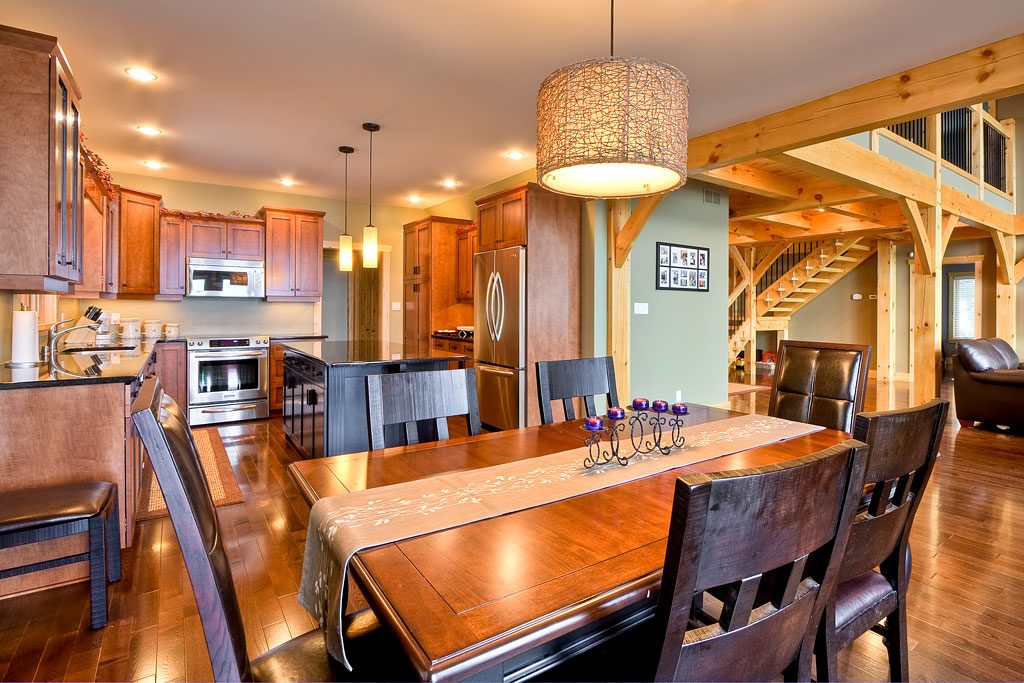
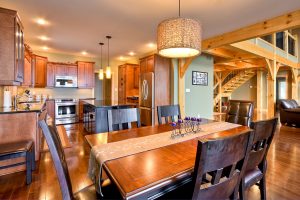
The residence is configured as a hybrid timber frame, concentrating heavy timber in the great room and entry zones while applying conventional framing in bedrooms and kitchen areas.
Engineering coordination includes:
-
Reinforced bearing at timber-to-stud transitions
-
Continuous diaphragm action across roof assemblies
-
Moisture isolation between framing types
This zoning strategy optimizes material efficiency while preserving long-span performance in primary spaces.
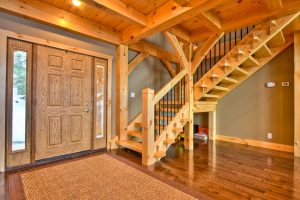
Timber Staircase with Through Tenons and Wedges
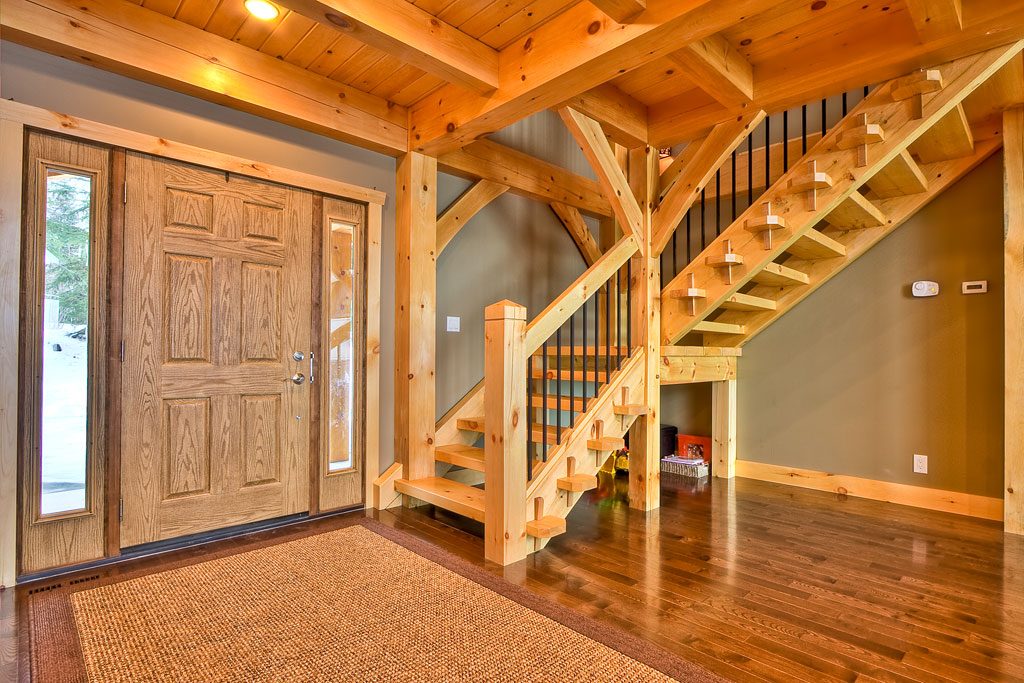
The specialty timber staircase incorporates through tenon joinery secured with wedges. Thru tenons provide direct mechanical load transfer between stringers and support beams.
Engineering considerations include:
-
Proper tenon sizing to preserve net section strength
-
Wedge compression preventing joint loosening
-
Seasonal movement allowance in timber connections
Stair loads are transferred into floor diaphragm without inducing eccentric stress.
The staircase also contributes lateral stiffness within the open great room volume.
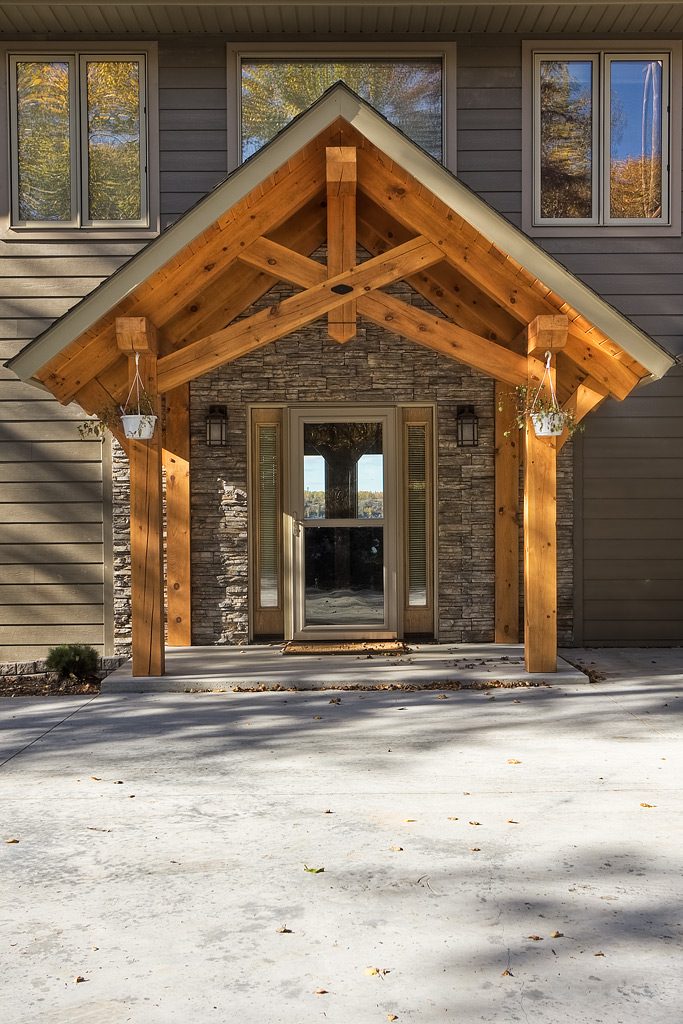
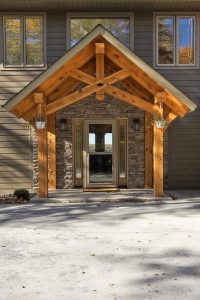
Covered Entry with Scissor Brace Truss
The covered entry is supported by a scissor brace truss system. Entry canopies experience:
-
Snow accumulation at roof edges
-
Wind uplift
-
Cantilever bending stress
Structural countermeasures include:
-
Reinforced beam-to-post connections
-
Uplift-rated anchorage at post bases
-
Proper flashing integration to prevent moisture intrusion
Scissor brace geometry reduces outward thrust while increasing ceiling height.
Deck and Stair System to Dock
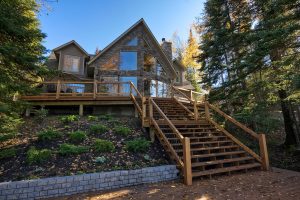
The large rear deck and stair system descending to the dock and boathouse require structural reinforcement due to exposure and elevation change.
Engineering features include:
-
Joist spacing rated for occupant live load
-
Lateral bracing against torsional movement
-
Uplift-rated connectors
-
Corrosion-resistant fasteners
Long stair runs require intermediate support to control deflection and vibration.
Proper drainage slope prevents hydrostatic pressure and water pooling on deck surfaces.
Exterior Cladding and Durability
Cultured stone siding combined with timber framing increases dead load at exterior walls.
Structural considerations include:
-
Anchored veneer systems
-
Drainage cavity behind stone
-
Frost-resistant detailing
Timber elements finished with Sansin ENS UV Clear Optimum maintain vapor permeability while resisting UV degradation.
End grain sealing and routine maintenance extend service life.
Environmental Load Considerations
North Shore lake exposure introduces:
-
Snow load accumulation and drift
-
Wind uplift along open water
-
Freeze-thaw cycling
-
Seasonal humidity fluctuation
Structural countermeasures include:
-
Continuous load paths from ridge to foundation
-
Reinforced scissor brace and king post connections
-
Ventilated roof assemblies
-
Frost-protected foundation systems
Creep deformation in long-span trusses is incorporated into serviceability calculations.
Structural Summary
Falcons North Shore integrates advanced timber engineering with:
-
King post prow front great room
-
Scissor brace truss systems at roof and entry
-
Parallel chord truss supporting upper gable
-
Timber staircase with through tenon joinery
-
Hybrid timber and conventional structural zoning
The residence achieves long-span performance, structural clarity and environmental durability while maintaining open lake views and complex roof geometry.