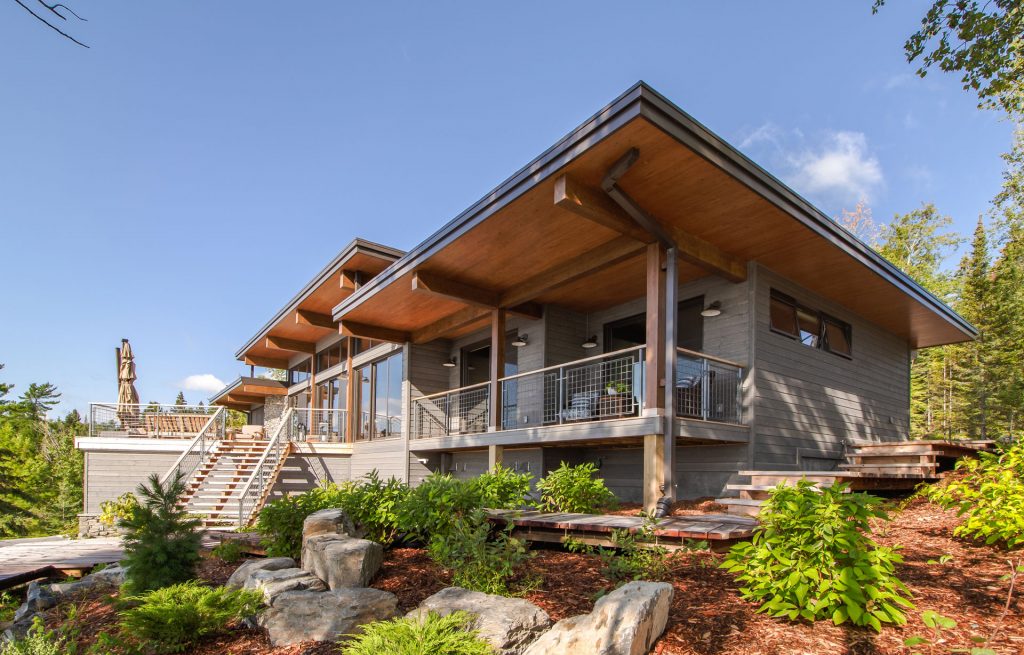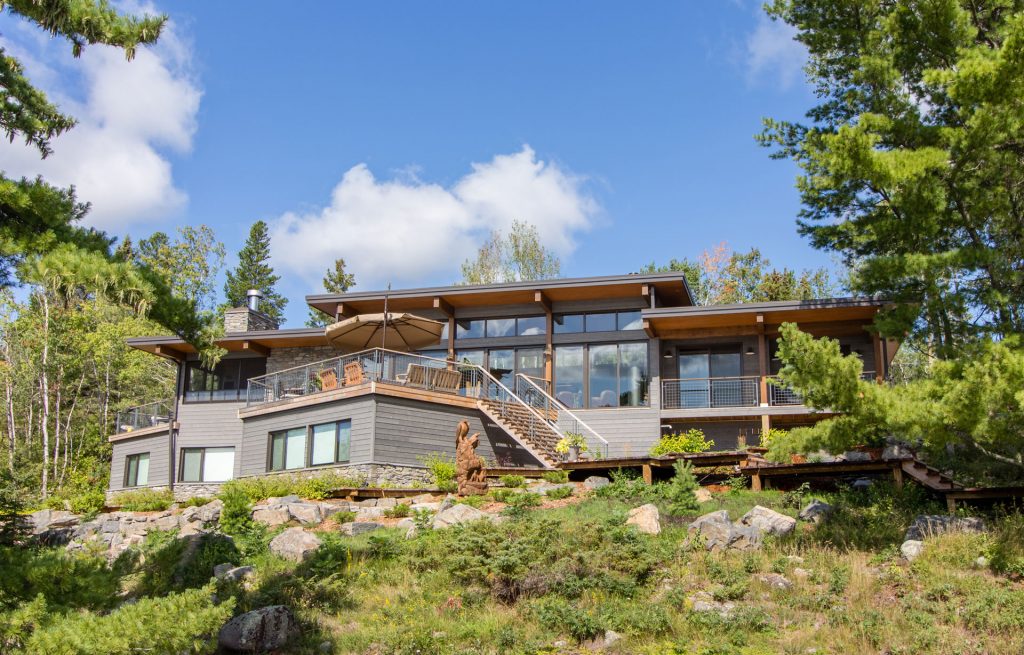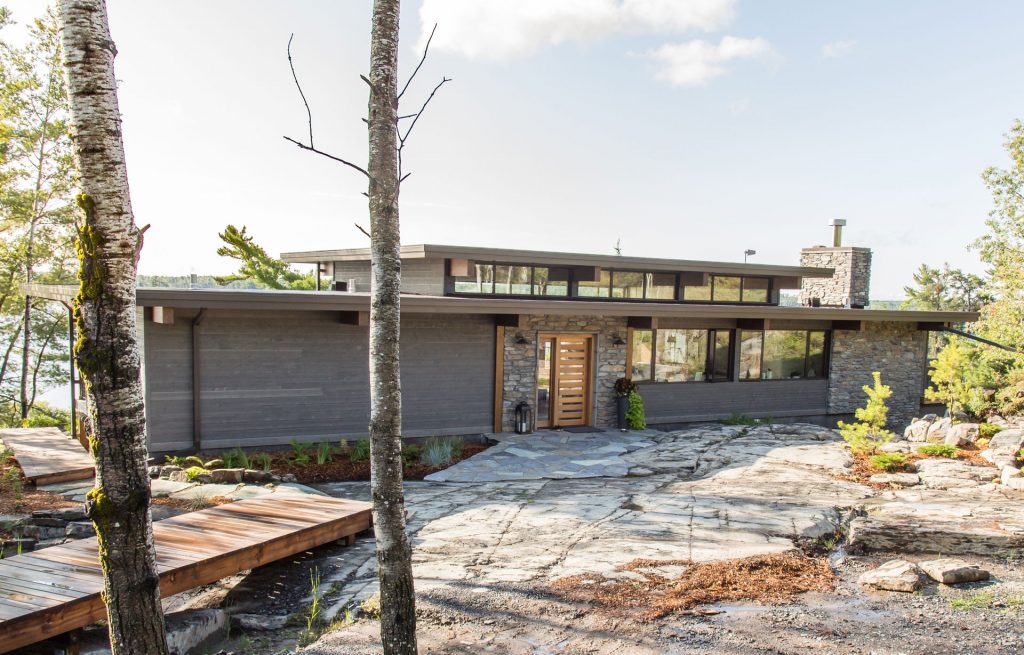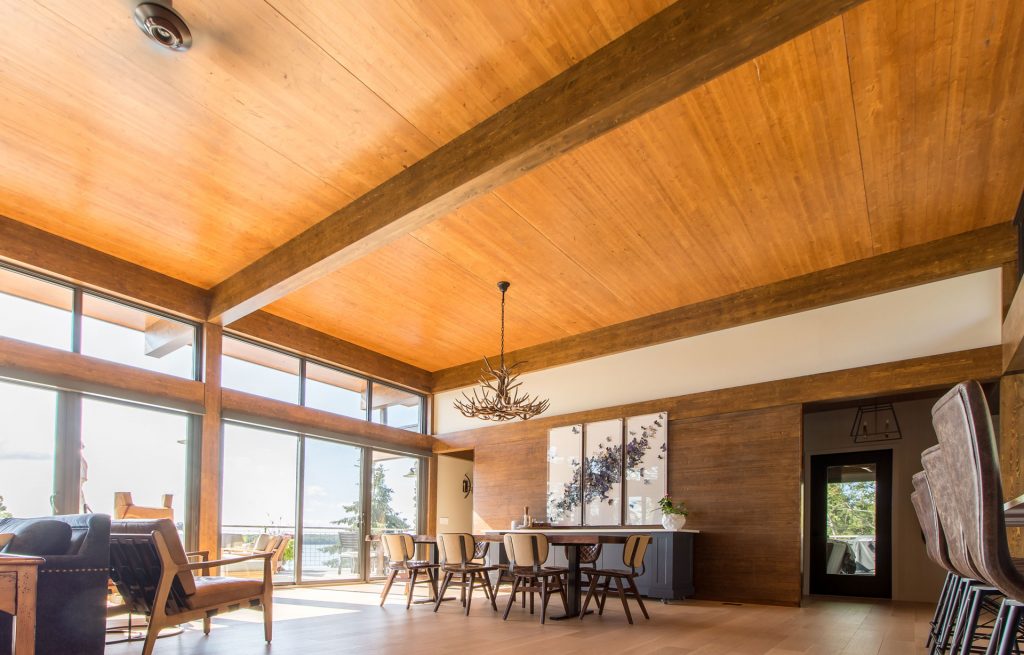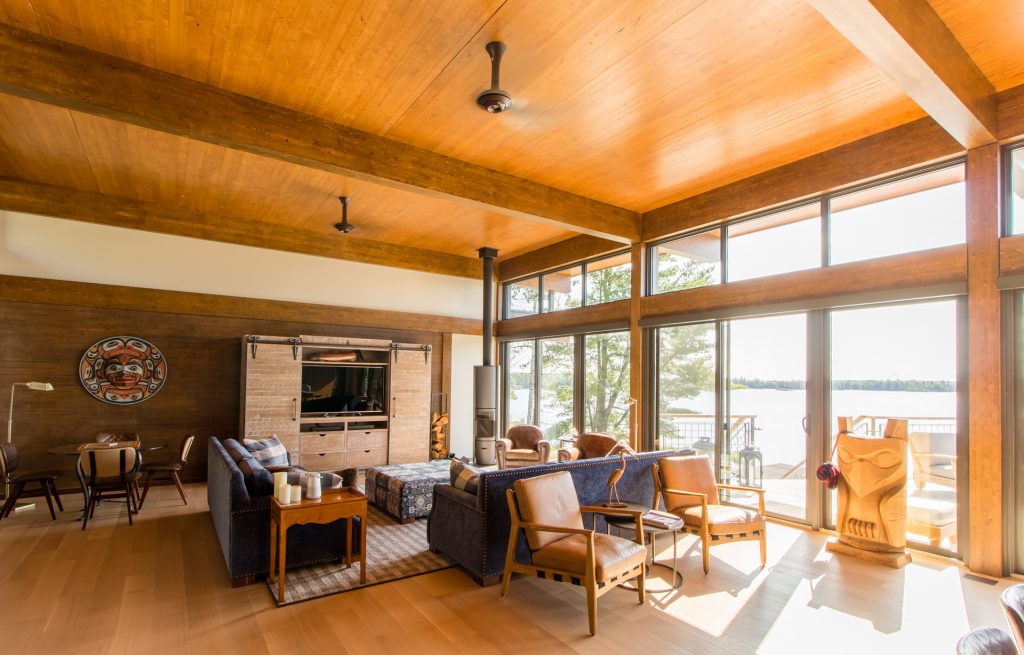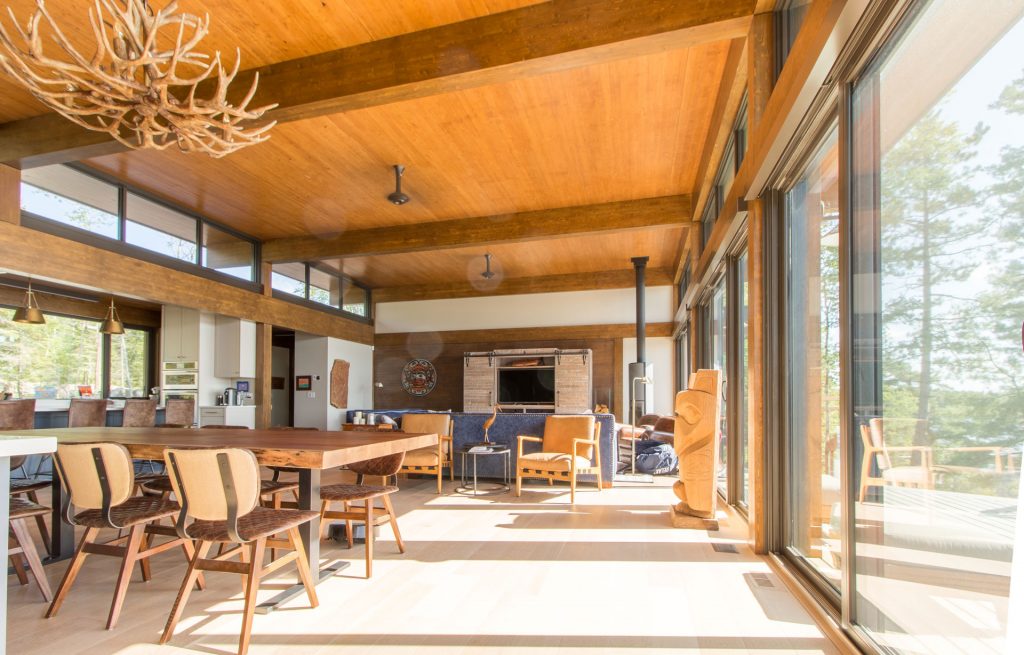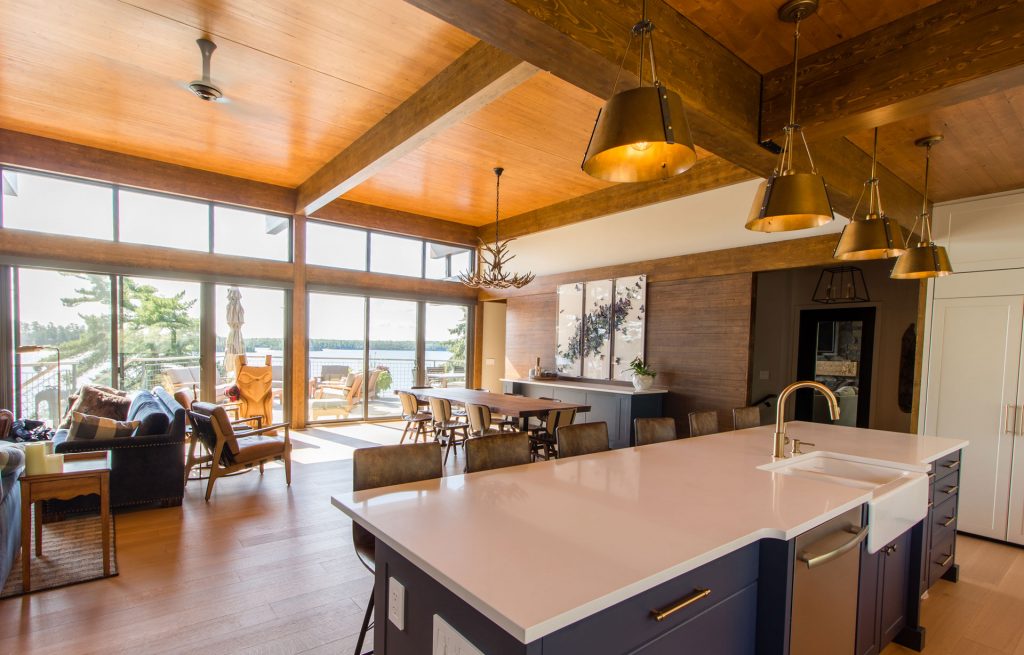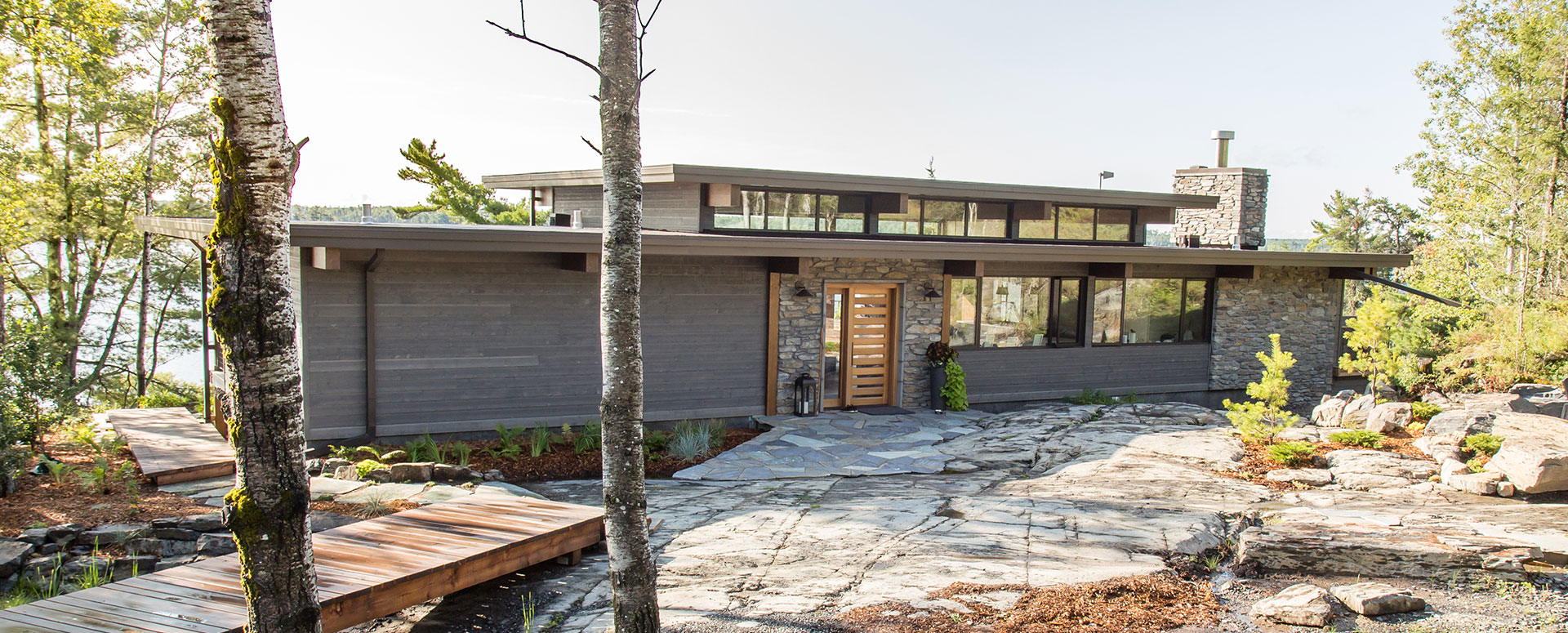
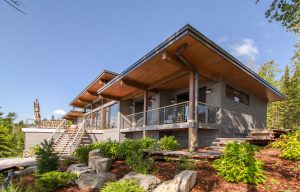
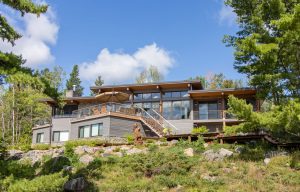
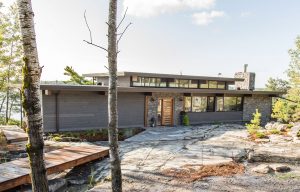
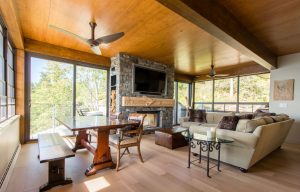
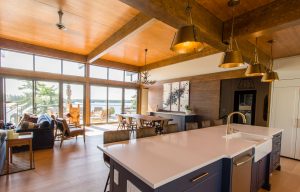
Eagles Nest is constructed directly on exposed granite bedrock. Building on rock eliminates concerns related to soil settlement but introduces anchorage and uplift challenges.
Engineering measures include:
-
Core drilling and epoxy-set anchor rods into granite
-
Reinforced concrete bearing pads where required
-
Shear transfer plates between mass timber columns and foundation
Bedrock anchorage provides high compressive capacity and excellent lateral resistance. However, connection detailing must account for thermal movement between concrete and timber elements.
Direct-to-rock construction simplifies load transfer geometry. Vertical gravity loads pass from roof diaphragm through mass timber columns into anchored base plates secured in granite.
Mass Timber Structural System
The primary structural system consists of prefabricated mass timber panels, beams and columns fabricated and installed as a coordinated assembly.
Mass timber systems provide:
-
High strength-to-weight ratio
-
Dimensional stability
-
Long-span capability
-
Reduced on-site construction time
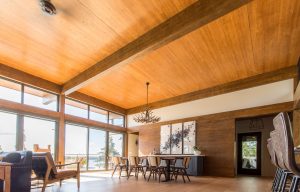
Unlike conventional stick framing, mass timber panels act as structural diaphragms. Roof and ceiling are integrated into a single structural layer.
Load paths are continuous and predictable:
-
Roof load distributed across mass timber deck
-
Transfer to primary beams
-
Axial compression through columns
-
Direct anchorage into granite foundation
Because mass timber components are factory fabricated, dimensional accuracy improves envelope integration and reduces field tolerance adjustments.
Thin Roof Profiles with High Structural Capacity
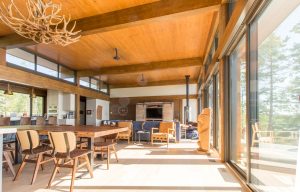
One key advantage of the mass timber roof assembly is reduced structural depth compared to conventional truss systems.
Structural decking panels span between beams without requiring deep rafter cavities. This allows:
-
Slim roof profile
-
Reduced visual bulk at eaves
-
Greater cantilever potential
Despite thinner assembly depth, the system maintains adequate bending capacity due to engineered lamination and panel thickness.
Snow load calculations determine panel span limits and fastener schedules. Creep deformation is accounted for under sustained dead and snow load conditions.
Long Spans and Reduced Column Frequency
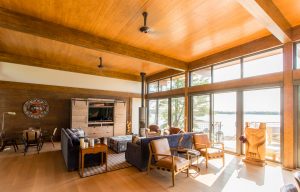
Mass timber beams permit extended spacing between columns. Fewer vertical supports improve interior openness and maximize lake views.
Engineering benefits include:
-
Reduced obstruction in glazing zones
-
Efficient distribution of load through larger beam sections
-
Improved flexibility in interior planning
Beam sizing is based on bending moment, shear stress and deflection limits. Long spans require careful evaluation of vibration performance and serviceability.
Continuous beam-to-column connections are reinforced to resist uplift and lateral forces generated by open-water wind exposure.
Large Overhangs and Cantilever Mechanics
Eagles Nest incorporates significant roof overhangs. Cantilevered roof extensions must resist bending and uplift forces.
Structural mechanics include:
-
Negative bending moment at beam supports
-
Axial compression in supporting columns
-
Reinforced fastener patterns at cantilever zones
Overhang length is determined by balancing shading performance and structural capacity. Excessive cantilever length increases bending stress and deflection.
Proper moisture detailing at cantilever penetrations prevents water intrusion at beam interfaces.
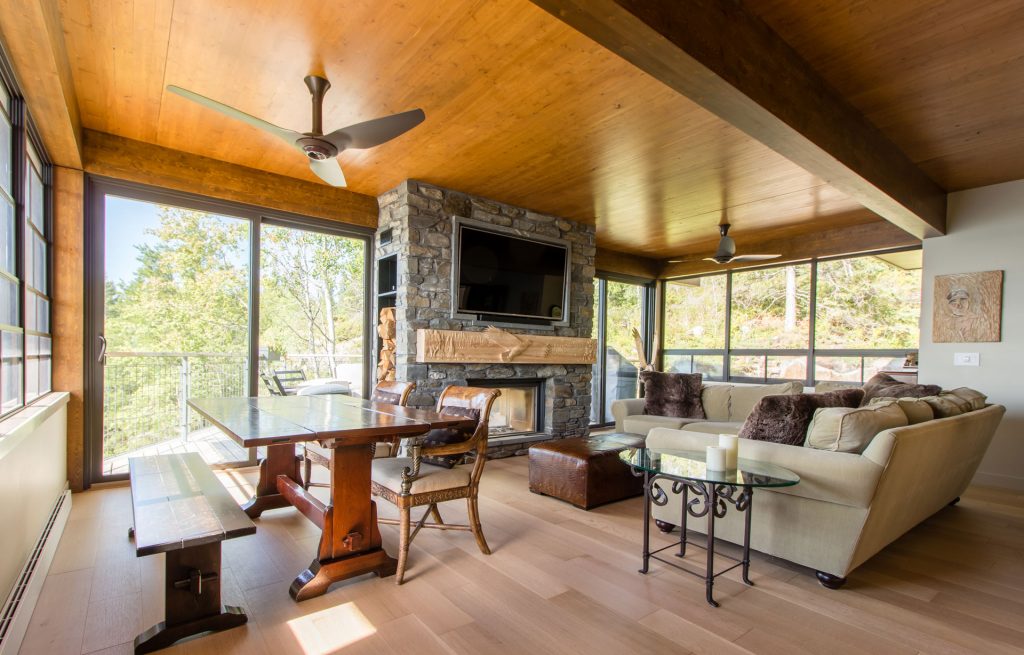
Roof Deck as Finished Ceiling and Structural Diaphragm
The mass timber roof deck serves dual purposes:
-
Interior finished ceiling
-
Structural diaphragm supporting roof insulation
This eliminates the need for additional ceiling framing layers. The exposed wood underside provides a finished appearance while the upper surface supports continuous insulation and roofing membrane.
Engineering advantages include:
-
Improved airtightness due to fewer penetrations
-
Continuous load transfer across deck plane
-
Reduced thermal bridging
Unbroken roof insulation above the structural deck enhances thermal performance. Continuous insulation eliminates rafter cavity interruptions typical in conventional framing.
Panel joints are sealed to maintain air barrier continuity.
Thermal Performance and Environmental Control
Building on granite exposes the structure to direct cold mass contact during winter months. High-performance insulation and airtight detailing are essential.
Key strategies include:
-
Continuous exterior insulation above roof deck
-
Thermal breaks at structural penetrations
-
Controlled vapor management layers
Mass timber provides moderate thermal mass, helping stabilize interior temperature swings.
Wind uplift resistance is critical due to open exposure. Hold-down anchors and panel fasteners are sized according to regional wind load requirements.
Glazing Integration and Lake Views
Large glazing areas require precise structural alignment. Beam deflection must remain within strict tolerances to protect window seals.
Mass timber fabrication accuracy allows:
-
Tight rough opening dimensions
-
Reduced site modification
-
Improved envelope performance
Lateral shear forces generated by wind acting on glazing are transferred through the mass timber diaphragm into foundation anchorage.
Durability and Long-Term Performance
Granite foundations provide stable bearing, but moisture management remains essential.
Durability measures include:
-
Sealed end grain surfaces
-
Flashing at all timber-to-exterior interfaces
-
Corrosion-resistant connectors
Creep deformation under sustained snow load is incorporated into structural calculations.
Because roof deck and ceiling are unified, maintenance access must be coordinated through service penetrations that do not compromise diaphragm integrity.
Structural Summary
Eagles Nest demonstrates how mass timber construction can deliver:
-
Direct anchorage into granite bedrock
-
Thin roof profiles with high structural capacity
-
Long spans between columns
-
Large cantilevered overhangs
-
Integrated structural roof deck with continuous insulation
This project illustrates disciplined mass timber engineering applied in a contemporary lakeside context. Structural efficiency, thermal performance and architectural clarity are achieved through precise fabrication and defined load path continuity from roof diaphragm to granite foundation.