Birds Hill Pine Ridge is positioned on a 14-acre property bordered predominantly by birch forest, with open exposure on three sides. Rural edge conditions introduce increased wind exposure and seasonal snow load variability compared to sheltered urban environments.
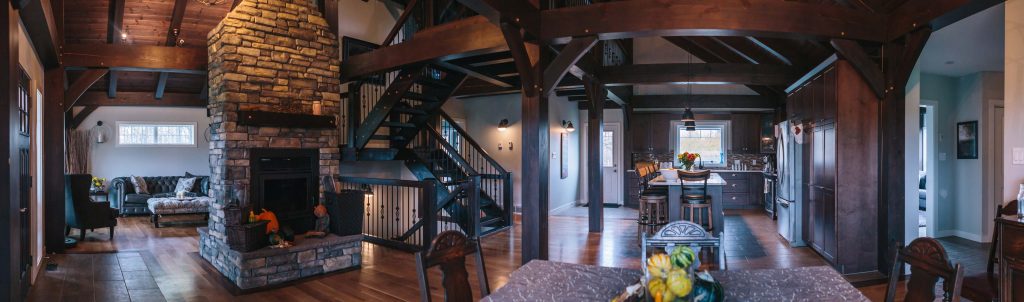
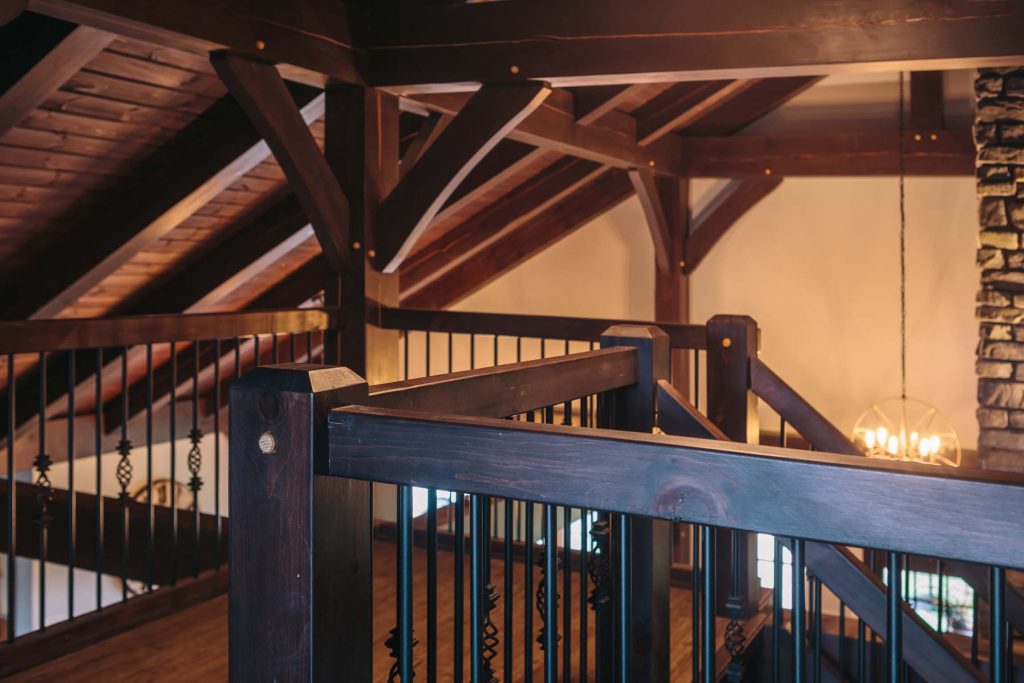
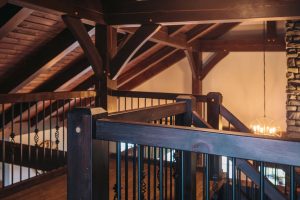
The structural system is organized around a post and plate timber frame configuration, integrating king post trusses at entry zones and heavy timber beams spanning the vaulted kitchen and dining areas. The objective is to maintain open interior volume while ensuring continuous load transfer from roof diaphragm to foundation anchorage.
This residence demonstrates disciplined timber framing applied to a low-density, high-exposure rural setting.
Covered Entry and Veranda: Post and Plate System
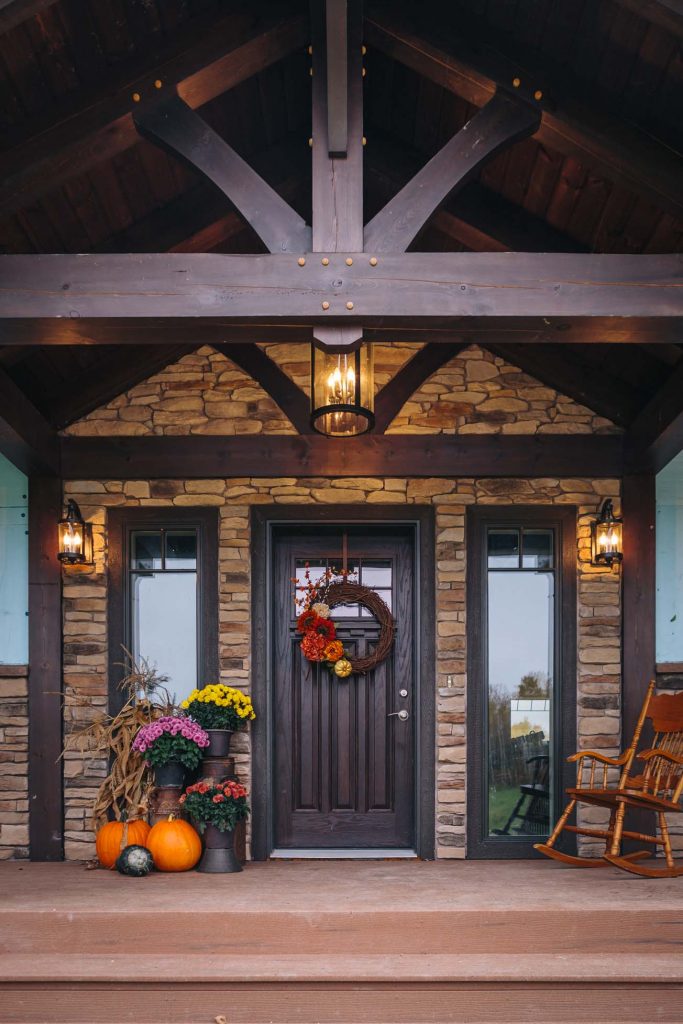
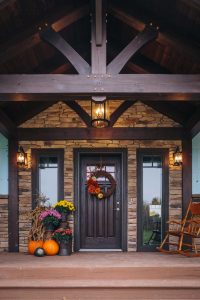
The entry sequence features a timber and cultured stone covered entry combined with a post and plate veranda. King post trusses support the gable roof at the entry and garage.
Structural mechanics of the post and plate system include:
-
Vertical posts carrying axial compression
-
Horizontal plates distributing roof loads
-
King post truss resolving rafter thrust through tie beams
Gable trim and garage-side trusses contribute to lateral stability at exposed elevations. Wind uplift is countered through tension-rated anchors at post bases.
Cultured stone veneer adds dead load to the entry assembly. Anchorage systems must transfer this load safely to structural framing without compromising drainage.
Flashing and capillary breaks are installed at all timber-to-stone interfaces to prevent moisture intrusion.
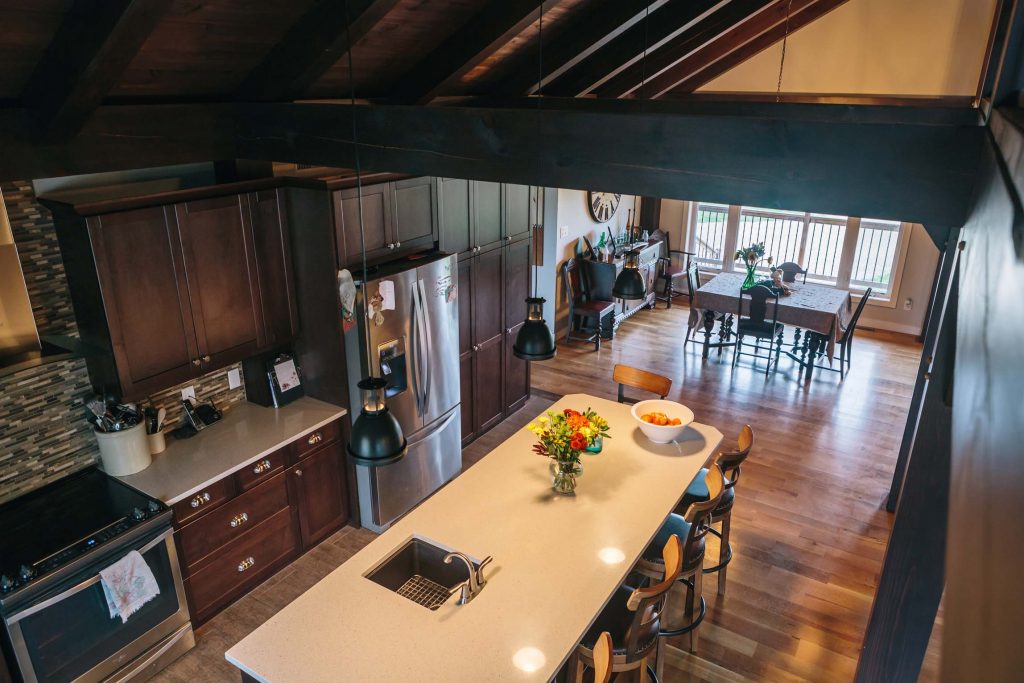
Heavy Timber Beams in Vaulted Kitchen and Dining
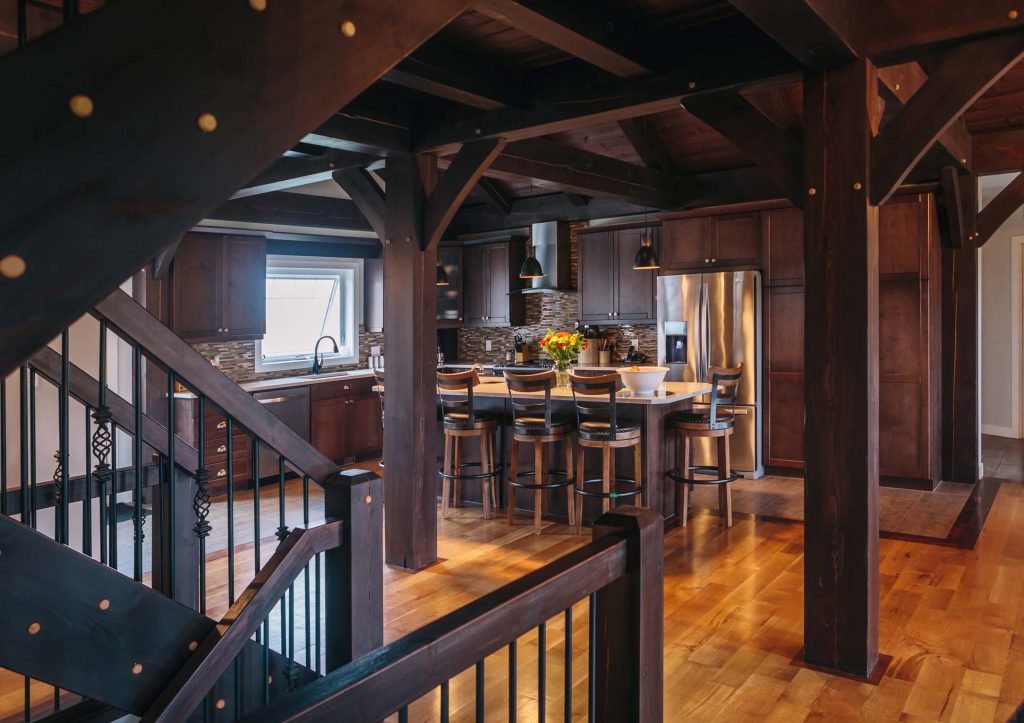
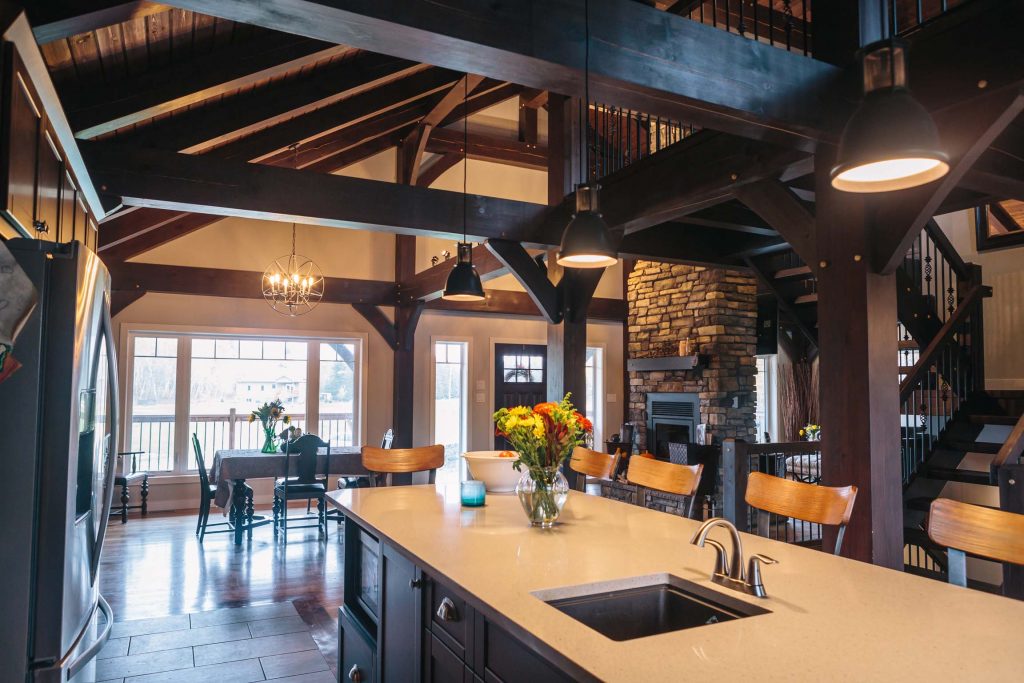
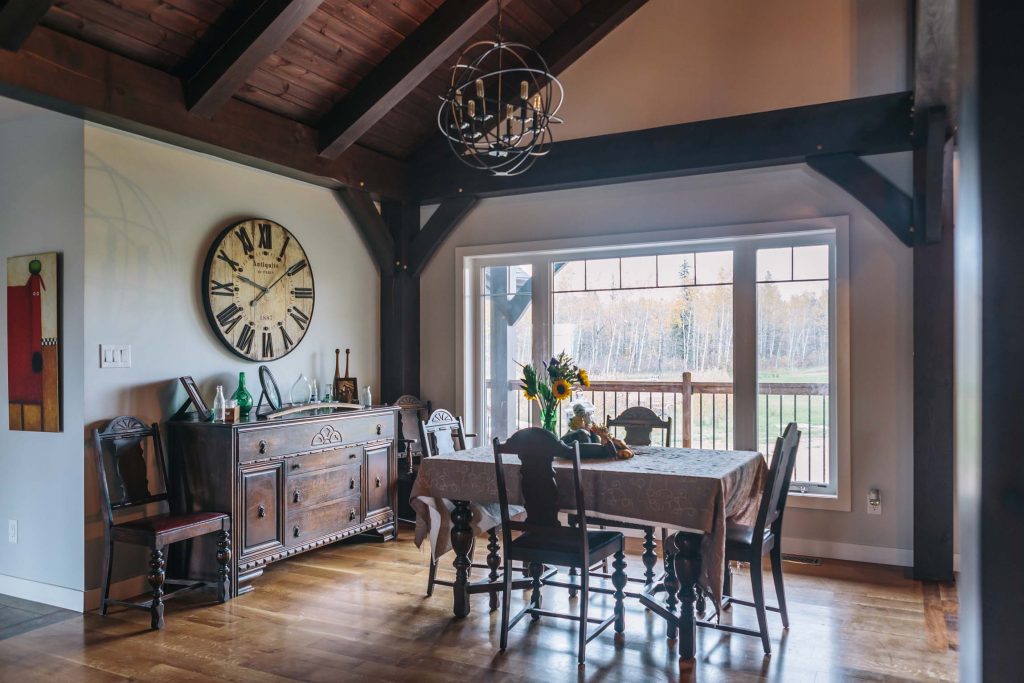
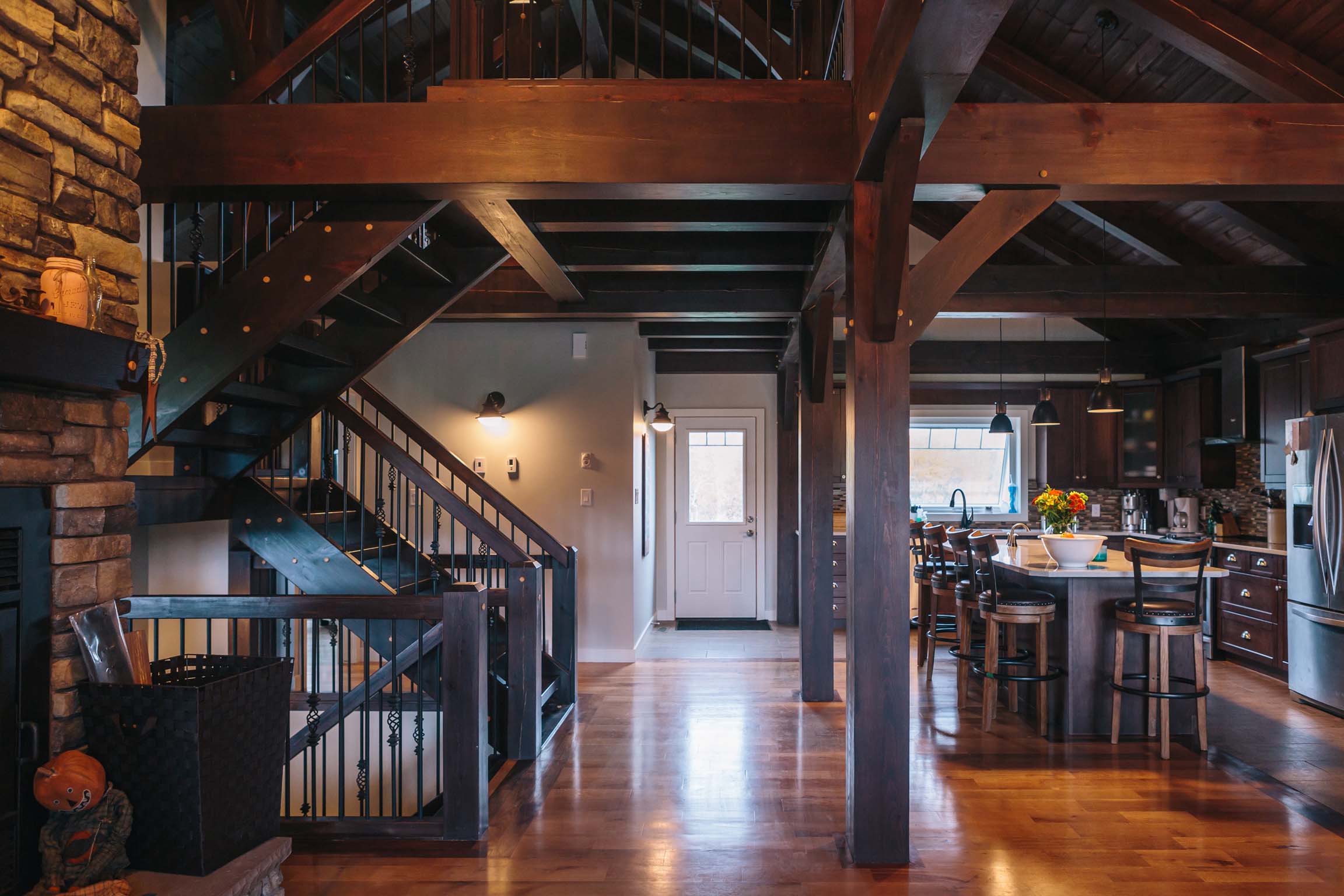
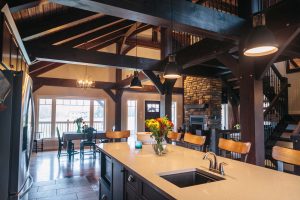
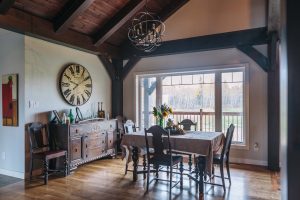
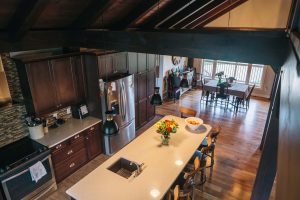
The kitchen and dining space features a vaulted ceiling supported by heavy timber beams. These beams carry roof loads across open spans without intermediate bearing walls.
Engineering considerations include:
-
Bending stress evaluation for primary beams
-
Deflection limits under sustained snow load
-
Alignment of beam bearings with structural posts
Vaulted geometry increases vertical volume but requires lateral stabilization through roof diaphragm action and shear-resisting wall assemblies.
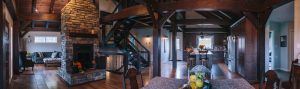
The open concept layout eliminates interior structural partitions. Beam sizing compensates for increased span demand.
Double-Sided Fireplace as Structural Divider
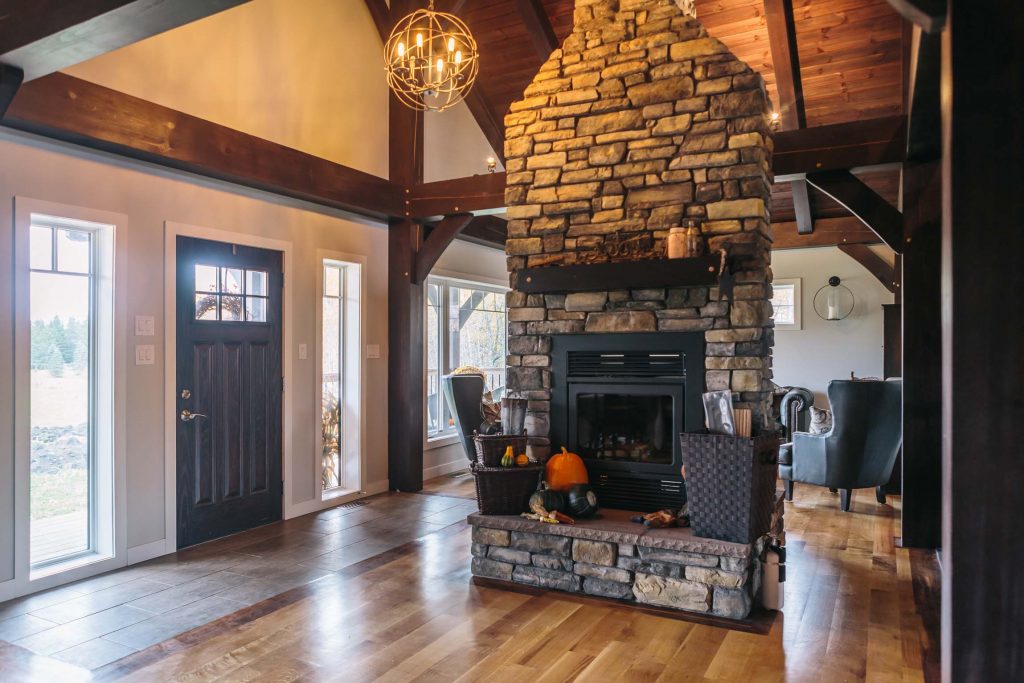
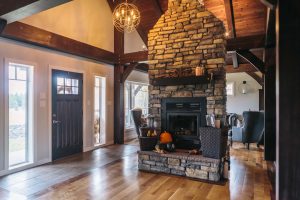
The living room and kitchen/dining area are separated by a double-sided fireplace with timber mantles. While primarily architectural, masonry mass introduces localized dead load.
Structural integration requires:
-
Reinforced floor framing beneath fireplace mass
-
Thermal isolation between masonry and timber elements
-
Anchorage of timber mantles into load-bearing framing
Because fireplaces generate localized heat, clearance distances and moisture management are essential to prevent timber degradation.
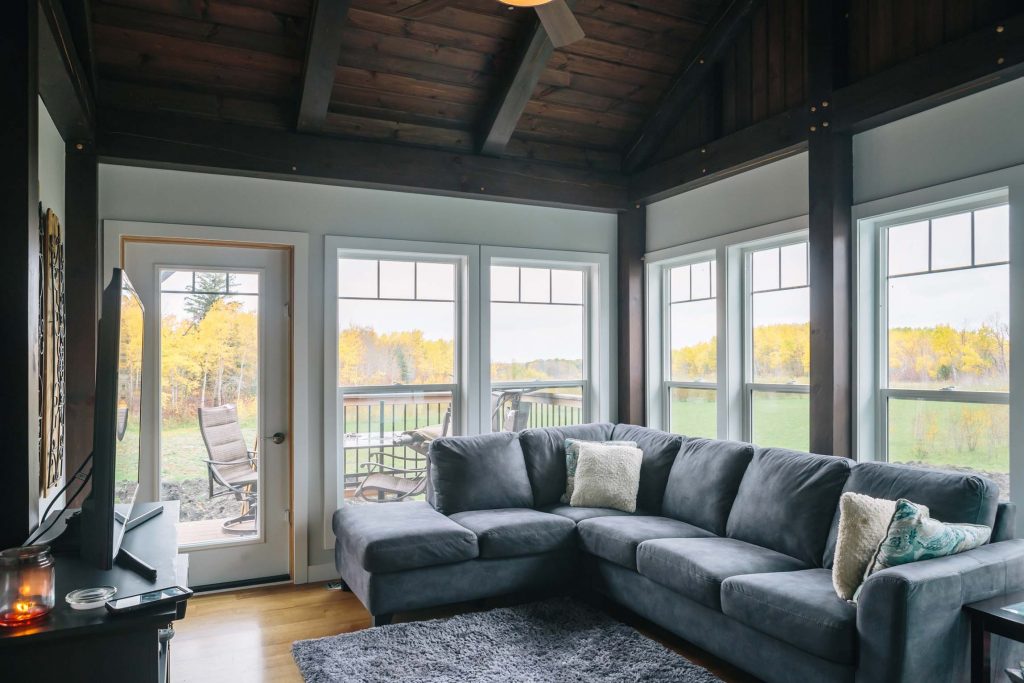
Timber Frame Sunroom
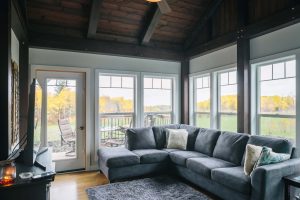
The sunroom is constructed as a dedicated timber frame volume oriented toward the surrounding acreage.
Structural considerations include:
-
Increased glazing exposure requiring reinforced headers
-
Lateral wind resistance across open elevations
-
Snow load management at roof transitions
Continuous load paths extend from sunroom rafters through posts into foundation anchorage.
Ventilated roof cavities prevent condensation in seasonal temperature fluctuation.
Interior Finish and Lighting Integration
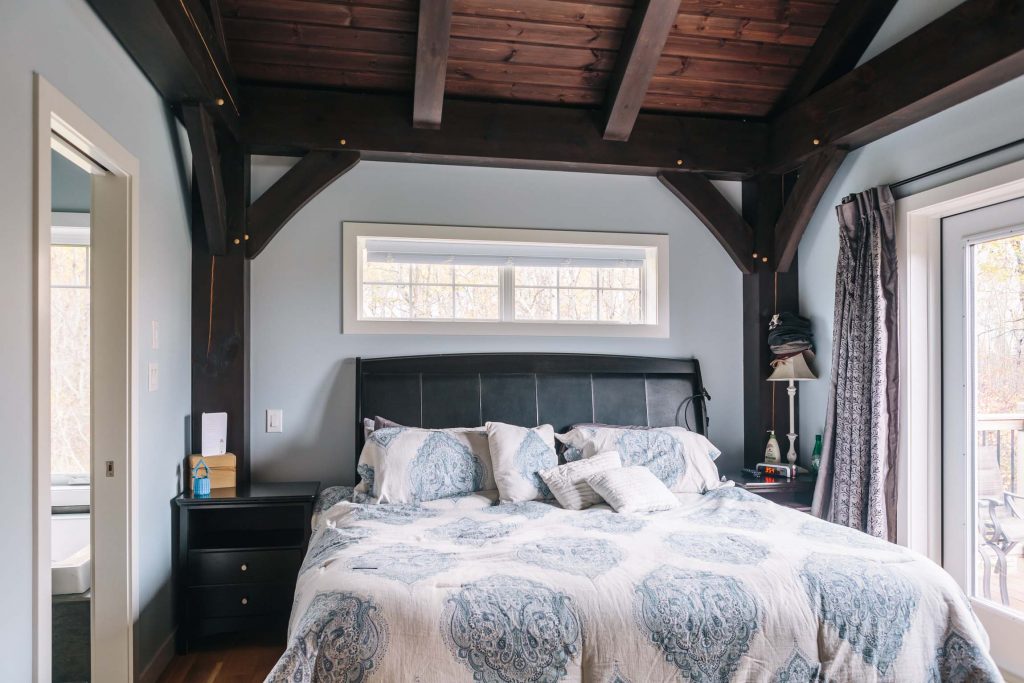
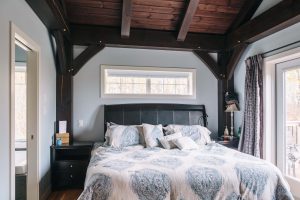
Timbers are finished with Sansin SDF Vintage Lantern, producing a dark, rich tone. Tongue and groove ceiling boards are finished in a contrasting lighter shade.
From a structural perspective:
-
T+G boards contribute minor diaphragm stiffness
-
Moisture content at installation must be controlled
-
Fastening patterns must prevent seasonal separation
Up-lighting directed toward the ceiling enhances visibility of timber members. Electrical routing is isolated from primary load-bearing components to prevent thermal concentration near structural joints.
Lighting design does not interfere with structural function when properly integrated.
Environmental Load and Durability
The 14-acre forested site presents:
-
Snow load accumulation influenced by tree coverage
-
Wind uplift on open sides of structure
-
Freeze-thaw cycling
-
Seasonal humidity variation
Structural countermeasures include:
-
Continuous vertical load paths
-
Reinforced king post truss connections
-
Uplift-rated foundation anchors
-
Ventilated roof assemblies
End grain sealing and proper flashing protect exterior timber from moisture absorption.
Foundation systems incorporate frost protection and drainage to maintain stable bearing conditions.
Structural Summary
Birds Hill Pine Ridge demonstrates engineered post and plate timber framing integrated with heavy beam vaults and king post trusses.
Key structural characteristics include:
-
Post and plate veranda with king post gable trusses
-
Heavy timber beams spanning vaulted kitchen and dining areas
-
Timber frame sunroom resisting wind exposure
-
Masonry fireplace integrated into structural grid
-
Defined load path continuity from ridge to footing
This residence combines rural site conditions with disciplined timber engineering, delivering structural clarity, long-span performance and environmental resilience within a forested prairie setting.