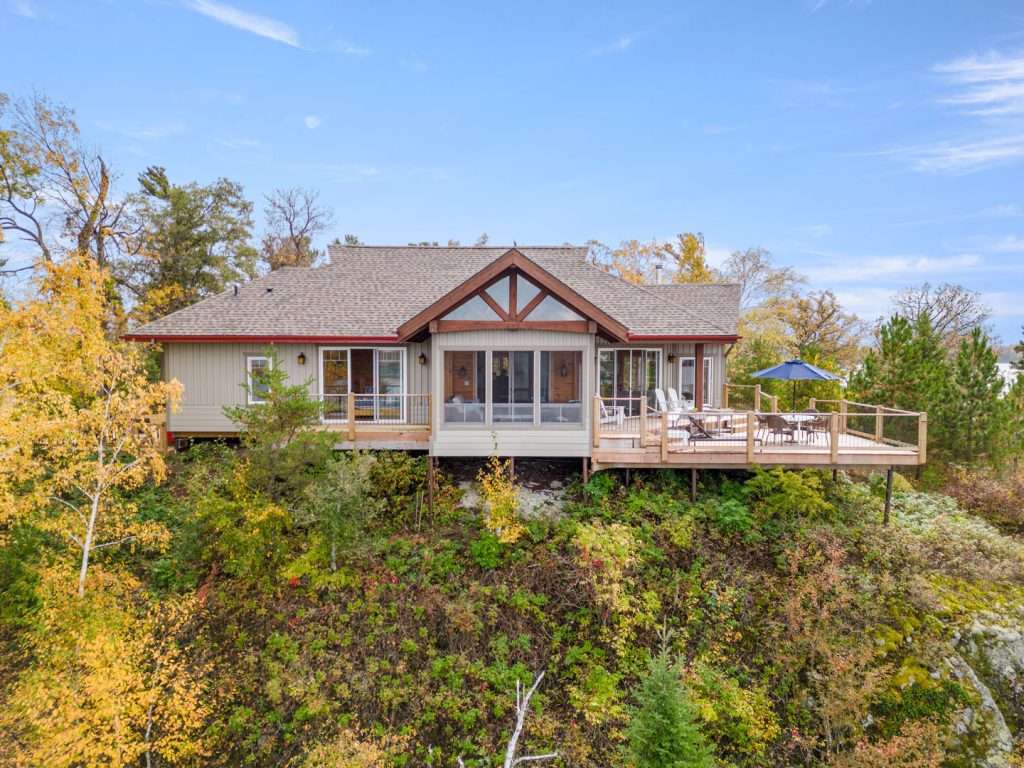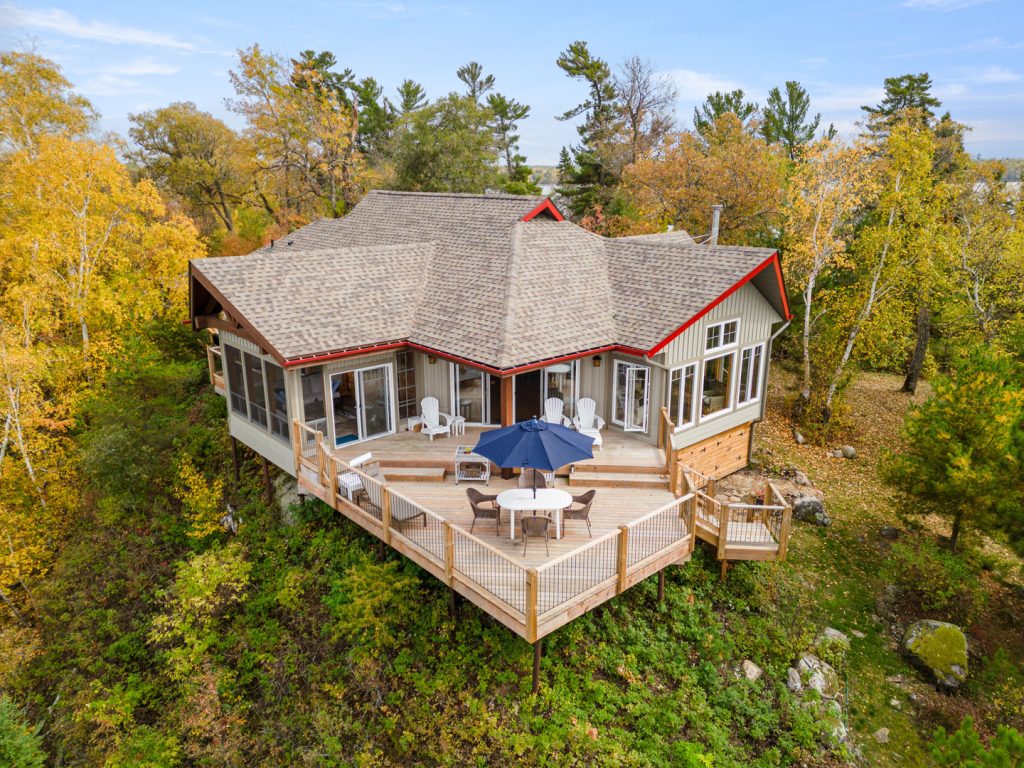
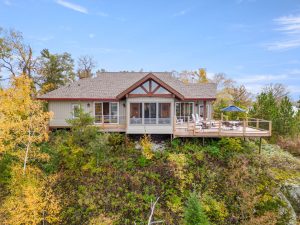
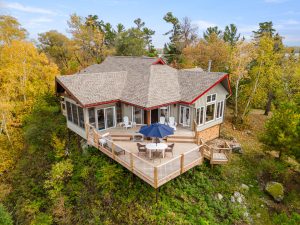
Lake of the Woods spans approximately 105,000 kilometers of shoreline and more than 14,500 islands. The Adventure Awaits cottage is located on a three-acre island site, fully off-grid and subject to direct environmental exposure.
Remote island construction introduces unique engineering constraints:
-
Limited material staging area
-
Restricted heavy equipment access
-
Elevated wind exposure across open water
-
Freeze-thaw cycling with high humidity
Structural design must prioritize prefabrication efficiency, predictable load paths, and long-term durability under isolated maintenance conditions.
Off-Grid Structural Strategy
An off-grid cottage must integrate structural reliability with mechanical independence. Without connection to municipal infrastructure, envelope performance and material resilience become primary risk mitigation strategies.
Engineering priorities include:
-
Reduced thermal loss through compact structural form
-
Airtight detailing to minimize energy demand
-
Durable timber connections resistant to corrosion
-
Simplified structural geometry for ease of assembly
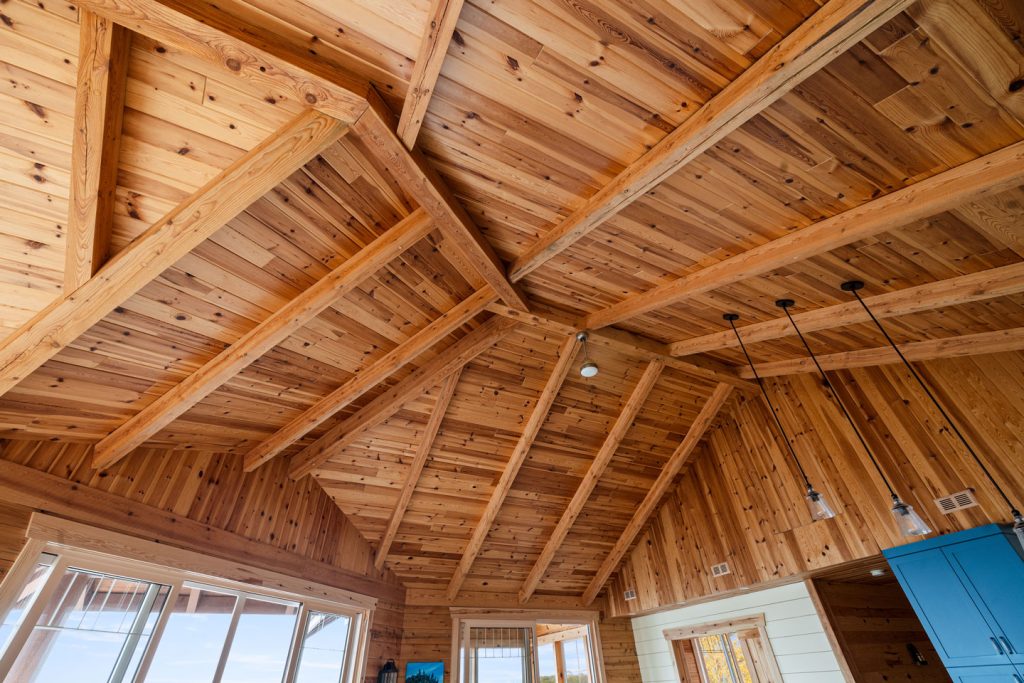
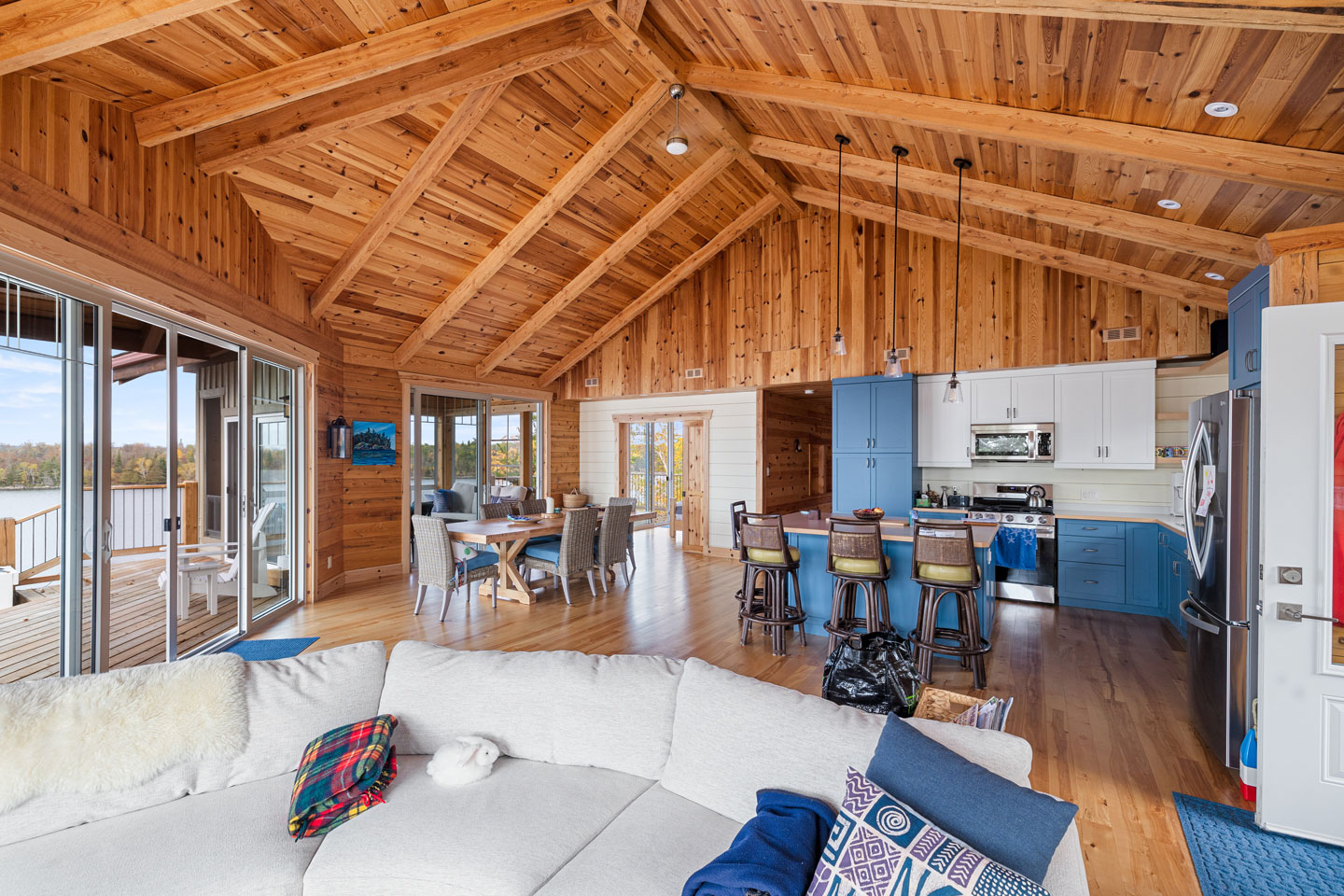
Load transfer remains continuous from roof diaphragm through primary beams into foundation anchorage. Island sites often rely on bedrock or shallow soil bearing. Where bedrock is present, anchor rods and reinforced concrete piers provide uplift resistance and lateral stability.
Wind loads are amplified due to unobstructed fetch over water. Uplift forces acting on roof assemblies are countered with tension-rated connectors integrated into the structural frame.
Entry Porch and Curving Tie Beam Mechanics
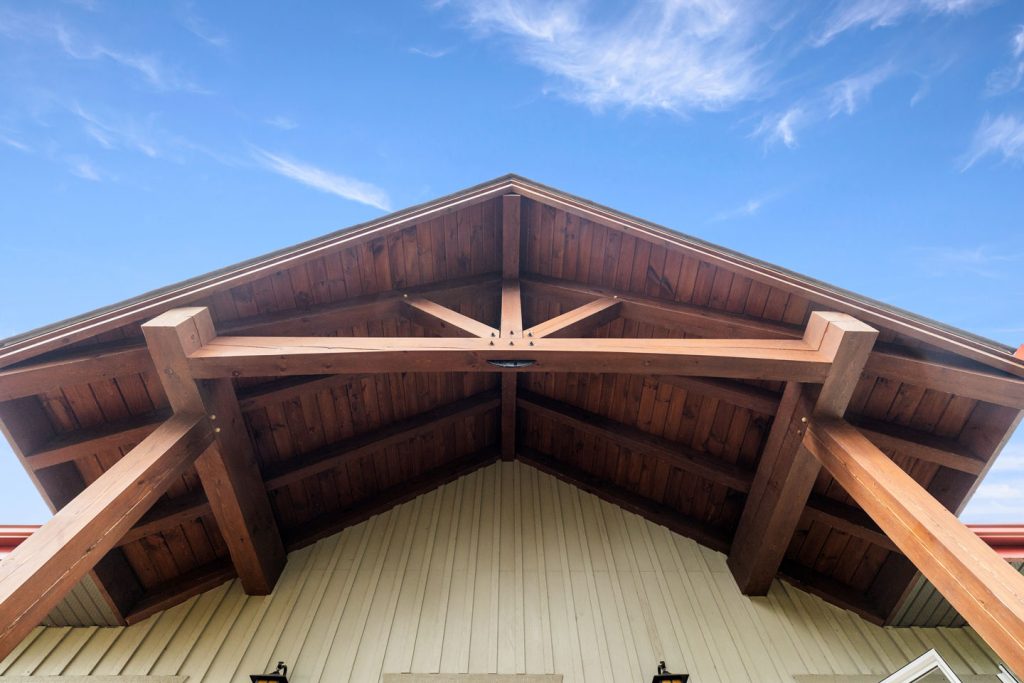
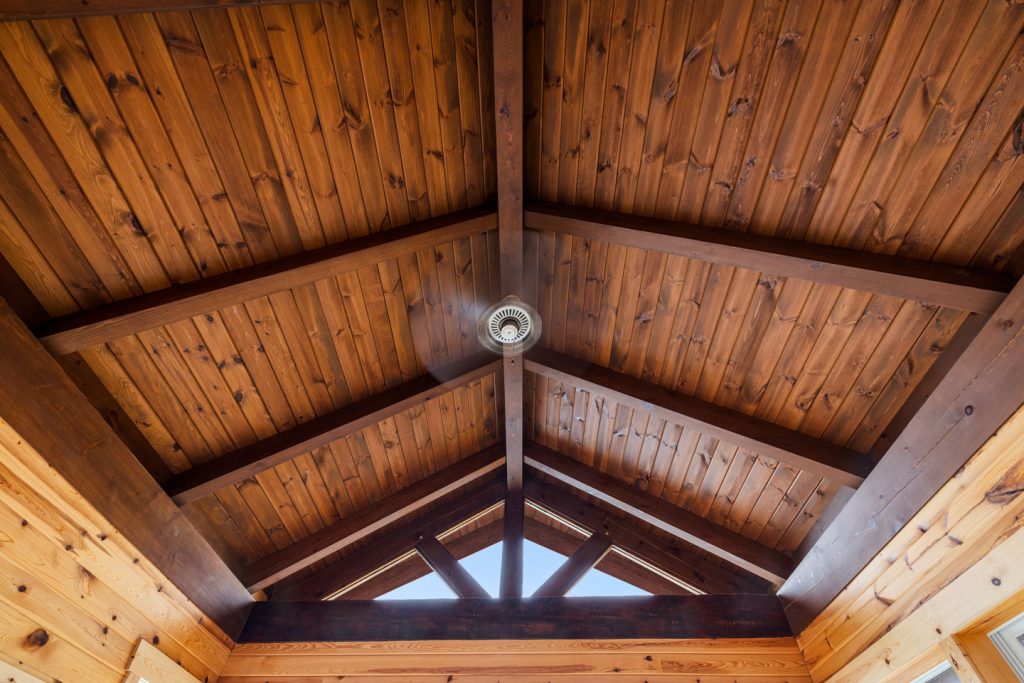
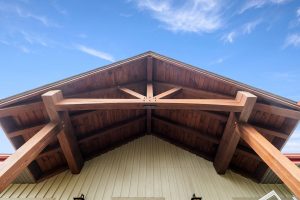
The entry porch with a curving tie beam functions as both architectural threshold and structural support system.
Tie beams in timber framing resist outward thrust generated by roof pitch. In this configuration:
-
Rafters impose compressive force along roof slope
-
Tie beam resolves horizontal thrust into axial tension
-
Posts transfer vertical reaction into foundation
Curved geometry modifies force vector orientation but does not alter fundamental structural mechanics. Member sizing must account for combined bending and axial stress.
Connection detailing at curved tie beams requires precise joinery or engineered steel reinforcement to maintain shear capacity and long-term stability under cyclic loading.
Because the entry is accessed directly from the dock, moisture exposure is elevated. Proper flashing and drainage at post bases prevent capillary absorption and decay.
Sunroom Veranda: Transitional Envelope Engineering
The 13 ft by 12 ft sunroom veranda serves as a thermal and environmental buffer between exterior dock access and conditioned interior space.
From an engineering standpoint, the veranda must manage:
-
Wind-driven rain
-
Insect infiltration
-
Solar heat gain
-
Snow load on extended roof planes
Screen or glazed assemblies reduce insect entry without significantly increasing lateral wind resistance. Structural framing must still resist torsion and uplift.
Roof framing above the veranda is sized for regional snow load and potential drift accumulation at roof intersections. Continuous ventilation prevents condensation in enclosed seasonal conditions.
As a transitional envelope element, the veranda reduces direct air infiltration into the primary living space, improving energy efficiency in off-grid operation.
Dining Deck and Timber Roof Canopy
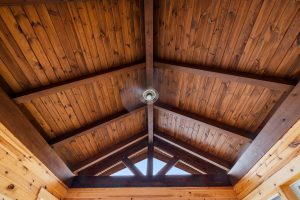
Double doors from the sunroom open onto a dining deck with a timber frame roof above. Deck assemblies in island environments must resist both live load and environmental stress.
Engineering considerations include:
-
Joist spacing calibrated for occupant load
-
Corrosion-resistant fasteners due to humidity
-
Drainage slope to prevent water accumulation
-
Uplift-resistant post anchorage
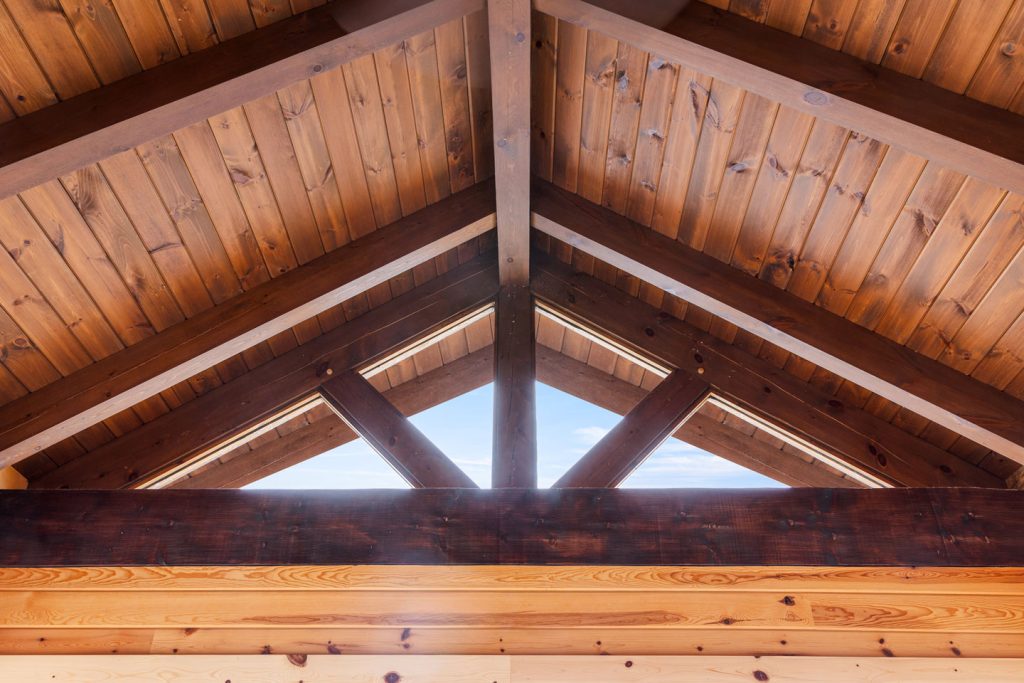
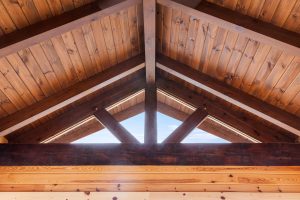
The timber canopy above the deck introduces cantilever forces and potential wind uplift. Braced beam geometry reduces bending moment and improves stiffness.
Continuous load paths from canopy rafters to deck posts ensure structural coherence. Anchor connections at deck-to-foundation interfaces are rated for uplift and shear forces typical in exposed waterfront sites.
Deck boards must allow ventilation below to reduce moisture retention. This mitigates decay risk in a climate where maintenance access may be seasonal.
Building Envelope and Energy Performance in Off-Grid Conditions
Off-grid performance depends heavily on envelope efficiency. Energy conservation reduces demand on renewable systems such as solar arrays or battery storage.
Performance measures include:
-
Continuous insulation layers
-
Airtight joint detailing at timber penetrations
-
Thermal break integration at structural connectors
-
Ventilated roof cavity to prevent condensation
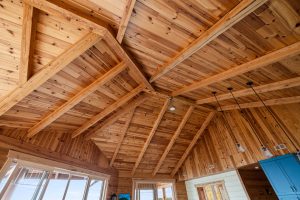
Timber elements contribute moderate thermal inertia, moderating interior temperature fluctuation when combined with controlled ventilation.
Solar orientation is optimized for natural daylighting, reducing artificial lighting demand.
Structural Durability and Maintenance Simplicity
Remote island cottages must be engineered for minimal intervention. Structural simplicity enhances long-term resilience.
Durability measures include:
-
Elevated timber clearances above grade
-
Sealed end grain surfaces
-
Stainless or hot-dip galvanized connectors
-
Defined drainage paths away from structural interfaces
Freeze-thaw cycling accelerates deterioration if moisture intrusion is not controlled. Proper flashing and slope management prevent hydrostatic pressure buildup at deck and wall transitions.
Heavy timber framing offers inspectable structural clarity. Exposed members allow visual assessment of connection integrity and moisture condition.
Engineering Summary
Adventure Awaits demonstrates that off-grid island living can achieve structural rigor and environmental resilience through disciplined timber engineering.
Key performance characteristics include:
-
Continuous load paths resisting wind uplift and snow load
-
Tie beam geometry resolving horizontal thrust
-
Durable deck and canopy assemblies
-
Airtight envelope optimized for energy independence
-
Prefabrication-compatible structural simplicity
The cottage is not defined by isolation but by structural efficiency. On a vast lake defined by scale and exposure, the timber frame system provides stability, durability, and comfort without reliance on complex infrastructure.
This is off-grid architecture grounded in structural logic and environmental physics.