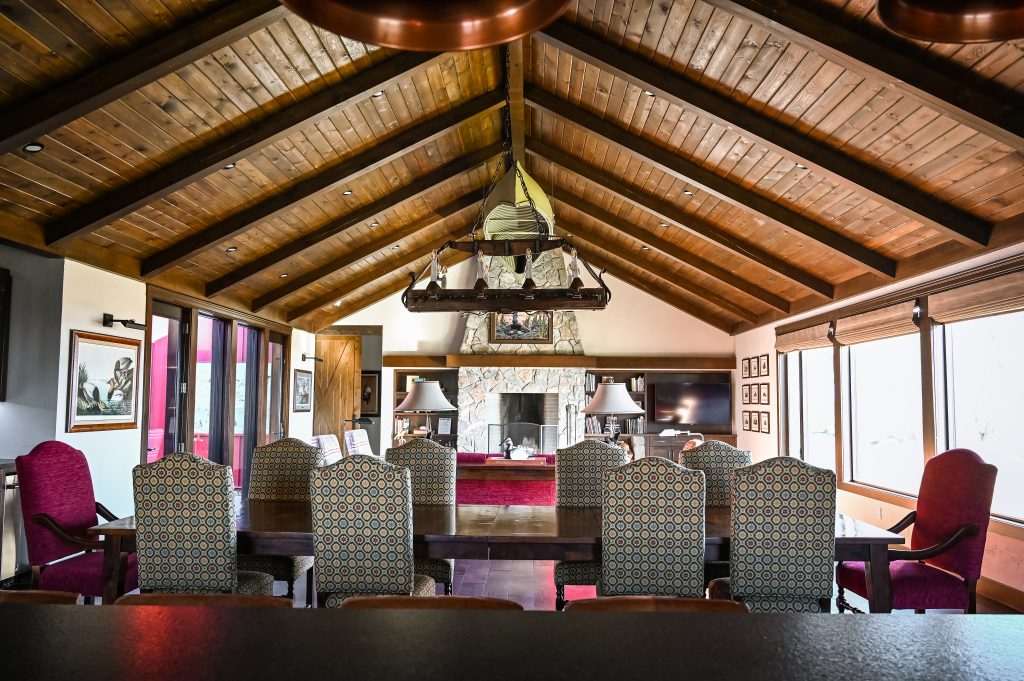
The Lodge is a purpose-built seasonal hunting retreat designed for multi-occupant use under variable autumn weather conditions. The structure integrates a steel exterior shell with a timber-framed interior core, balancing durability, low maintenance requirements, and structural clarity.
The building accommodates five bedrooms and four bathrooms within a 24 ft x 52 ft central living volume. Structural engineering prioritizes long-span interior performance, lateral stability, moisture resistance, and durability under intermittent seasonal occupancy.
This is a performance-driven lodge structure rather than a decorative timber environment.
Steel Exterior Envelope: Durability and Maintenance Reduction
The steel exterior cladding was selected to minimize long-term maintenance in a remote setting. Hunting lodges often experience periods of vacancy, making material resilience critical.
Engineering advantages of steel cladding include:
-
Resistance to rot and insect damage
-
Reduced moisture absorption
-
Dimensional stability under freeze-thaw cycling
-
Low maintenance lifecycle
Proper installation requires:
-
Ventilated rainscreen cavity
-
Thermal break detailing to reduce bridging
-
Corrosion-resistant fasteners
-
Drainage plane integration
Steel panels must be isolated from timber framing components to prevent condensation-driven corrosion. Air barrier continuity behind cladding maintains envelope performance.
Covered Entry Hall and Environmental Buffering
The covered entry hall functions as a transitional environmental buffer between exterior and conditioned interior space.
Structural functions include:
-
Snow load support on extended roof plane
-
Wind pressure resistance at entry
-
Moisture shedding away from primary openings
Covered entry systems reduce hydrostatic pressure at door thresholds during heavy precipitation events. Uplift resistance at exposed corners is achieved through anchored posts tied into foundation elements.
Central Living Volume: 24 ft x 52 ft Span Engineering
The primary interior living area spans 24 ft by 52 ft and houses kitchen, dining, and great room functions. Long-span timber framing within this footprint must control deflection and creep deformation under sustained load.
Structural strategies include:
-
Engineered glulam beams sized for bending stress limits
-
Timber truss systems distributing roof load
-
Aligned vertical posts maintaining continuous load paths
-
Floor diaphragm stabilization
Roof loads transfer through timber framing into vertical supports and down to foundation anchorage. Member sizing accounts for regional snow load and dead load from ceiling and insulation assemblies.
The 9 ft wall height throughout the lodge improves vertical load stability by maintaining moderate slenderness ratios in posts and wall framing.
Timber and Board Ceilings: Structural and Environmental Interaction
Timber beams and board ceilings underline the lodge aesthetic while performing structural and diaphragm functions.
Engineering implications include:
-
Added dead load contribution
-
Dimensional movement under seasonal humidity change
-
Shear transfer across ceiling plane
Board ceilings must be installed with controlled moisture content to limit shrinkage gaps. Proper fastening patterns maintain diaphragm integrity and prevent vibration under occupancy load.
Visible timber framing allows structural inspection and reinforces load path transparency.
Central Courtyard and Outdoor Kitchen Integration
The lodge includes a central courtyard with an outdoor kitchen. This introduces semi-enclosed structural conditions subject to wind pressure and snow accumulation.
Engineering considerations include:
-
Drainage slope away from interior walls
-
Snow load evaluation in partially enclosed zones
-
Corrosion-resistant materials near cooking equipment
Outdoor kitchen structures must resist localized heat exposure and potential grease accumulation. Structural timber near heat sources requires proper clearance and fire-resistant detailing.
Courtyard geometry must avoid creating wind tunnel effects that amplify lateral load.
Multi-Bedroom Structural Zoning
Five bedrooms and four bathrooms introduce distributed plumbing loads and localized floor reinforcement zones.
Structural measures include:
-
Reinforced floor framing beneath bathroom areas
-
Vibration control in sleeping zones
-
Acoustic isolation between rooms
Stacked plumbing walls align with structural bearing lines to preserve load path continuity and minimize penetrations through primary beams.
Decorative Canoe Overhead: Suspended Load Management
The suspended cedar strip canoe introduces additional overhead load. While primarily aesthetic, it must be structurally secured.
Engineering requirements include:
-
Anchored suspension points tied into primary beams
-
Load calculation for static and dynamic forces
-
Safety factor for occupant protection
Attachment points are integrated into structural members to avoid weakening ceiling assemblies.
Seasonal Performance and Environmental Loads
As a hunting lodge used during autumn and potentially winter conditions, the structure must withstand:
-
Snow load accumulation
-
Wind uplift
-
Freeze-thaw cycling
-
Elevated humidity during unoccupied periods
Durability strategies include:
-
Continuous load paths from roof to foundation
-
Corrosion-resistant connectors
-
Ventilated roof cavity to prevent condensation
-
Moisture-protected steel-to-timber interfaces
Creep deformation in timber members is considered under sustained snow load conditions.
Foundation systems incorporate frost protection and proper drainage to prevent heave.
Structural Summary
The Lodge demonstrates how hybrid timber and steel construction can deliver:
-
Long-span interior performance across a 24 ft x 52 ft living volume
-
Durable low-maintenance exterior cladding
-
Integrated courtyard structural zoning
-
Continuous load path clarity
-
Seasonal resilience in a lake-adjacent environment
This lodge is engineered for shared occupancy, environmental durability, and structural reliability. Timber provides structural warmth and span efficiency. Steel delivers envelope longevity.
The result is a purpose-built hunting lodge where structural performance supports comfort, durability, and long-term use without excessive maintenance burden.