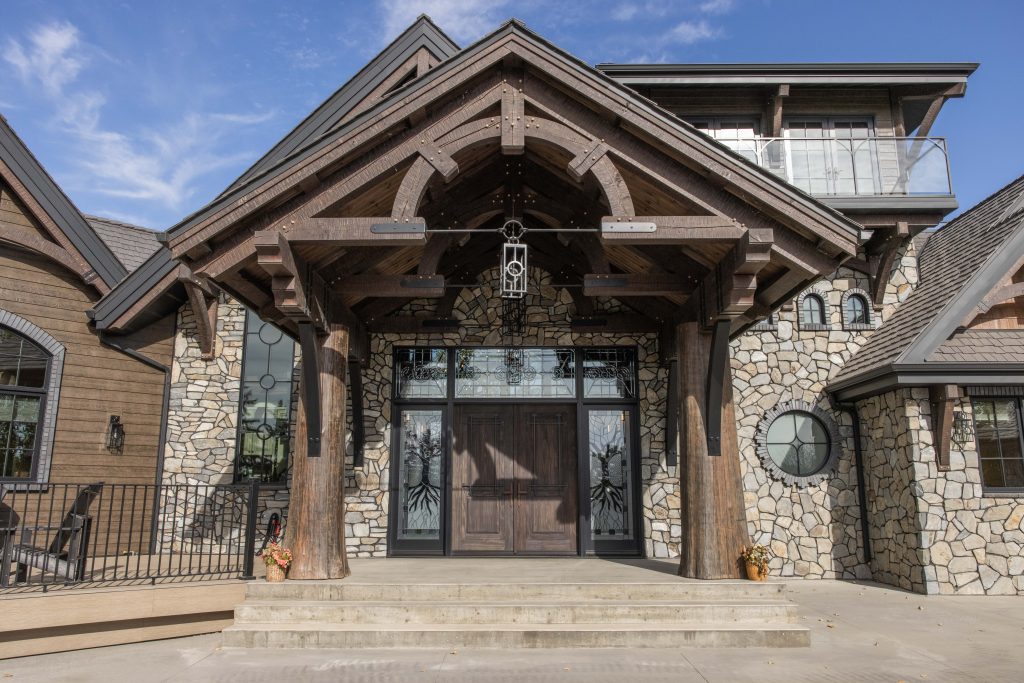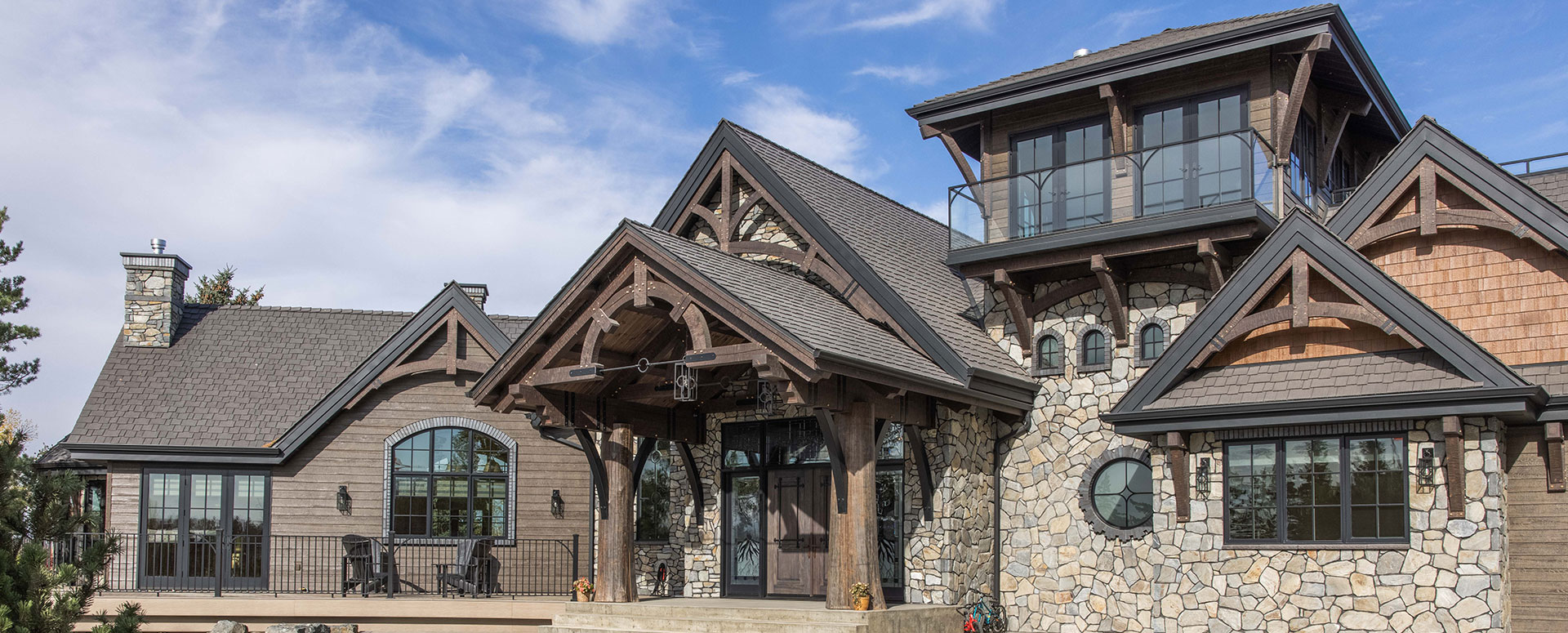

The House on the Prairies is a multi-storey timber residence engineered with reclaimed Douglas fir and larch structural members, integrated Western red cedar logs and custom steel components. The project combines heavy timber framing, complex roof geometry and hybrid steel reinforcement to achieve both structural performance and architectural continuity.
The structural system extends vertically through a third-storey tower, radially through a 16-sided turreted sunroom and horizontally across cross-gabled roof intersections. Each timber element performs a defined structural function while contributing to the overall architectural expression.
Reclaimed Douglas Fir and Larch Structural System
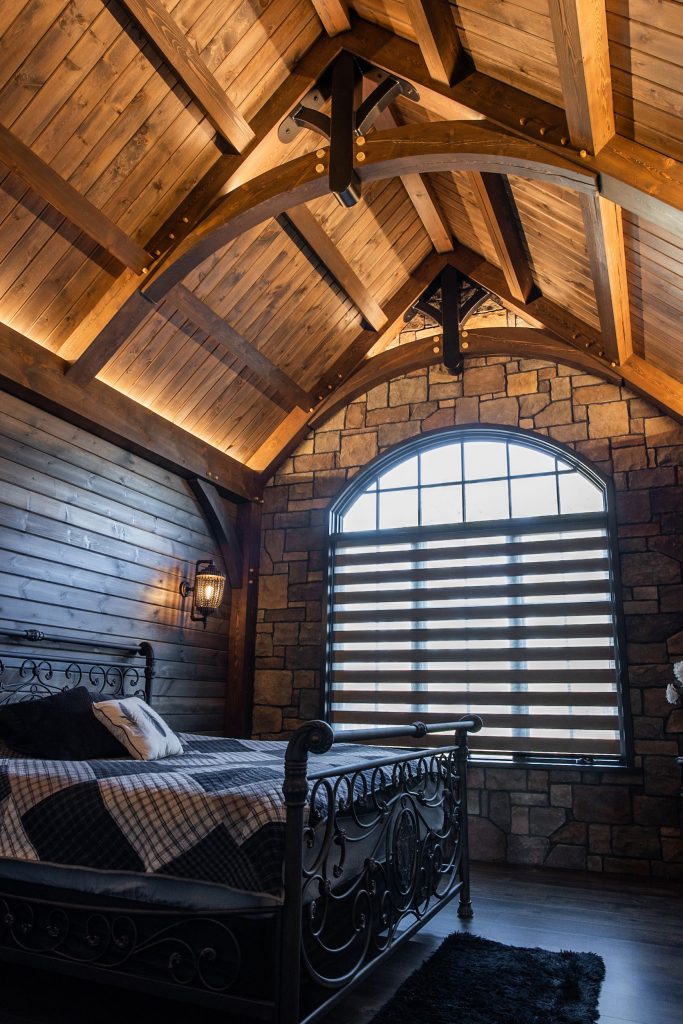
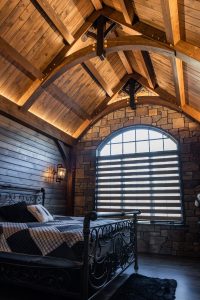
Primary load-bearing members are reclaimed Douglas fir and larch timbers sourced from historic prairie grain elevators. Reclaimed structural wood introduces variability in grain orientation and density that must be evaluated prior to engineering reuse.
Engineering processes include:
-
Structural grading for residual strength
-
Re-sawing and planing to remove compromised surfaces
-
Section verification for bending and compression capacity
-
Moisture stabilization prior to installation
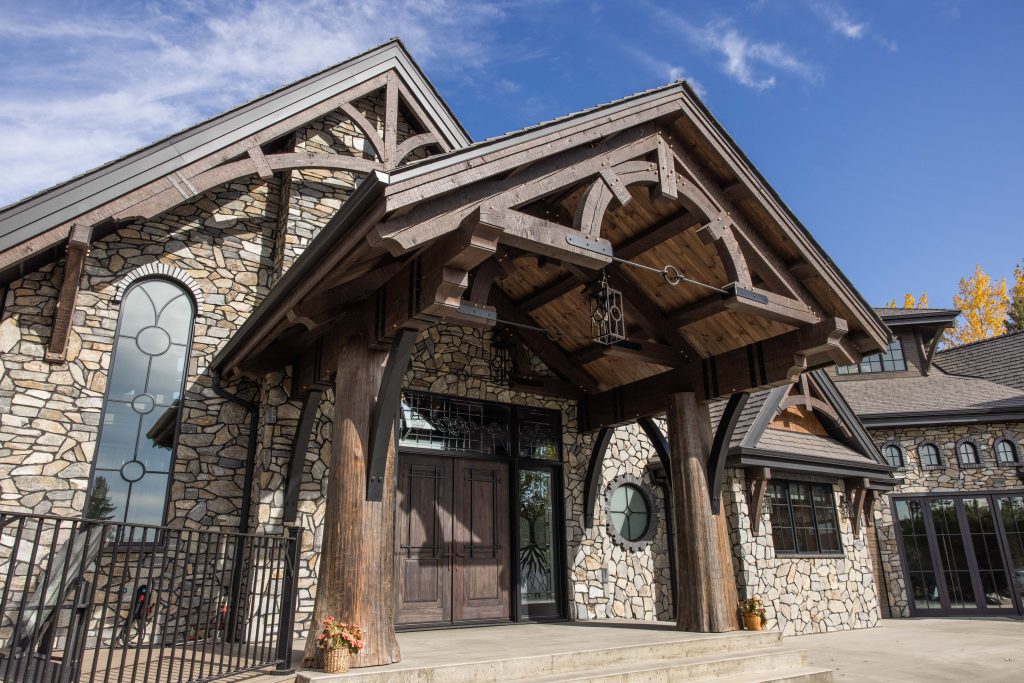
Interior members are planed smooth for dimensional accuracy. Exterior members retain an adze-like texture, increasing surface roughness but not compromising structural integrity when properly sealed.
Custom Chocolate Ebony stain preserves grain contrast while providing surface protection. Protective coatings must allow vapor permeability to prevent moisture entrapment within dense reclaimed wood.
Third Storey Tower and Live Edge Ash Transom Ridge
The third-storey tower incorporates a live edge ash transom ridge beam and connects to a balcony deck through a widows walk. Elevated tower geometry increases lateral wind exposure and torsional demand.
Engineering considerations include:
-
Reinforced vertical load stacking from ridge to foundation
-
Lateral shear resistance through diaphragm action
-
Wind uplift anchorage at upper deck level
The live edge ash ridge beam must be sized for bending stress limits while preserving natural edge geometry. Because live edge profiles reduce uniform cross-section, effective section modulus calculations account for variable depth.
Connection detailing at tower transitions ensures that vertical loads are distributed evenly into supporting posts and lower structural grid.
16-Sided Turreted Sunroom: Radial Load Distribution
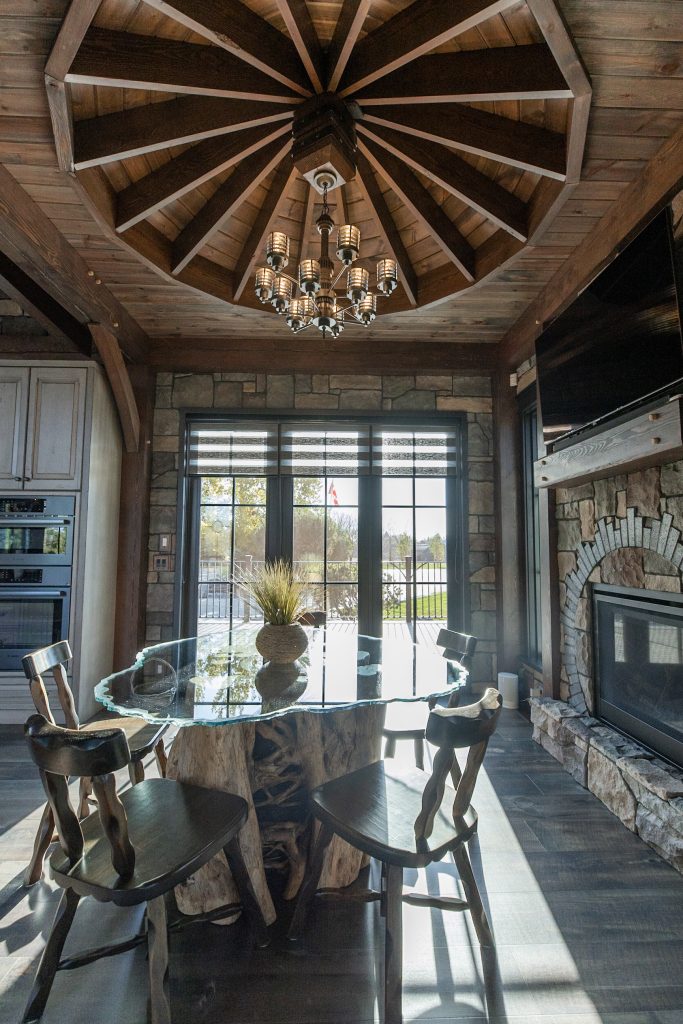
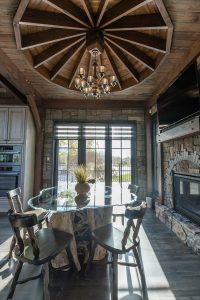
The 16-sided turreted sunroom introduces radial framing geometry. Each segment contributes to a circular diaphragm condition.
Structural implications include:
-
Radial rafter load transfer
-
Concentrated reaction forces at perimeter posts
-
Snow drift evaluation around multi-faceted roof
The matching tray ceiling in the breakfast nook mirrors the turret geometry but is non-load-bearing relative to the primary roof structure.
Stone fireplace integration within the sunroom adds localized dead load. Hearth and masonry detailing must be supported by reinforced foundation zones to prevent settlement.
Western Red Cedar Log Integration
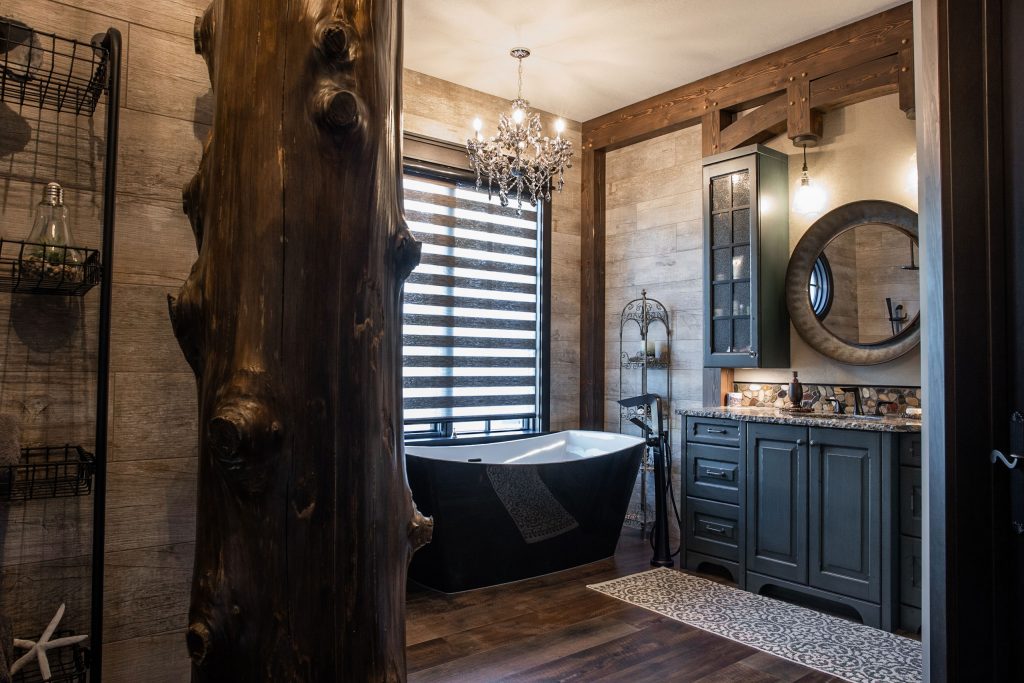
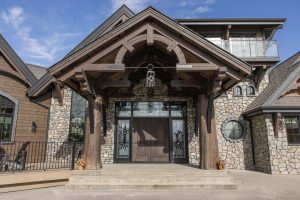
Thirteen Western red cedar logs are positioned strategically from front entry to rear deck canopy. These logs serve both structural and axial compressive roles depending on placement.
Engineering aspects include:
-
Axial load transfer through vertical log posts
-
Moisture isolation at base connections
-
Accommodation of differential shrinkage between cedar and fir members
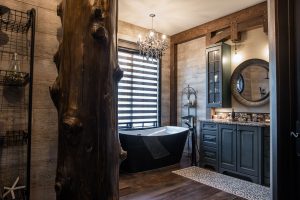
A massive cedar trunk within the stairwell introduces concentrated compressive loading. Base anchorage must resist both vertical force and lateral displacement.
Exterior cedar logs weather to a silver patina, while interior logs are clear coated. Surface treatments must allow dimensional movement without cracking.
Cathedral Trusses and Cross-Gabled Kitchen Roof
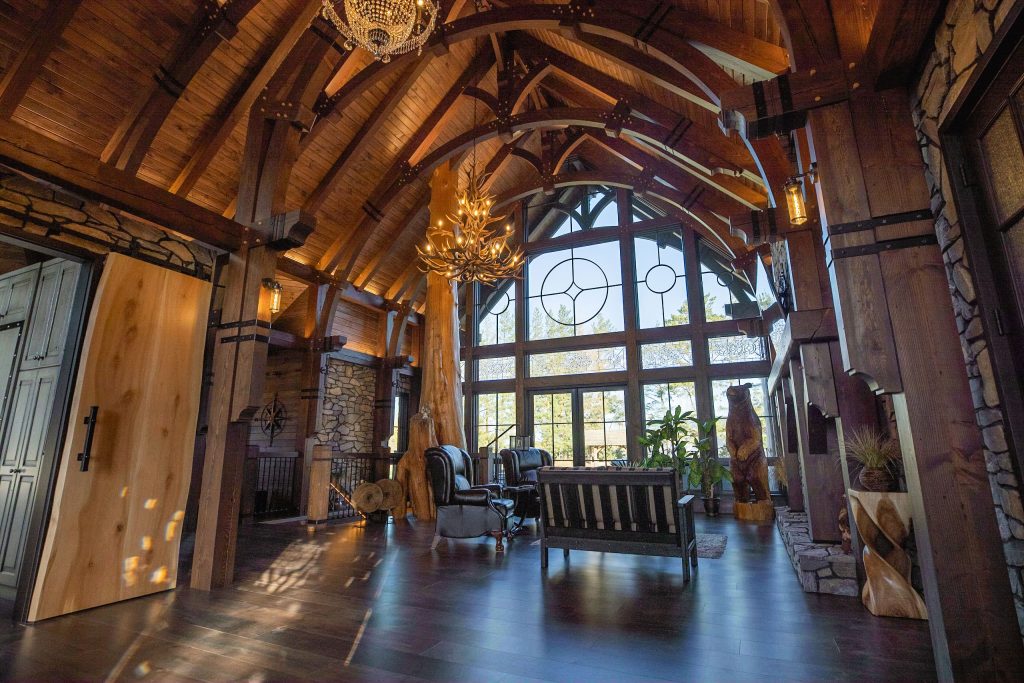
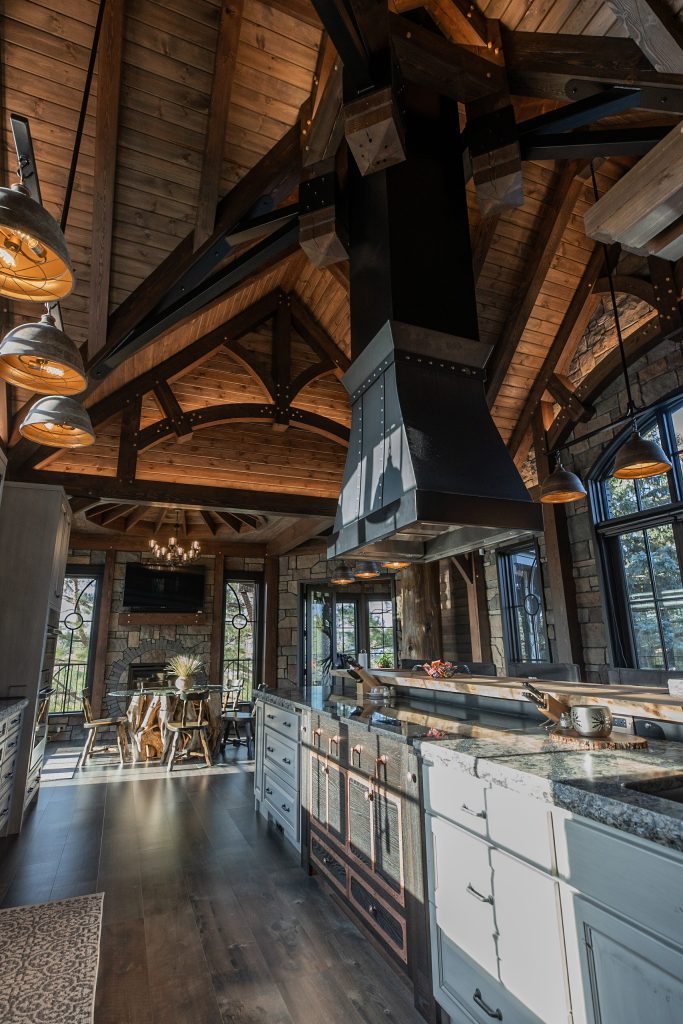
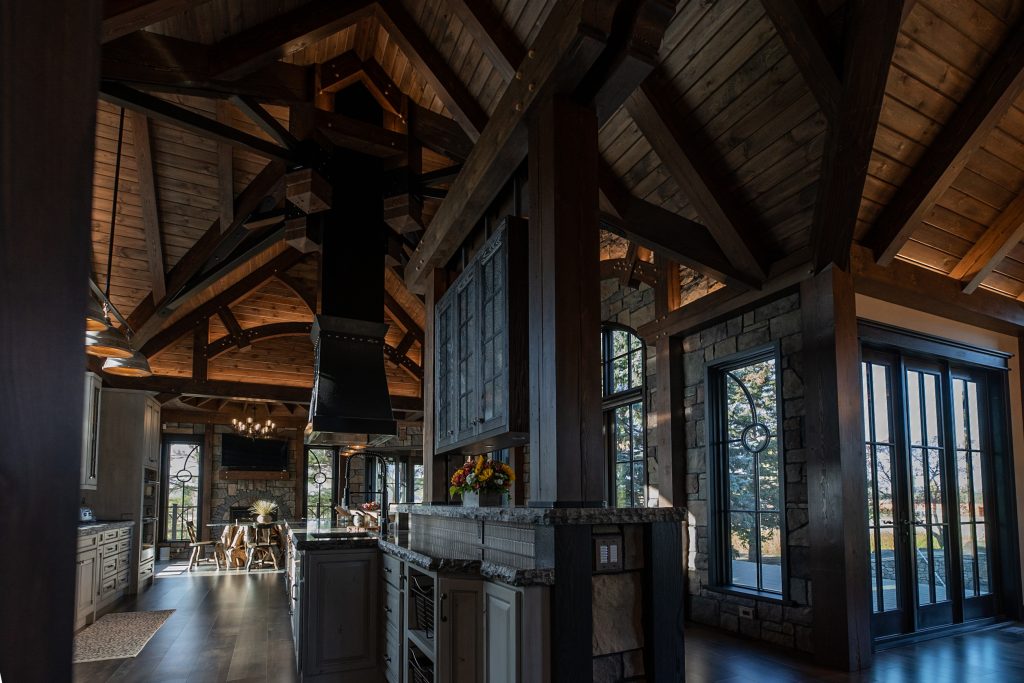
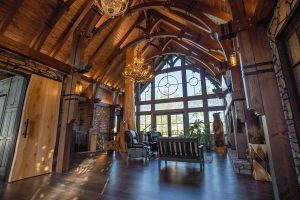
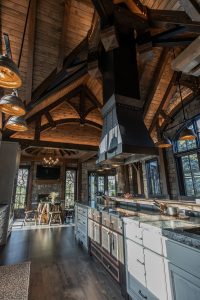
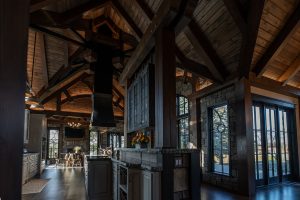
The great room incorporates cathedral-style timber trusses engineered for long-span support. These trusses resolve roof loads through axial compression and tension distribution.
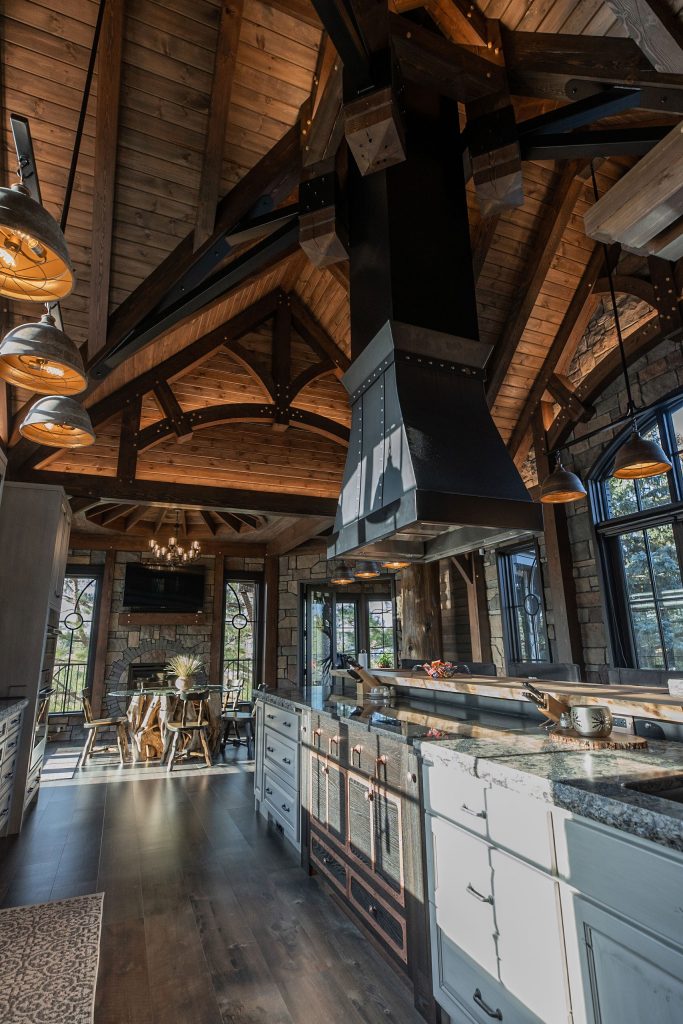
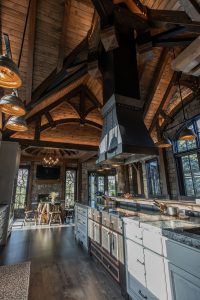
In the kitchen, a cross-gabled roof with a four-foot central opening accommodates a custom metal range hood above a 20 ft island. Roof openings require reinforced headers to maintain diaphragm continuity.
Engineering measures include:
-
Beam reinforcement at roof penetrations
-
Redistribution of load around central void
-
Ventilation coordination to avoid structural interference
Sycamore slabs in seating areas introduce minimal structural load but must be anchored securely.
Live Edge Ash Collar Ties and Central Cedar Column
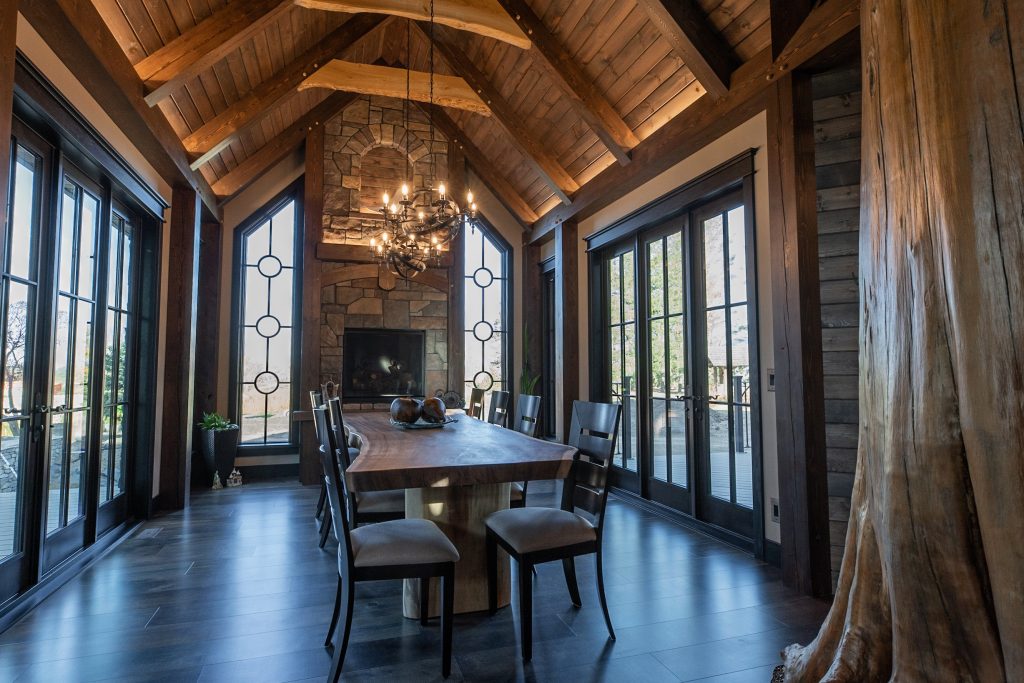
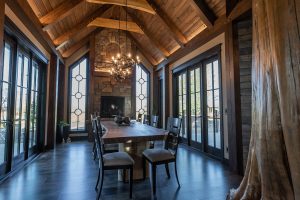
The dining room includes live edge ash collar ties integrated into timber ceiling framing. Collar ties resist rafter separation and reduce horizontal thrust at ridge.
Because live edge members vary in geometry, structural calculations account for non-uniform cross-section.
A large swelling cedar log positioned centrally serves as a visual and structural anchor. Axial compressive capacity is verified against roof and floor loads.
Continuous load transfer from upper levels into this central column maintains structural alignment.
Timber and Steel Railings with Curved Stair Integration
Timber and steel railing systems combine axial strength of wood with tensile capacity of steel. Railings must resist lateral load in compliance with building code requirements.
The site-curved railing follows around a 42 in diameter cedar log. Curved railing sections must maintain consistent structural anchorage along their length.
Steel connectors are isolated from timber surfaces to prevent corrosion and moisture-induced degradation.
Exterior Envelope and Material Interaction
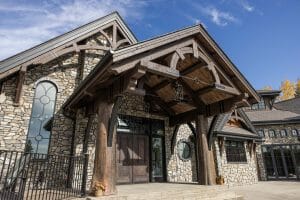
Stone, glass and timber compose the exterior elevations. Each material introduces distinct structural considerations:
-
Stone veneer dead load supported through anchored framing
-
Large glazing requiring reinforced headers
-
Timber brackets resisting cantilever bending
Breezeway connections between home and garage maintain load continuity while accommodating differential movement.
Drainage planes behind cladding prevent hydrostatic pressure accumulation.
Environmental Load and Durability Considerations
Prairie conditions impose:
-
Snow load accumulation
-
Wind uplift across open terrain
-
Freeze-thaw cycling
-
Seasonal humidity fluctuation
Structural countermeasures include:
-
Continuous load paths from ridge to foundation
-
Uplift-rated hold-down anchors
-
Reinforced cross-gable intersections
-
Ventilated roof assemblies
Reclaimed timber members are evaluated for creep deformation under sustained load.
Foundation systems incorporate frost protection and moisture control to prevent differential settlement.
Structural Summary
The House on the Prairies integrates reclaimed heavy timber engineering, radial turret geometry and multi-level tower construction within a unified structural framework.
Key performance characteristics include:
-
Reclaimed Douglas fir and larch structural frame
-
Third-storey tower with live edge ash ridge beam
-
16-sided turreted sunroom with radial framing
-
Cathedral trusses and cross-gabled roof intersection
-
Western red cedar log columns integrated structurally
This residence demonstrates advanced timber engineering applied across vertical and radial geometries while maintaining continuous load path clarity and environmental resilience in a prairie setting.