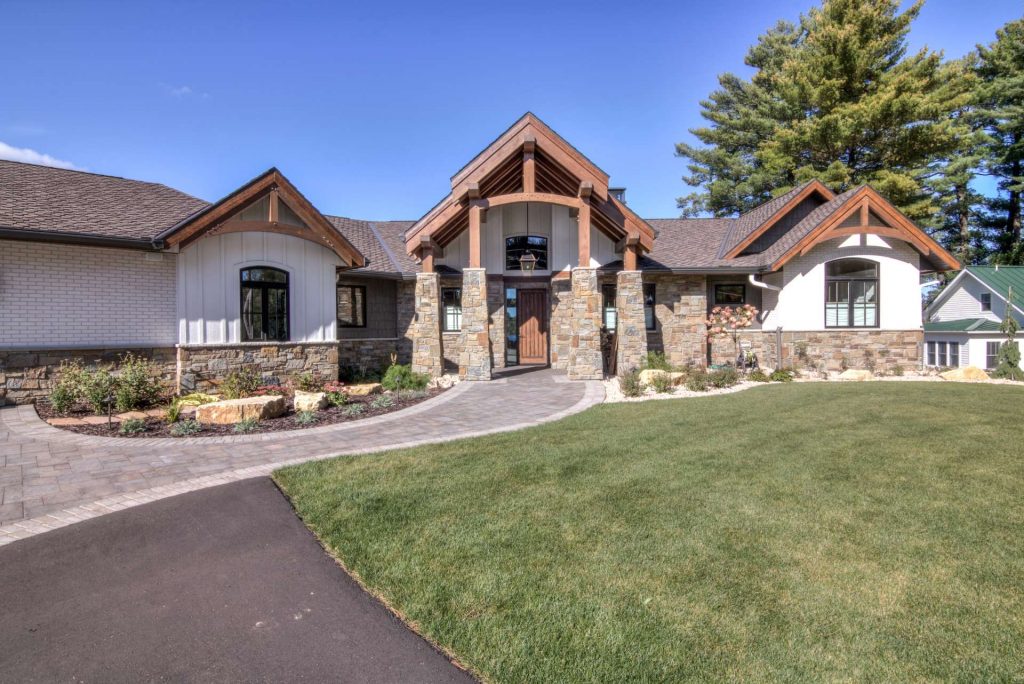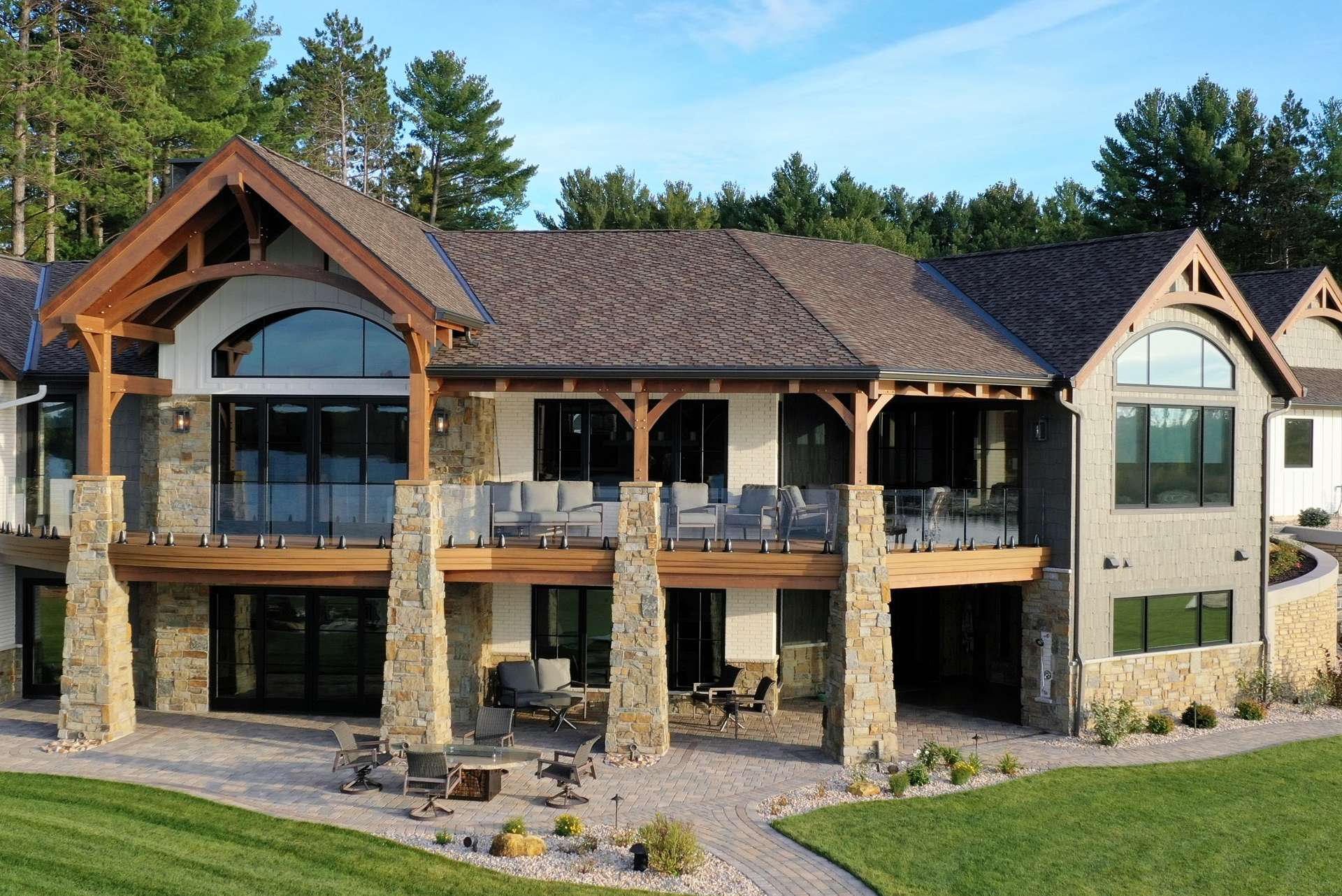
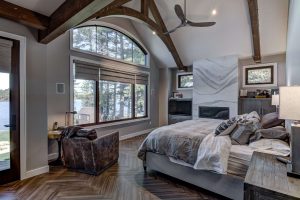
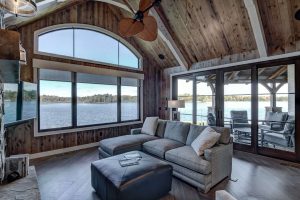
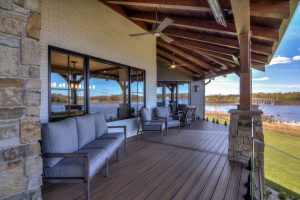
The Wisconsin Getaway residence integrates structural timber framing with selective decorative applications across multiple interior zones. The defining structural elements are double curving tie king post trusses constructed from high-grade Douglas fir, combined with large-section posts and eave plates.
The structural system supports exterior deck canopies, entry overhangs and interior vaulted volumes while maintaining a restrained contemporary aesthetic. Timber is used deliberately. It carries load where required and remains visually distinct against drywall and painted surfaces.
This project demonstrates how engineered heavy timber can coexist with minimal interior finishes without compromising structural performance.
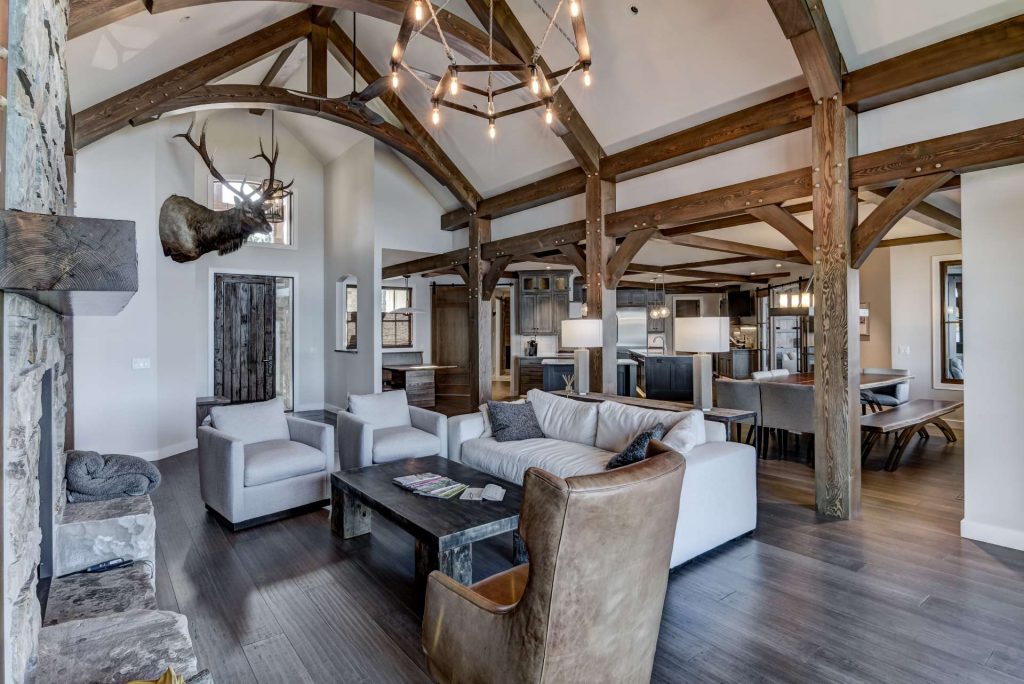
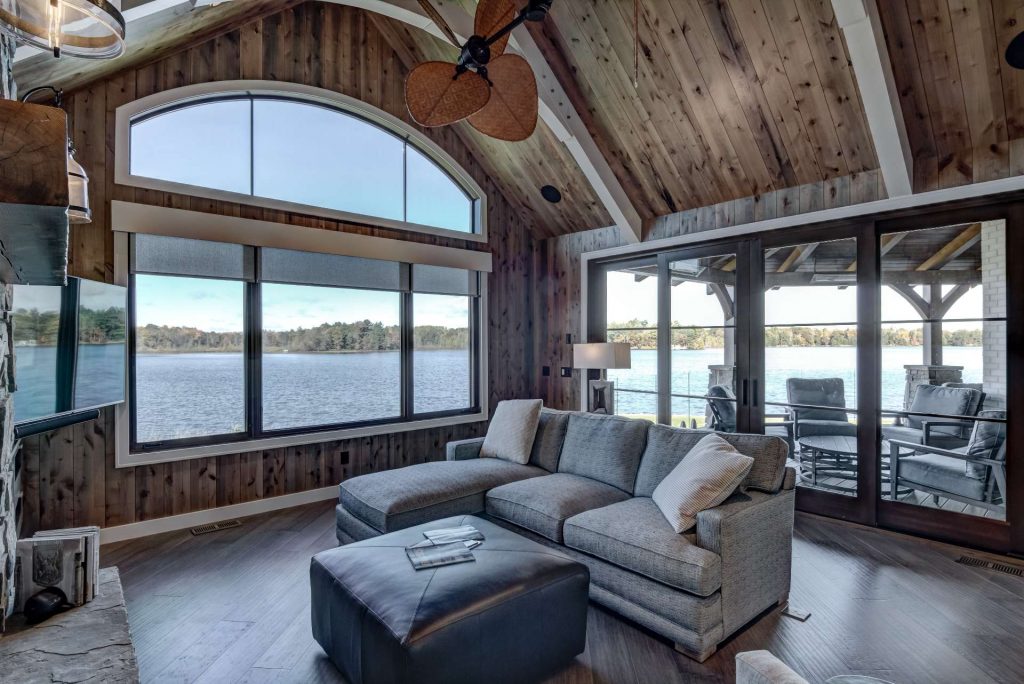
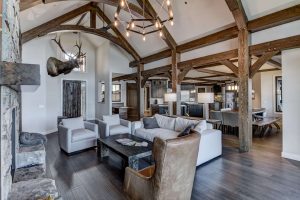
Living Room: Double Curving Tie King Post Trusses
The living room features double curving tie king post trusses supported by 10 in x 10 in posts and substantial eave plates. Curved tie beams introduce additional engineering complexity compared to straight members.
Structural mechanics include:
-
Rafters in axial compression
-
Central king post in tension
-
Curving tie beam resolving horizontal thrust
-
Large-section posts transferring compressive reaction into foundation
To achieve the required curvature, Douglas fir members up to 20 in deep were specified. Greater depth allows sufficient structural section modulus after shaping the radius.
Curved members are evaluated for combined bending and axial stress. Removal of material to form the radius reduces effective cross-section, requiring compensatory sizing.
Connection detailing at curved interfaces must resist shear and prevent rotational movement under sustained snow load.
Creep deformation is calculated based on anticipated dead and live load conditions to maintain long-term alignment.
Large Section Posts and Eave Plates
The 10 in x 10 in posts and substantial eave plates provide structural continuity along the perimeter.
Engineering functions include:
-
Vertical load transfer from roof trusses
-
Lateral stability at exterior wall lines
-
Anchorage for canopy extensions
Post slenderness ratios are evaluated to prevent buckling under compressive load. Base connections incorporate uplift-rated anchors due to wind exposure.
Eave plates distribute rafter load evenly and serve as structural boundary members within the roof diaphragm.
Structural Canopies: Entry and Back Deck
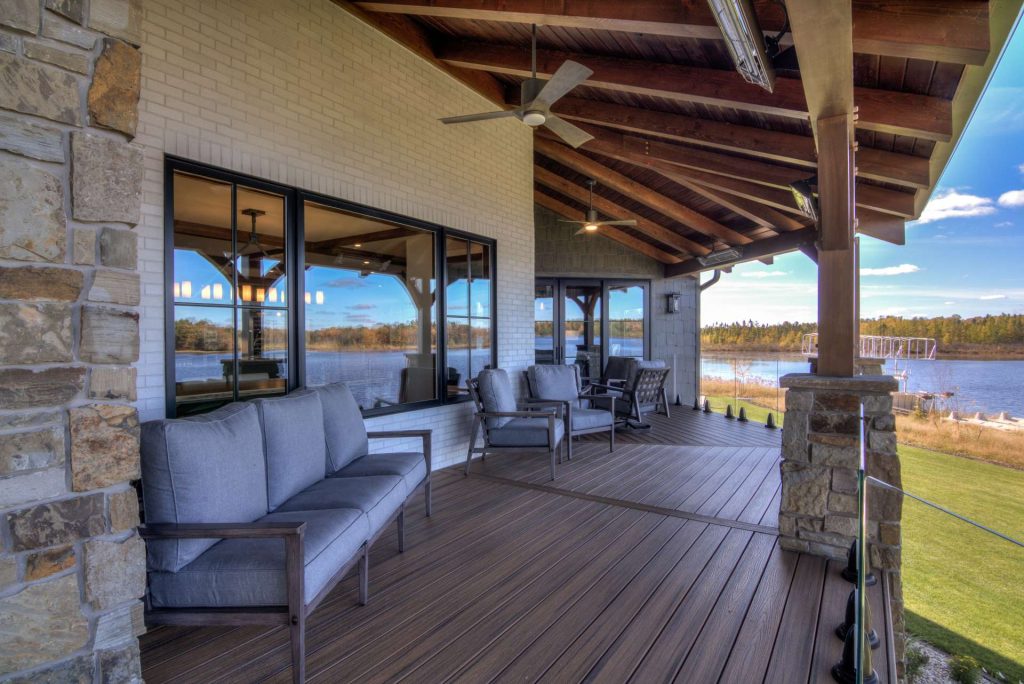
Structural trusses support the back deck canopy and entry canopy. These assemblies must resist both vertical snow load and uplift from wind pressure.
Engineering considerations include:
-
Cantilever bending resistance
-
Reinforced beam-to-post connections
-
Snow drift accumulation at roof transitions
-
Corrosion-resistant hardware in exposed zones
Continuous load paths extend from canopy rafters through posts into foundation anchorage.
Deck structures beneath canopies are designed for occupant live load and environmental exposure. Fasteners are selected to resist humidity-induced corrosion.
Contemporary Interior Integration
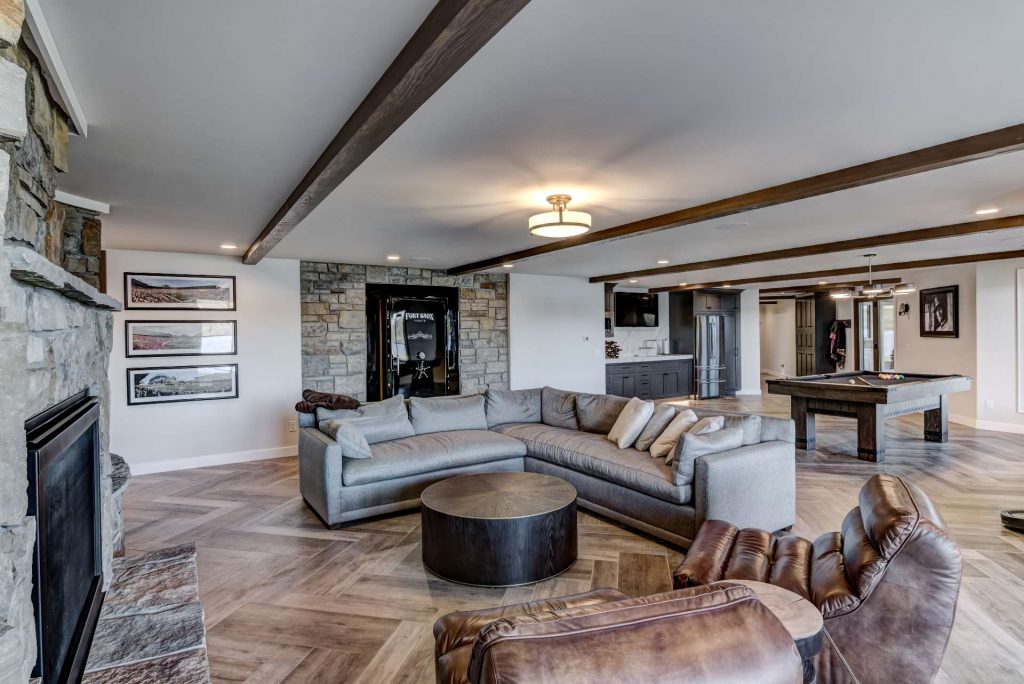
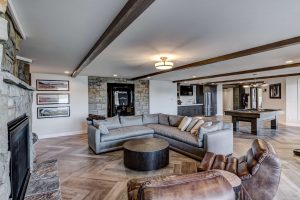
The primary living space uses drywall ceilings and walls to create visual contrast. Timber elements remain exposed and minimal.
From a structural perspective:
-
Exposed trusses remain primary load-bearing components
-
Drywall ceilings attach to secondary framing without interfering with load paths
-
Differential movement between timber and light framing is accommodated through flexible joint detailing
This strategy ensures structural independence of heavy timber components.
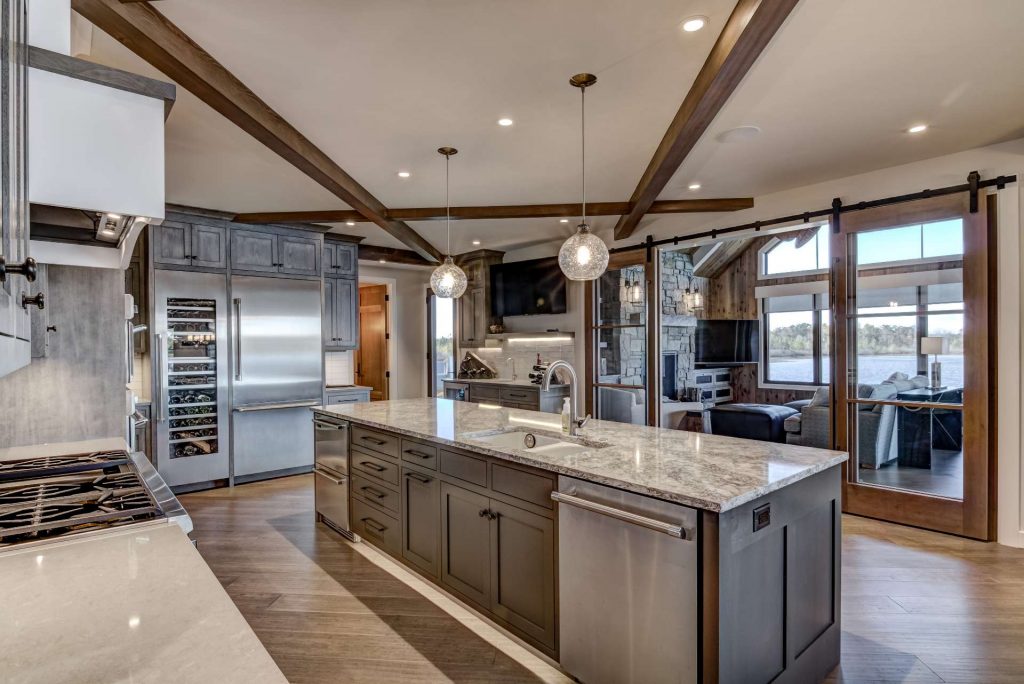
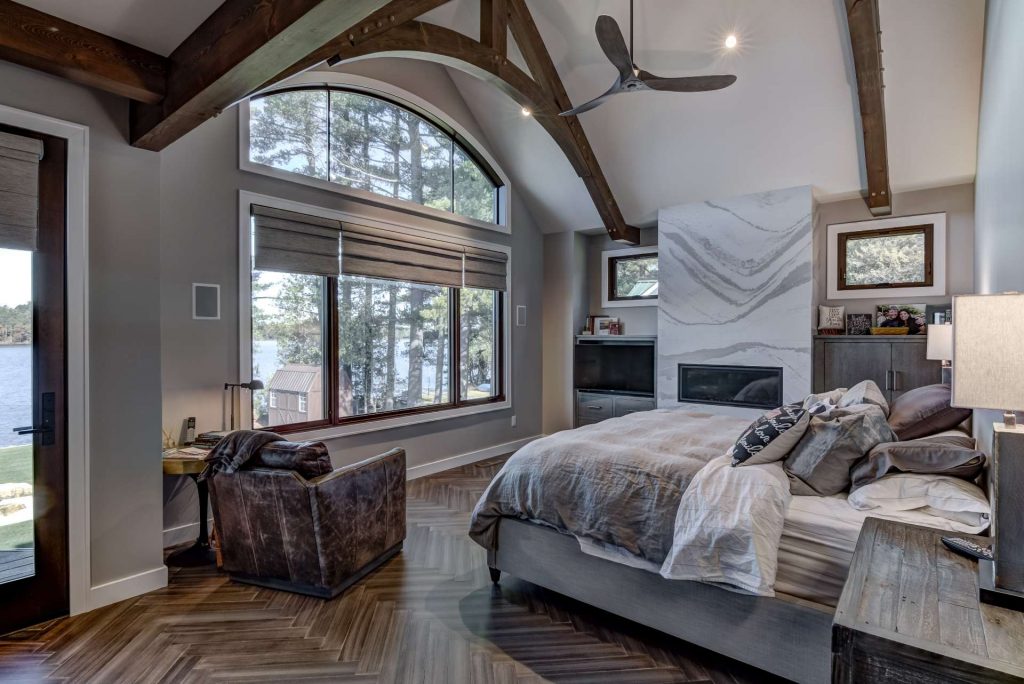
Decorative Timber Trusses and Coffered Ceilings
Decorative trusses in the family room and master bedroom align with structural rhythm but may not serve primary load-bearing roles.
Engineering integration requires:
-
Secure anchorage to structural framing
-
Accommodation of seasonal movement
-
Alignment with structural grid
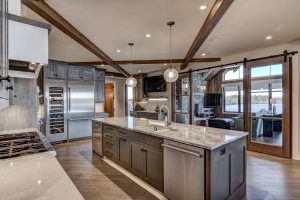
Coffered ceiling details in the kitchen and lower level incorporate trim timbers up to 30 ft long to avoid seams. Long members must be evaluated for straightness tolerance and moisture stability.
Fastening schedules prevent sagging or joint separation under humidity variation.
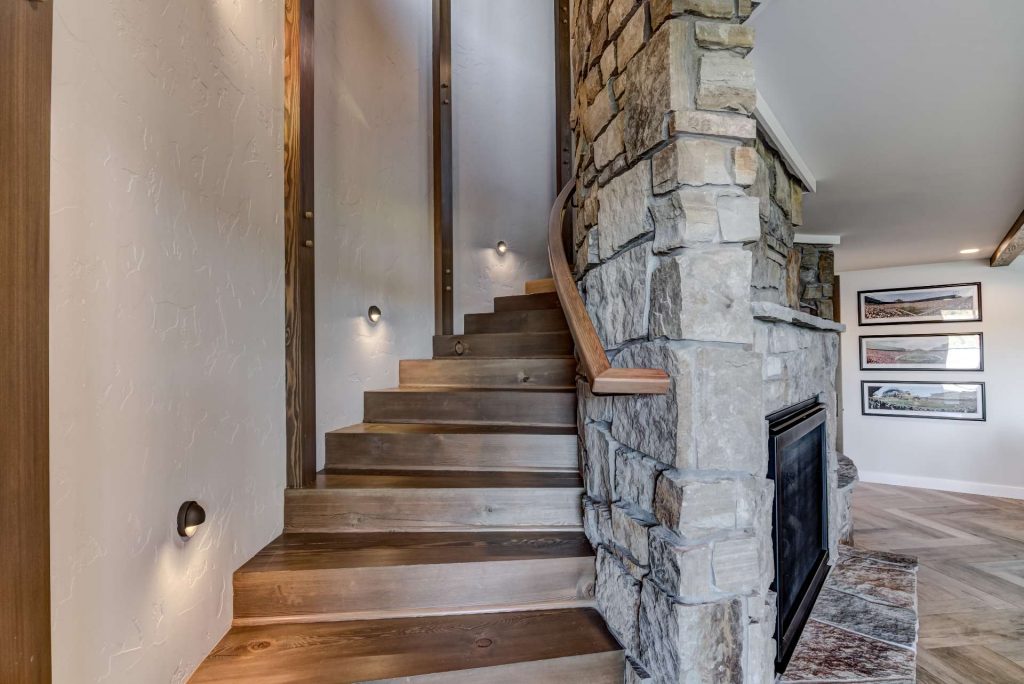
Curving Staircase Engineering
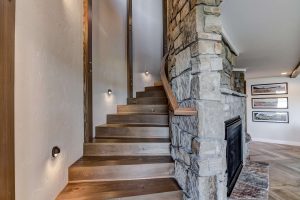
The curved staircase leading to the walkout is constructed from solid 8 in x 16 in timbers radiused on both inside and outside faces.
Structural requirements include:
-
Adequate bending resistance in stringers
-
Uniform tread support under occupant load
-
Guardrail anchorage compliance
Radiusing both faces reduces effective cross-sectional area. Structural calculations account for reduced section modulus and ensure sufficient bending capacity.
Secure anchorage into floor framing prevents torsional movement.
Douglas Fir Performance Characteristics
High-grade Douglas fir was selected for all timber elements due to:
-
High compressive and bending strength
-
Favorable modulus of elasticity
-
Dense grain structure
-
Dimensional stability when kiln dried
Moisture content is controlled at installation to limit shrinkage stress.
The SDF Bronze Teak finish by Sansin is translucent, preserving grain visibility while providing UV protection and surface moisture resistance.
Protective coatings must allow vapor permeability to prevent trapped moisture within timber members.
Environmental Load and Durability Considerations
The Wisconsin climate imposes:
-
Snow load accumulation
-
Wind uplift
-
Freeze-thaw cycling
-
Seasonal humidity variation
Structural countermeasures include:
-
Continuous load paths from ridge to foundation
-
Reinforced curved tie connections
-
Uplift-rated hold-down anchors
-
Ventilated roof assemblies
Creep deformation in large curved members is accounted for in long-span calculations to maintain serviceability over time.
Foundation systems incorporate frost protection and drainage to prevent differential settlement.
Structural Summary
Wisconsin Getaway illustrates advanced curved timber engineering combined with contemporary interior restraint.
Key structural characteristics include:
-
Double curving tie king post trusses using up to 20 in deep Douglas fir members
-
10 in x 10 in posts and robust eave plates
-
Structural deck and entry canopies engineered for snow and wind load
-
30 ft trim timbers in coffered ceilings
-
Solid 8 in x 16 in curved staircase stringers
This residence demonstrates how engineered heavy timber can achieve complex geometry, long-span performance and structural integrity while maintaining a refined, modern interior aesthetic.