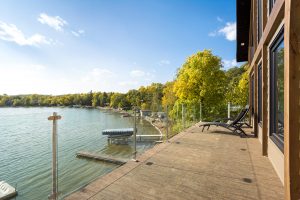
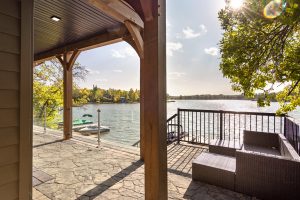
The Lake Metigoshe residence is embedded into a steep hillside terrain overlooking 180-degree lake views. Hillside construction introduces distinct structural demands, including lateral soil pressure, foundation stability, and differential load transfer between upper and lower levels.
The structural approach integrates a primary heavy timber frame within the main living space, supported by high-performance envelope systems including ICF walls and insulated roof panels. The result is a system engineered for both panoramic exposure and environmental resilience.
Steep terrain requires careful evaluation of load paths from roof to foundation. Vertical gravity loads are transferred through timber posts into reinforced foundation systems designed to resist both axial compression and lateral soil pressure.
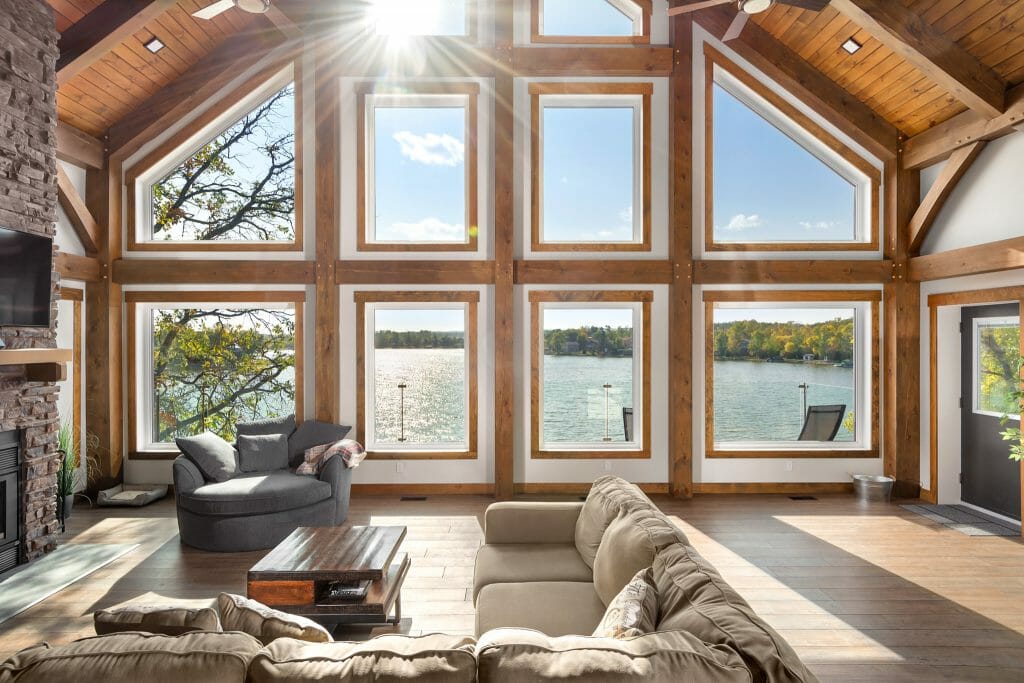
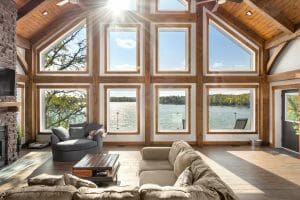
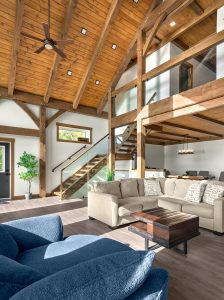
Living Room Vault: 24 ft Timber Frame Volume
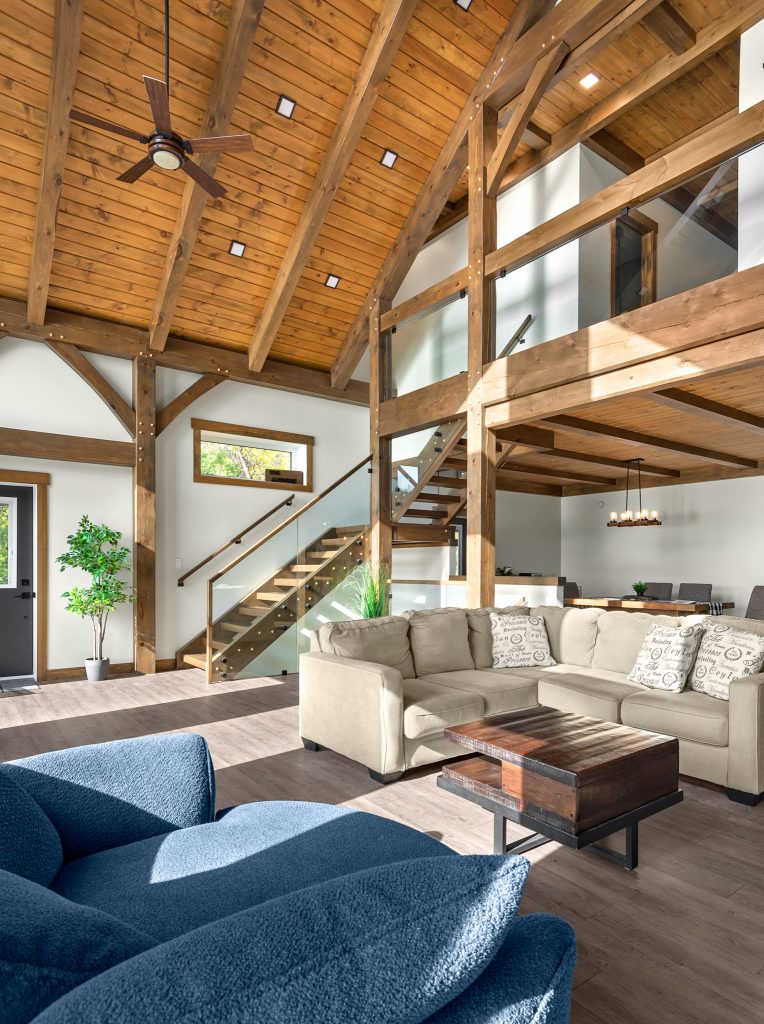
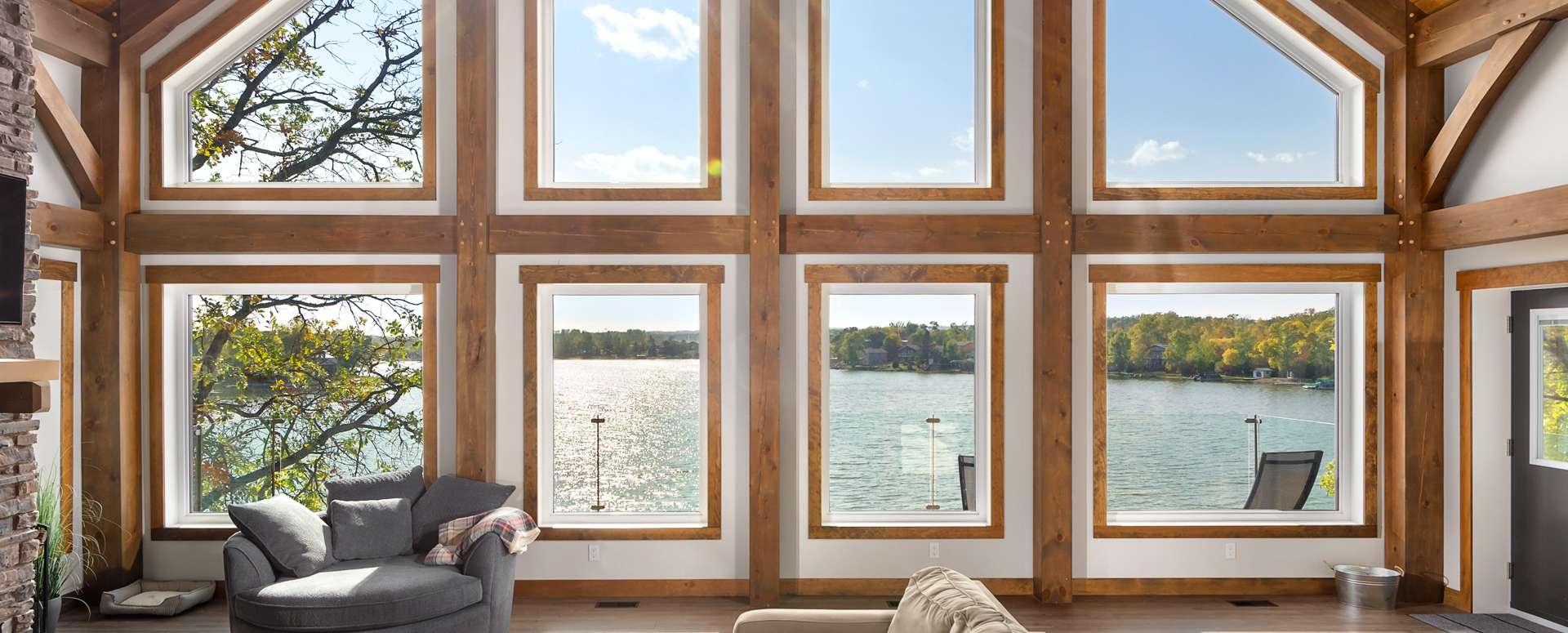
The central living room features a 24 ft high timber-framed vault. Large vertical volumes increase structural demand in several ways:
-
Higher bending moment at ridge beam
-
Increased slenderness in vertical posts
-
Amplified wind pressure at glazing
Carefully framed window openings are integrated within the timber structure. Large expanses of glazing require reinforced headers and precise deflection control to protect seals and maintain envelope performance.
Structural calculations account for snow load, dead load from roof assembly, and long-term creep deformation of timber members.
The timber frame provides continuous load transfer from ridge to foundation without reliance on concealed steel moment frames.
Integrated Corner Staircase and Multi-Level Load Continuity
Corner stairs leading to the loft and basement walk-out are integrated into the structural grid. Stair framing must support live load and resist torsional movement while remaining aligned with primary bearing lines.
Engineering considerations include:
-
Reinforced stair stringers
-
Guardrail anchorage
-
Connection detailing to prevent vibration
Load continuity between upper loft, main floor and walk-out level maintains structural coherence. Diaphragm action at each floor level stabilizes the vertical timber frame.
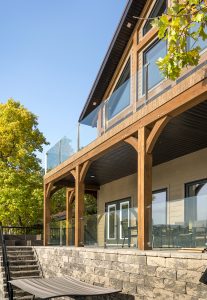
Timber Deck Support at Walk-Out Level
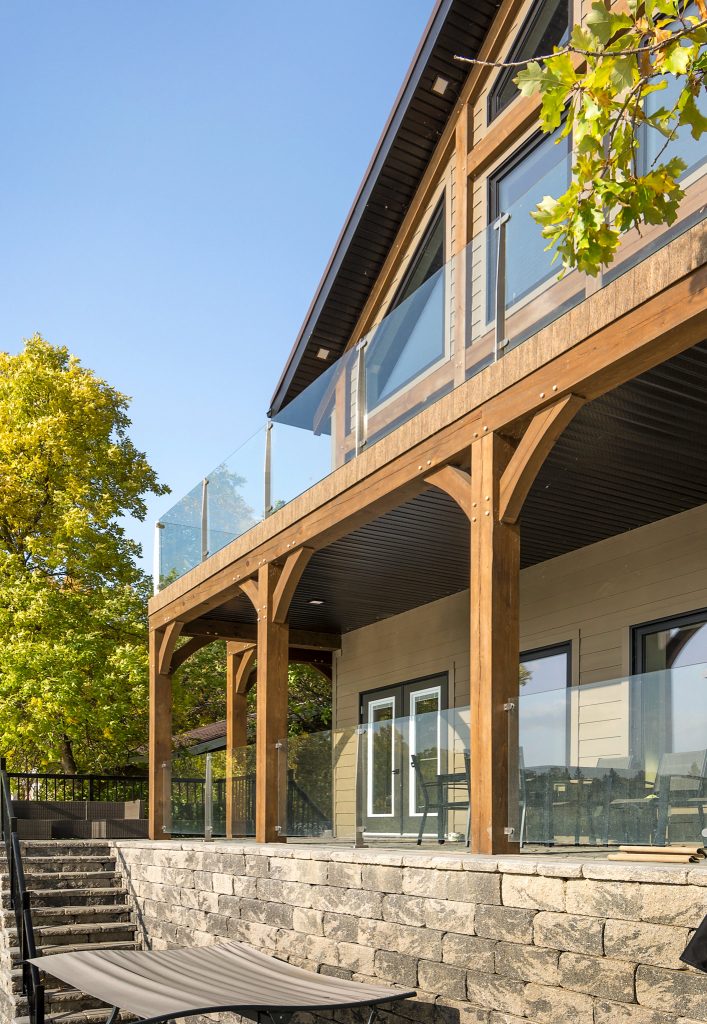
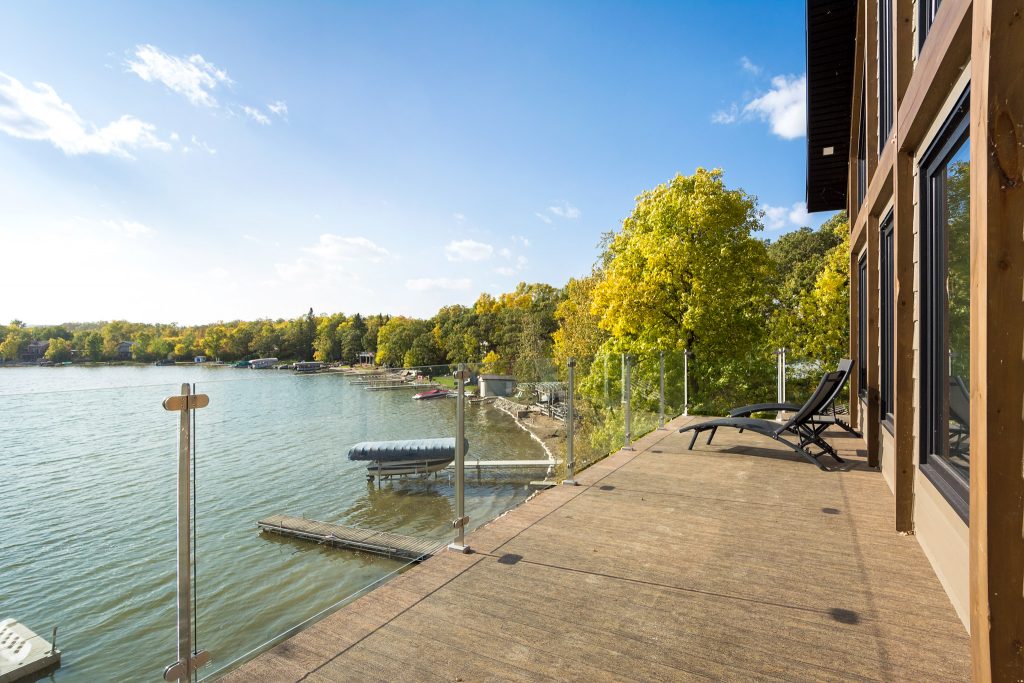
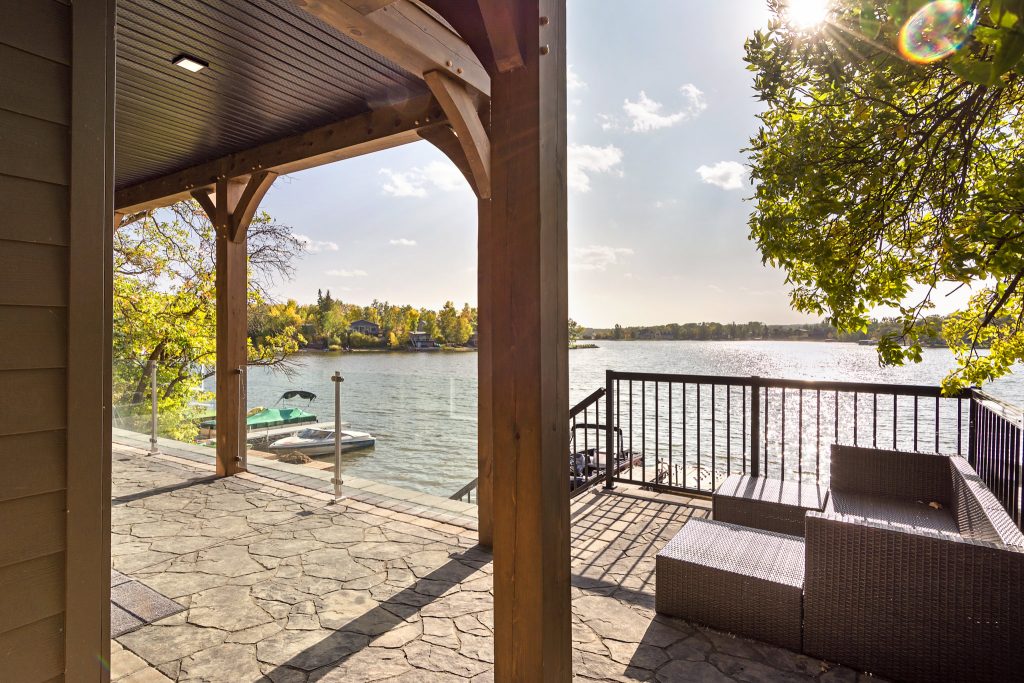
At the lower walk-out level, the lakeside deck is supported by timber post and plate construction. This assembly must resist both vertical live load and wind uplift.
Engineering features include:
-
Axial compression transfer through posts
-
Bending resistance in deck beams
-
Uplift-rated anchorage at base connections
Because hillside exposure can amplify wind speed, lateral bracing is incorporated to prevent sway.
Deck framing is detailed with proper drainage slope and corrosion-resistant fasteners due to lake humidity.
ICF Wall System: Thermal and Structural Performance
Insulated Concrete Form walls extend from foundation up to the rafter level. ICF systems provide:
-
High compressive strength
-
Continuous insulation
-
Reduced thermal bridging
-
Resistance to lateral soil pressure
In hillside conditions, ICF walls resist backfill pressure and moisture infiltration. Reinforced concrete cores are engineered to handle both vertical loads from the timber frame and horizontal earth loads.
Air barrier continuity is maintained between ICF walls and timber framing to prevent convective heat loss.
Roof Assembly: Greenstone ICE Panels
The roof structure incorporates Greenstone ICE insulated panels installed above the timber frame. These structural insulated panels serve dual purposes:
-
Structural roof deck
-
High-performance insulation layer
Engineering advantages include:
-
Reduced thermal bridging
-
Consistent R-value performance
-
Enhanced airtightness
Panel installation requires precision to maintain load transfer across joints. Fastening schedules are specified to resist wind uplift and snow load.
Combined with the timber frame, this system exceeds minimum R-value requirements for cold climate construction.
Interior Timber Accents and Structural Hierarchy
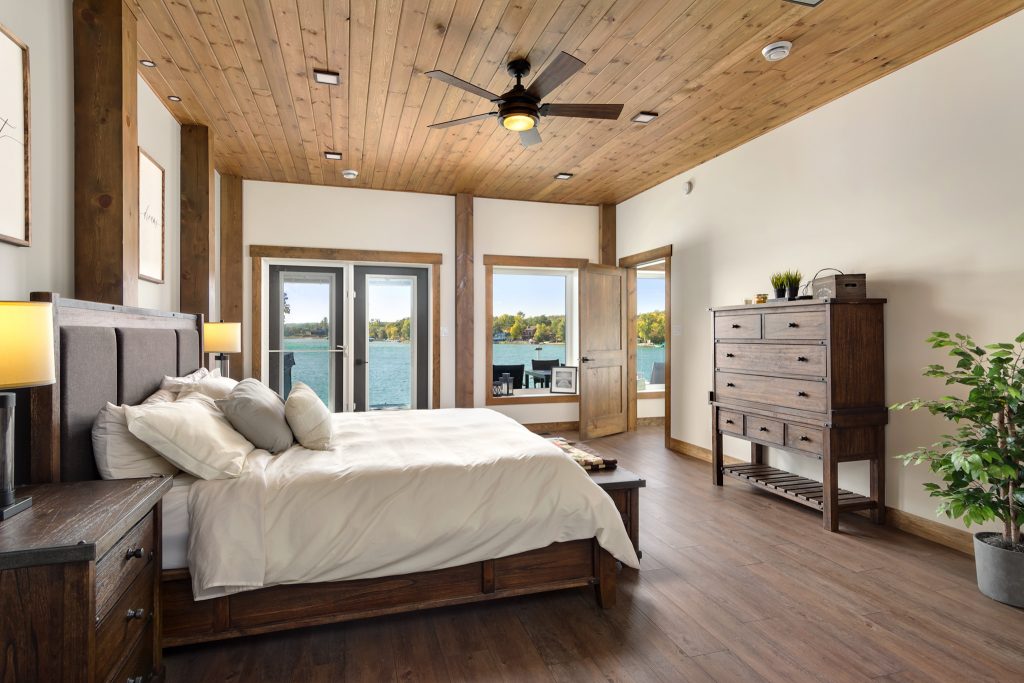
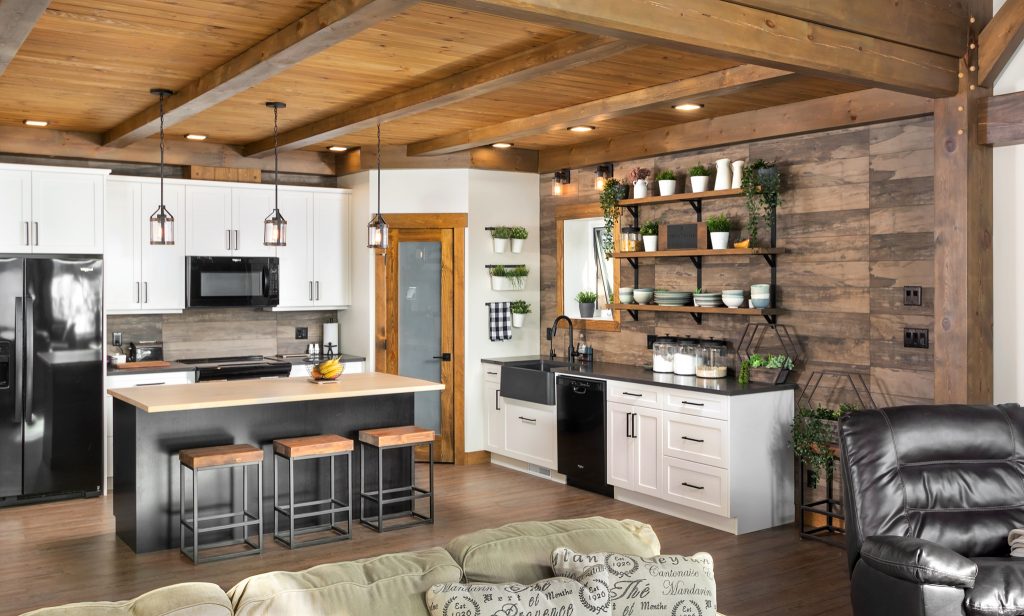
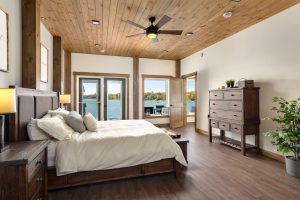
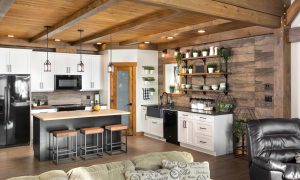
Timber accents extend into the master bedroom, kitchen, loft ceilings, garage and fireplace mantles. While some elements are structural, others are integrated decoratively but aligned with the structural grid.
Proper moisture isolation and fastening techniques prevent stress transfer between heavy timber and conventional framing components.
Exposed timber members are sealed with Sansin SDF Minwax Dark Walnut, while tongue and groove boards use Sansin SDF Provincial for contrast. Protective coatings allow vapor permeability while limiting UV degradation.
Environmental Load and Durability Considerations
Lake Metigoshe conditions include:
-
Snow load accumulation
-
Wind uplift over open water
-
Freeze-thaw cycling
-
Elevated humidity
Structural countermeasures include:
-
Continuous vertical load paths
-
Reinforced ridge and beam sizing
-
Uplift-rated foundation anchors
-
Ventilated roof cavities
Creep deformation of timber is incorporated into long-term deflection analysis.
Foundation drainage systems and capillary breaks prevent hydrostatic pressure buildup against ICF walls.
Structural Summary
The Lake Metigoshe home demonstrates integrated hillside timber engineering supported by high-performance envelope systems.
Key performance attributes include:
-
24 ft vaulted timber living space
-
Reinforced hillside foundation using ICF construction
-
Greenstone ICE insulated roof panels exceeding code R-values
-
Structural deck supported by timber post and plate system
-
Continuous load path clarity from ridge to footing
This project illustrates how heavy timber framing, when paired with insulated concrete forms and high-performance roof panels, delivers structural integrity, energy efficiency and durability in steep lakefront terrain.