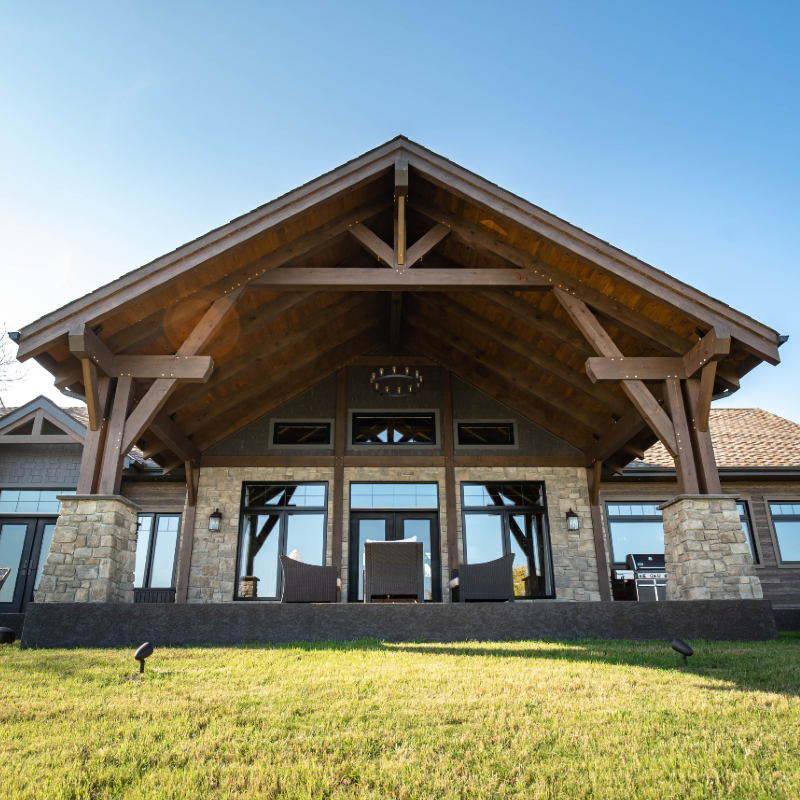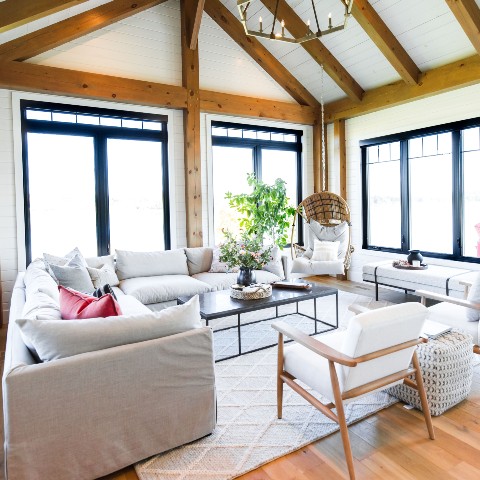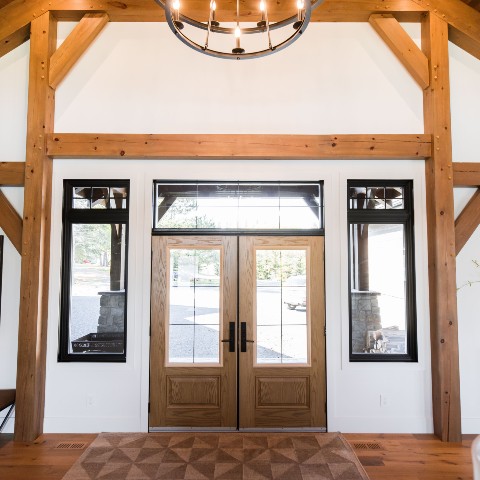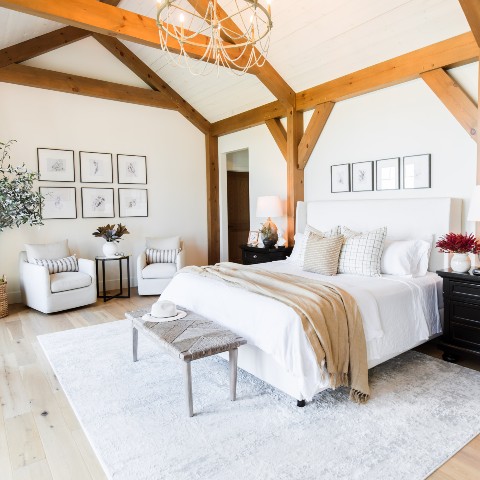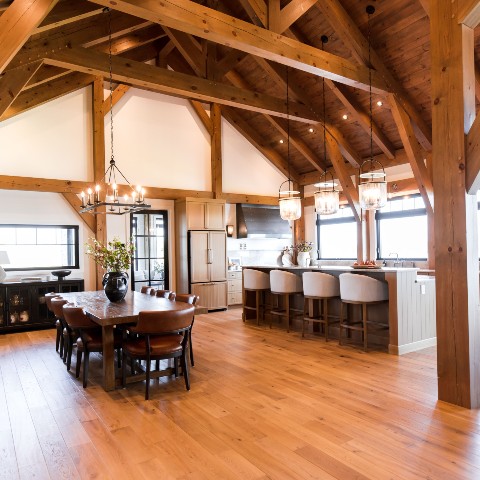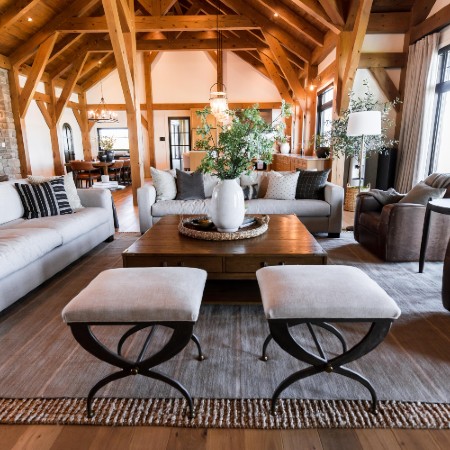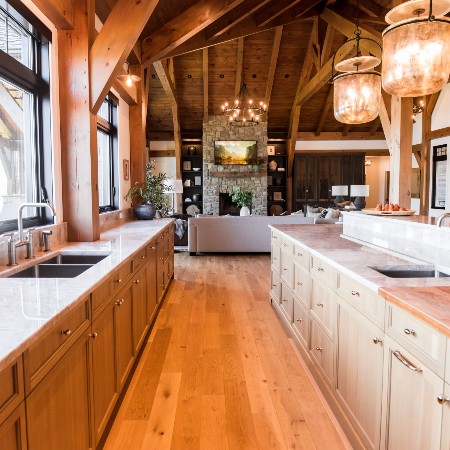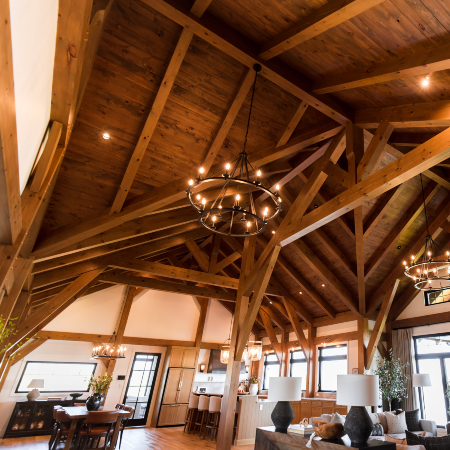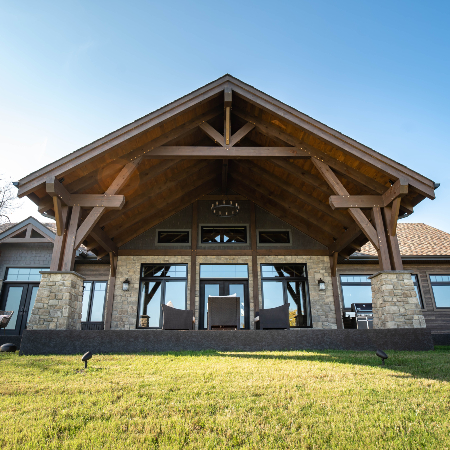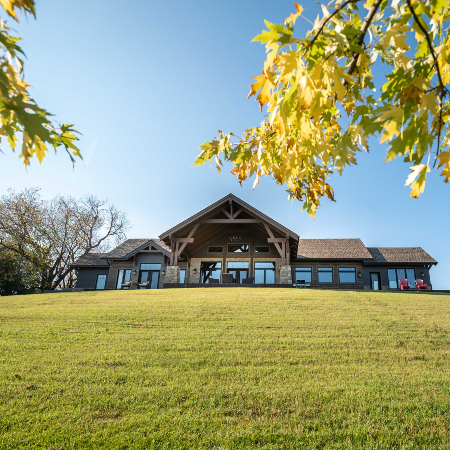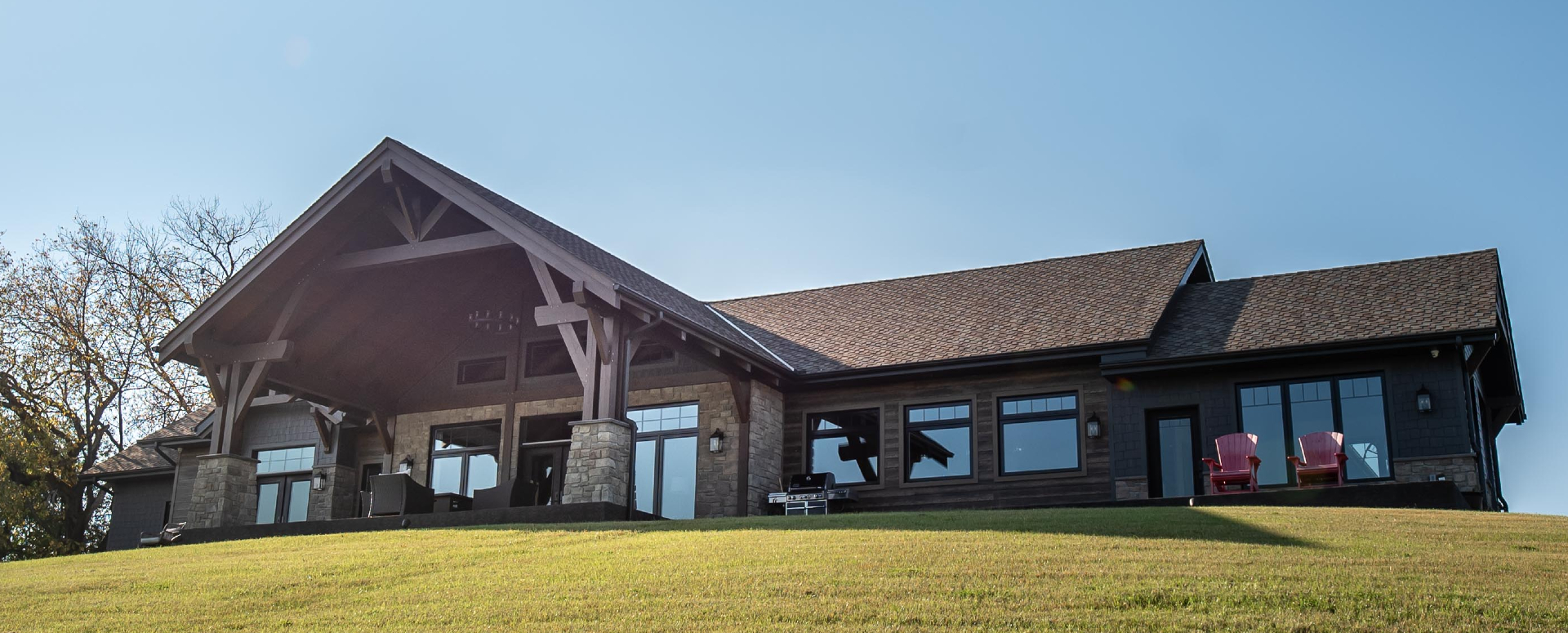
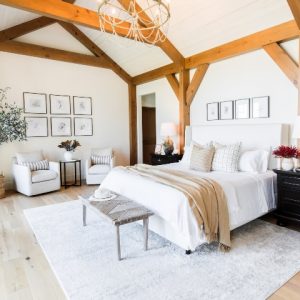
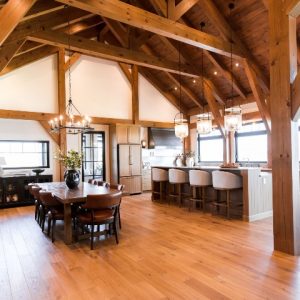
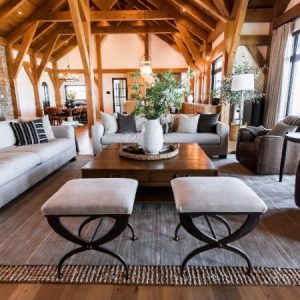
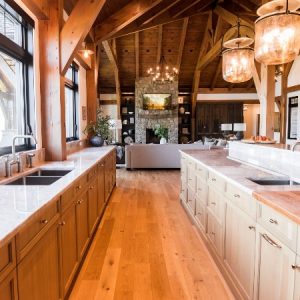
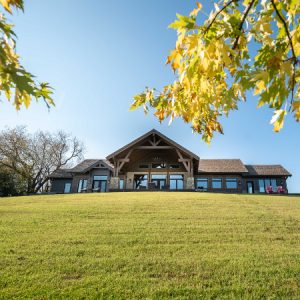
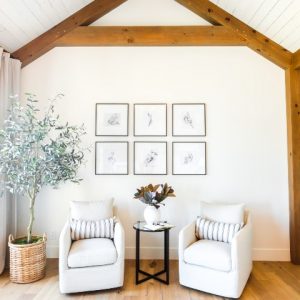
The Muriel Lake residence integrates classic timber frame detailing with modern structural refinements. The primary living volumes are fully timber framed, while exterior and secondary elements combine mountain-influenced finishes with contemporary restraint.
The engineering focus of this project lies in raised chord truss design, complex valley framing geometry, and continuous load path management across intersecting roof planes.
This is a structural system where exposed timber performs measurable load-bearing work while defining interior space.
Primary Structural System: Raised Chord Truss Engineering
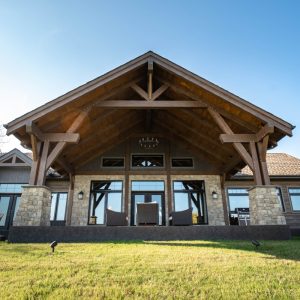
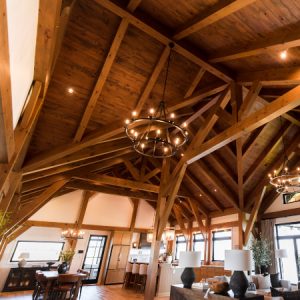
The central structural element is a custom-designed raised chord truss incorporating large strut braces that spring from low points on the posts.
Raised chord trusses alter the geometry of the bottom chord to increase interior ceiling height without introducing excessive horizontal thrust. The structural behavior includes:
-
Axial compression along rafters
-
Tensile force within the raised chord
-
Strut braces transferring compressive force into vertical posts
-
Reduced bending moment across mid-span
Because the strut braces originate low on the posts, force transfer is more direct. This reduces stress concentration at upper connection points and improves axial load distribution.
Member sizing accounts for:
-
Regional snow load
-
Dead load from roof deck and insulation
-
Long-term creep deformation
-
Wind uplift forces
Connection detailing must resist combined shear and axial loads. Concealed steel plates or reinforced joinery ensure performance stability over time.
Valley Framing: Roof Intersection Load Management
Where the kitchen roof intersects with the great room roof, valley framing creates a complex load transfer condition. Valley rafters carry tributary load from two converging roof planes.
Engineering implications include:
-
Increased bending demand on valley rafters
-
Concentrated reactions at valley supports
-
Snow drift accumulation at intersection
Valley rafters are sized for higher tributary load compared to common rafters. Reinforced bearing points transfer load into primary beams and posts.
Proper flashing integration and ice membrane installation prevent moisture intrusion at valley joints.
This framing geometry not only creates visual openness but maintains structural coherence under multi-directional loading.
Timber-Framed Main Living Areas
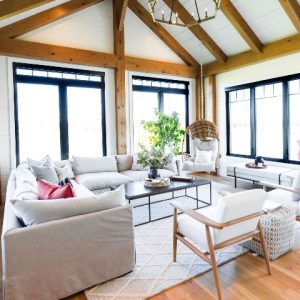
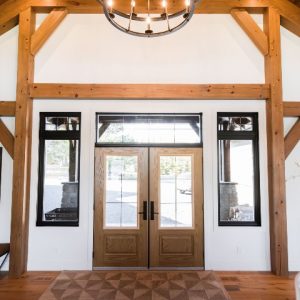
All primary living spaces are fully timber framed. Continuous load paths extend from ridge beams through posts into foundation anchorage.
Structural advantages include:
-
Reduced need for interior bearing walls
-
Open sightlines
-
High compressive strength in vertical posts
-
Defined diaphragm action at ceiling level
Heavy timber elements are dimensioned to maintain acceptable deflection limits under sustained load. Creep factors are applied to long-span members during design calculations.
Tongue and Groove Ceilings: Diaphragm and Finish Integration
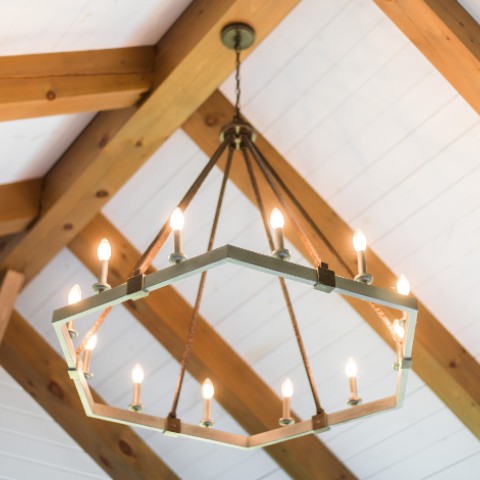
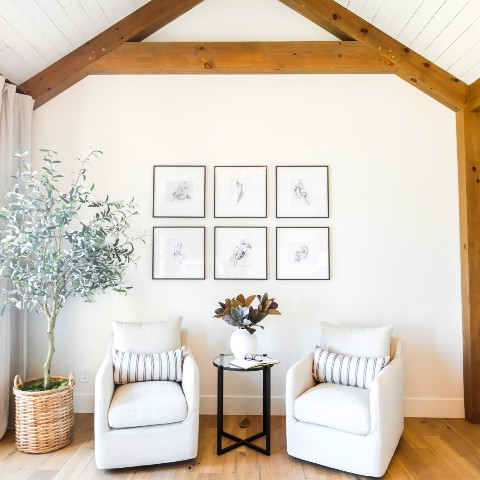
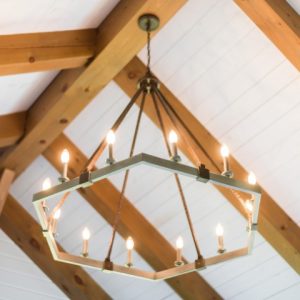
Tongue and groove boards are used extensively in ceiling assemblies. In the main living areas, boards are stained to complement the timber framing. In the sunroom and primary bedroom, boards are white-washed to create contrast.
From an engineering perspective, T&G boards:
-
Add distributed dead load
-
Contribute minor diaphragm stiffness
-
Require controlled moisture content to limit seasonal movement
Proper fastening schedules ensure shear transfer and prevent board separation due to humidity variation.
White-washed finishes increase light reflectance without affecting structural performance.
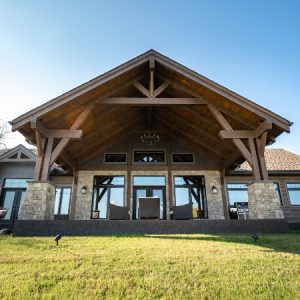
Exterior Structural Elements: Decks, Canopies and Bracketed Gables
The large covered deck and entry canopy extend structural load paths beyond the primary envelope. These elements must resist:
-
Snow load accumulation
-
Wind uplift
-
Cantilever bending forces
Bracketed gable trim details reinforce gable stability and convert bending stress into axial compression through triangulated geometry.
Deck assemblies incorporate:
-
Corrosion-resistant fasteners
-
Drainage slope
-
Uplift-rated post anchors
Exterior timber elements must be sealed at end grain to reduce capillary moisture absorption.
Material Selection: Eastern White Pine Performance
Eastern white pine is used as the primary timber species. Pine offers good workability and moderate strength when appropriately sized.
Performance considerations include:
-
Controlled installation moisture content
-
Surface protection against UV degradation
-
Monitoring for creep deformation in long-span members
The custom Bronze Teak finish by Sansin provides UV protection while maintaining vapor permeability.
Because pine is softer than Douglas fir, connection detailing must ensure adequate bearing area and shear resistance.
Environmental Load Considerations
Muriel Lake conditions impose:
-
Snow load with potential drift at roof intersections
-
Wind uplift over open water
-
Freeze-thaw cycling
-
Seasonal humidity variation
Structural countermeasures include:
-
Continuous vertical load paths
-
Reinforced valley framing
-
Tension-rated foundation anchors
-
Ventilated roof assemblies
Foundation systems incorporate frost protection and drainage to prevent soil movement affecting post alignment.
Structural Summary
Muriel Lake demonstrates advanced raised chord truss engineering integrated with complex valley framing and hybrid mountain-inspired detailing.
Key performance characteristics include:
-
Custom raised chord trusses with low-sprung strut braces
-
Reinforced valley framing at roof intersection
-
Continuous timber framing across main living volumes
-
Deck and canopy systems engineered for snow and wind load
-
Eastern white pine structural members protected with custom finish
The project illustrates how classic timber framing principles can evolve through refined geometry and disciplined engineering to deliver long-span performance, architectural openness and environmental resilience in a lakefront setting.