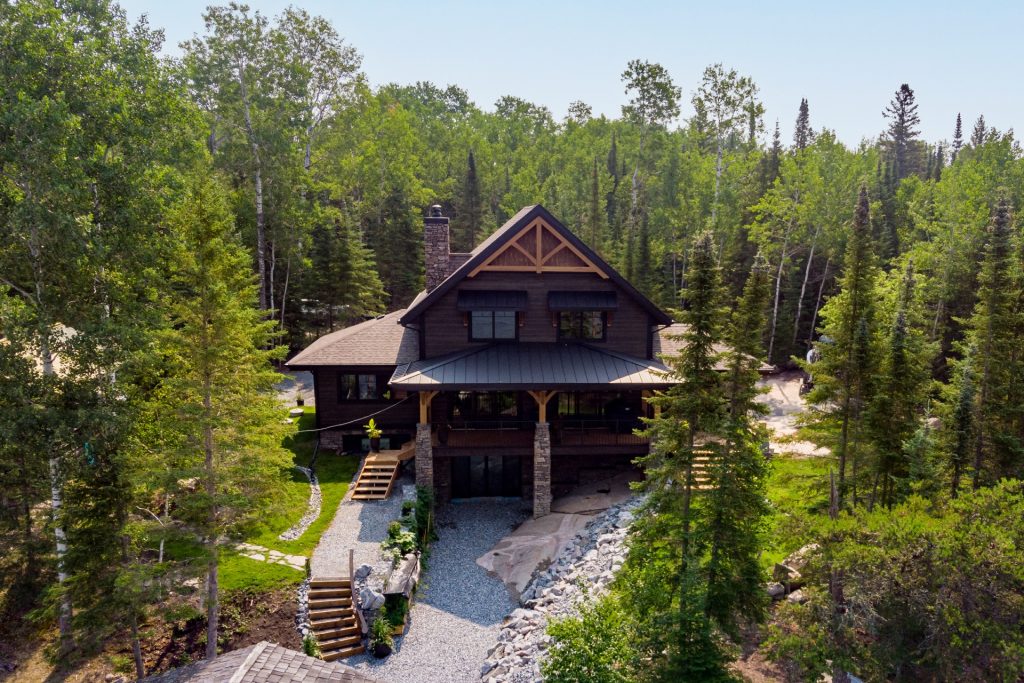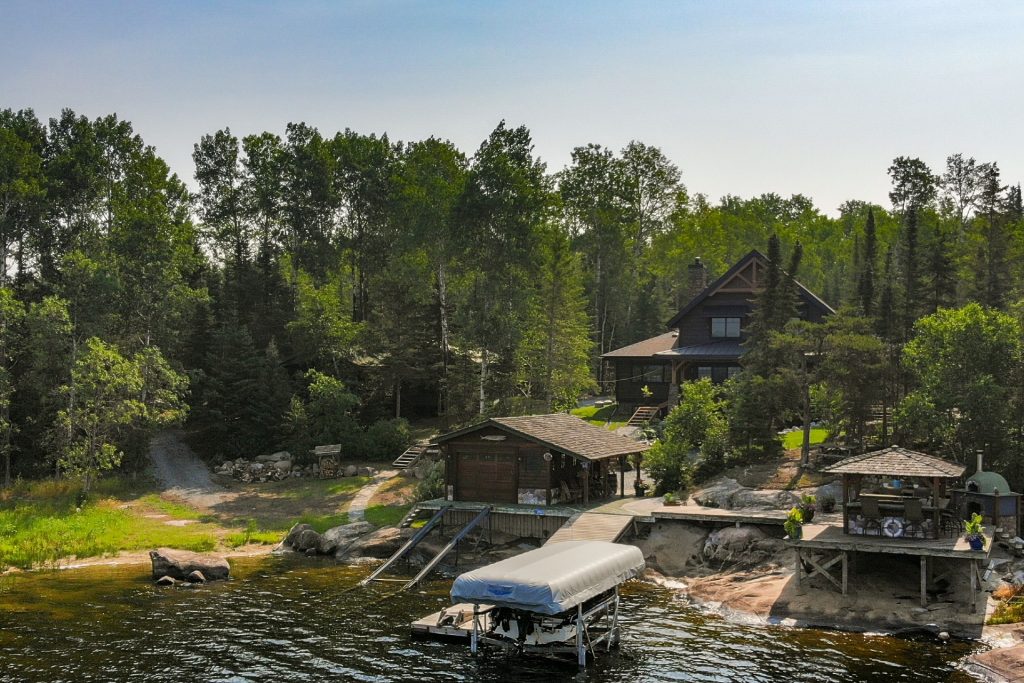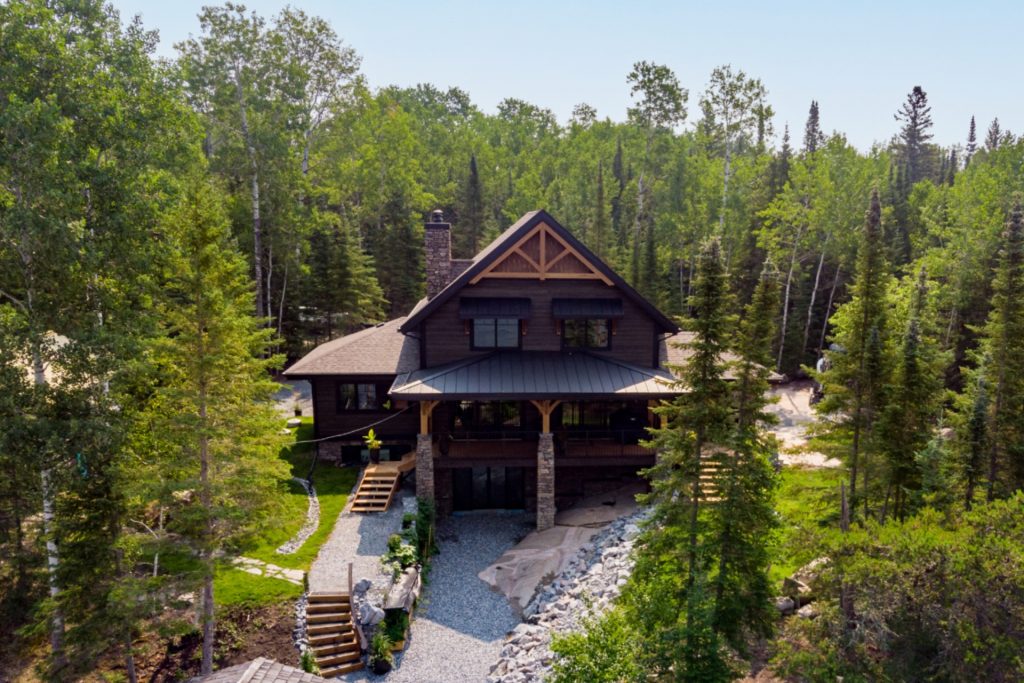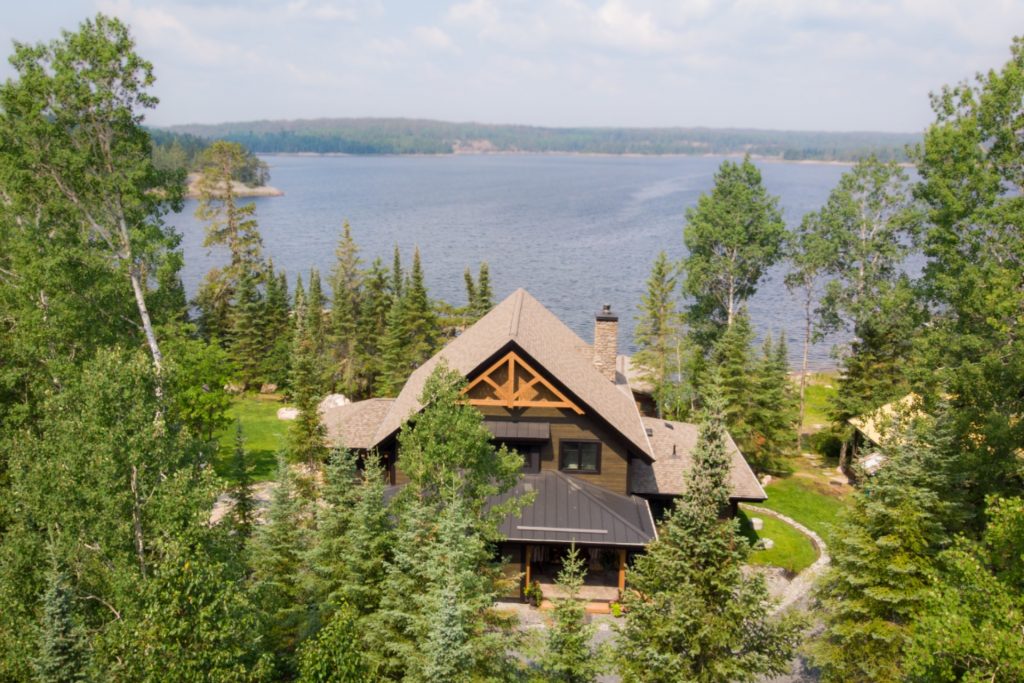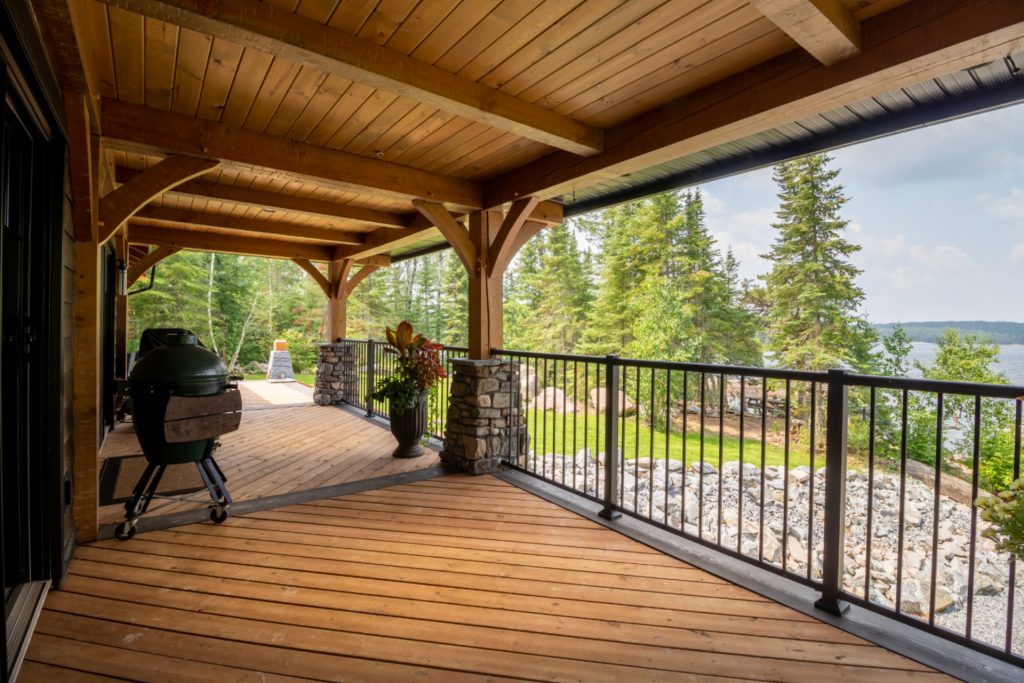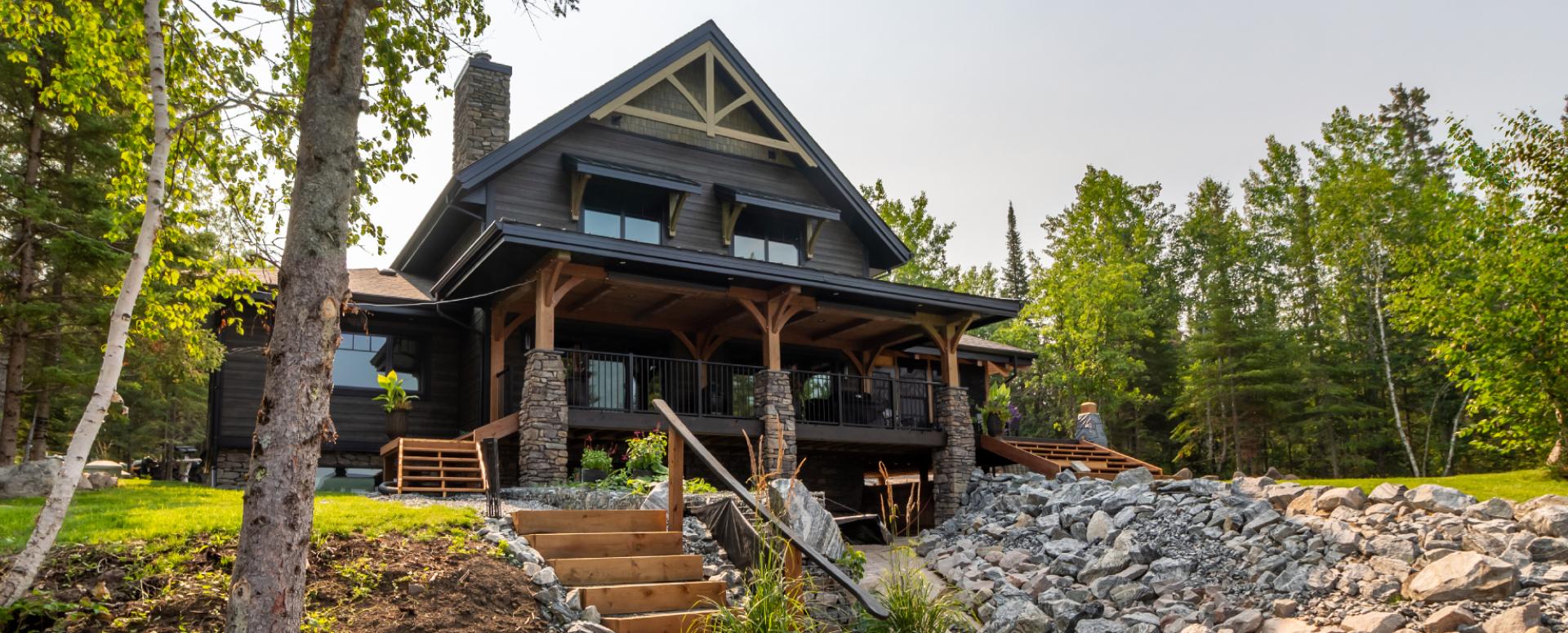
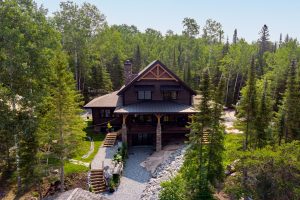
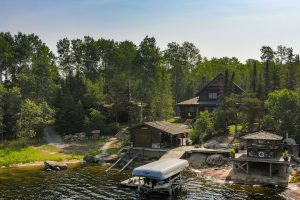
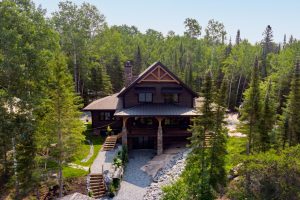
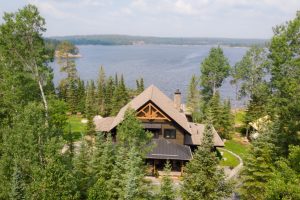
The Winnipeg River residence is positioned on a remote riverside property north of Kenora. Remote construction environments demand structural systems that prioritize durability, clear load paths, and simplified maintenance access.
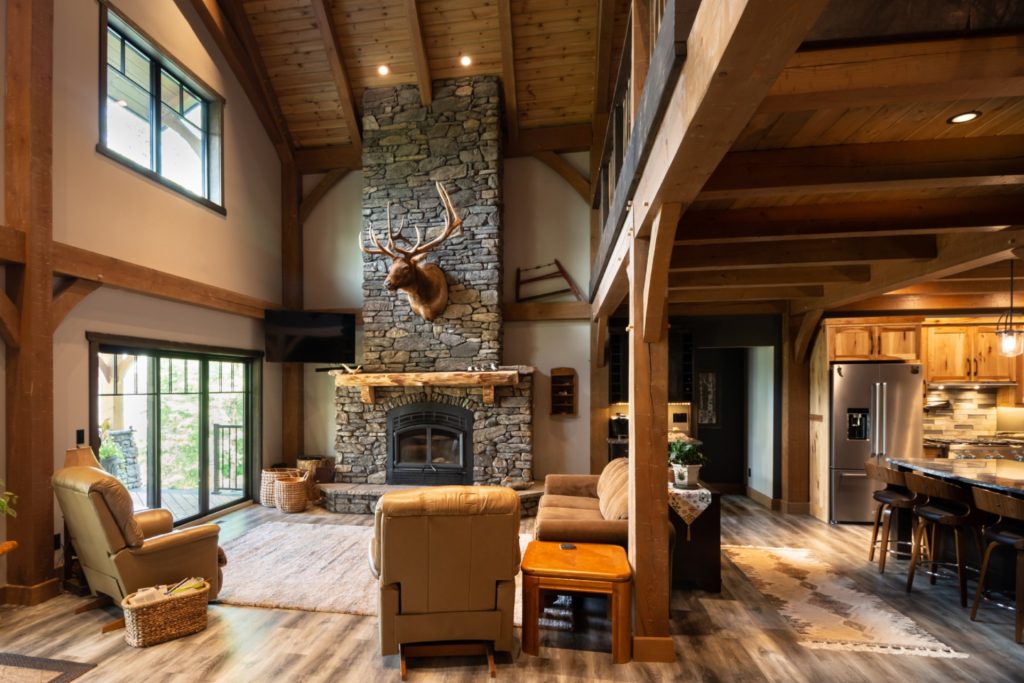
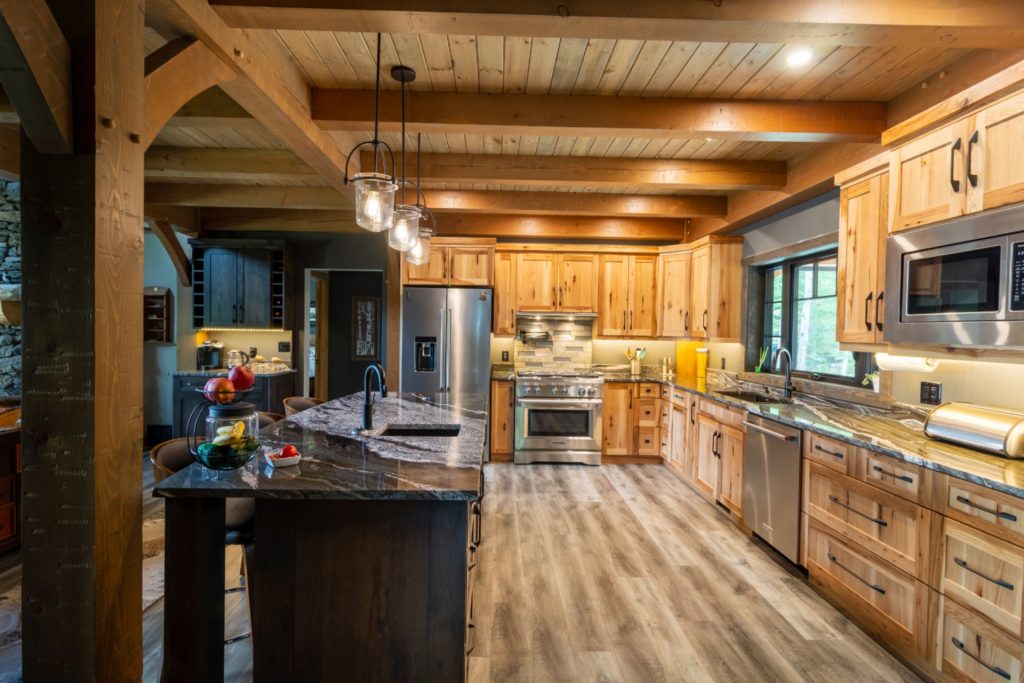
This home is constructed predominantly as a structural timber frame using Douglas fir as the primary load-bearing material. The architectural expression reflects craftsman influence, but the defining feature is structural transparency. Beams, posts and trusses are not applied ornamentation. They carry roof and lateral loads directly to the foundation.
In riverside environments subject to snow accumulation, wind uplift and freeze-thaw cycling, heavy timber framing provides predictable structural behavior and long-term resilience.
Douglas Fir as Primary Structural Material
Douglas fir is selected for its high compressive strength parallel to grain, favorable modulus of elasticity and dimensional stability when properly conditioned.
Engineering advantages include:
-
High bending strength for long-span beams
-
Reliable axial compression capacity in posts
-
Reduced variability compared to many softwood species
-
Compatibility with traditional joinery and concealed steel connectors
Moisture content at installation is controlled to limit shrinkage stress and joint separation. Creep deformation under sustained snow load is evaluated during structural sizing to maintain serviceability limits.
Exposed structural members allow visual inspection of joint integrity over time.
Arched Brace King Post Trusses: Structural Mechanics
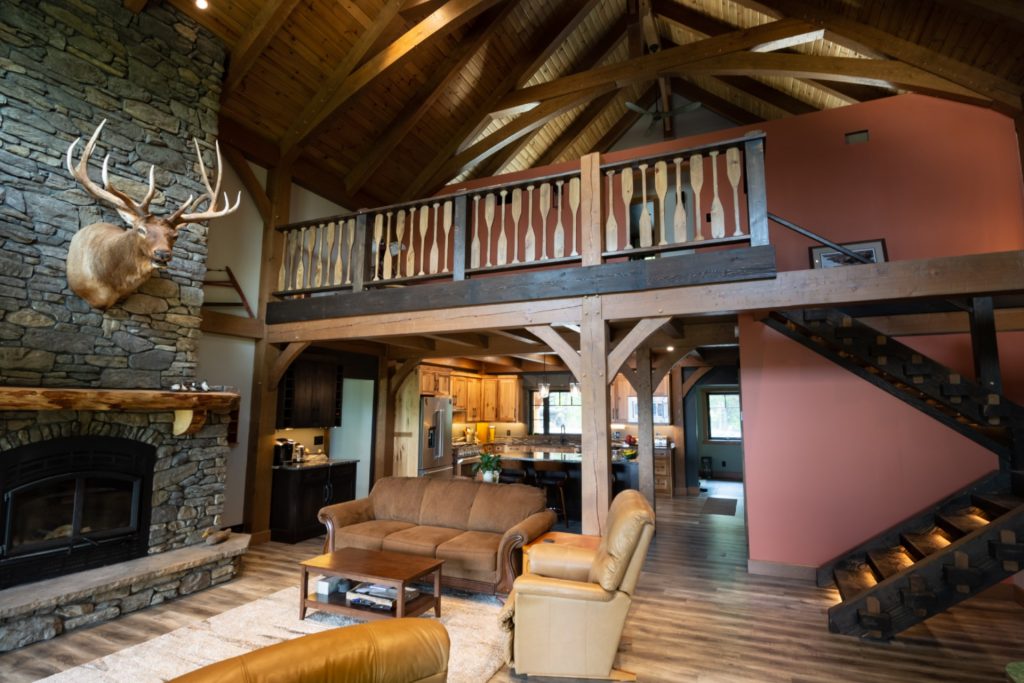
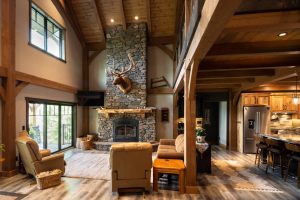
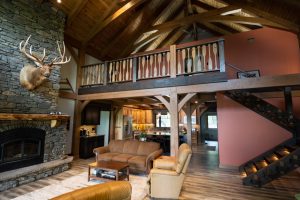
The great room is defined by arched brace king post trusses incorporating 6 in x 16 in curved braces. These members form the focal structural element while performing measurable load transfer.
Structural mechanics of the king post truss include:
-
Compressive force in rafters
-
Tensile force in the central king post
-
Horizontal thrust resolved through tie beam
-
Curved braces stabilizing geometry and redistributing stress
Curved braces must be engineered for combined bending and axial compression. Section sizing accounts for regional snow load and dead load from roof assembly.
Connection detailing at brace intersections is critical. Mortise and tenon joints or concealed steel reinforcement must resist shear forces and prevent rotation under cyclic loading.
The arch geometry modifies force vector orientation but maintains defined axial load paths from ridge to foundation.
Craftsman Exterior Detailing and Structural Function
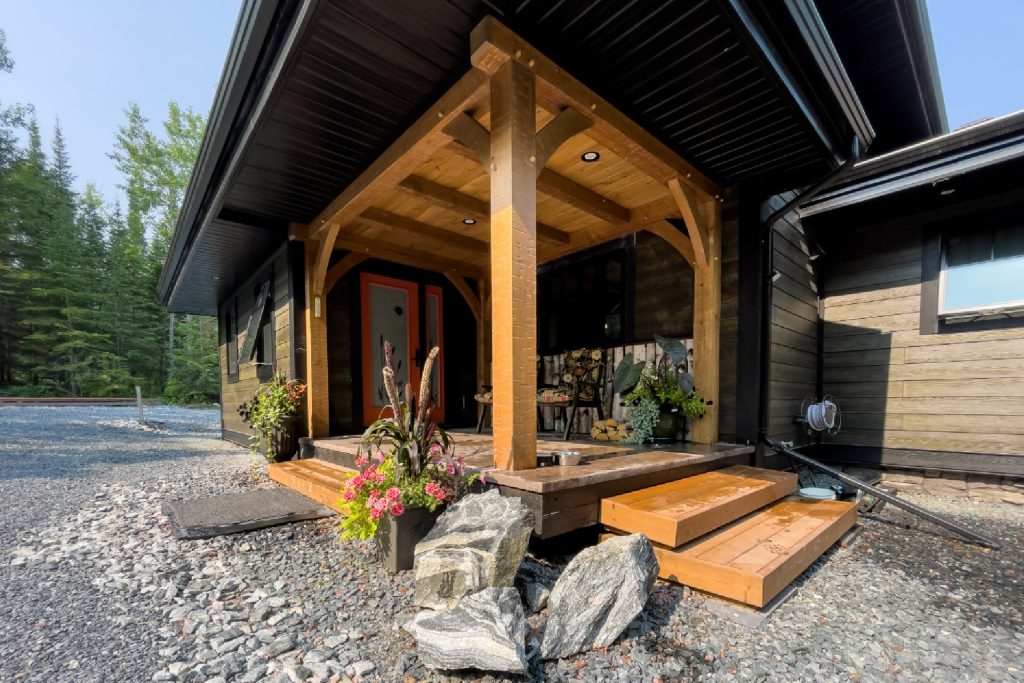
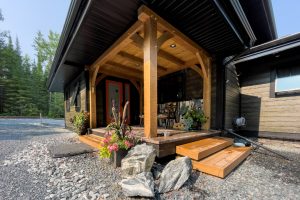
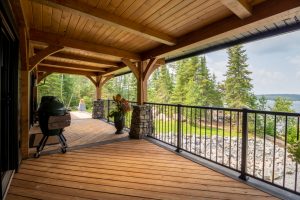
Bracketed canopies and large overhangs reflect craftsman design language while performing environmental control functions.
Structural roles include:
-
Protection of wall assemblies from precipitation
-
Reduction of solar gain at glazing
-
Redistribution of snow shedding
Large overhangs introduce cantilever bending stress. Outlook beams and brackets convert bending into axial compression through triangulated geometry.
Variation in siding colors and textures does not alter structural function but must integrate with drainage planes and air barrier continuity to prevent moisture intrusion.
Timber Frame Sunroom with Hipped Roof Geometry
The full timber frame sunroom incorporates a complex hipped roof structure fully visible from below. Hipped roofs introduce multi-directional load paths and intersecting rafter geometry.
Engineering considerations include:
-
Concentrated load at hip rafters
-
Diagonal load transfer toward supporting posts
-
Snow drift accumulation at hip intersections
-
Ventilation to prevent condensation
Hip rafters are sized for increased tributary area compared to common rafters. Continuous load paths transfer forces through timber posts into foundation anchorage.
Sliding screen windows and doors on three sides increase lateral wind exposure. Framing must resist torsional forces generated by uneven wind pressure.
Because the sunroom is used seasonally, envelope detailing must accommodate temperature variation without compromising structural timber integrity.
Interior Tongue and Groove Ceilings and Diaphragm Action
Tongue and groove boards line the ceilings throughout the living areas. These boards provide both finish and structural diaphragm contribution.
Engineering implications include:
-
Additional dead load in roof assembly
-
Shear transfer across ceiling plane
-
Controlled expansion and contraction under humidity change
Proper fastening schedules ensure diaphragm stiffness and prevent board separation.
The contrast between lighter ceiling boards and darker Douglas fir beams does not affect structural performance but enhances visual clarity of load-bearing elements.
Surface Finish and Long-Term Durability
Douglas fir timbers are finished with a custom adze-like texture and tinted to Greyed Medium Brown by Sansin. Surface finishing impacts durability rather than structural capacity.
Protective coatings must:
-
Resist UV degradation
-
Allow vapor permeability
-
Reduce surface moisture absorption
Textured finishes increase surface area and may influence drying characteristics. Proper maintenance intervals preserve timber longevity.
All exposed beam ends require sealing to reduce capillary moisture absorption.
Environmental Load Considerations
The Winnipeg River region imposes:
-
Snow load accumulation
-
Wind uplift along open river corridor
-
Freeze-thaw cycling
-
Seasonal humidity variation
Structural countermeasures include:
-
Continuous vertical load paths from trusses to foundation
-
Tension-rated hold-down anchors
-
Ventilated roof cavities
-
Corrosion-resistant connectors
Foundation systems must resist frost heave and soil moisture fluctuation typical of river-adjacent sites.
Structural Summary
The Winnipeg River residence demonstrates advanced Douglas fir timber framing applied in a craftsman-inspired architectural context.
Key performance attributes include:
-
Arched brace king post trusses with 6 in x 16 in curved members
-
Complex hipped roof geometry in fully exposed sunroom structure
-
Cantilevered overhangs engineered for snow and wind load
-
Continuous load path integrity across full timber frame system
This project illustrates how heavy timber engineering, when combined with disciplined envelope detailing and material science, produces a structurally expressive, durable riverside residence suited to remote northern conditions.