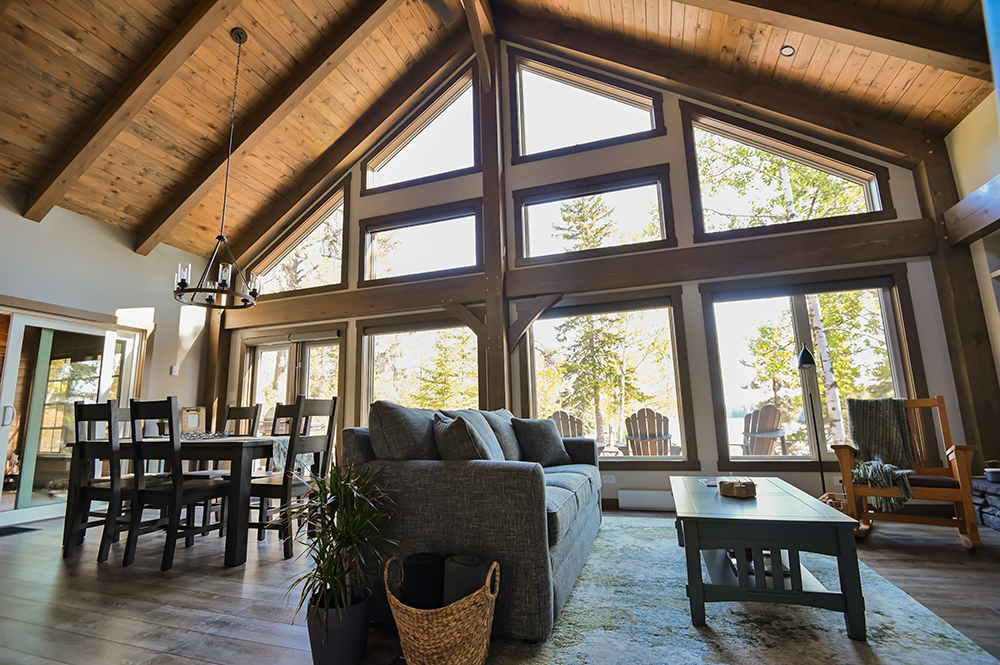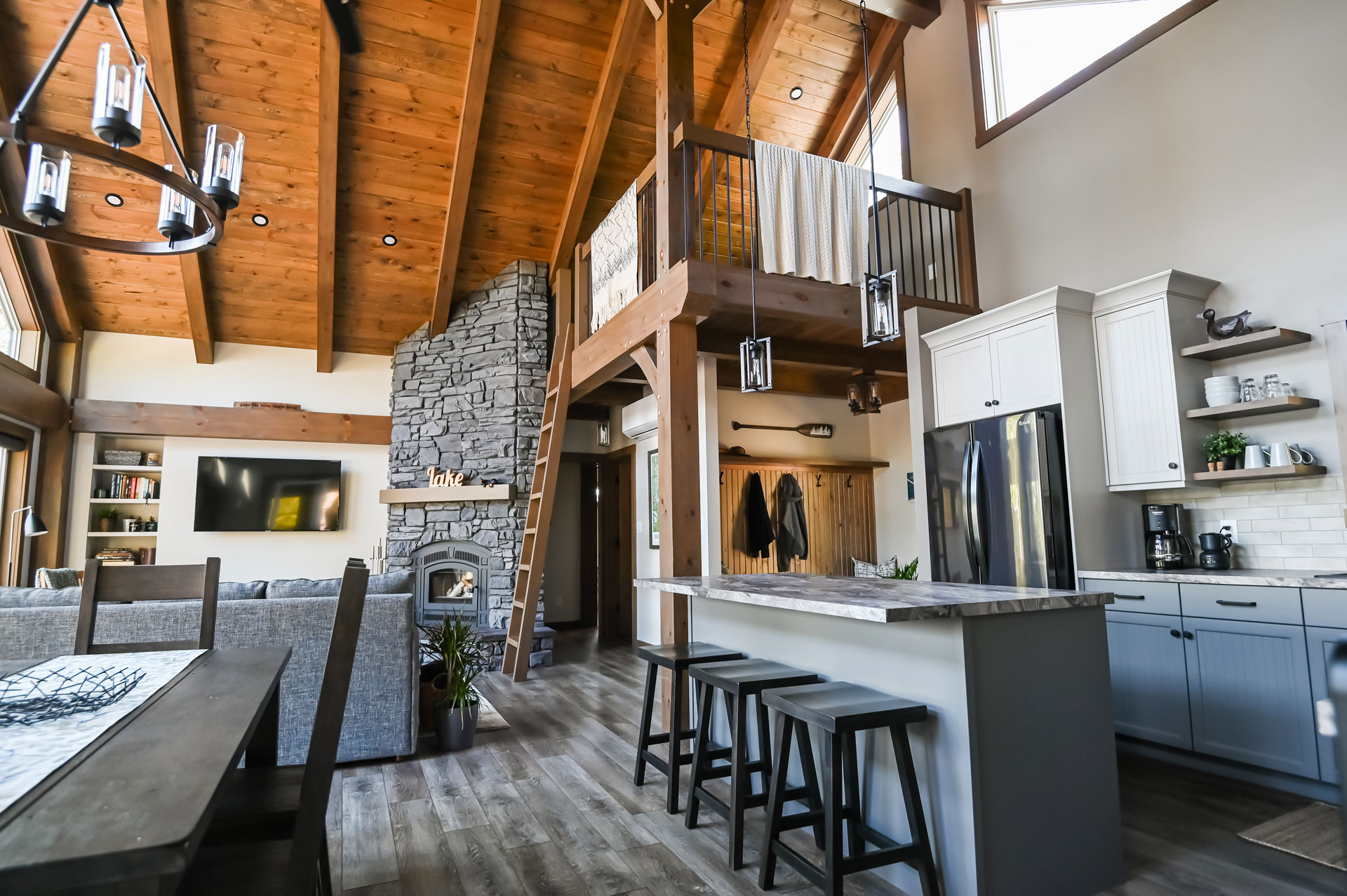
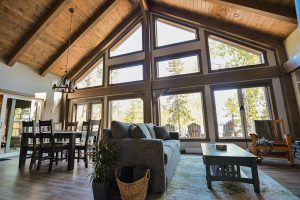
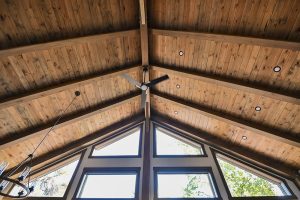

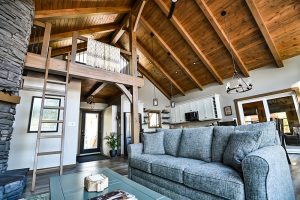
The Spruce is a compact two-bedroom, two-bath lake cottage engineered as a hybrid timber framing system. The design objective was clear: create a structurally sound, budget-conscious retreat that delivers spatial clarity, durability and direct connection to the lakeside environment.
Rather than maximizing volume, the project optimizes structural efficiency. Heavy timber elements are concentrated in primary living areas where span and visual structure are most impactful. Conventional framing is used strategically to manage cost and simplify mechanical integration.
This is structural allocation by performance, not by style.
Compact Footprint and Load Path Efficiency
A compact building envelope improves both structural and thermal performance. Reduced footprint lowers foundation demand and simplifies load transfer geometry.
Key structural principles include:
-
Direct vertical load stacking from roof to foundation
-
Shorter beam spans reducing bending stress
-
Reduced exterior wall area relative to interior volume
Continuous load paths ensure that roof loads travel through timber beams and posts into foundation supports without eccentric deviation.
In lake environments subject to snow load and wind uplift, compact geometry reduces structural vulnerability and improves envelope tightness.
Timber-Framed Living Core
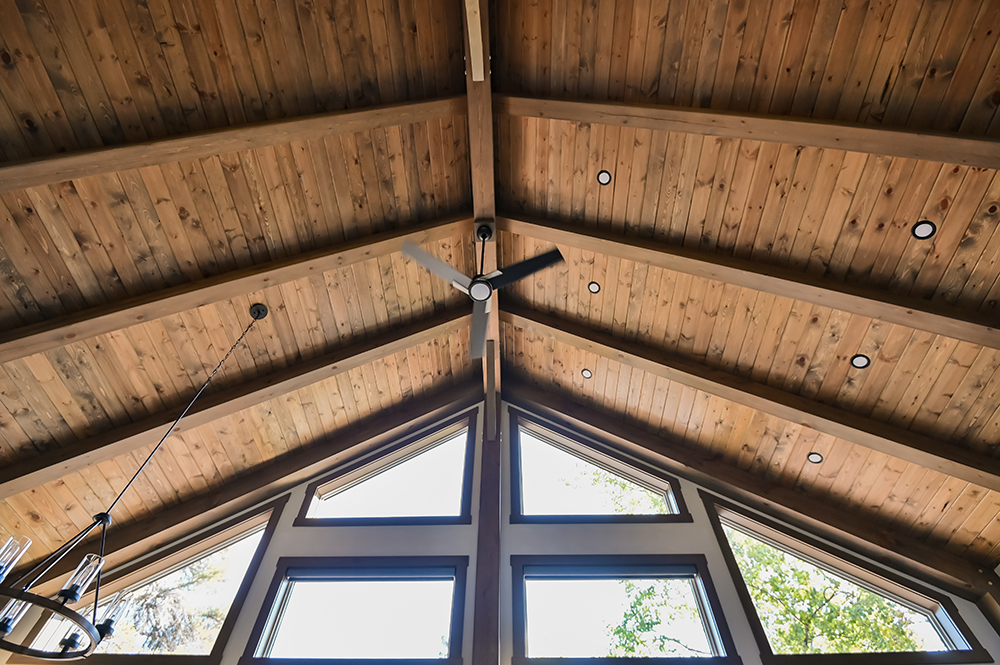
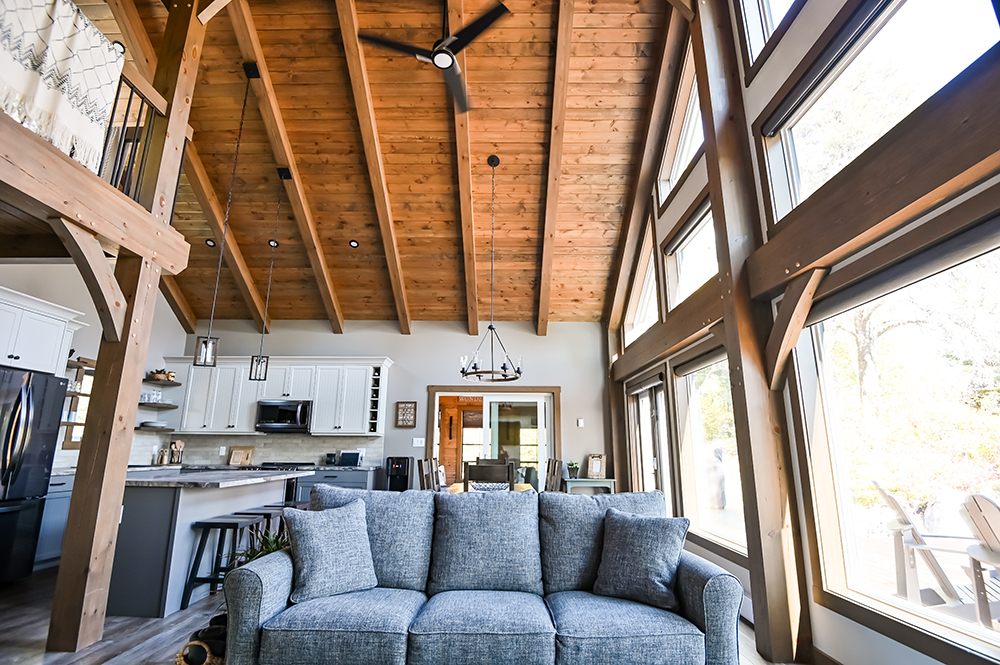
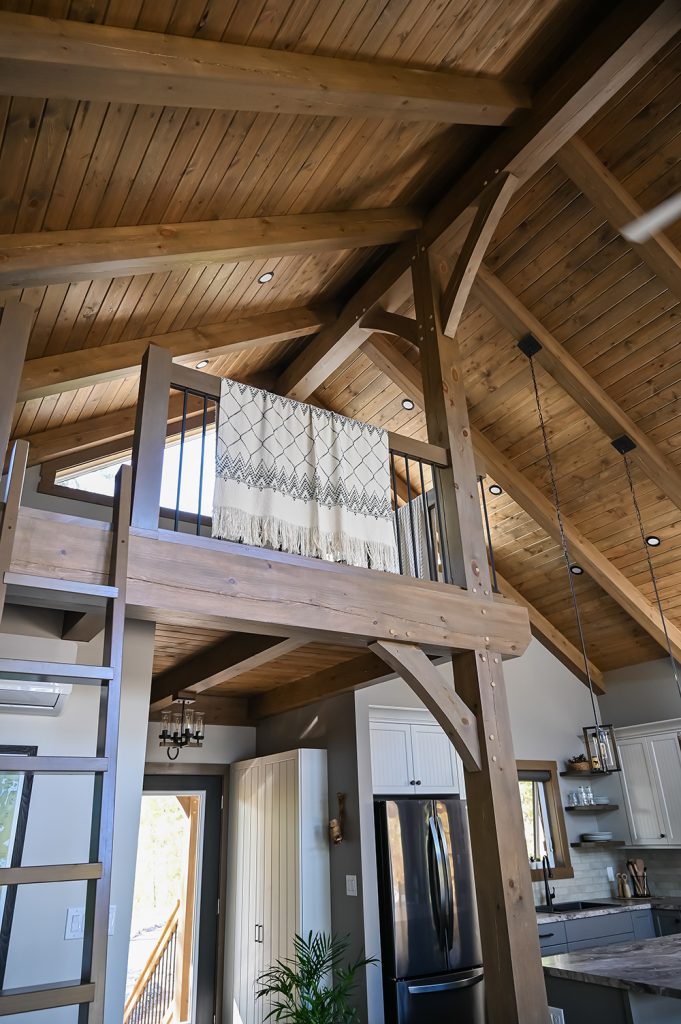
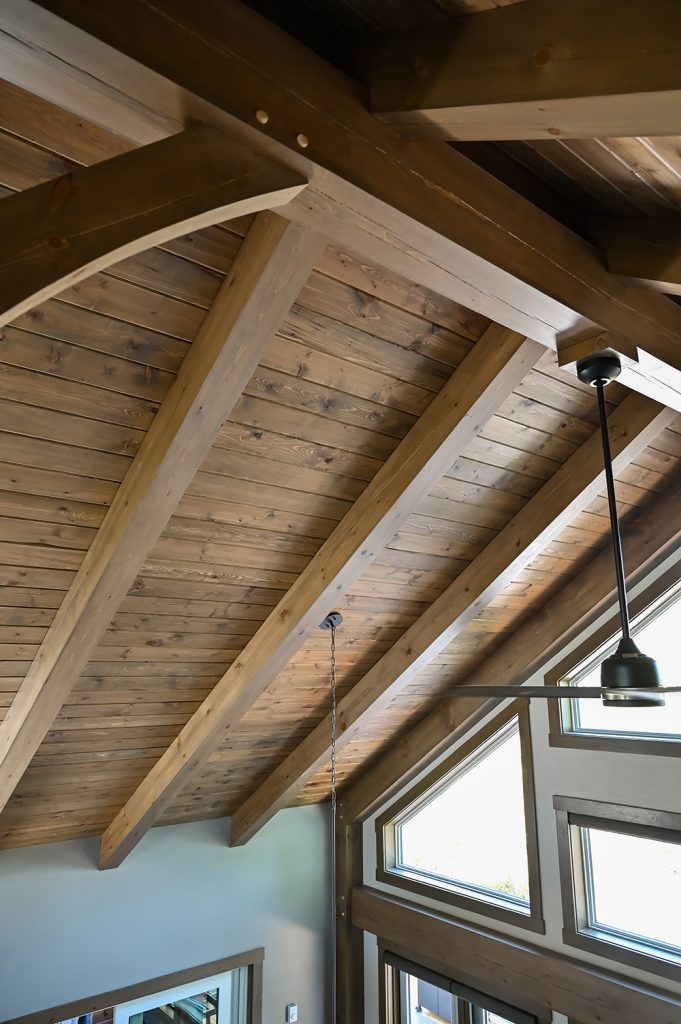
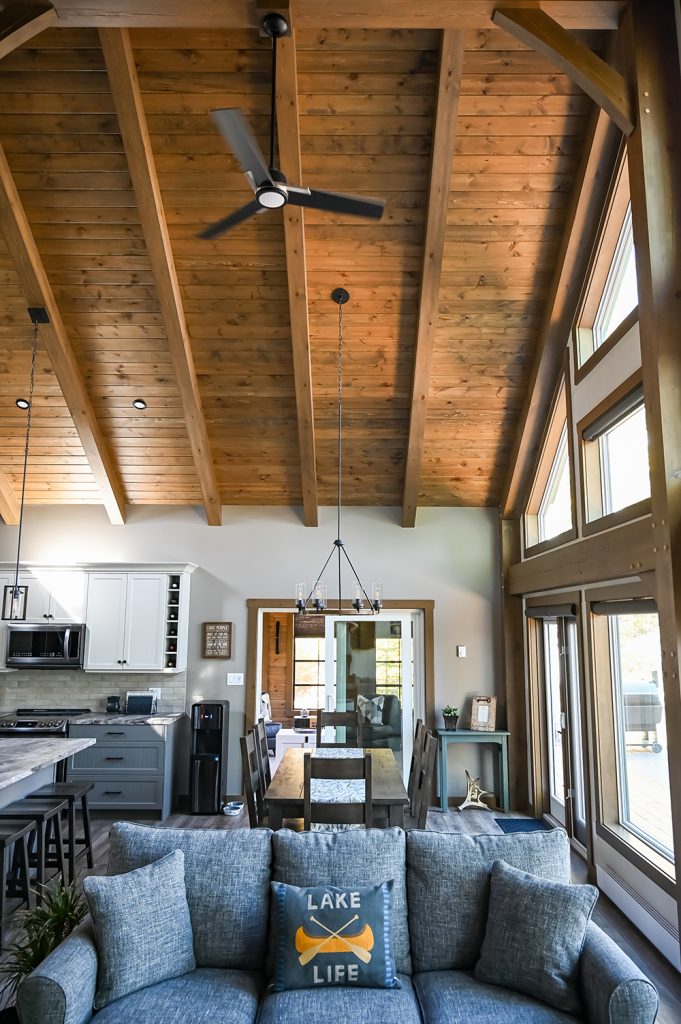
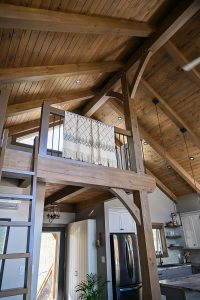
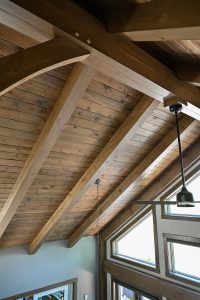
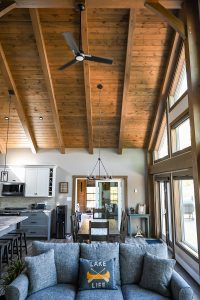
The combined foyer, kitchen, dining and great room are defined by exposed timber framing. These members are not decorative overlays. They function as primary structural supports.
Timber beams and posts outline the central volume and perform:
-
Axial compression transfer from roof structure
-
Bending resistance across open living spans
-
Visual articulation of structural grid
Member sizing accounts for regional snow load and dead load from roof assembly. Long-term creep deformation is evaluated to maintain serviceability and prevent ceiling misalignment.
Connection detailing between beams and posts may incorporate mortise and tenon joinery or concealed steel plates sized for shear resistance and uplift tension.
Loft Integration and Vertical Load Management
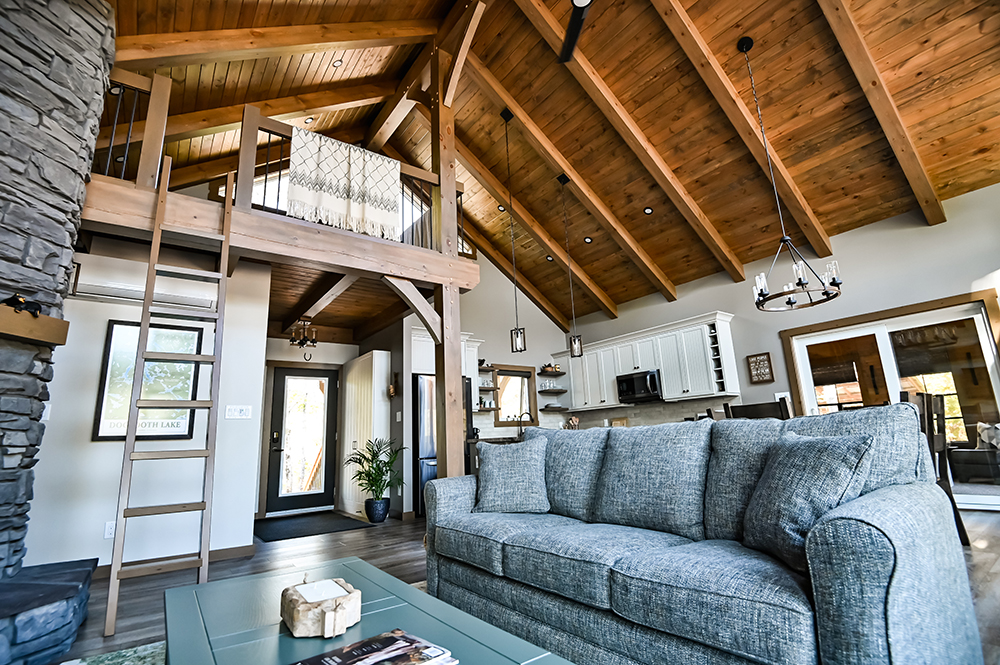
A small loft accessed by ladder is positioned between the living area and bedroom hall. Loft construction introduces additional live load within a compact structure.
Engineering considerations include:
-
Concentrated load transfer at loft support points
-
Deflection control in loft joists
-
Guardrail anchorage strength
The loft floor diaphragm contributes to lateral stiffness by tying opposing wall assemblies together.
Ladder access reduces structural footprint compared to full stair systems, preserving usable floor area while limiting additional load concentration.
Direct Lake Access and Deck Integration
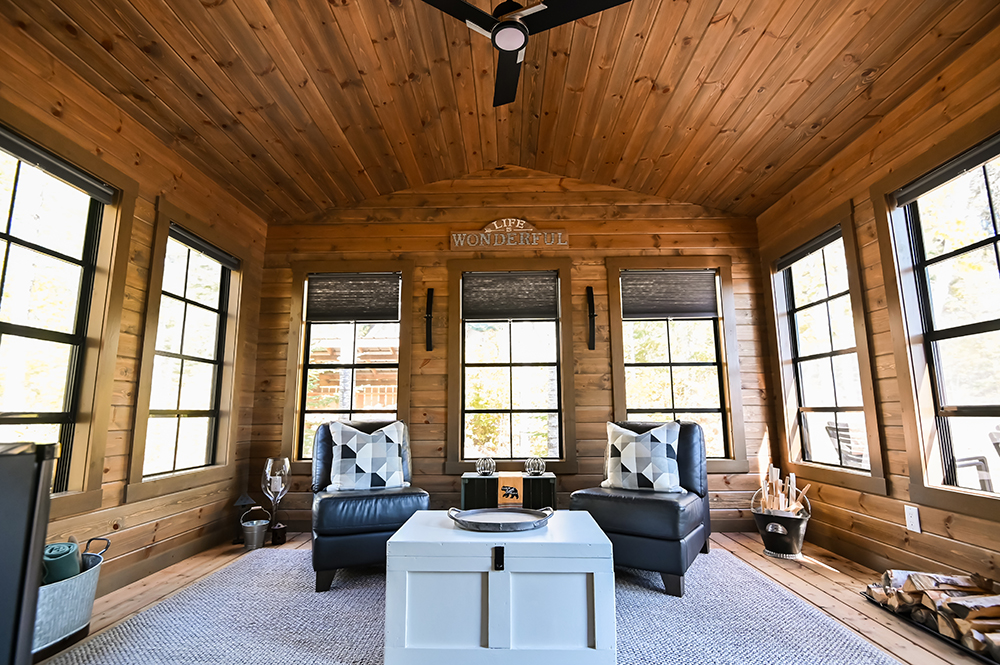
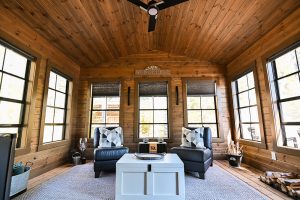
The design emphasizes immediate access to the lakeside deck from the master suite, main living space and sunroom. Structural integration of deck and main structure must address differential movement and uplift.
Deck engineering includes:
-
Joist spacing rated for occupant live load
-
Corrosion-resistant fasteners in humid lake conditions
-
Drainage slope to prevent standing water
-
Uplift-rated anchors at post bases
Because lakefront sites often experience amplified wind loads, deck-to-structure connections are reinforced to resist lateral shear and tension forces.
Flashing at door thresholds prevents moisture intrusion into floor assemblies.
Hybrid Construction Strategy
Hybrid construction combines heavy timber framing in central zones with efficient conventional framing in bedroom and service areas.
Advantages of this approach include:
-
Concentration of timber where structural span is greatest
-
Simplified wall cavity for insulation and mechanical systems
-
Reduced overall timber volume
-
Improved budget control
Conventional walls supporting timber beams must be reinforced at bearing points. Top plates are doubled or engineered to handle concentrated reactions.
Moisture isolation between heavy timber and stud framing prevents stress transfer due to differential seasonal movement.
Thermal and Environmental Performance
Lake cottages in cold climates must address:
-
Snow load accumulation
-
Wind uplift across open water
-
Freeze-thaw cycling
-
Seasonal humidity variation
The compact form reduces thermal bridging opportunities. Airtight detailing at beam penetrations limits convective heat loss.
Ventilated roof cavities prevent condensation buildup and extend timber durability.
Timber provides moderate thermal inertia, buffering interior temperature fluctuation when combined with controlled ventilation.
Durability and Maintenance Simplicity
Budget-conscious design does not imply reduced structural integrity. Durability strategies include:
-
Elevated timber clearance from grade
-
Sealed end grain surfaces
-
Proper drainage plane behind cladding
-
Stainless or hot-dip galvanized connectors
Because compact cottages may experience intermittent occupancy, materials must tolerate fluctuating humidity and temperature conditions.
Exposed timber allows visual inspection of structural condition over time.
Structural Summary
The Spruce demonstrates how hybrid timber framing can deliver:
-
Efficient load paths within a compact footprint
-
Timber-framed central living volume
-
Loft integration without excessive structural complexity
-
Direct deck access with reinforced connection detailing
-
Balanced performance and budget control
This is a compact lake cottage engineered for durability, clarity and practical lakefront living. Timber is used where it performs best, and conventional framing supports the system without compromising structural integrity.