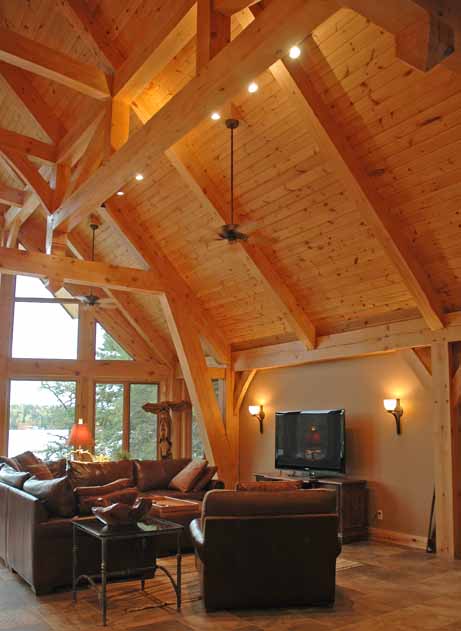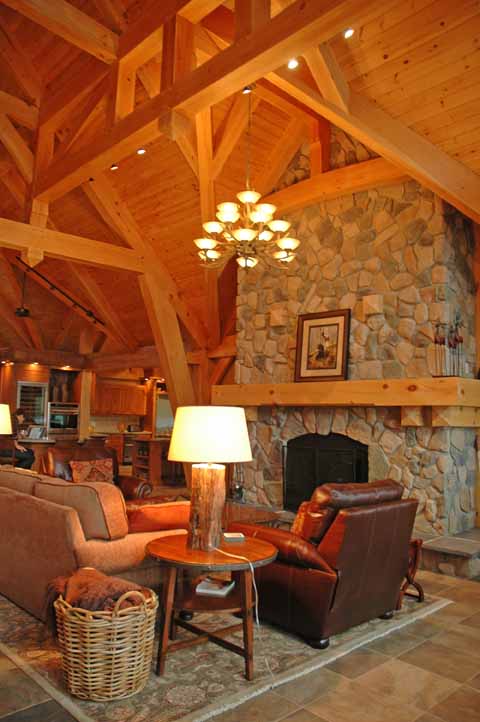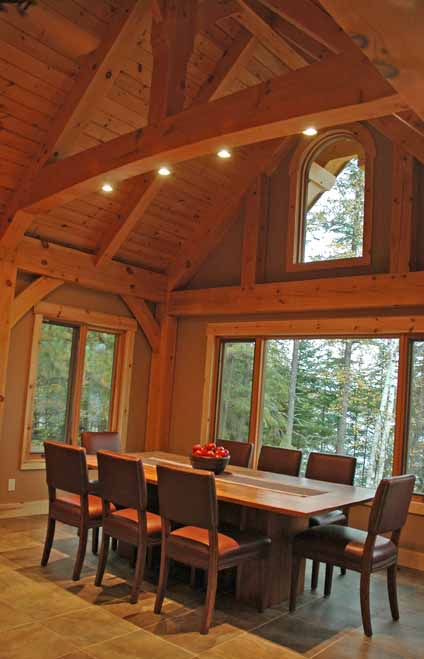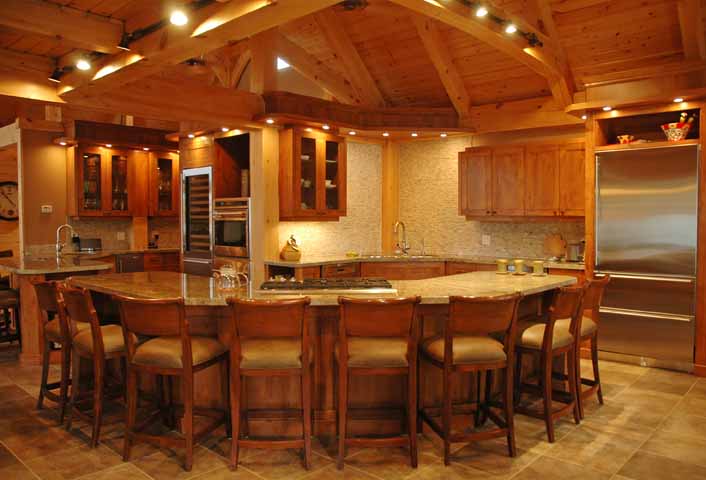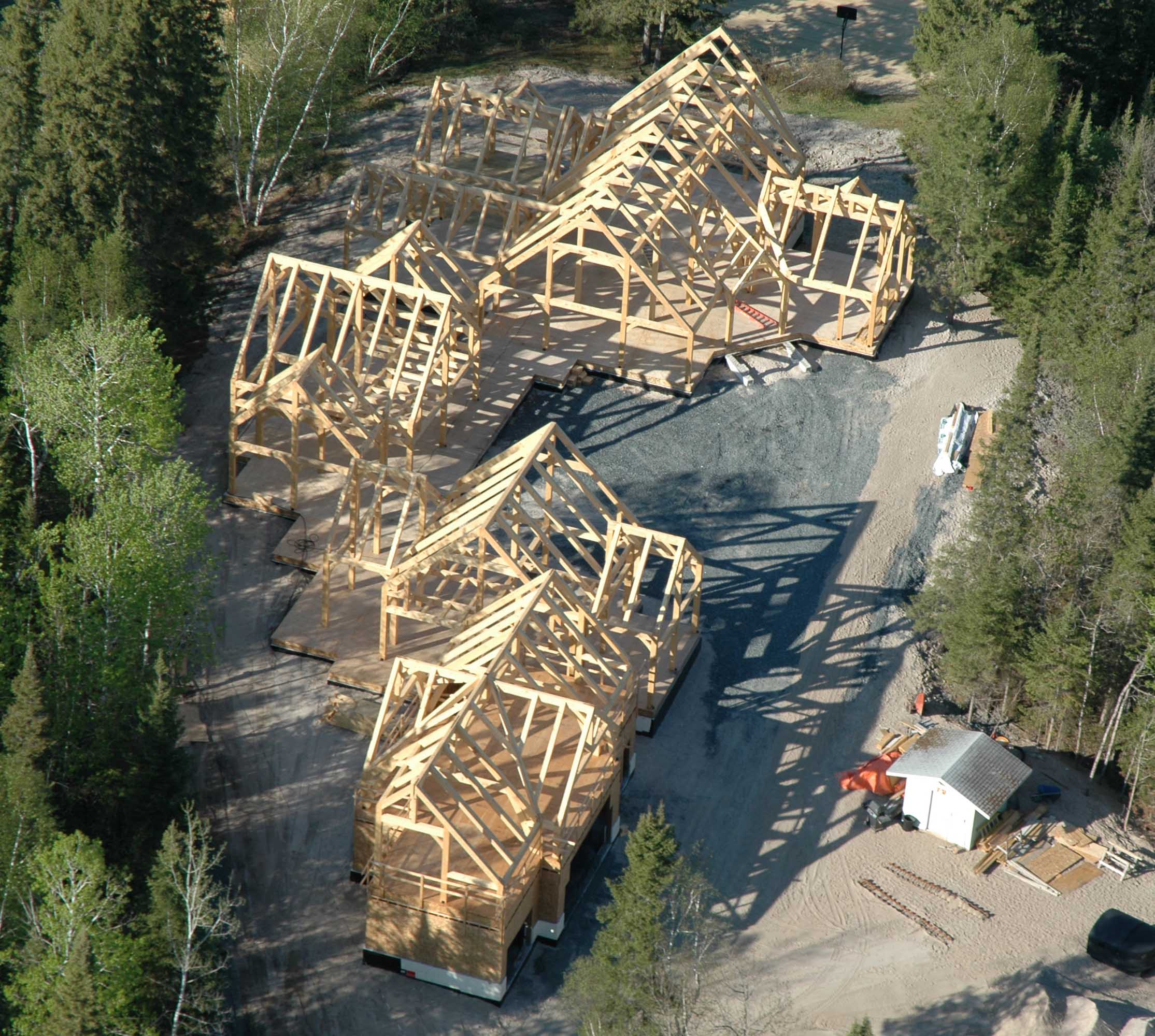
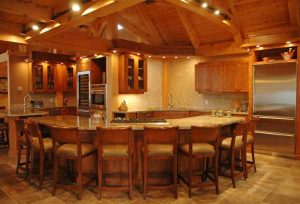
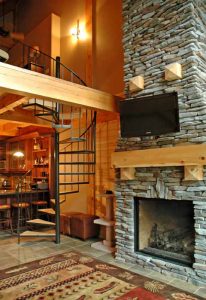
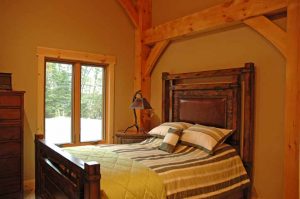
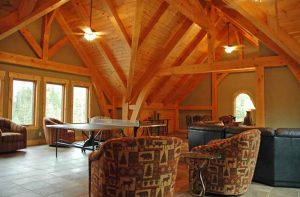
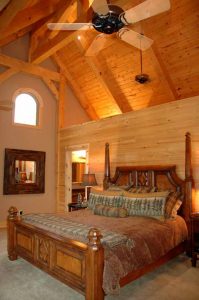
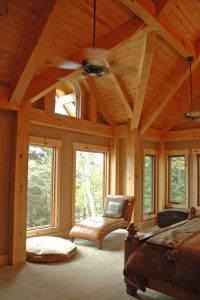
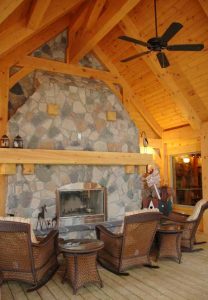
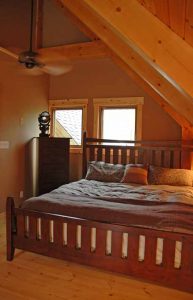
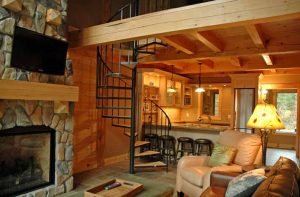
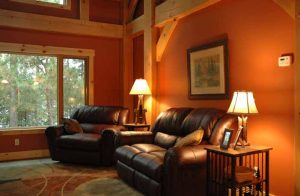
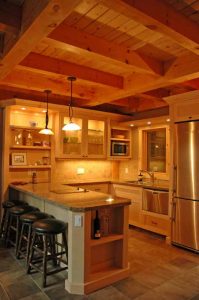
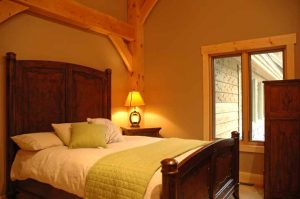
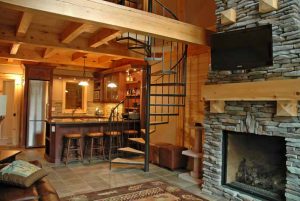
Island Resort is a multi-structure family compound composed of four primary buildings:
-
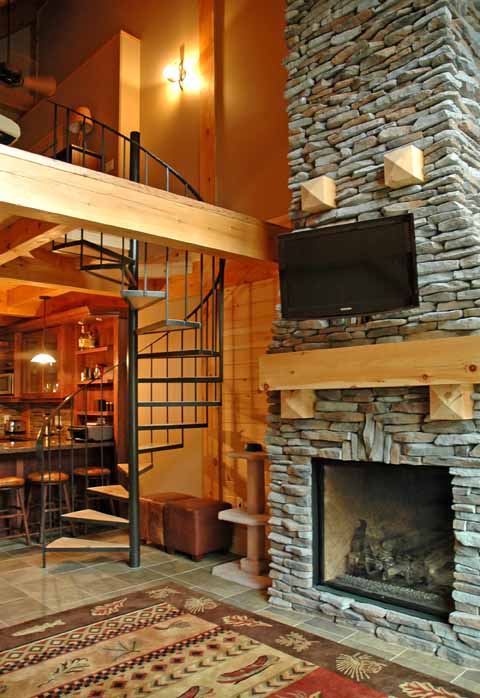
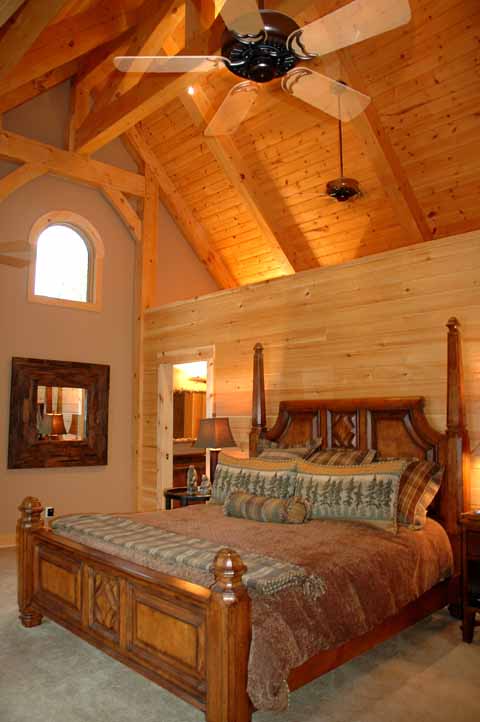
Main lodge with great room, master wing and sunroom
-
Two independent guest cabins
-
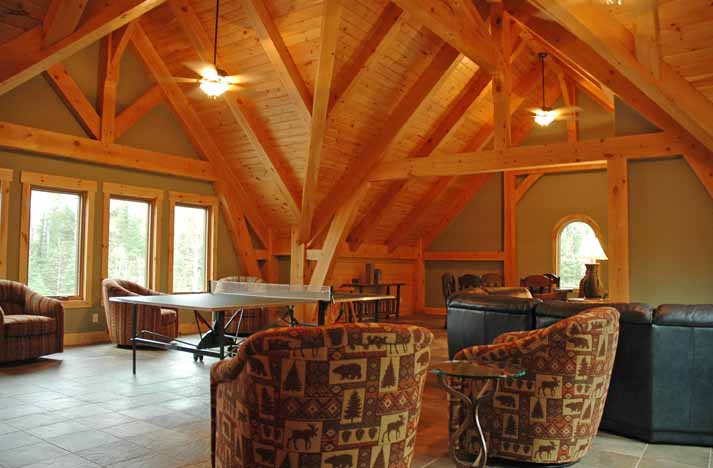
Recreation hall constructed above a four-car garage
All structures are connected by an enclosed boardwalk system, creating a unified architectural and structural network across the site.
A multi-building timber project of this scale requires coordinated load path planning, differential movement control between structures and environmental durability measures suitable for exposed lake or island conditions.
Structural Organization Across Multiple Buildings
Each building functions structurally independent while maintaining architectural cohesion through consistent timber engineering language.
Engineering priorities include:
-
Independent foundation systems to prevent load transfer between buildings
-
Movement joints at boardwalk connections to accommodate seasonal expansion
-
Uplift-rated anchorage due to open wind exposure
-
Snow load consideration for varying roof elevations
The enclosed boardwalk serves as a transitional structure. It must accommodate differential settlement and thermal movement while maintaining lateral stability.
Main Lodge: English Cruck Frame and Parallel Chord Truss Integration
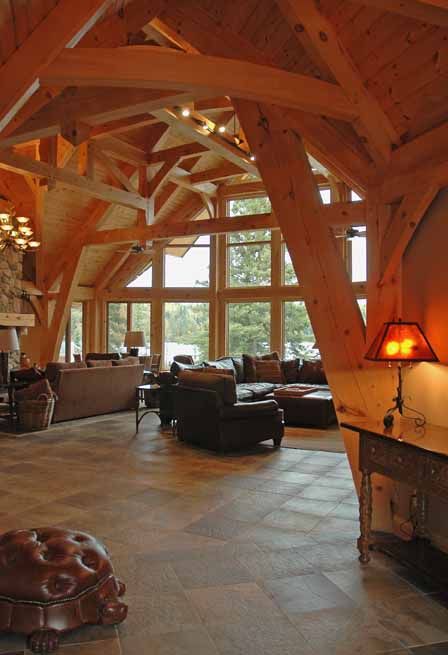
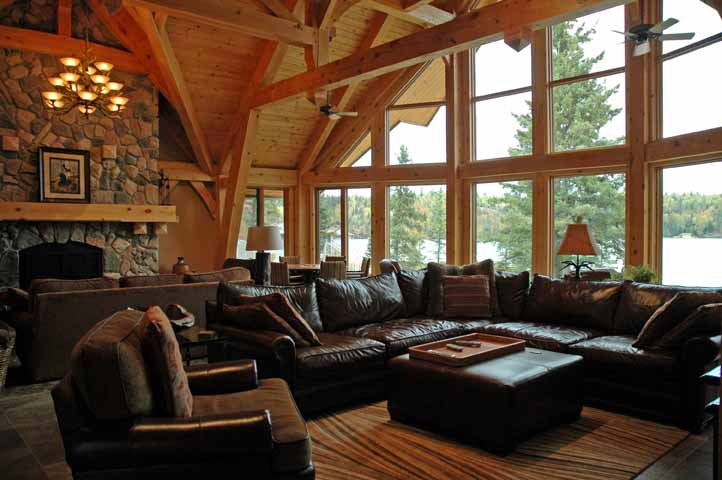
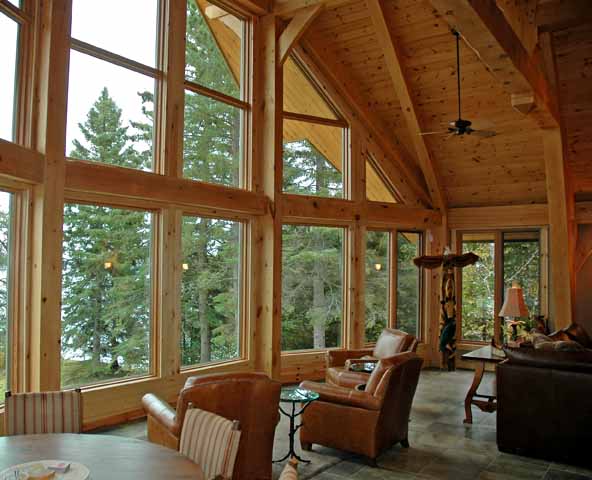
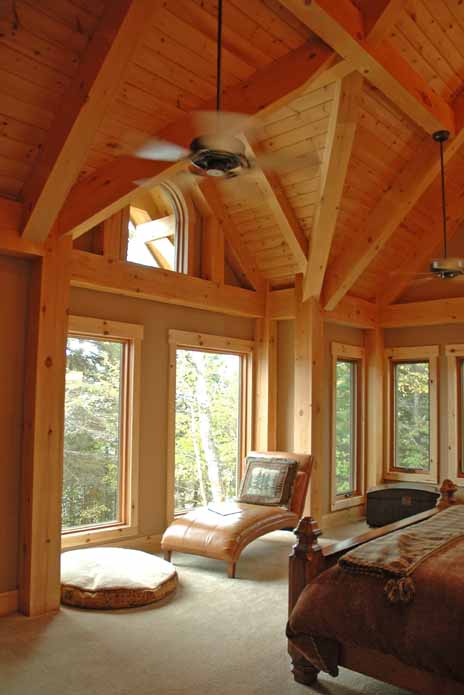
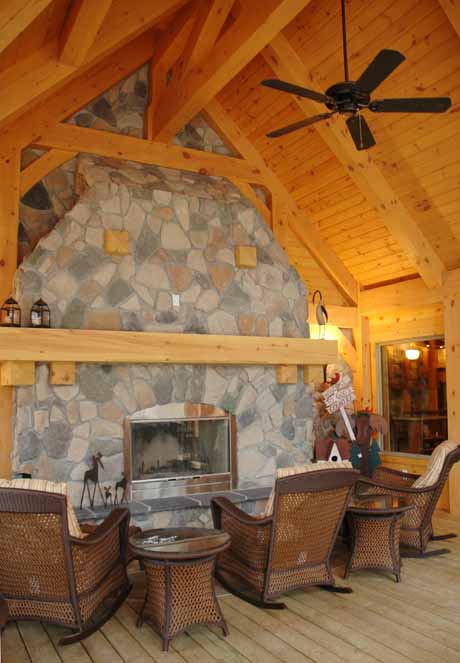
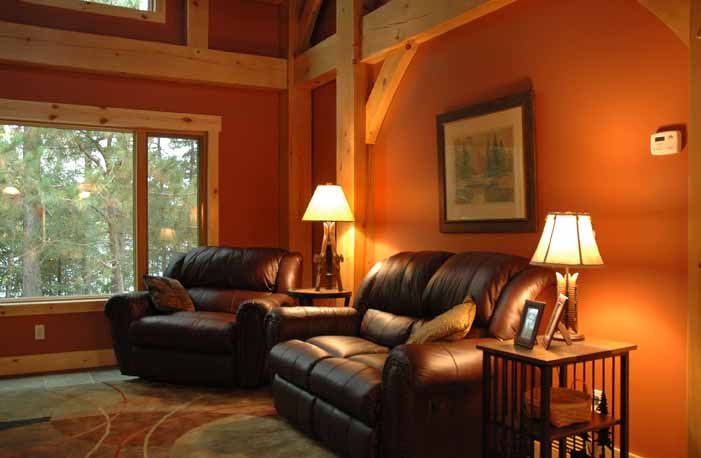
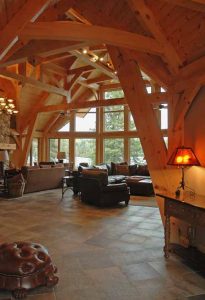
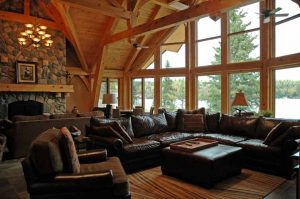
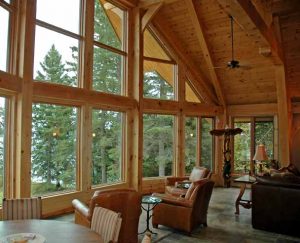
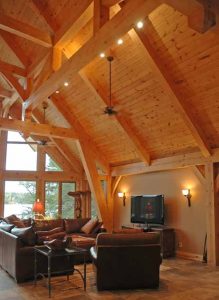
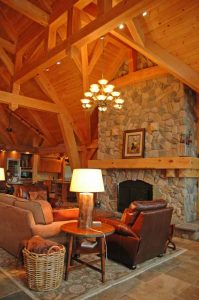
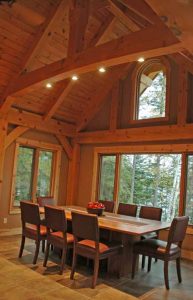
The main lodge features a dramatic timber frame system combining English cruck frame trusses with parallel chord trusses spanning the great room.
Cruck Frame Structural Mechanics
Cruck frames utilize paired curved timbers rising from near floor level to meet at or near the ridge. Structural behavior includes:
-
Axial compression along curved members
-
Vertical load transfer directly into foundation
-
Reduced bending moment compared to straight rafters
Cruck geometry distributes roof load efficiently while creating a cathedral-like volume. Because curved members experience combined axial and bending stress, timber selection and grading are critical.
Connections at the ridge and base must resist shear and prevent rotational displacement.
Parallel Chord Truss Integration
Parallel chord trusses are integrated within the great room to manage long spans between structural supports.
Structural advantages include:
-
Uniform load distribution along chords
-
Controlled mid-span deflection
-
Reduced thrust at bearing points
The integration of cruck frames with parallel chord trusses requires precise dimensional fabrication to align load paths and prevent eccentric loading.
Roof diaphragm continuity stabilizes the combined system against lateral wind pressure.
Entry Foyer Geometry: 120 Degree Intersection
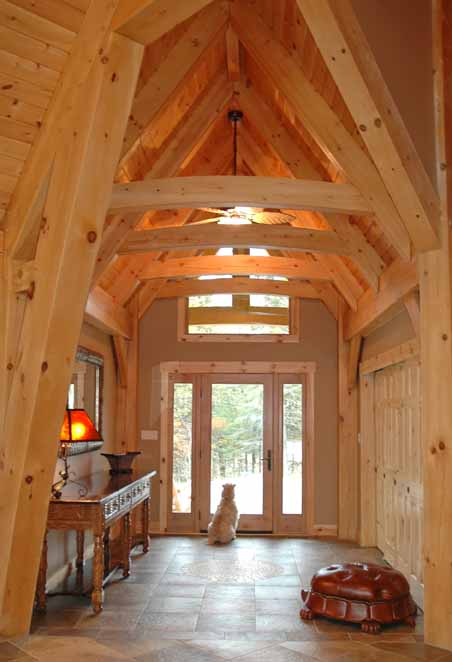
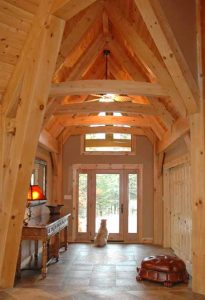
The entry foyer intersects the great room at 120 degrees, introducing complex load transfer geometry.
Engineering challenges include:
-
Non-orthogonal roof plane intersection
-
Concentrated load at truss convergence points
-
Snow drift accumulation at angled valleys
Four raised chord trusses establish visual rhythm while resolving structural forces.
Raised chord trusses elevate the bottom chord above wall plate level, increasing ceiling height while maintaining tension capacity.
Joint detailing at angled intersections must resist shear in multiple axes.
Recreation Hall Above Four-Car Garage
The recreation hall is constructed above a four-car garage, requiring reinforced floor framing to resist increased live load.
Engineering considerations include:
-
Floor joist or beam sizing for assembly occupancy load
-
Vibration control for large open recreational space
-
Fire separation between garage and upper structure
Garage openings reduce wall shear capacity. Reinforced headers and lateral bracing compensate for reduced wall diaphragm area.
Continuous vertical alignment of structural posts ensures direct compression transfer into foundation.
Guest Cabins: Compact Structural Efficiency
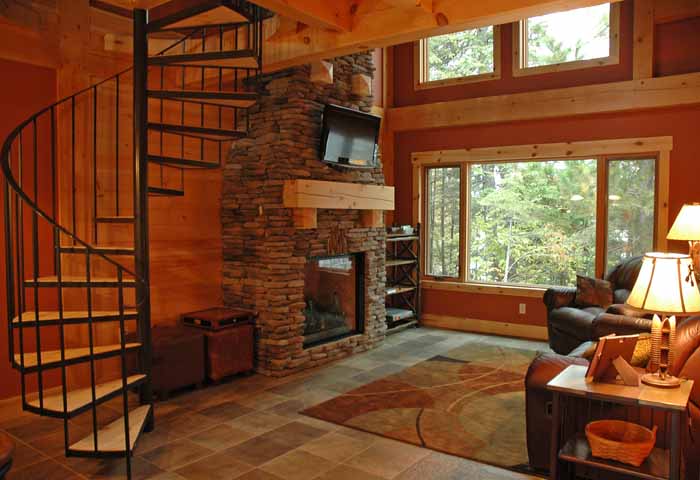
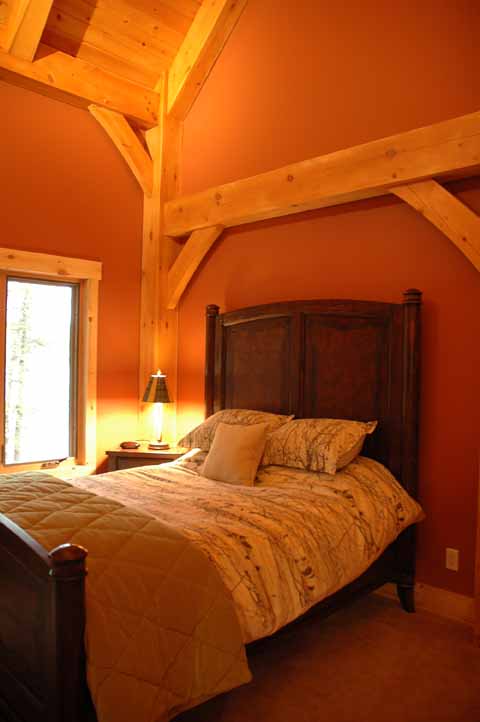
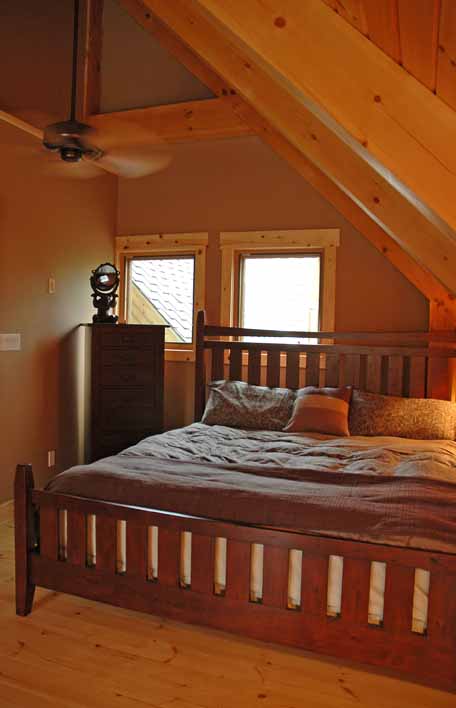
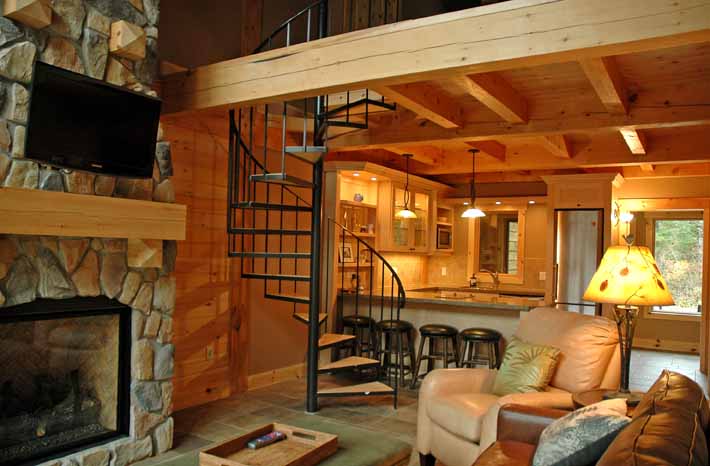
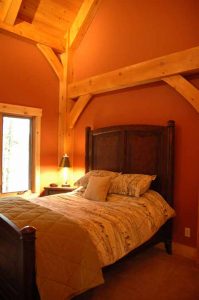
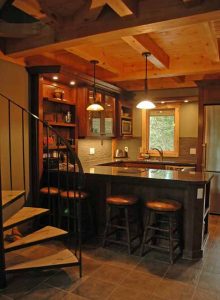
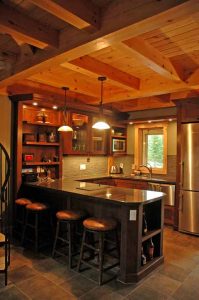
Each guest cabin includes:
-
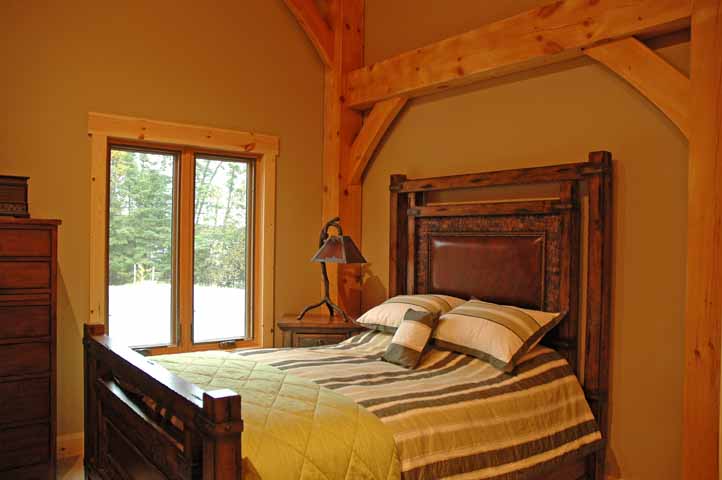
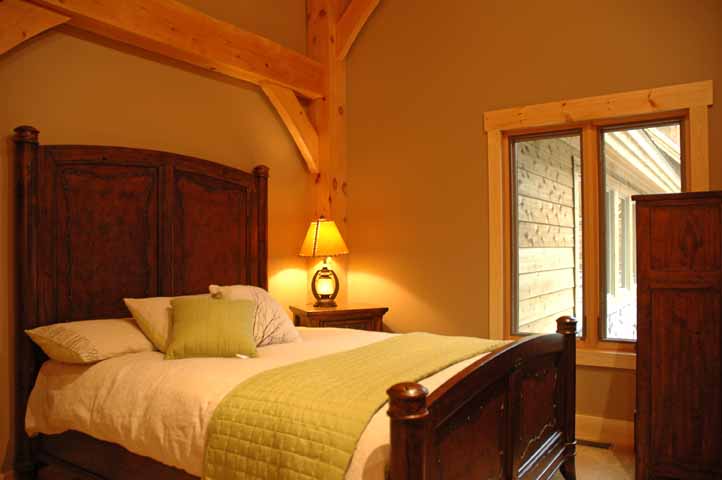
Master bedroom
-
Ensuite bathroom
-
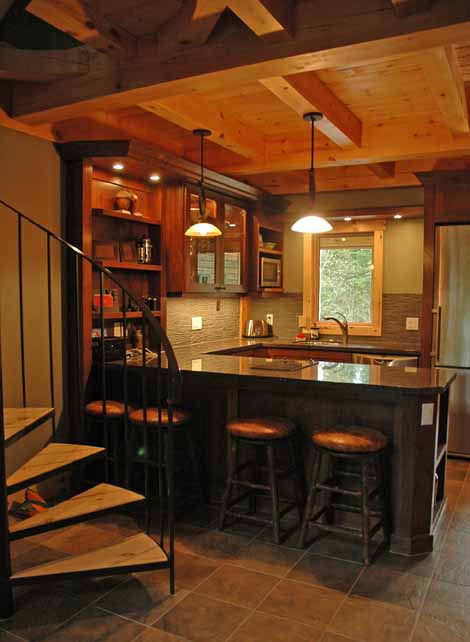
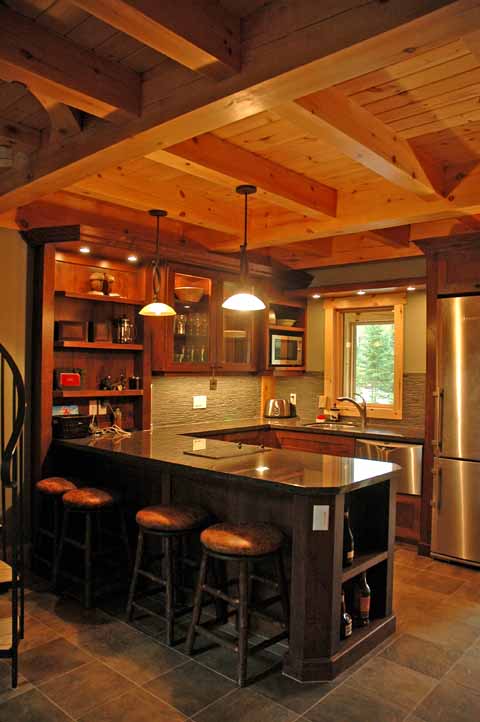
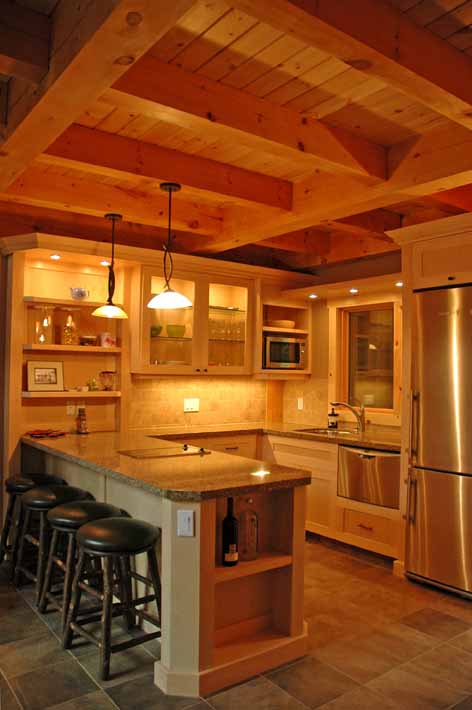
Compact kitchen
-
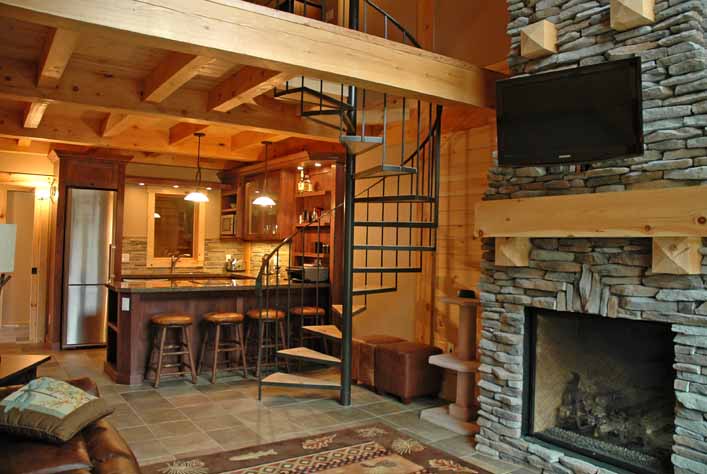
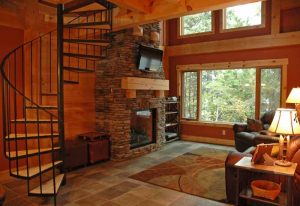
Sleeping loft
Structural efficiency is achieved through simplified timber geometry and optimized span lengths.
Loft framing requires:
-
Reinforced bearing for concentrated live load
-
Guardrail anchorage integrated into timber posts
-
Deflection control to prevent floor bounce
Roof pitch and framing geometry are selected for snow shedding efficiency.
Because cabins are separate structures, independent frost-protected foundations prevent differential settlement.
Environmental and Durability Considerations
Island or lakeside exposure introduces:
-
Increased wind uplift
-
Snow accumulation and drifting
-
Freeze-thaw cycling
-
Elevated humidity
Structural countermeasures include:
-
Continuous load paths from ridge to footing
-
Uplift-rated anchor systems
-
Corrosion-resistant fasteners
-
Ventilated roof assemblies
Timber moisture content is controlled at installation to reduce shrinkage stress.
All end grain surfaces are sealed to minimize moisture absorption.
Structural Summary
Island Resort demonstrates advanced multi-building timber engineering featuring:
-
English cruck frame trusses integrated with parallel chord trusses
-
Raised chord trusses at complex 120 degree foyer intersection
-
Recreation hall supported above garage with reinforced floor system
-
Independent guest cabins with efficient structural layouts
-
Enclosed boardwalk connections accommodating movement
The compound achieves structural clarity across multiple volumes while managing environmental exposure and geometric complexity. This project illustrates how traditional timber framing systems can be combined with engineered truss technology to deliver long-span performance, spatial rhythm and long-term durability in a multi-structure resort environment.