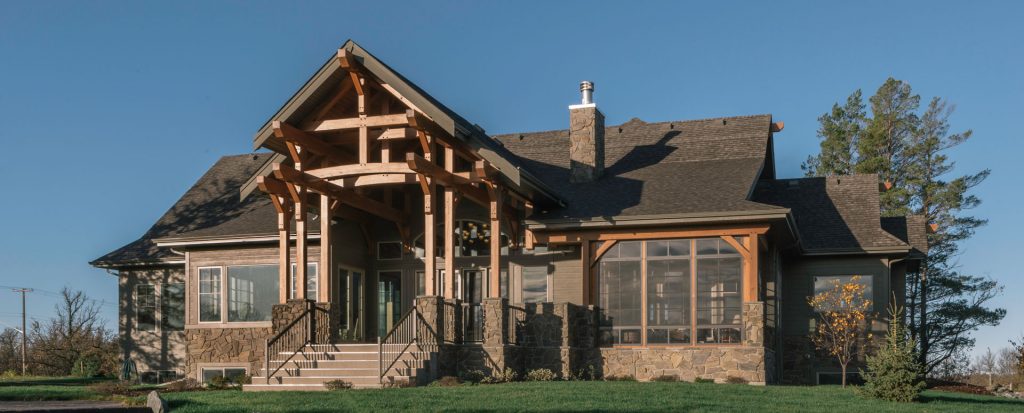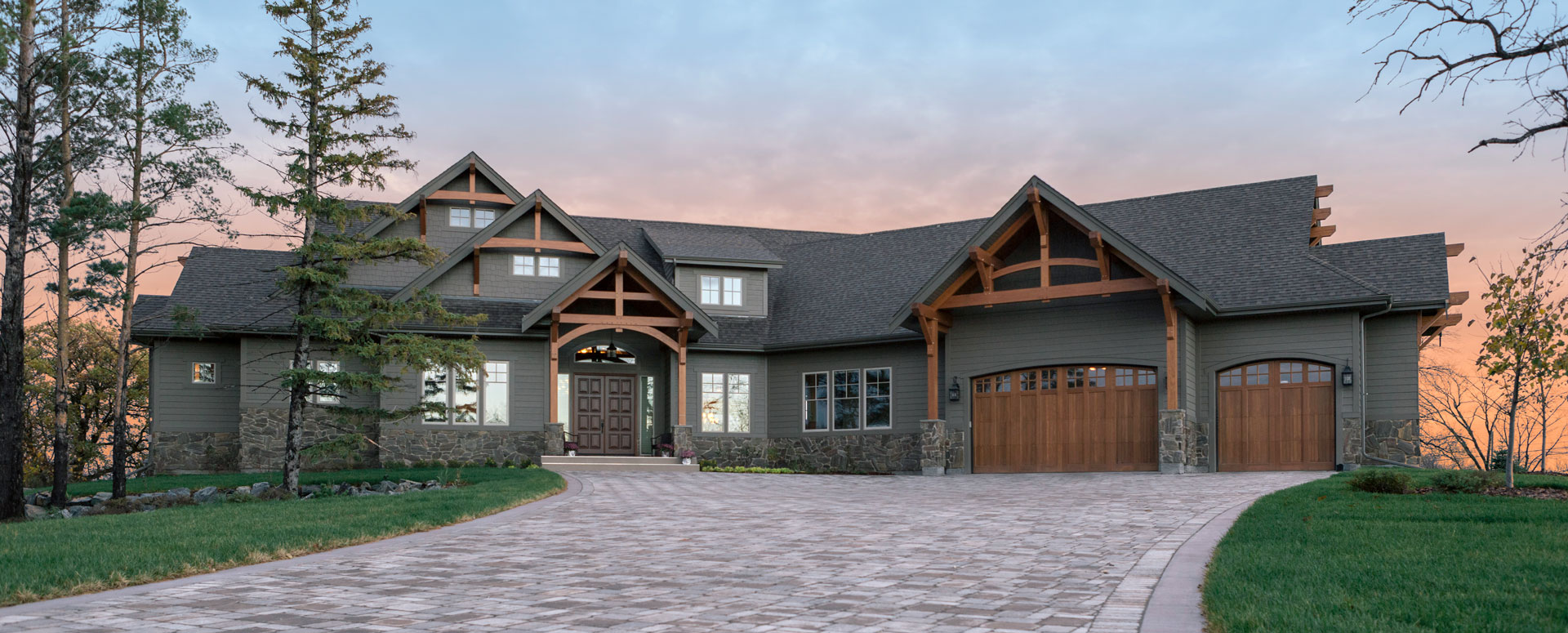
House on the Assiniboine is positioned on a large cul-de-sac riverside lot with 180-degree views of the Assiniboine River. Open river exposure increases wind velocity and lateral load demand on roof assemblies and deck structures. The structural system integrates heavy timber framing with conventional construction in a hybrid configuration.
The primary timber elements are constructed from high-grade Douglas fir, selected for its high bending strength, compressive capacity and predictable modulus of elasticity. Continuous load paths extend from roof diaphragm through posts into foundation anchorage engineered for frost and moisture control.
This is a character-driven home supported by disciplined structural mechanics.
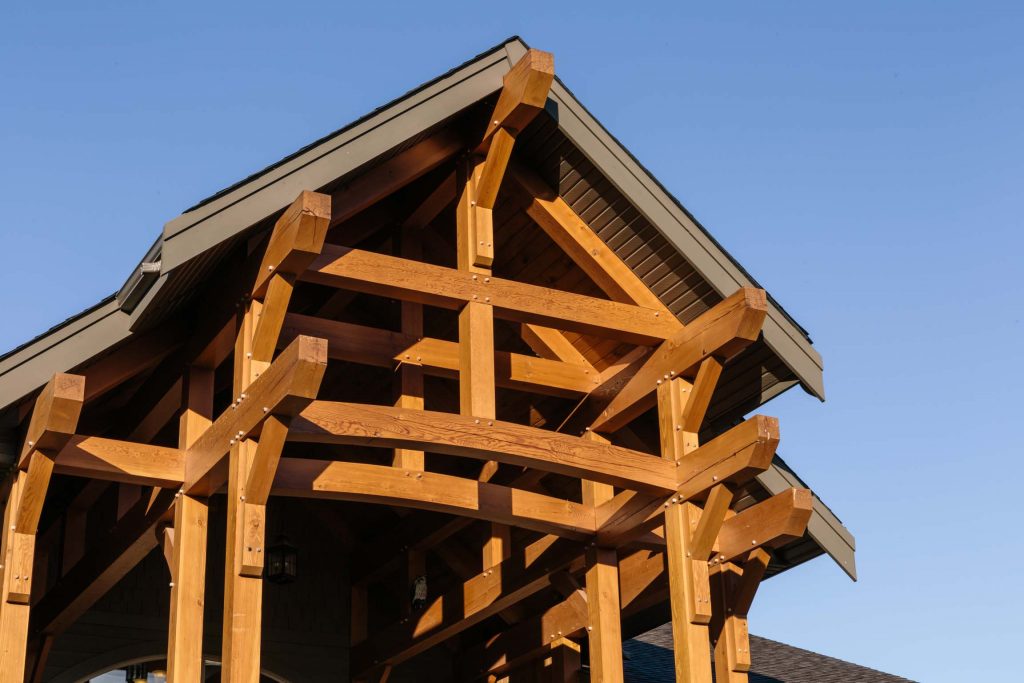
Double-Curving Tie Beams: Entry and Covered Deck
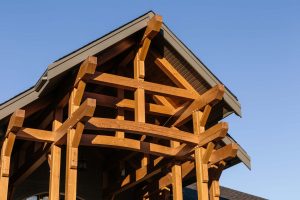
Both the covered entry and the outdoor covered deck feature double-curving tie beams. Curved timber members introduce additional engineering complexity compared to straight ties.
Structural mechanics include:
-
Tensile resistance in tie beams resolving rafter thrust
-
Combined bending and axial stress in curved profiles
-
Shear transfer at beam-to-post connections
-
Reinforced anchorage at post bases to resist outward thrust
Curving ties require deeper stock to preserve structural capacity after shaping the radius. Effective section modulus is calculated considering material removed during curvature formation.
Outlookers extending roof planes are engineered for cantilever bending stress and wind uplift forces. Proper flashing integration prevents moisture intrusion at penetration points.
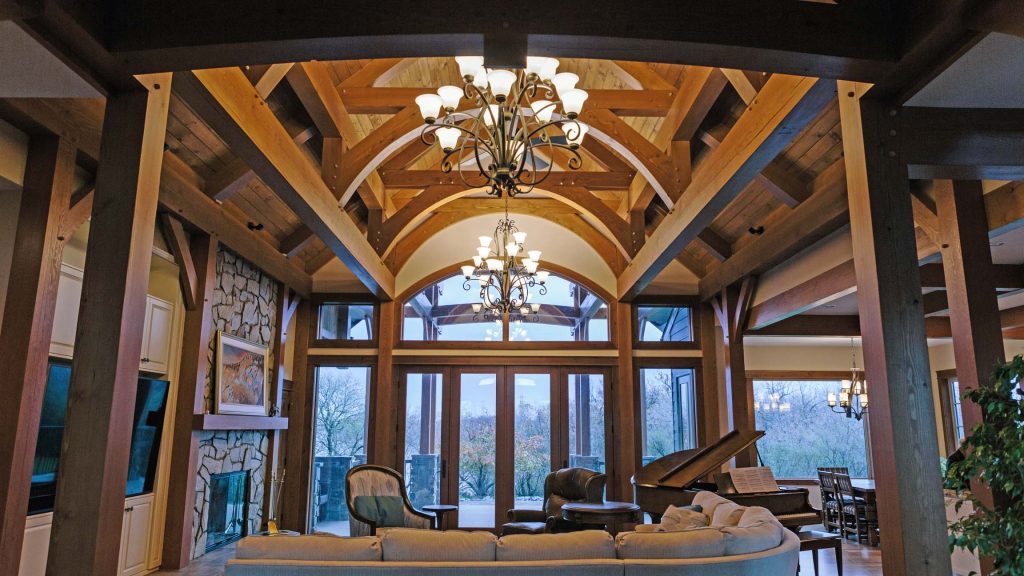
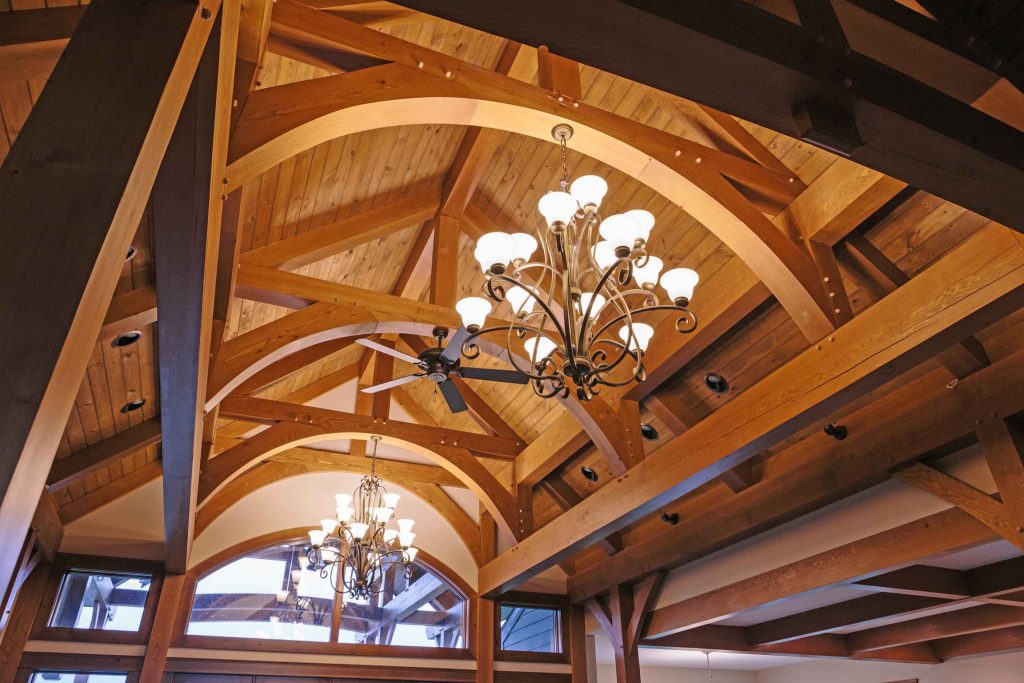
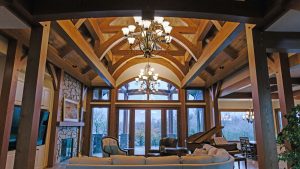
Timber-Framed Barrel Vault Ceiling
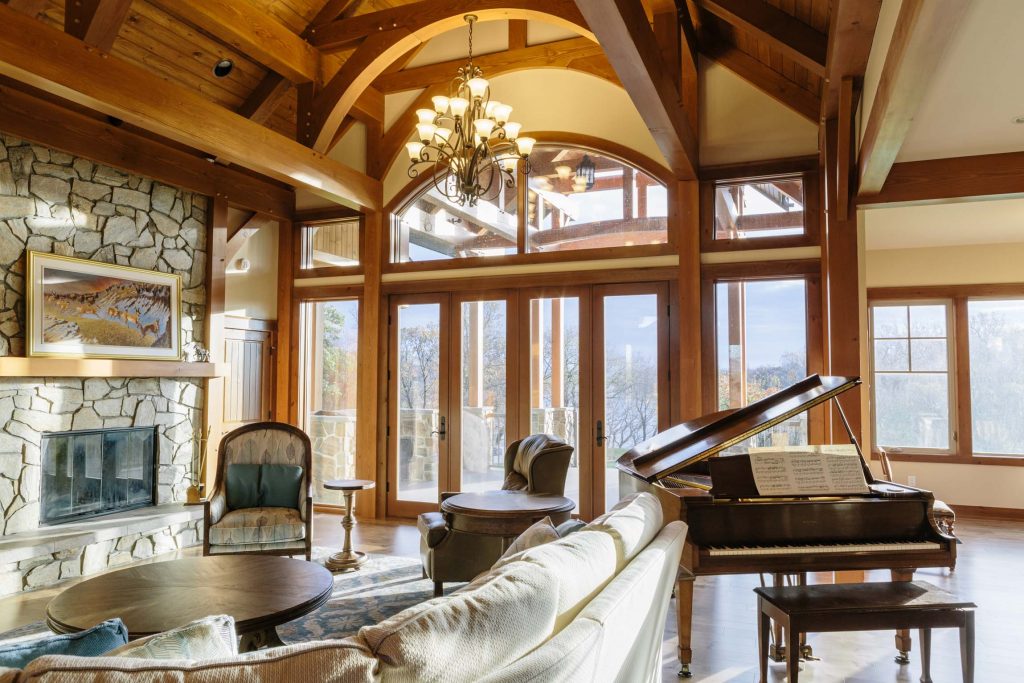
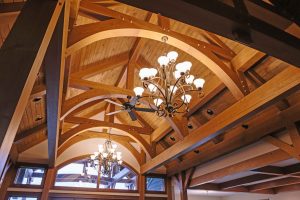
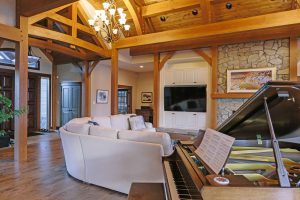
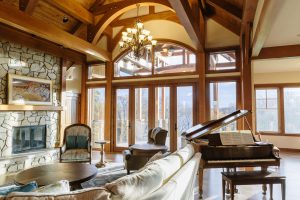
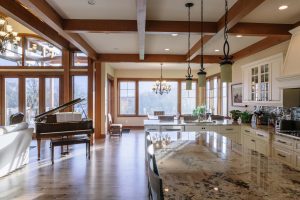
The great room features a timber-framed barrel vaulted ceiling. Barrel vault geometry distributes compressive forces along the curve, reducing reliance on straight ridge beams.
Engineering considerations include:
-
Axial compression along curved rafters
-
Horizontal thrust management at wall supports
-
Reinforced tie systems at base of vault
-
Shear resistance at intersecting roof planes
Vaulted geometry increases vertical volume, which can amplify lateral load effects. Roof diaphragm action stabilizes the structure under wind pressure.
Deflection limits are controlled to protect glazing interfaces and prevent long-term joint separation due to creep deformation.
Hybrid Structural Configuration
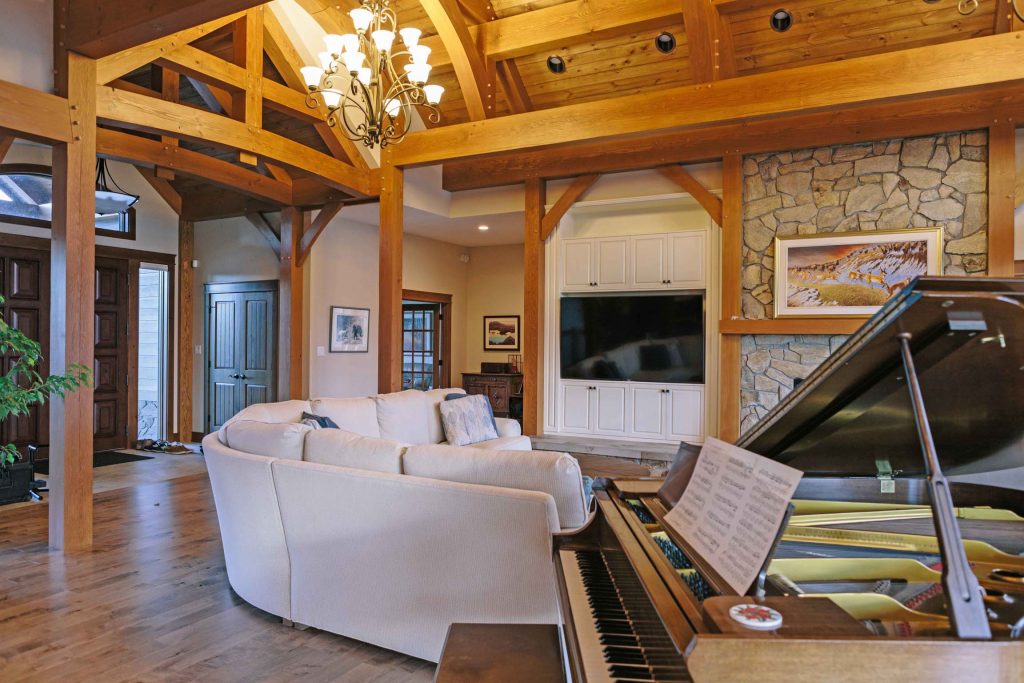
The residence utilizes a hybrid system combining timber frame in key living zones with conventional framing in secondary spaces.
Engineering coordination includes:
-
Reinforced bearing at timber-to-stud wall interfaces
-
Continuous roof and floor diaphragm action
-
Moisture isolation between heavy timber and kiln-dried framing
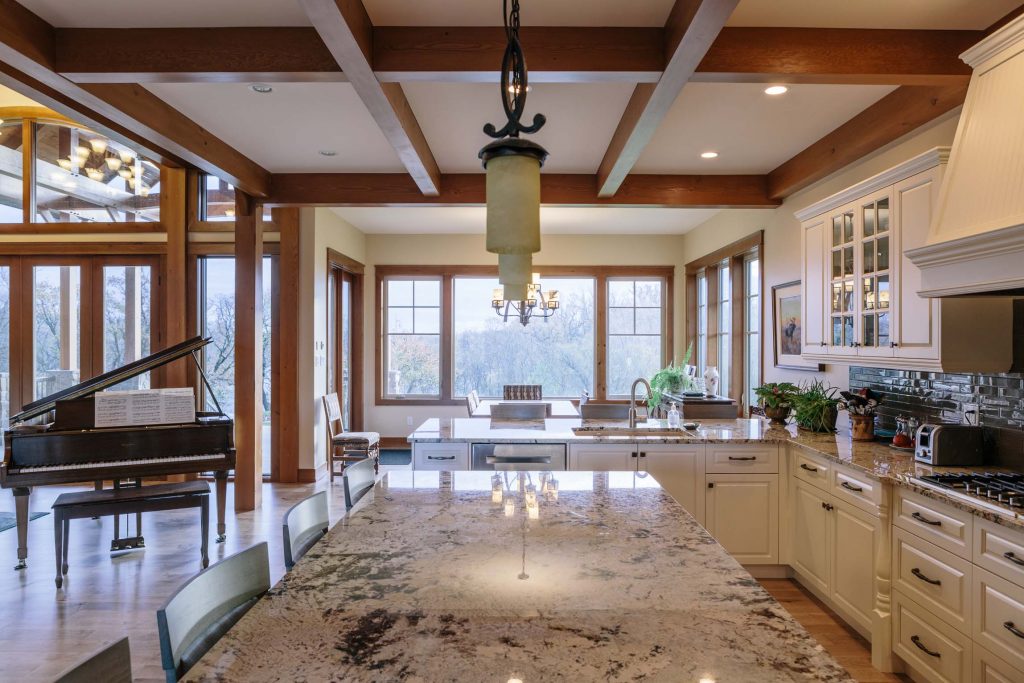
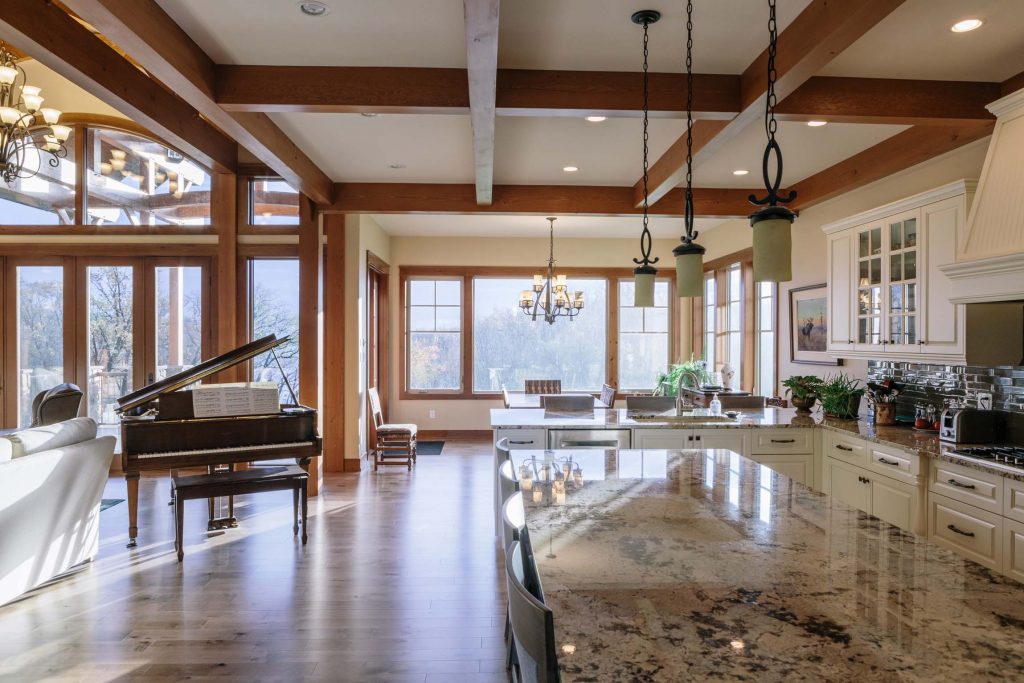
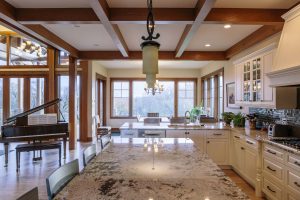
Ceiling beams in the kitchen extend timber expression through the interior while maintaining alignment with structural grid.
Hybrid zoning allows cost efficiency without compromising structural clarity in primary volumes.
Screen Room: Timber Post and Plate System
The screen room employs a post and plate timber configuration. Structural behavior includes:
-
Vertical axial compression in posts
-
Load distribution through horizontal plates
-
Lateral stabilization through diaphragm action
Because screen rooms experience high air flow and seasonal humidity variation, connections must accommodate dimensional movement without loosening.
Uplift-rated anchors at post bases resist wind forces generated by river exposure.
Gable Trim Details and Structural Integration
Multiple gable trim elements including brackets and outlookers enhance exterior articulation. Structural implications include:
-
Additional load at gable peaks
-
Wind load resistance at exposed elevations
-
Reinforced connection detailing
Bracketed assemblies convert cantilever bending into axial compression through triangulated geometry.
Proper drainage and flashing prevent hydrostatic pressure buildup at decorative timber interfaces.
Local Stone Integration
Local stone is used on exterior siding and interior fireplace surfaces. Stone veneer adds significant dead load and must be supported by reinforced framing or foundation elements.
Engineering considerations include:
-
Anchored veneer systems
-
Drainage cavity behind stone
-
Frost-resistant detailing
Fireplace stone mass introduces localized load. Floor framing beneath hearth zones is reinforced to maintain serviceability.
Open Concept Living and Structural Performance
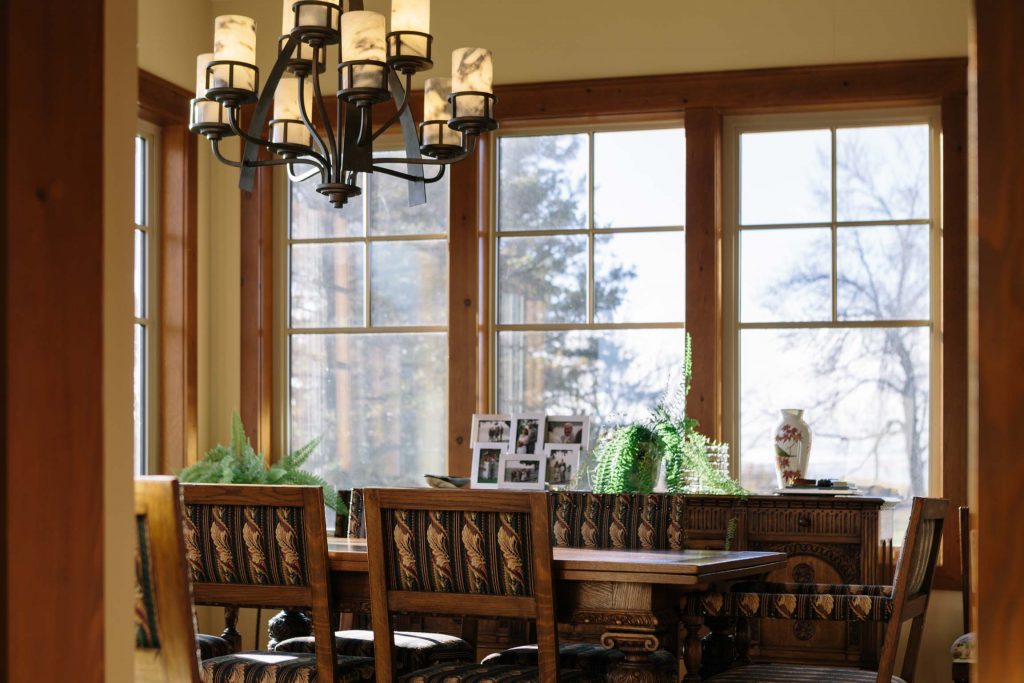
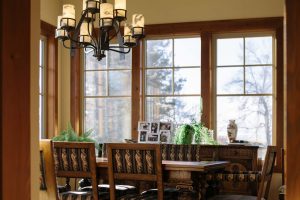
The open concept living, dining and kitchen area requires long-span timber support without interior load-bearing partitions.
Structural measures include:
-
Beam sizing for bending stress limits
-
Deflection control under sustained snow load
-
Alignment of vertical supports with foundation elements
Floor systems beneath open spans are reinforced to prevent vibration and maintain finish integrity.
Finish and Durability
All timber elements are finished with Sansin SDF Espresso. Protective finishes must:
-
Resist UV degradation
-
Maintain vapor permeability
-
Reduce surface moisture absorption
End grain sealing and regular maintenance extend timber service life.
Environmental Load Considerations
The Assiniboine River site imposes:
-
Snow load accumulation
-
Wind uplift along open river corridor
-
Freeze-thaw cycling
-
Elevated seasonal humidity
Structural countermeasures include:
-
Continuous vertical load paths
-
Reinforced curved tie connections
-
Uplift-rated hold-down anchors
-
Ventilated roof assemblies
Foundation systems incorporate frost protection and drainage control to prevent differential settlement.
Structural Summary
House on the Assiniboine integrates advanced timber geometry and hybrid construction within a riverside setting.
Key structural characteristics include:
-
Double-curving tie beams at entry and deck
-
Timber-framed barrel vaulted ceiling
-
Post and plate screen room
-
High-grade Douglas fir structural members
-
Hybrid timber and conventional framing alignment
The project demonstrates how curved timber engineering, long-span vaulting and defined load paths combine to create a structurally robust residence responsive to open river exposure and environmental demand.