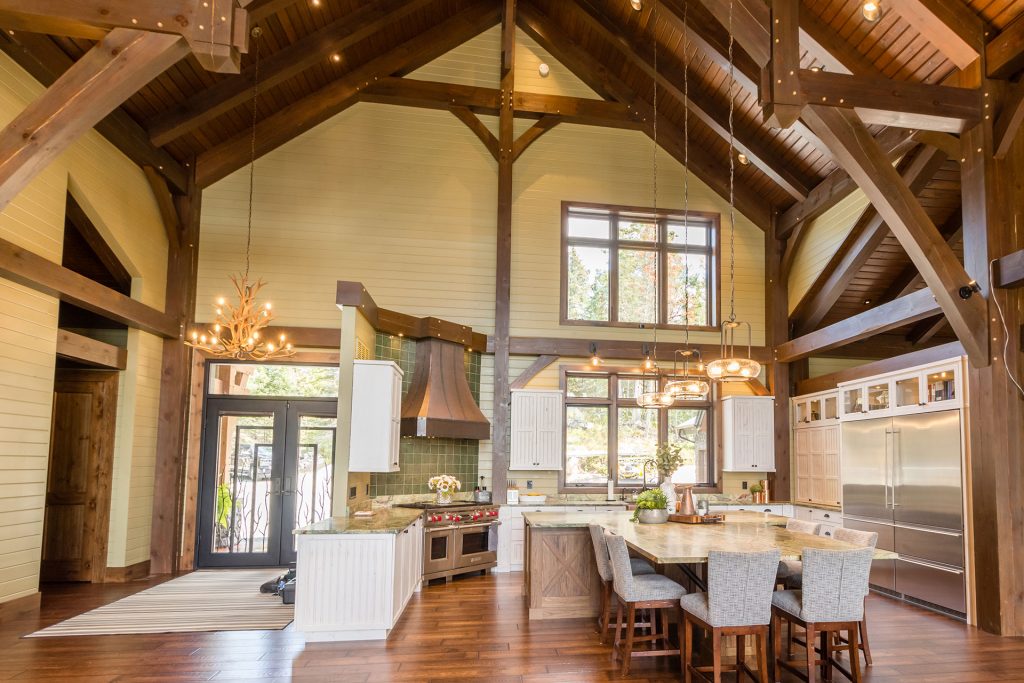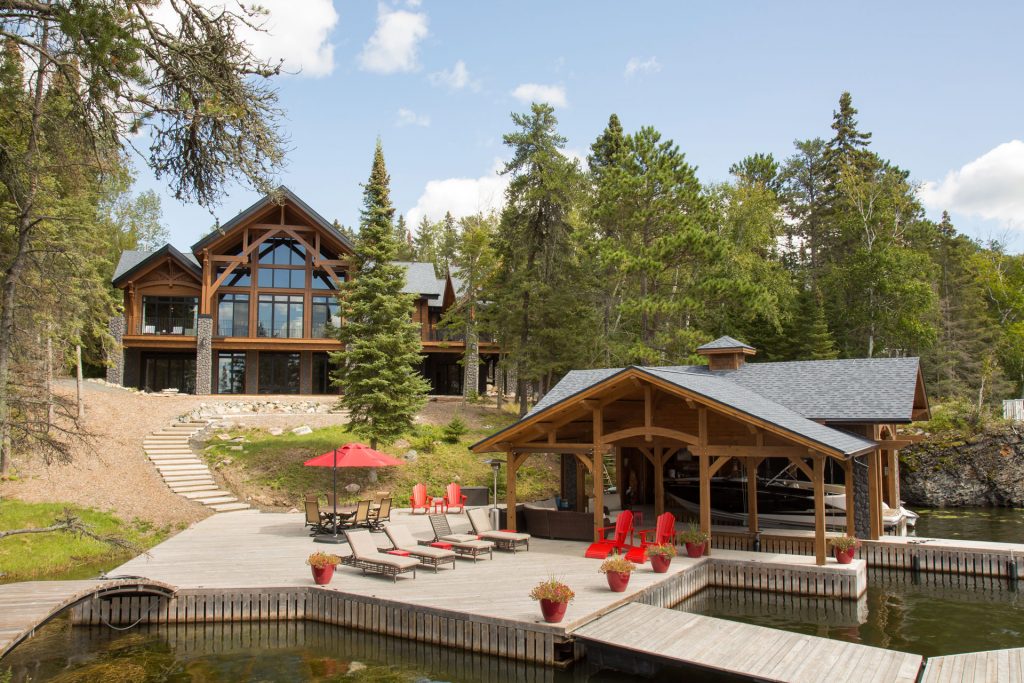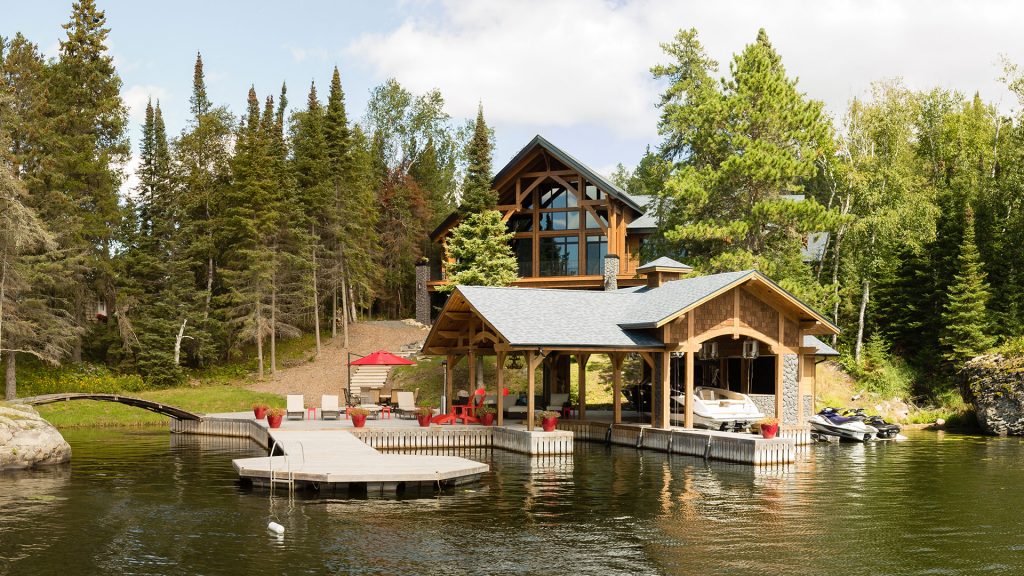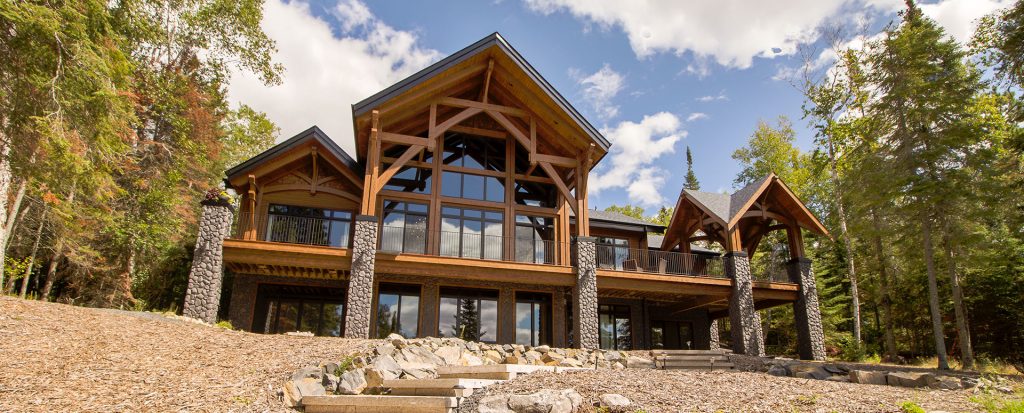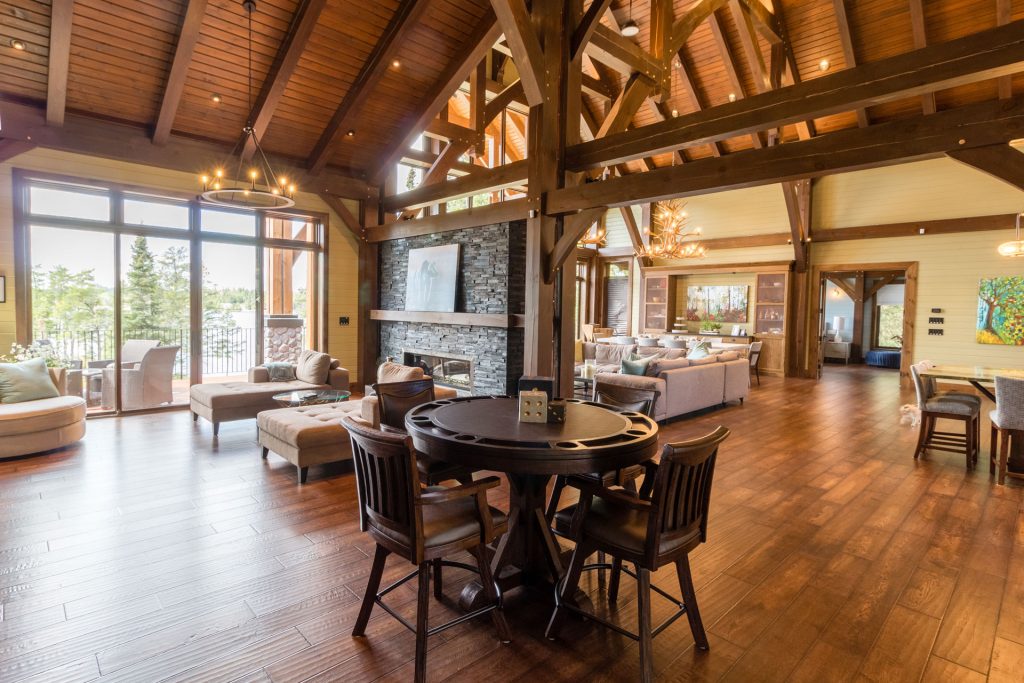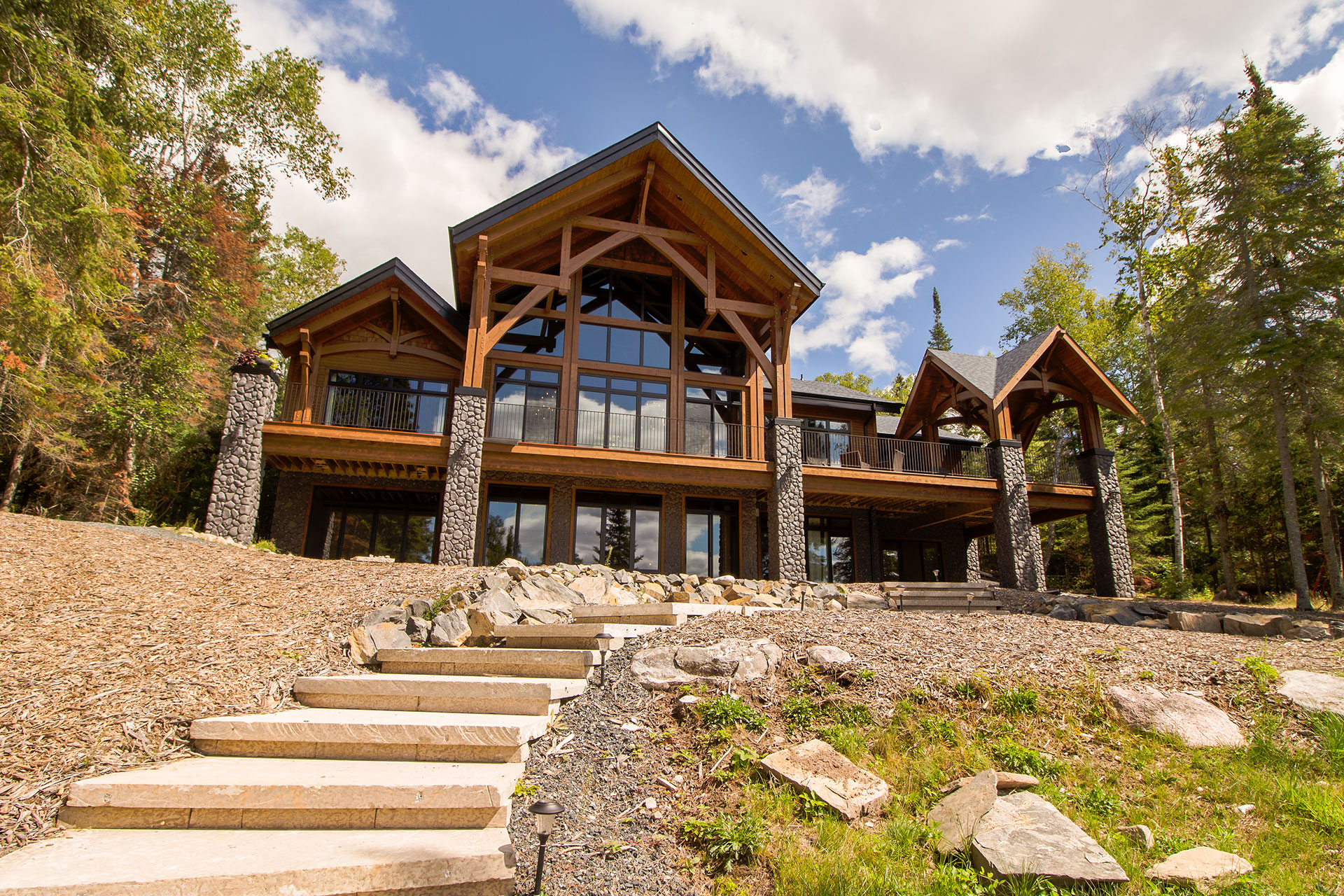
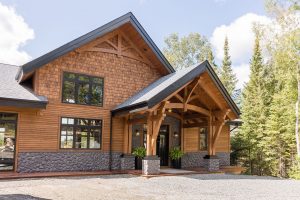
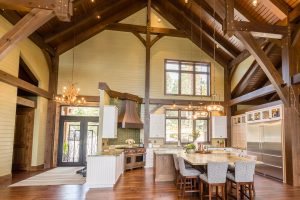
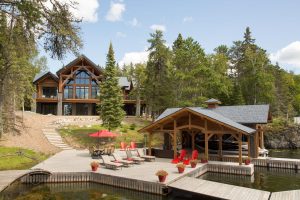
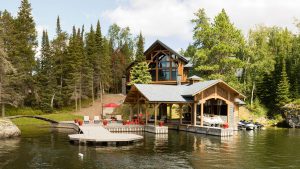
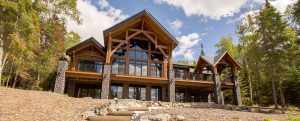
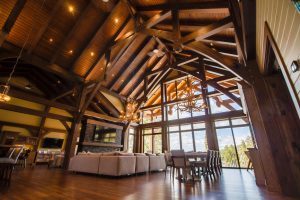
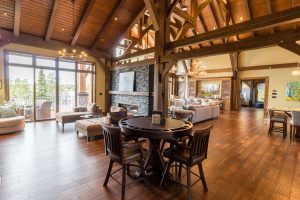
The Lakehouse is a large timber cottage engineered around a series of hammer beam trusses spanning the central great room. The structural system integrates vaulted roof geometry, extended canopy projections and a four-gabled gazebo assembly.
The defining feature is the hammer beam truss configuration, which allows for expansive vertical volume without continuous tie beams across the full span. Curving ties and sculpted beam ends enhance the architectural identity while maintaining structural performance.
This residence demonstrates how complex timber geometry can resolve roof loads efficiently across multiple intersecting volumes.
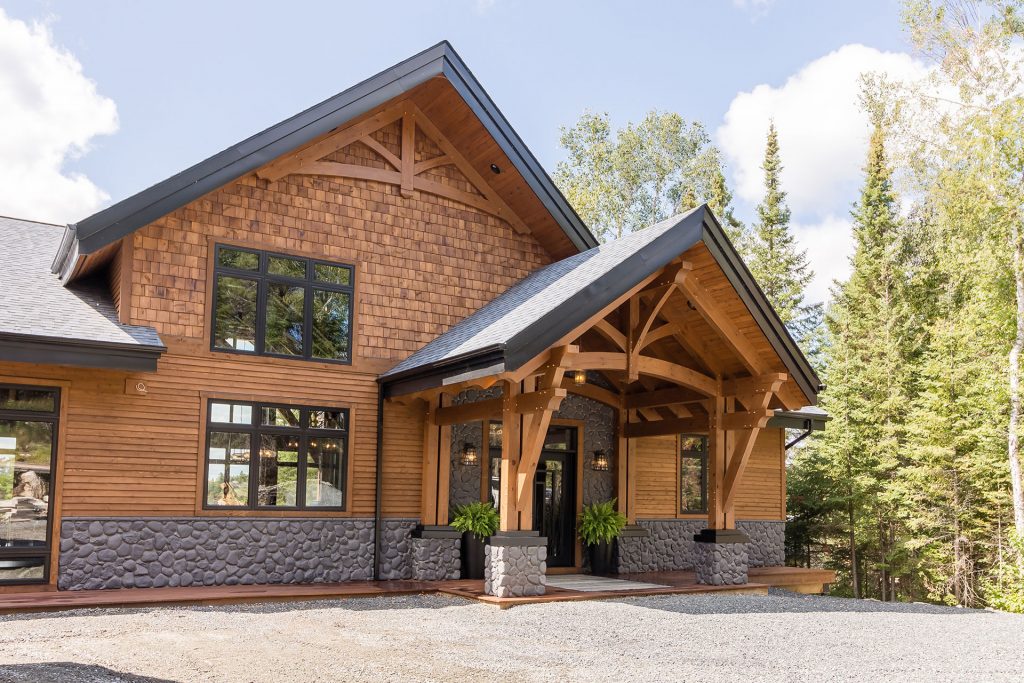
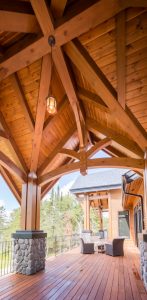
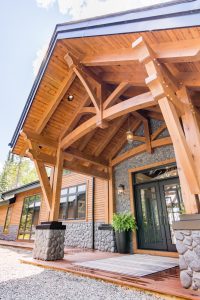
Entry Porch: Curving Ties and Beam-End Profiling
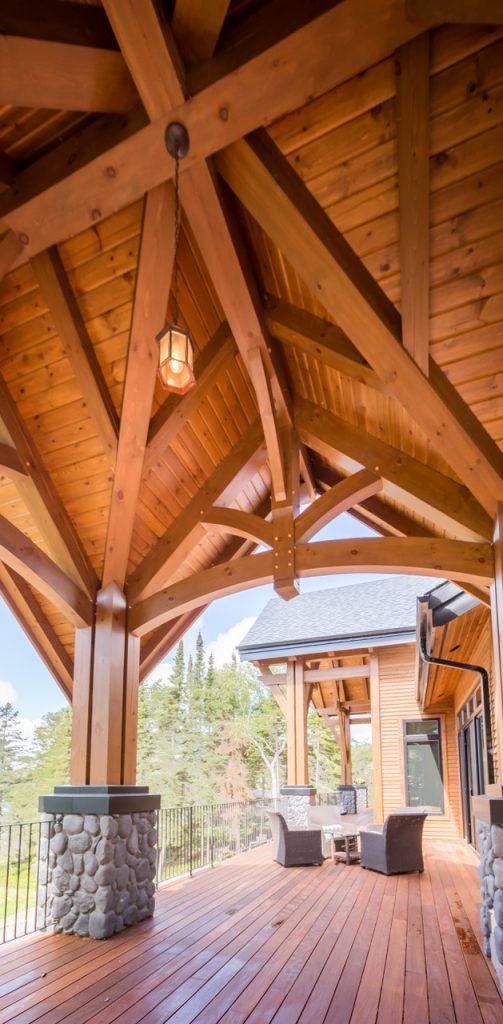
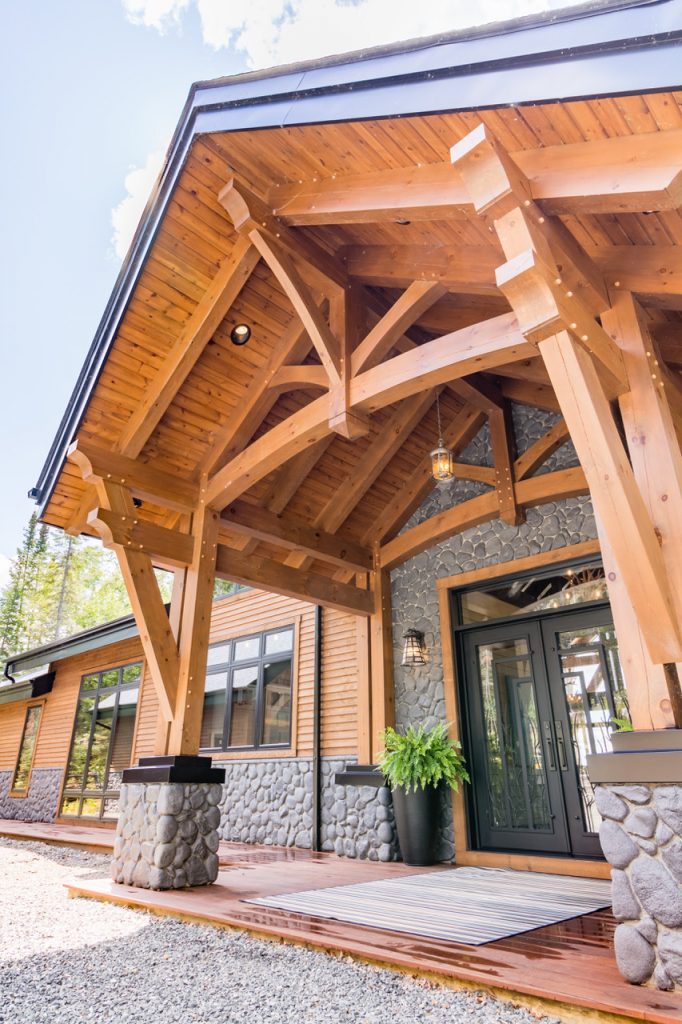
The entry porch incorporates curving tie beams and sculpted rafter ends. While visually expressive, these elements must maintain structural integrity.
Engineering considerations include:
-
Axial tension in tie beams resisting rafter thrust
-
Bending stress in curved members
-
Shear resistance at beam-to-post joints
-
Moisture protection at exposed end grain
Curved ties reduce effective cross-section at radius transitions. Section sizing compensates for material removal to maintain adequate section modulus.
Proper flashing integration at beam penetrations prevents moisture intrusion into structural members.
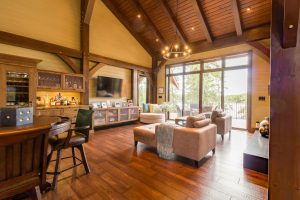
Hammer Beam Trusses: Central Structural System
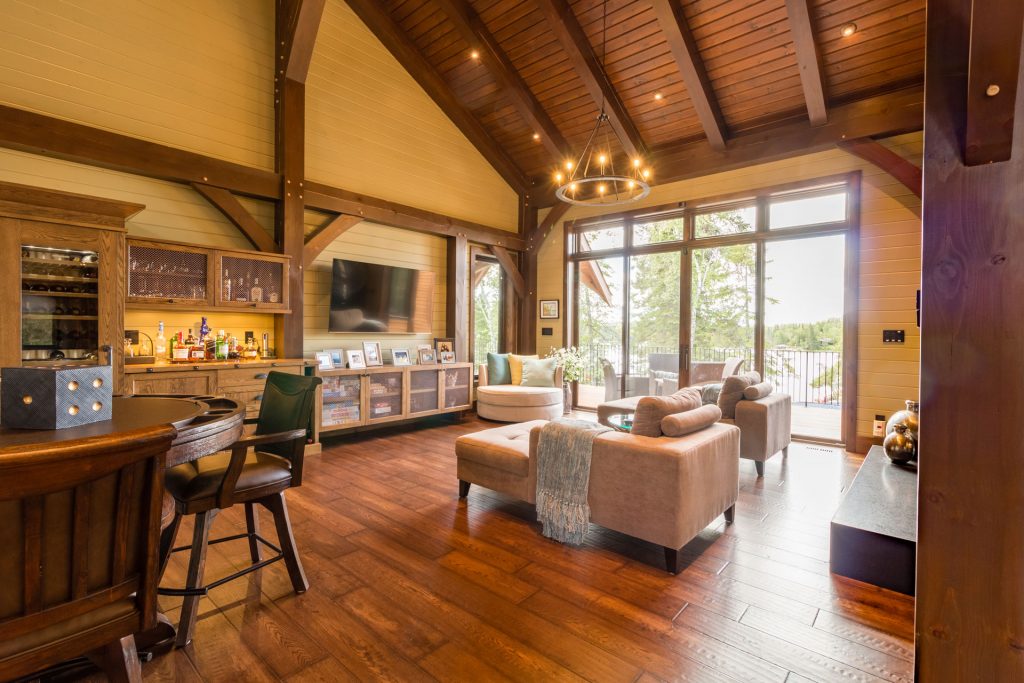
The great room is supported by three hammer beam trusses carrying the vaulted roof from foyer through kitchen to lakeside deck.
Hammer beam trusses differ from king post systems by eliminating a continuous bottom tie across the full span. Structural performance relies on:
-
Shortened horizontal hammer beams projecting from posts
-
Vertical struts transferring load upward
-
Curved braces resolving thrust forces
-
Reinforced joints resisting lateral spread
Because hammer beam geometry introduces outward thrust, post bases must be anchored to resist horizontal force.
Member sizing accounts for:
-
Regional snow load
-
Dead load from roof deck and insulation
-
Wind uplift
-
Long-term creep deformation
Connection detailing is critical. Mortise and tenon joints or concealed steel reinforcement resist combined shear and bending forces at complex intersections.
Lakeside Canopy and Brace-Supported Roof Extension
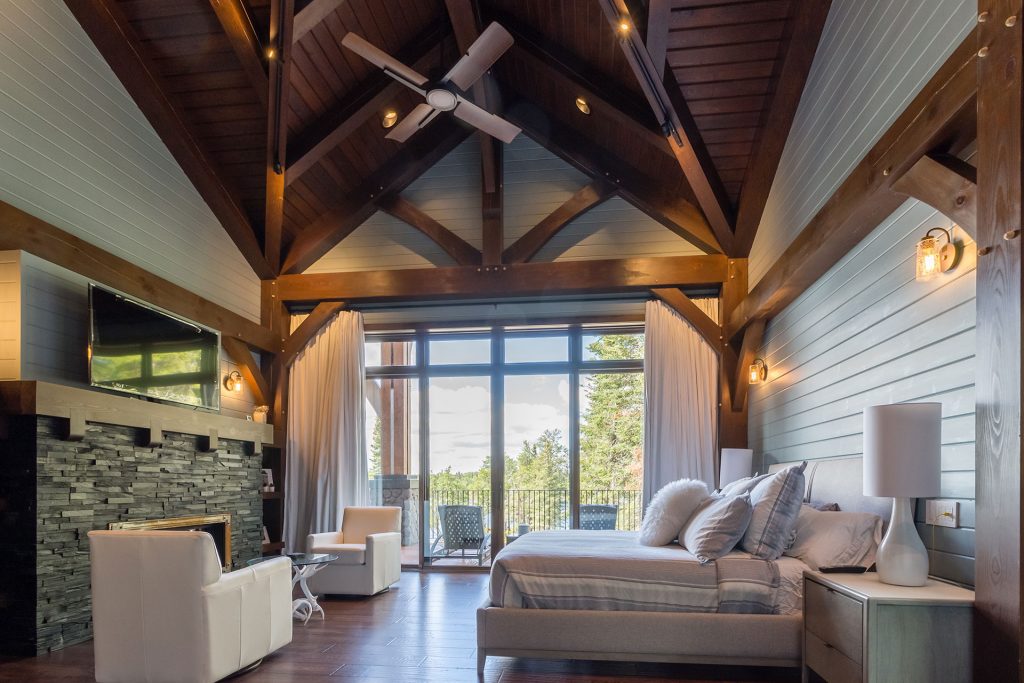
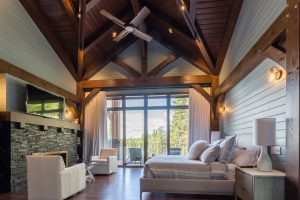
The lakeside canopy extends the primary roof plane outward, creating a covered outdoor space. Adjacent to it, a brace-supported roof extension at the master bedroom introduces cantilevered structural conditions.
Engineering implications include:
-
Bending stress in extended rafters
-
Axial compression in supporting braces
-
Uplift resistance at exposed edges
-
Snow drift evaluation at roof junctions
Brace geometry converts cantilever bending into axial compression, reducing deflection at roof projection.
Continuous load paths extend from canopy rafters through posts into foundation anchorage.
Deck integration beneath canopy must resist both vertical live load and wind-induced lateral forces.
Four-Gabled Gazebo: Multi-Directional Load Transfer
The 18 ft x 18 ft four-gabled gazebo presents a complex roof geometry with intersecting ridges and valleys.
Structural considerations include:
-
Concentrated load at ridge intersections
-
Increased bending demand in hip and valley rafters
-
Snow accumulation at gable junctions
-
Torsional resistance under uneven wind pressure
Each gable plane transfers load to supporting posts through triangulated framing.
Hip rafters are sized for larger tributary areas compared to common rafters. Valley framing includes reinforced bearing points to prevent excessive deflection.
Proper drainage detailing prevents hydrostatic pressure buildup at roof transitions.
Interior Timber Continuity: Den, Day Spa and Master Bedroom
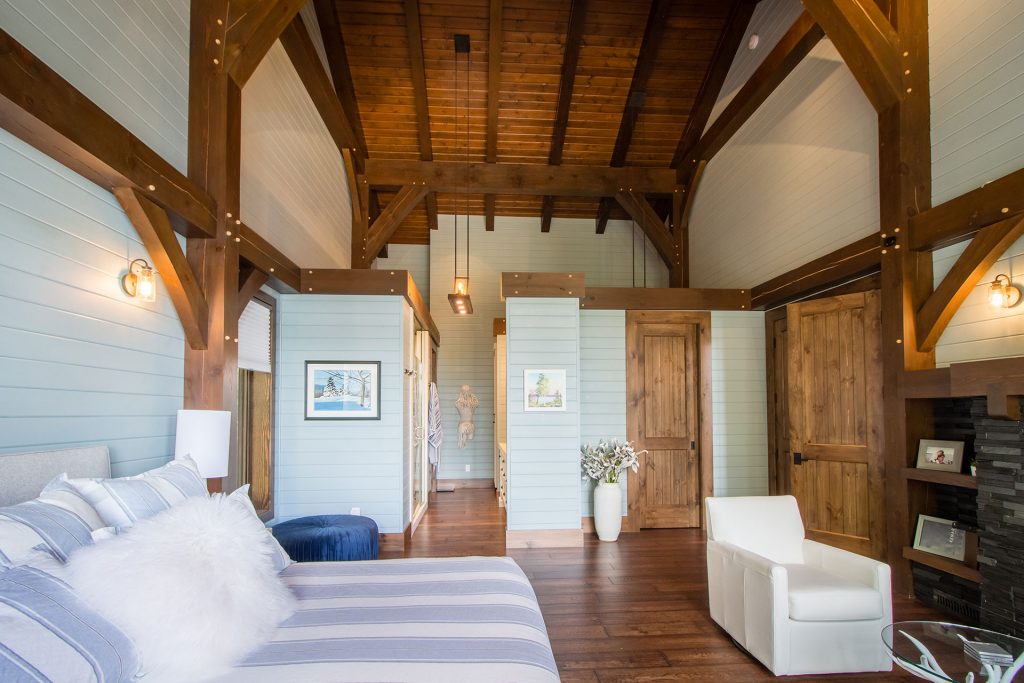
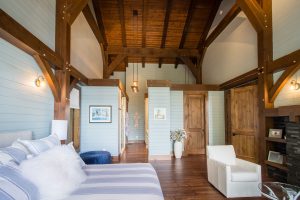
Timber framing extends into the den, day spa and master bedroom, maintaining structural consistency across zones.
Engineering integration includes:
-
Reinforced beam sizing for localized spans
-
Moisture isolation in spa areas
-
Load alignment with primary structural grid
In spa environments, elevated humidity requires enhanced ventilation and vapor management to protect timber integrity.
Floor systems are designed for live load requirements typical of residential occupancy, including localized load from spa equipment.
Environmental Load and Durability Considerations
Lakefront exposure imposes:
-
Snow load accumulation
-
Wind uplift across open water
-
Freeze-thaw cycling
-
Elevated humidity
Structural countermeasures include:
-
Uplift-rated hold-down anchors at post bases
-
Ventilated roof assemblies
-
Corrosion-resistant connectors
-
Sealed end grain surfaces
Creep deformation in hammer beam assemblies is accounted for during design to maintain serviceability limits.
Foundation systems incorporate frost protection and drainage measures to prevent settlement affecting post alignment.
Structural Summary
The Lakehouse demonstrates advanced hammer beam timber engineering integrated with multi-gable roof geometry and extended canopy systems.
Key structural characteristics include:
-
Three hammer beam trusses supporting central vaulted roof
-
Curving tie beams engineered for axial tension and bending
-
Brace-supported roof extensions resisting cantilever forces
-
18 ft x 18 ft four-gabled gazebo with reinforced valley framing
-
Continuous load path integrity from ridge to footing
This project illustrates how expressive timber geometry can operate within disciplined structural mechanics, delivering long-span performance and environmental resilience in a large lakefront cottage.