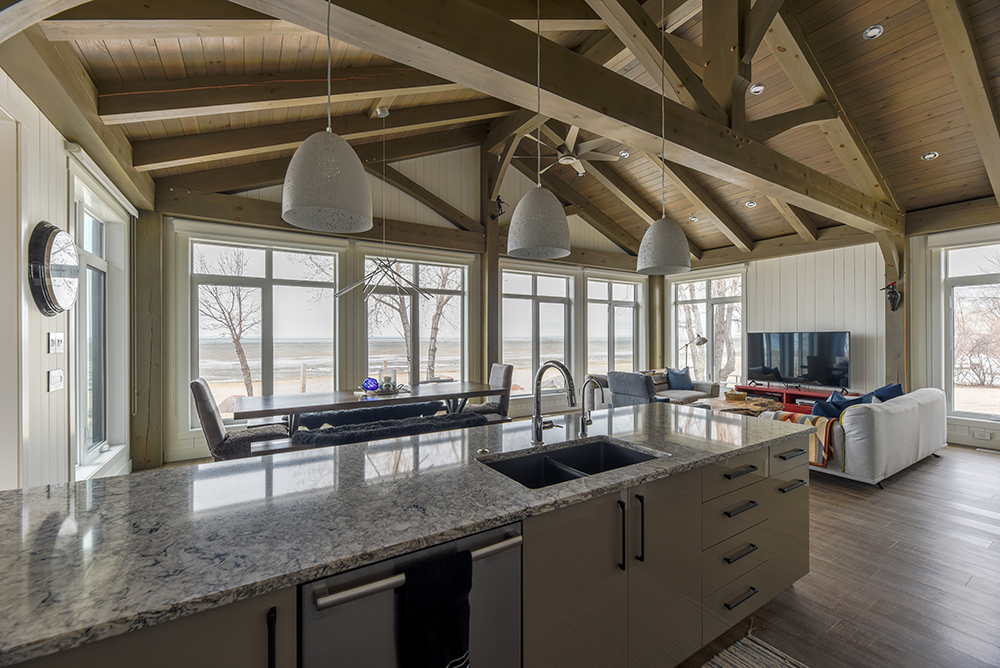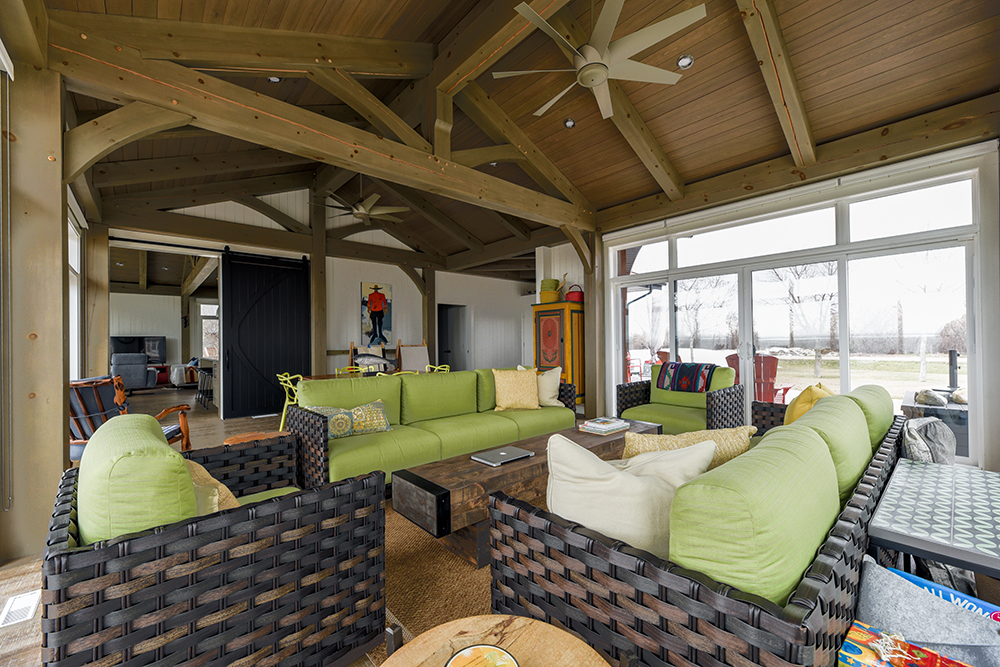

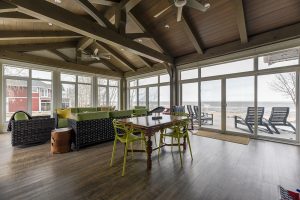
The Beach House is a three-bedroom, two-bath lake residence engineered around a compact timber frame core with extended deck and sunroom volumes. The structure is designed to maximize panoramic exposure to Manitoba’s second largest lake while maintaining structural efficiency and dimensional clarity.
The architectural intent emphasizes intimacy and simplicity. The engineering strategy reinforces this through defined load paths, repetitive truss geometry, and controlled span lengths.
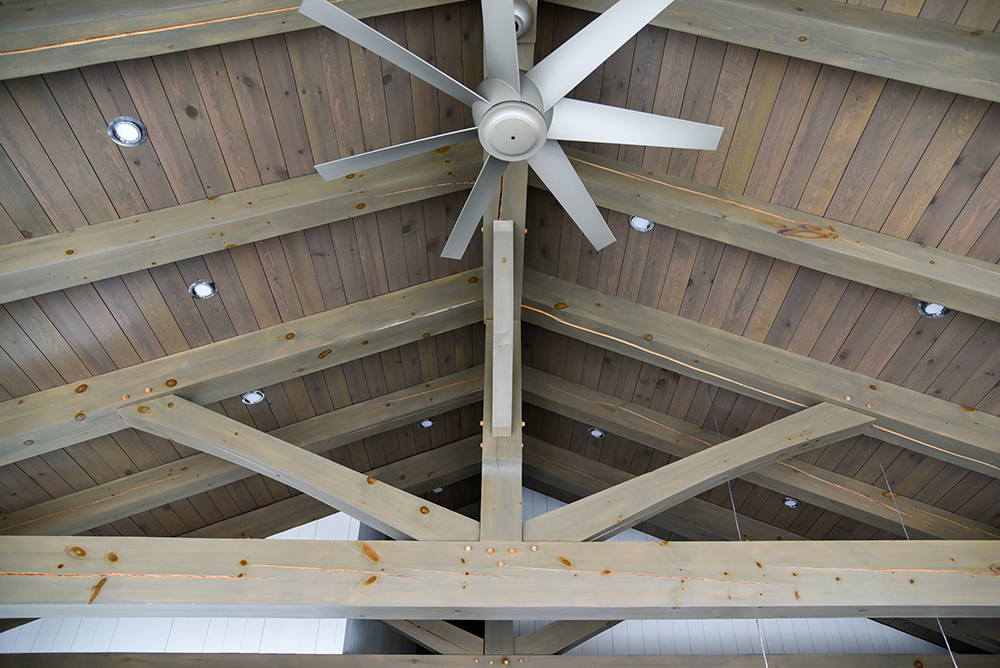
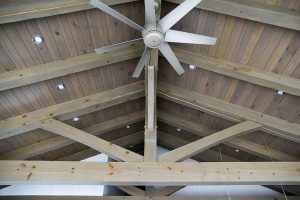
Main Living Area: Five King Post Trusses at 6:12 Pitch
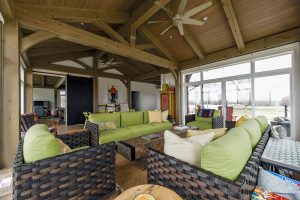
The primary living space is spanned by five king post trusses with a 6:12 roof pitch. This moderate slope balances interior headroom, snow shedding efficiency, and structural economy.
King post truss mechanics operate through:
-
Axial compression in rafters
-
Tensile force in the vertical king post
-
Horizontal thrust resolved in the tie beam
-
Diagonal bracing stabilizing geometry
A 6:12 pitch reduces snow retention compared to lower slopes, while maintaining a profile that limits excessive wind uplift. Snow load calculations are based on regional climatic data, including potential drift formation at roof transitions.
Five evenly spaced trusses distribute roof loads across the main span. Load paths transfer through tie beams into vertical posts and down to foundation anchorage.
Member sizing accounts for bending stress limits and long-term creep deformation under sustained dead and snow loads.
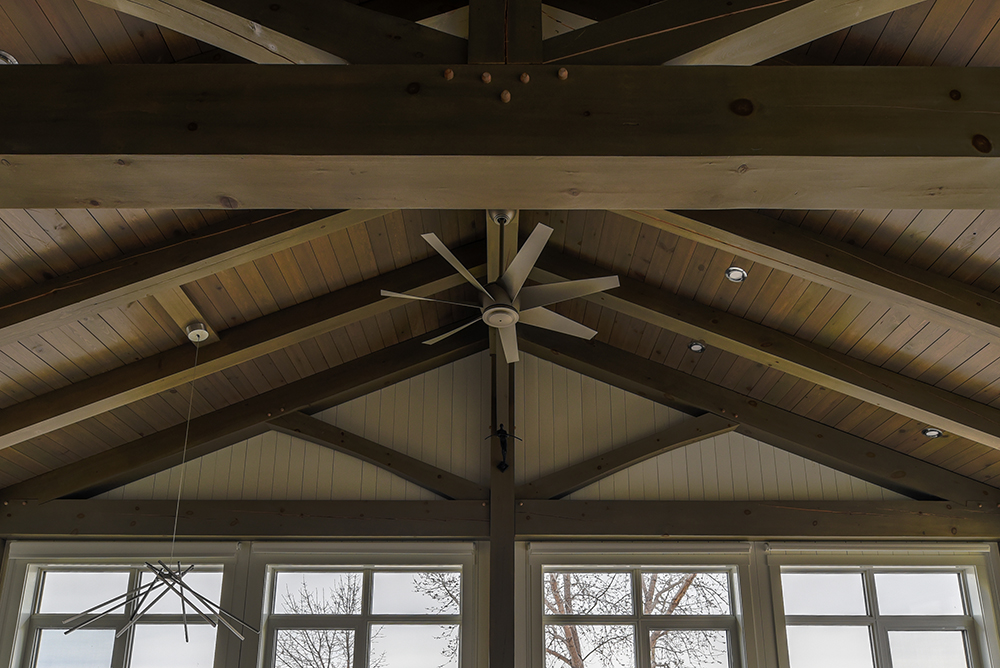
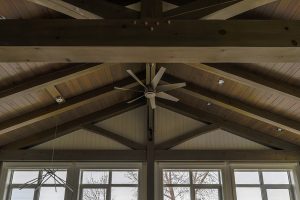
Sunroom Roof: Secondary King Post Truss Series
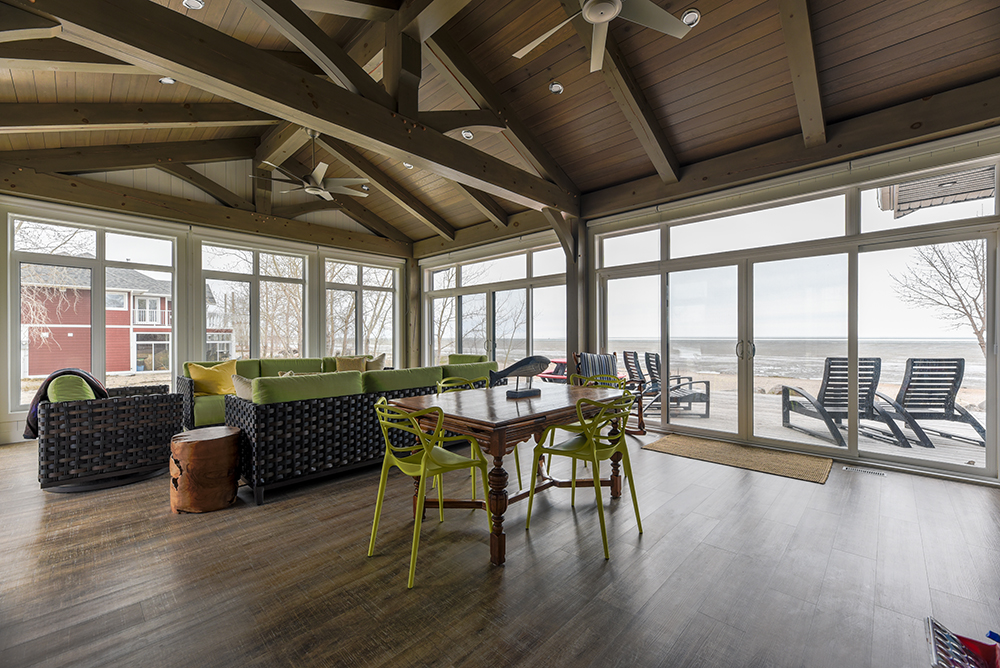
The large sunroom is supported by three additional king post trusses. Although visually lighter than the main living volume, this assembly must address snow load, wind pressure, and increased glazing exposure.
Structural considerations include:
-
Concentrated reactions at truss bearing points
-
Integration of glazing headers within timber framework
-
Uplift resistance at roof edges
Because sunrooms often incorporate significant glass area, thermal expansion differentials between timber and glazing frames must be accommodated through flexible connection detailing.
Ventilated roof cavities above the sunroom ceiling mitigate condensation risk during seasonal temperature fluctuation.
Galley Kitchen as Structural Anchor
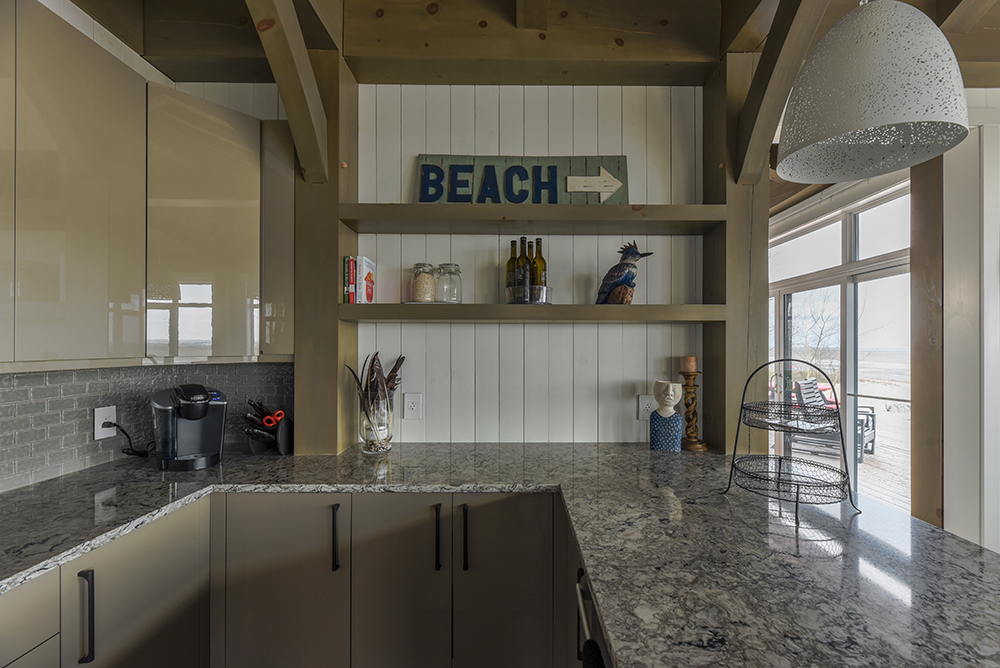
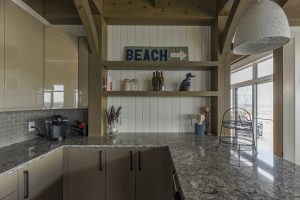
The centrally located galley kitchen with a large peninsula bar functions as the social core. Structurally, the central location supports balanced load distribution.
Heavy appliances and cabinetry introduce localized dead load. Floor framing beneath the kitchen zone is reinforced to maintain serviceability limits and prevent perceptible vibration.
By concentrating service loads near primary bearing lines, the design preserves structural symmetry and reduces eccentric loading.
Lakeside Deck and Panoramic Exposure
The lakeside deck provides 180-degree views and accommodates occupant live load and environmental forces.
Engineering measures include:
-
Joist sizing rated for combined live and snow load
-
Corrosion-resistant fasteners in humid lake conditions
-
Lateral bracing to resist wind shear
-
Uplift-rated post anchorage
Open-water exposure increases wind uplift pressure. Deck-to-structure connections are reinforced to maintain continuous load paths.
Flashing at door thresholds ensures water management at the interface between conditioned interior and exterior deck assembly.
Tongue and Groove Boards: Structural and Environmental Interaction
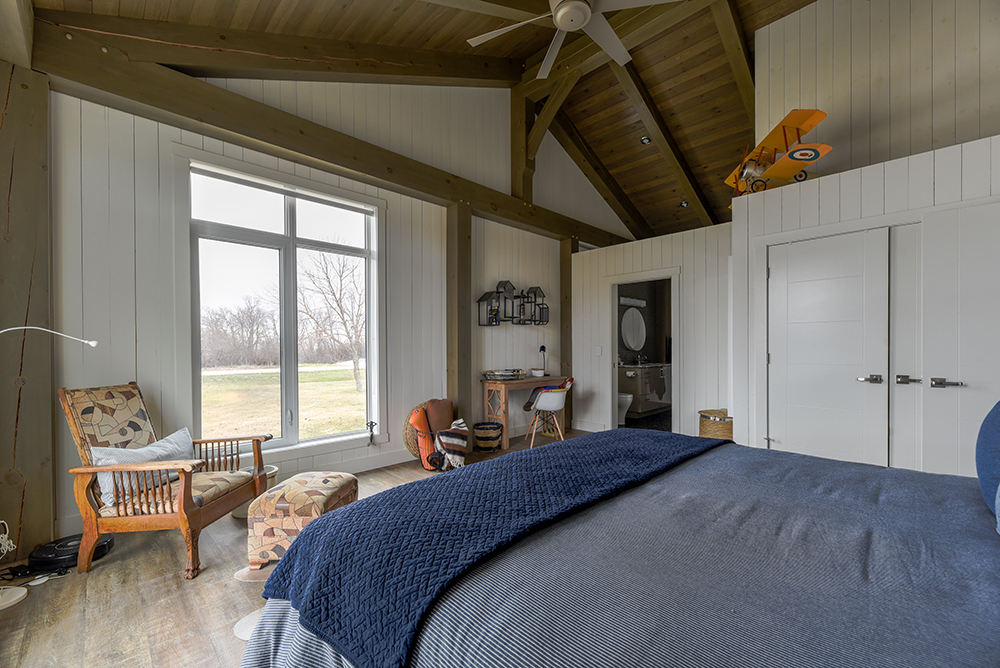
Extensive tongue and groove boards are used on walls and ceilings. While primarily finish elements, these boards contribute to diaphragm stiffness and interior durability.
Engineering implications include:
-
Additional dead load in roof assembly
-
Controlled expansion and contraction under humidity change
-
Enhanced acoustic absorption
Proper fastening patterns prevent board separation during seasonal moisture cycling. Boards are installed at controlled moisture content to minimize shrinkage stress.
The consistent use of wood surfaces reduces thermal shock sensation and supports moderate thermal inertia.
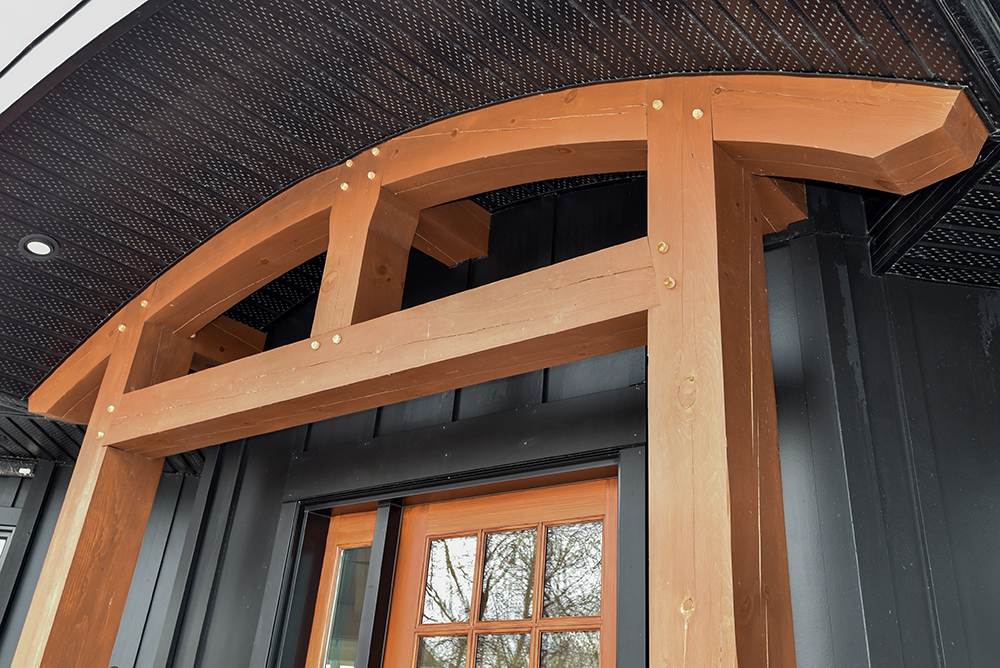
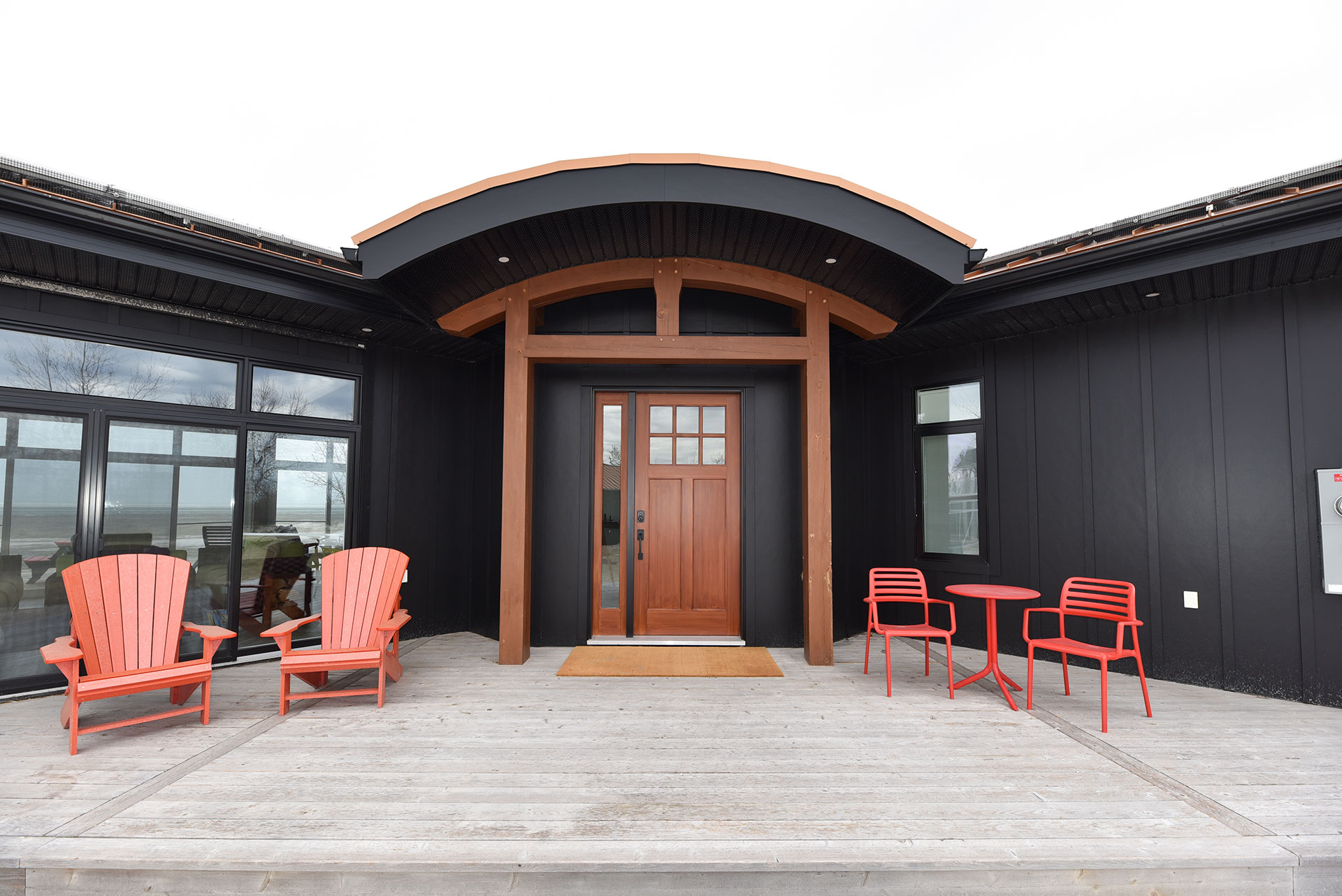
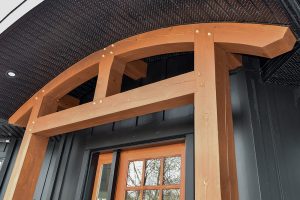
Barrel Vault Entry: Curved Timber Engineering
The entry features a barrel vault roof supported by curving beams. Curved timber elements must be engineered for combined bending and axial stress.
Structural performance considerations include:
-
Uniform load distribution along curved members
-
Shear resistance at beam-to-post connections
-
Moisture protection at exposed curvature
Barrel vault geometry introduces compressive force distribution along the curve. Member sizing accounts for snow load and wind uplift acting on curved roof surfaces.
Stain color selection does not affect structural performance but exposed timber must be protected from UV degradation and moisture intrusion.
Proper flashing at curved roof transitions prevents hydrostatic pressure buildup during precipitation events.
Environmental Performance and Durability
The Beach House operates in a lakefront climate characterized by:
-
Snow load accumulation
-
Wind uplift over open water
-
Freeze-thaw cycling
-
Elevated humidity
Durability strategies include:
-
Continuous load paths from truss to foundation
-
Ventilated roof assemblies
-
Corrosion-resistant connectors
-
Moisture-managed deck interfaces
Creep deformation in king post trusses is accounted for during design to maintain long-term serviceability.
Foundation systems incorporate frost-protected detailing to resist seasonal ground movement.
Structural Summary
The Beach House demonstrates how a compact timber frame lake residence can achieve:
-
Efficient 6:12 king post truss spans
-
Secondary truss support for large sunroom volume
-
Reinforced deck integration for panoramic exposure
-
Curved barrel vault entry engineered for combined load
-
Consistent timber diaphragm performance
This is a timber structure defined by repetition, clarity and load efficiency. The engineering supports intimate scale without compromising structural reliability or environmental resilience.