



A Landmark in Mass Timber Residential Architecture
Bergen Gardens represents a major milestone in Canadian mass timber construction. As Winnipeg’s first mid-rise mass timber building, this six-storey assisted living residence sets a new benchmark for sustainable, human-centered residential architecture in Manitoba and across North America.
Designed to support long-term comfort, dignity, and connection, the project integrates an assisted living residence with a connected memory care facility, allowing residents at differing levels of care to remain close to loved ones and truly age in place. This thoughtful planning approach reinforces community, continuity, and emotional wellbeing—values that align naturally with timber construction.
Structural Innovation Through Mass Timber
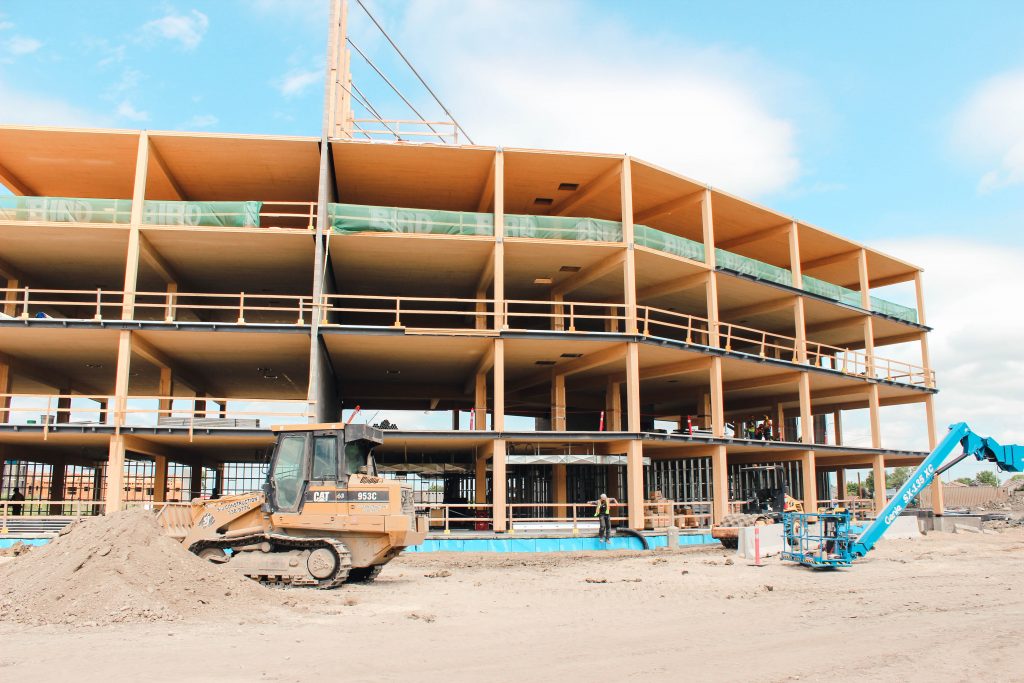
At its core, Bergen Gardens is a highly engineered mass timber structure, optimized for performance, efficiency, and longevity. The building’s structural system is composed of glulam columns and beams supporting CLT floor and roof panels, with a consistent 6.5-metre column spacing that balances openness with structural clarity.
In total, the structure incorporates 2,280 cubic metres of mass timber, a substantial volume that underscores the project’s scale and ambition. Of this, 80 percent consists of CLT panels, while the remaining 20 percent is formed by glulam columns and beams. This precise material distribution reflects a design optimized for load efficiency, repeatability, and construction speed.
The use of prefabricated mass timber elements allowed for a high level of dimensional accuracy, reduced on-site waste, and accelerated installation—key advantages in multi-storey residential construction.
Weight Reduction and Construction Efficiency
One of the most significant advantages of mass timber in this project was its dramatically lower structural weight compared to conventional concrete construction.
Had Bergen Gardens been built using reinforced concrete, the structure would have weighed approximately 6.5 million kilograms. By using mass timber instead, the total structural weight was reduced to 1.3 million kilograms—a reduction of nearly 80 percent.
This weight savings translated directly into tangible benefits:
-
Substantially reduced foundation material requirements
-
Lower construction costs
-
Reduced embedded energy
-
Shorter construction timelines
For mid-rise residential buildings, these efficiencies position mass timber as a highly competitive alternative to concrete and steel, particularly in regions like Manitoba where sustainability and cost performance are increasingly important.
Carbon Storage and Environmental Performance
Beyond construction efficiency, Bergen Gardens delivers exceptional environmental performance.
During the production of mass timber components for the six-storey structure, 235 metric tonnes of greenhouse gas emissions were generated. However, this was more than offset by the 1,295 metric tonnes of CO₂ stored within the timber itself—carbon that will remain sequestered for the life of the building.
This net-positive carbon outcome highlights the role of mass timber as a climate-responsible building system, particularly when paired with responsible forestry practices.
The project’s laminated timbers and CLT panels were supplied by Nordic Structures, a recognized leader in sustainable forestry. Operating within a fixed forest management area, Nordic ensures long-term ecosystem health through responsible planting and harvesting practices, supporting both environmental resilience and community wellbeing for generations to come.
Designing for Memory Care and Wellbeing
As a memory care residence, Bergen Gardens required more than structural performance—it demanded materials that support emotional and psychological health.
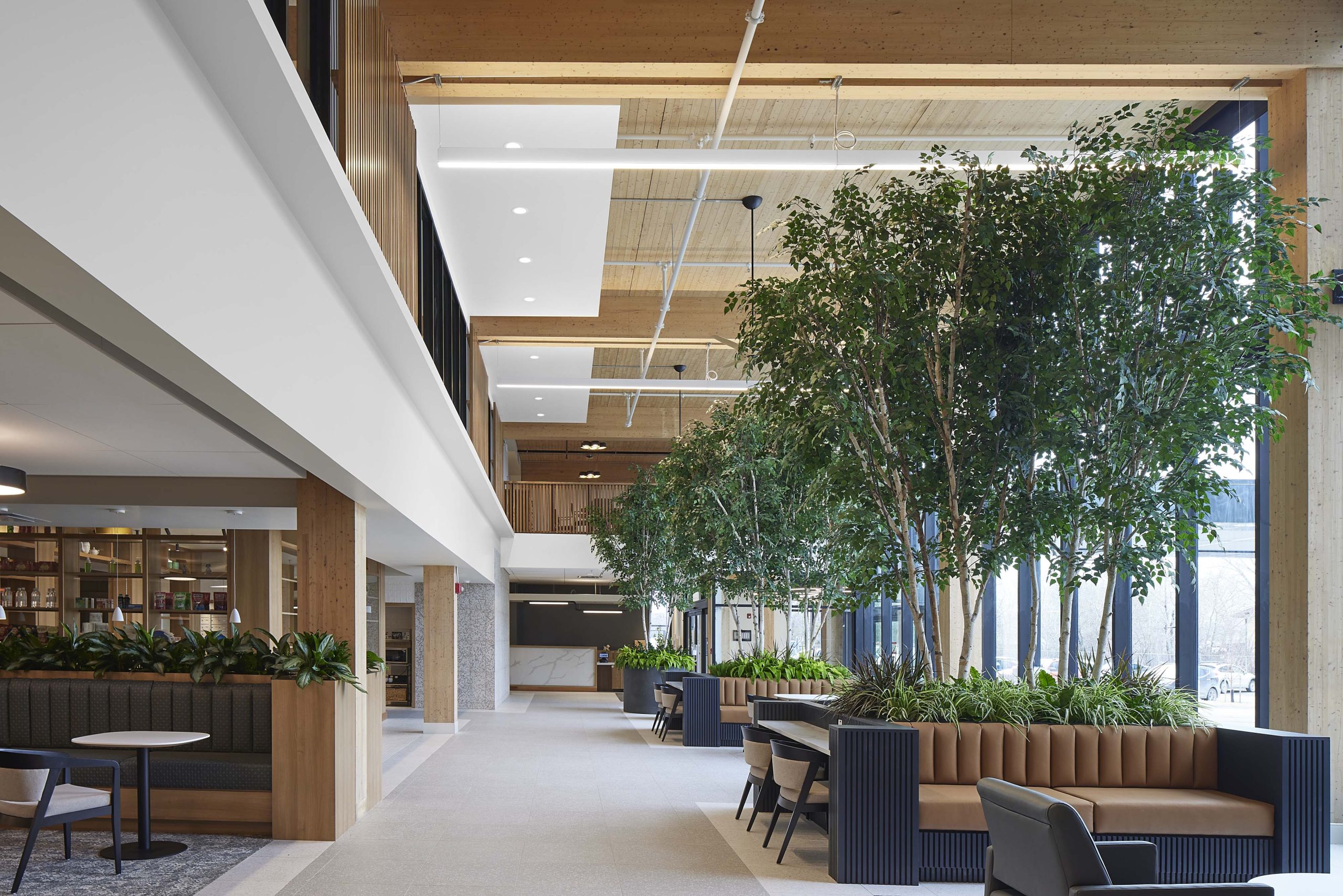
Wood was a natural choice. Numerous studies have shown that wood interiors can reduce anxiety, lower blood pressure, and decrease heart rates. Occupants consistently report feelings of safety, calm, and relaxation in timber-rich environments and are more likely to engage in positive social interactions.
For residents living with memory-related conditions, these subtle yet powerful effects are especially meaningful. The warmth, texture, and familiarity of wood contribute to an environment that feels supportive rather than institutional—an essential quality for assisted living and memory care architecture.
A Model for Future Mass Timber Residential Projects
Bergen Gardens demonstrates how mass timber residential construction can successfully meet the demands of mid-rise assisted living projects while delivering measurable benefits in sustainability, construction efficiency, and occupant wellbeing.
Fabricated and installed with support from Cornerstone Timberframes, the project stands as a model for future mass timber commercial and residential developments across Canada and North America.
For developers, architects, and care providers seeking long-term value, environmental responsibility, and human-centered design, Bergen Gardens offers a clear vision of what mass timber makes possible.