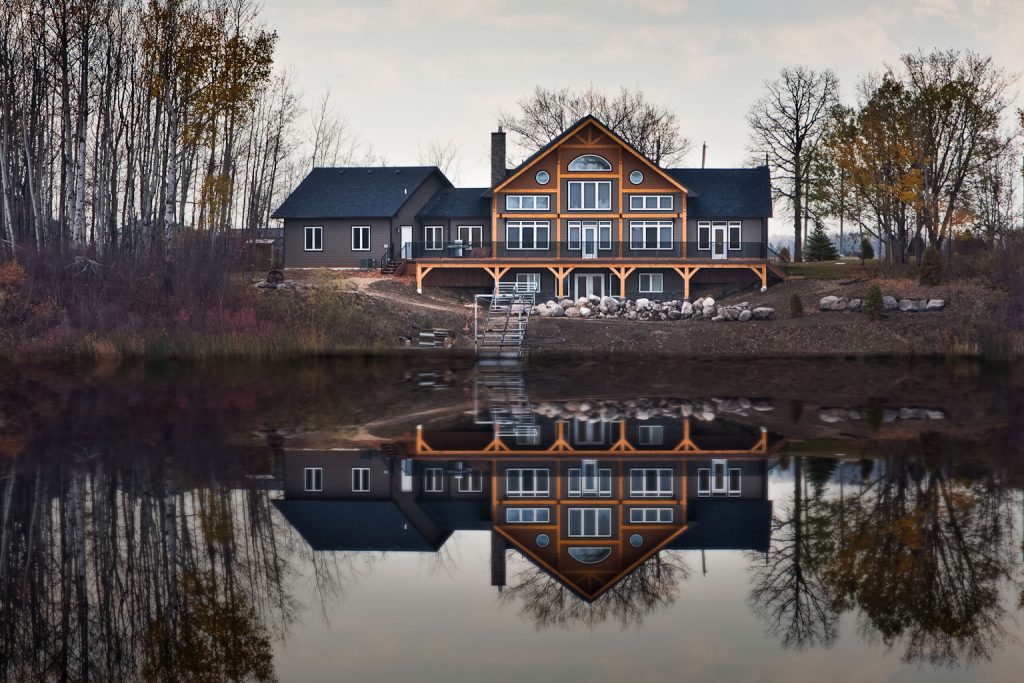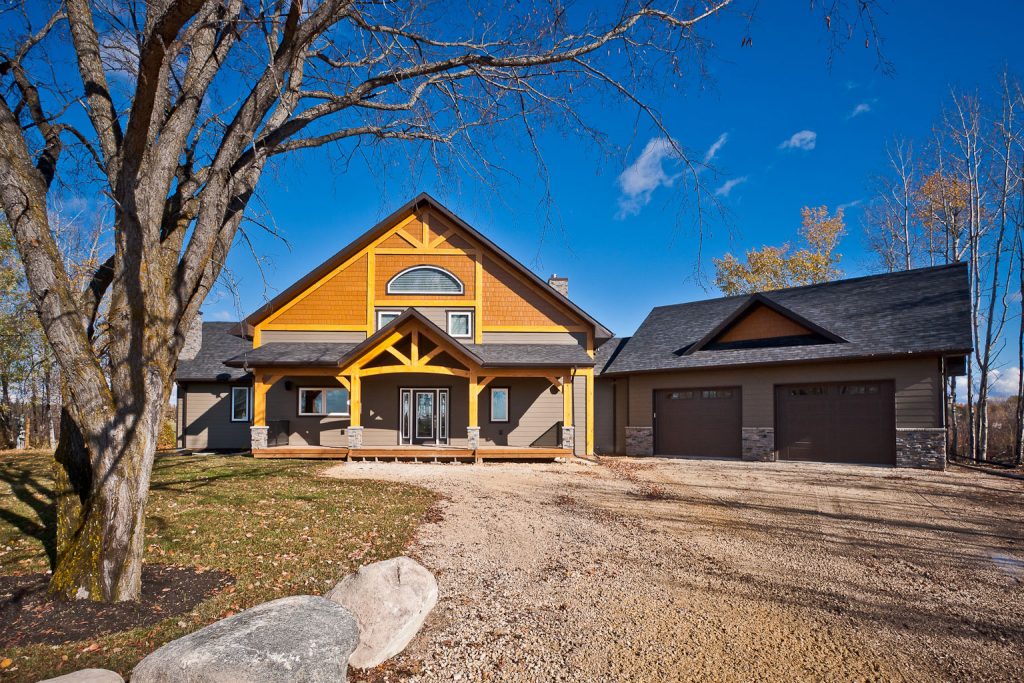
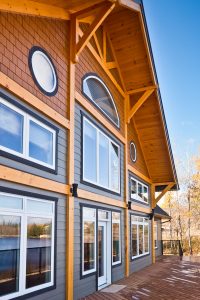
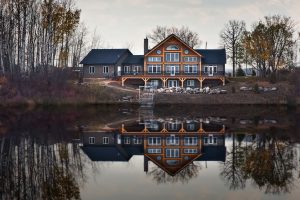
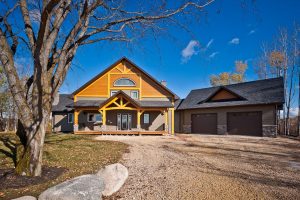
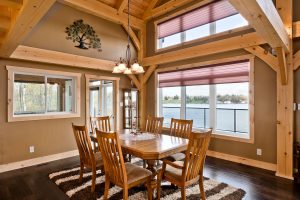
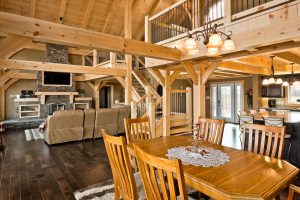
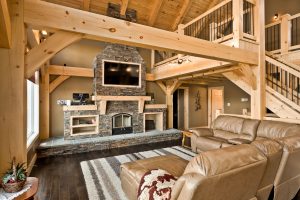
Bear Foot Island Cottage is derived from the Lily Pad timber frame design and adapted for direct waterfront exposure. The structure includes a walk-out basement, flanking sunroom and an angled two-door garage connected by a framed link. Waterfront positioning increases wind uplift, snow drift and moisture exposure, requiring reinforced anchorage and disciplined load path continuity.
The structural system integrates a full interior timber frame with extensive exterior timber expression. All framing is finished with Sansin ENS UV Clear Optimum to provide UV protection while maintaining vapor permeability.
Foundation and Walk-Out Basement Engineering
The walk-out basement configuration introduces grade transition and lateral soil pressure considerations.
Engineering priorities include:
-
Reinforced concrete foundation walls resisting hydrostatic pressure
-
Perimeter drainage system to prevent moisture intrusion
-
Frost-protected footings
-
Anchored sill plates to resist uplift
Because the structure is located directly at the water’s edge, foundation anchorage must account for elevated wind exposure and potential ice load in transitional seasons.
Continuous load paths extend from roof diaphragm through posts into anchored foundation plates.
Interior Timber Frame: Arcade Plates and Curved Bracing
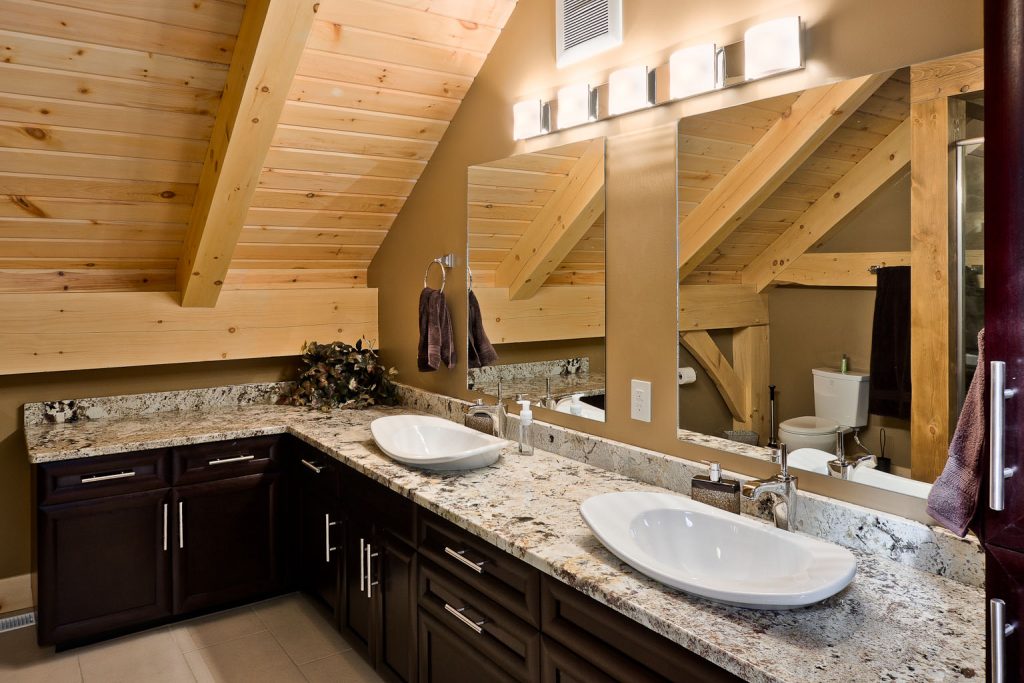
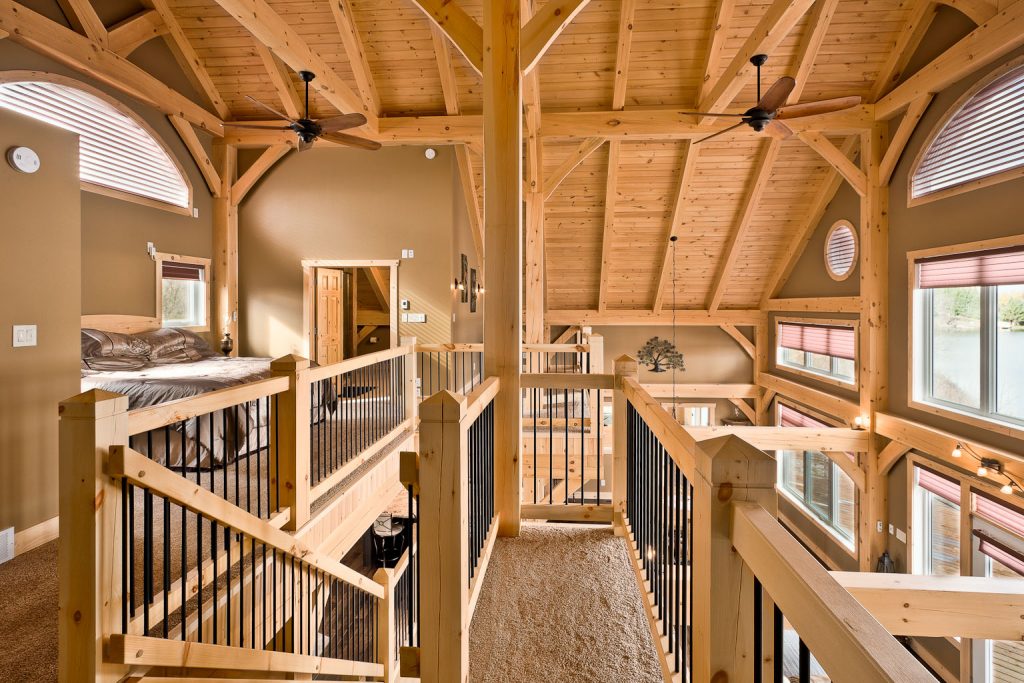
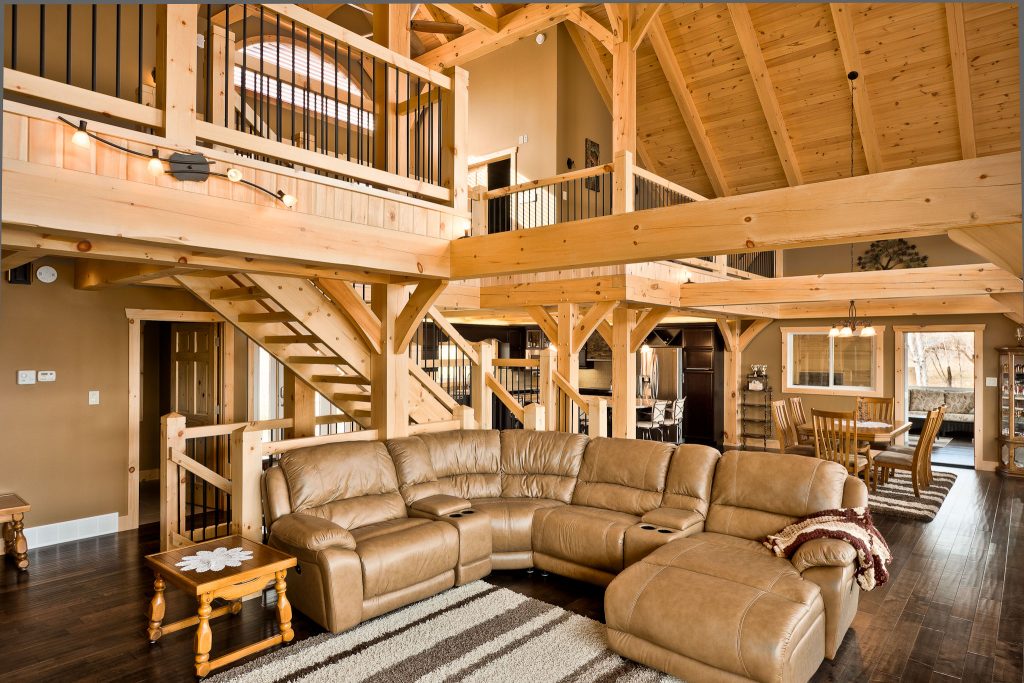
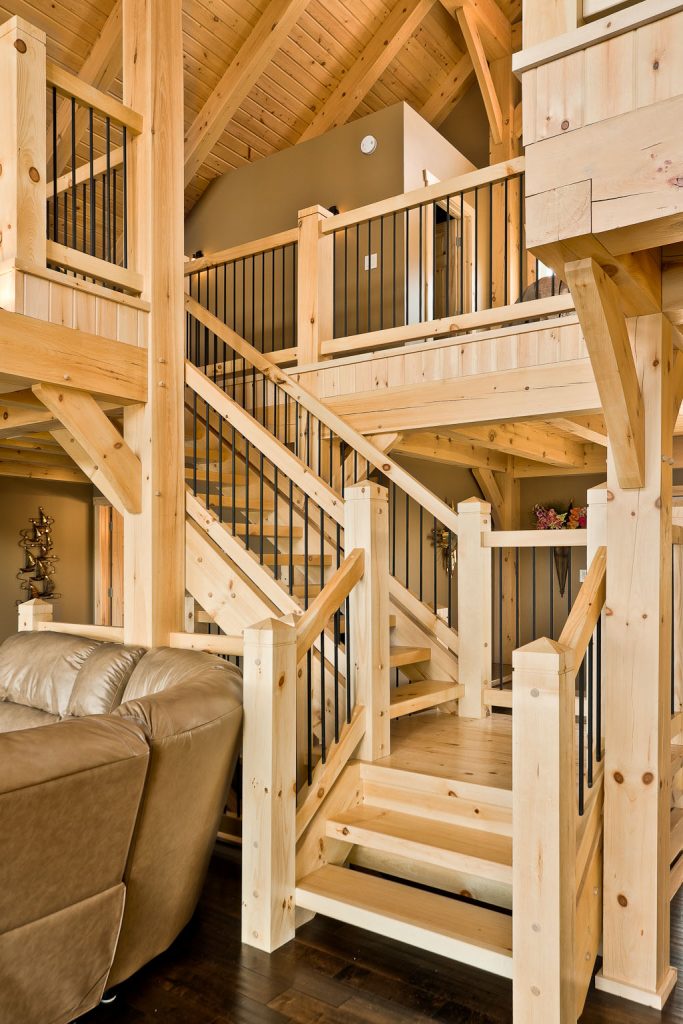
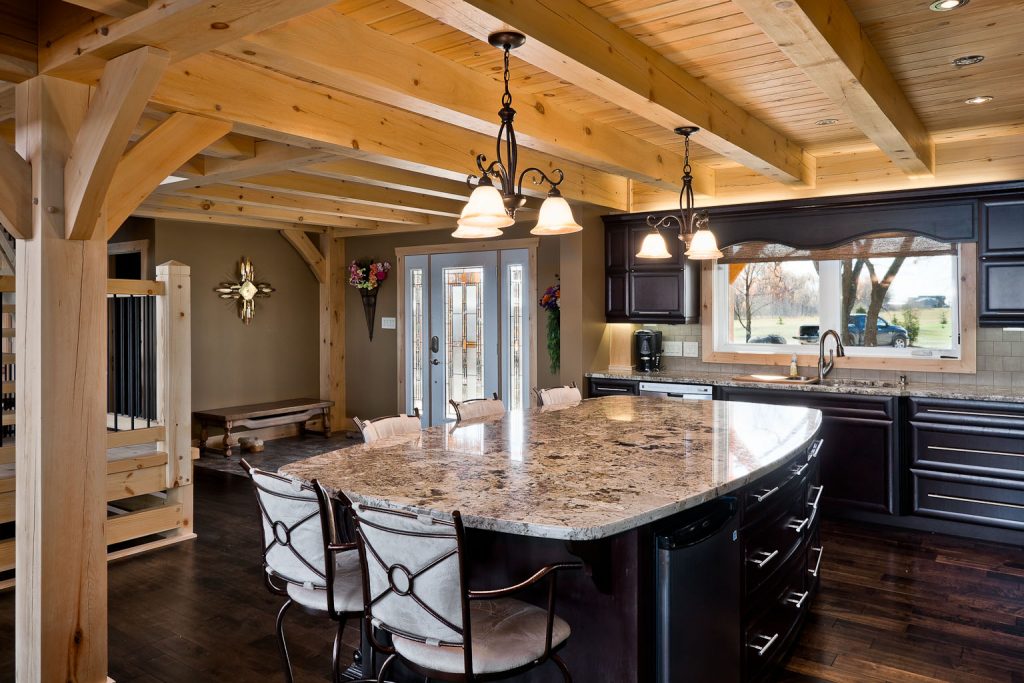
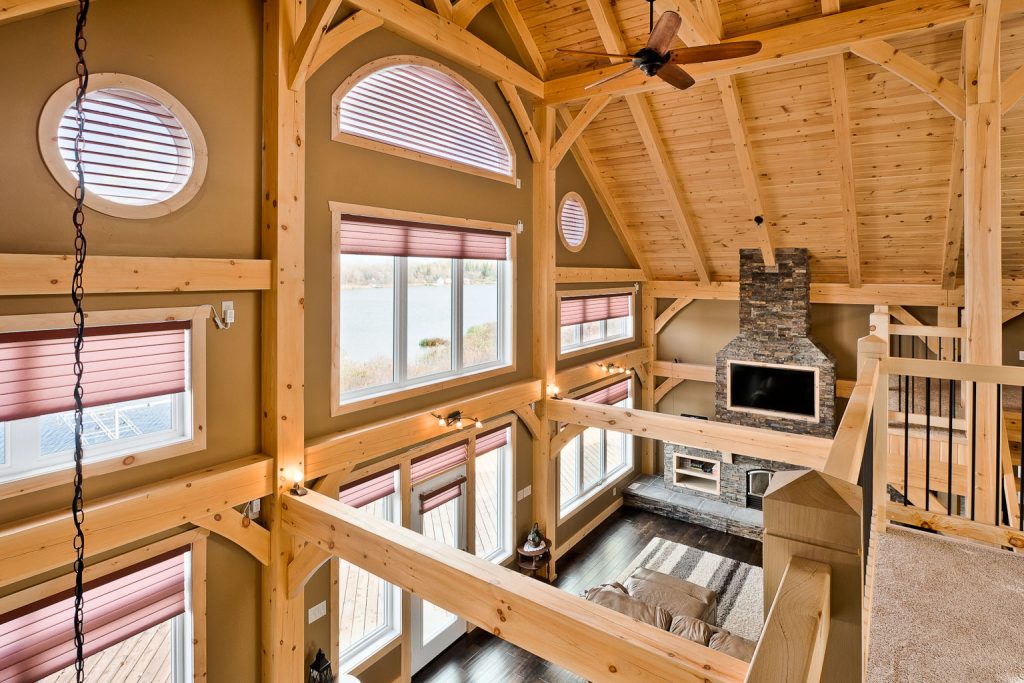
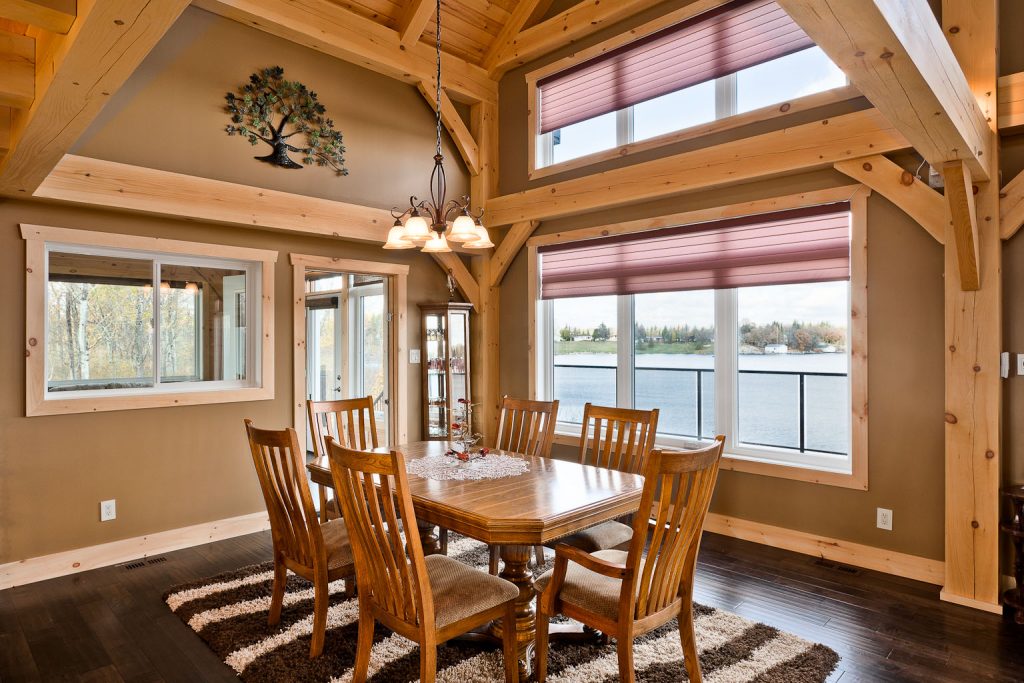
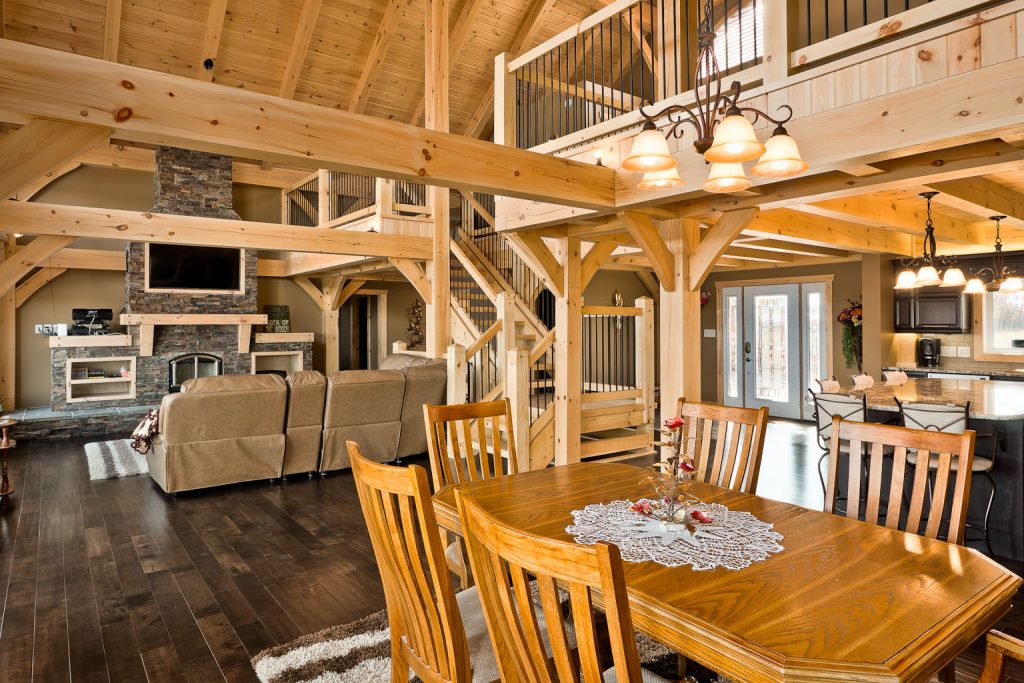
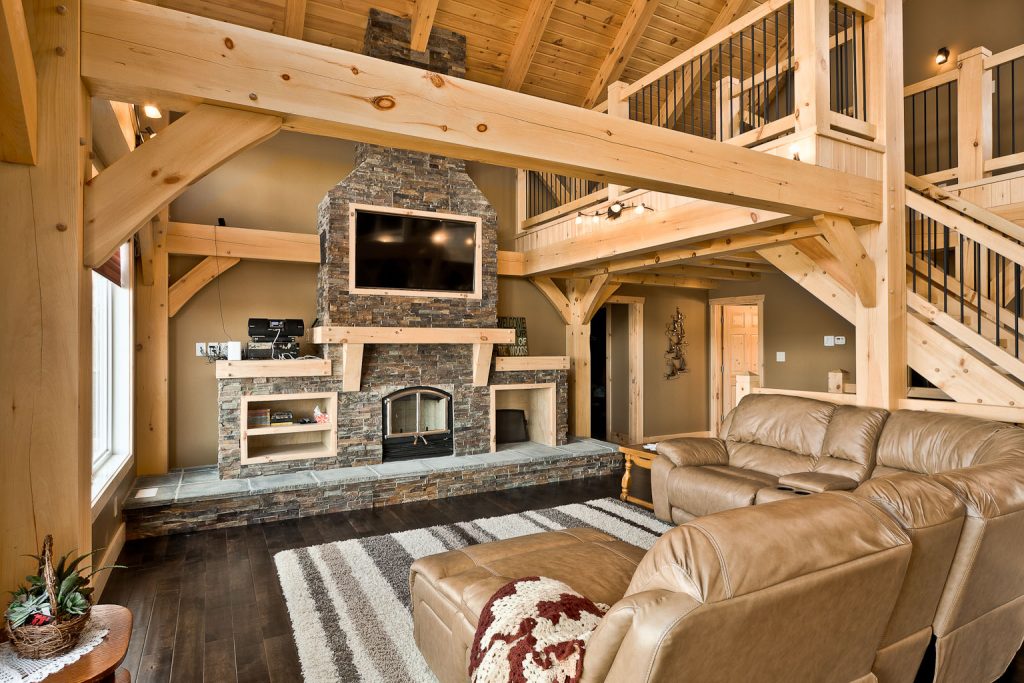
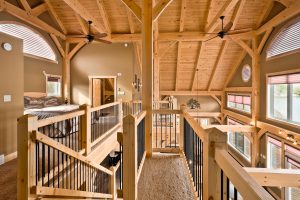
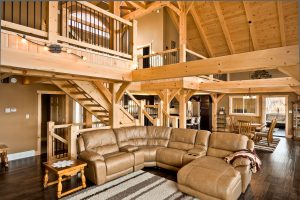
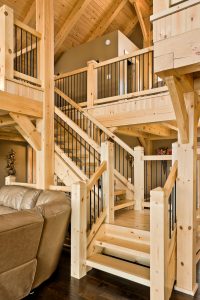
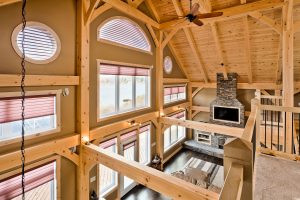
The interior frame features arcade plates with large curved braces spanning the open concept living and dining area.
Structural mechanics include:
-
Axial compression in vertical posts
-
Bending resistance in primary beams
-
Diagonal braces converting lateral shear into axial compression
-
Shear transfer at mortise-and-tenon joints
Curved braces introduce combined bending and axial stress. Member depth is increased to preserve section modulus after shaping.
The open concept layout eliminates interior load-bearing partitions. Beam sizing compensates for increased span demand and long-term creep deformation under snow load.
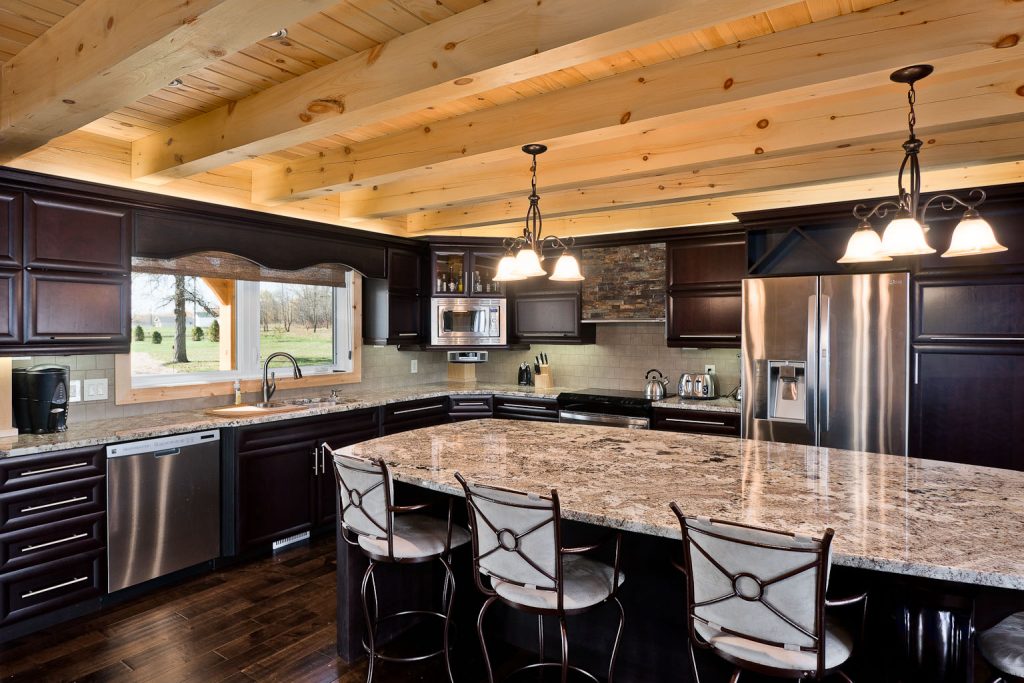
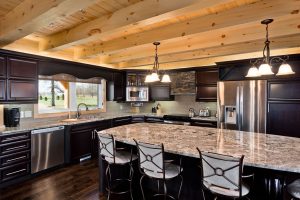
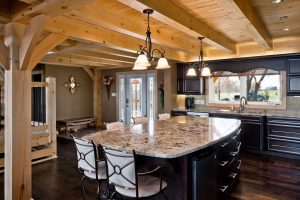
Kitchen area positioned to the rear remains fully integrated into the timber grid, preserving vertical load stacking.
Extensive Exterior Timber System
Exterior timber elements extend structural expression beyond the interior frame.
Components include:
-
Ledger beams and half posts aligned with interior grid
-
Gable trims and brackets
-
Timber frame entry with king posted double-curving tie
-
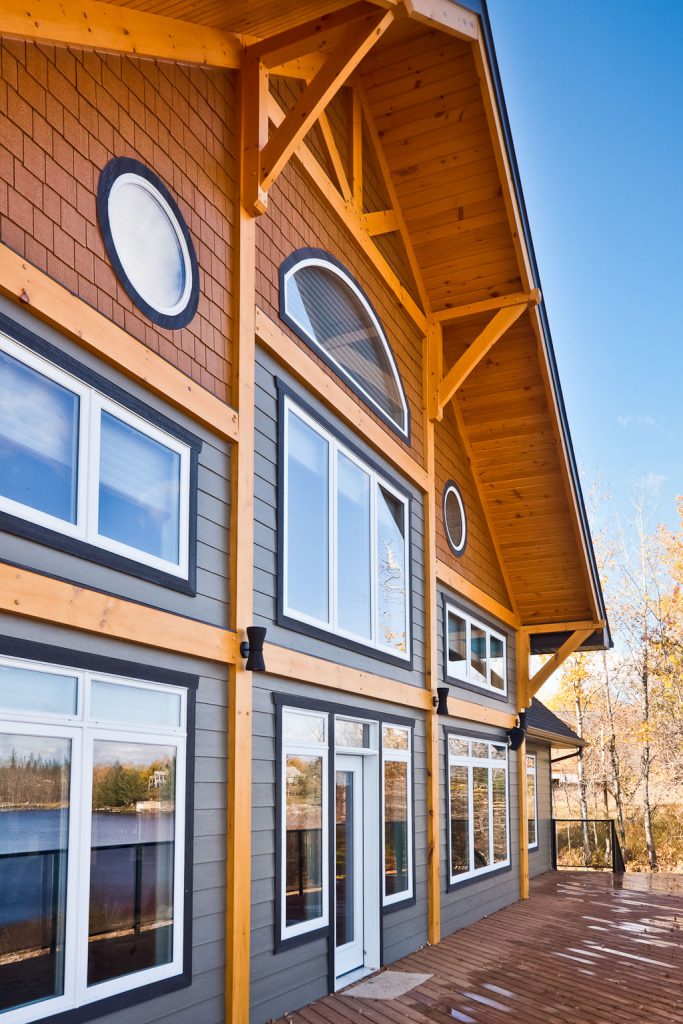
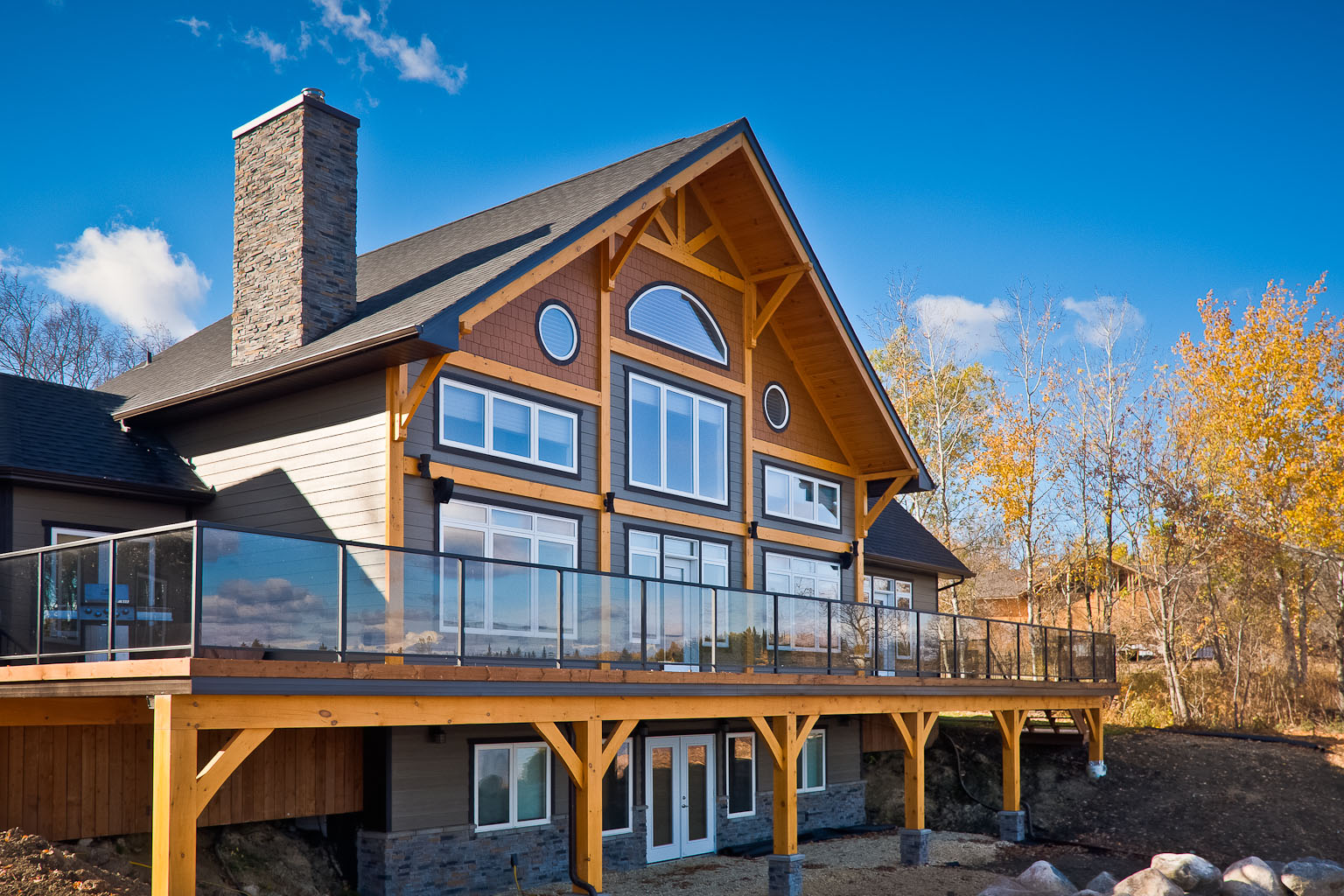
Post-and-plate structure supporting entire water-side deck
King Posted Double-Curving Tie
The entry incorporates a king post truss with a double-curving tie beam. Engineering considerations include:
-
Tension forces resolved within curved tie
-
Reinforced connection detailing at curvature transitions
-
Anchored post bases resisting horizontal thrust
Curved geometry reduces effective section modulus, requiring precise sizing.
70 ft Water-Side Deck: Post-and-Plate Structural Performance
The entire lakeside deck spans over 70 ft and is supported by a timber post-and-plate system.
Engineering requirements include:
-
Continuous beam alignment across full deck length
-
Reinforced beam-to-post connections
-
Uplift-rated anchors at each support
-
Joist spacing designed for occupant live load and snow accumulation
A deck of this length must accommodate thermal expansion and seasonal movement. Expansion joints or connection tolerances are integrated into the system.
Large overhangs above the deck reduce direct solar gain and manage precipitation runoff.
Roof Assembly and Overhang Engineering
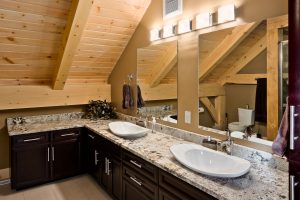
Large overhangs are supported by tongue and groove roof decking visible from below.
Structural behavior includes:
-
Cantilever bending stress at overhang edges
-
Shear transfer through purlins and rafters
-
Snow load accumulation at roof transitions
T+G decking provides:
-
Continuous nailing base for insulation and membrane
-
Minor diaphragm stiffness
-
Finished ceiling surface
Ventilated roof cavities prevent condensation and reduce risk of moisture accumulation.
Window Configuration and Structural Reinforcement
The water-side elevation incorporates extensive glazing, including:
-
One half-round window
-
Two circular windows
-
Full-height window spans between posts
Curved and circular openings require custom headers sized for concentrated load transfer.
Structural considerations include:
-
Reinforced perimeter framing
-
Post alignment beneath window mullions
-
Differential movement allowance between timber and glazing
Large glazing areas reduce shear wall capacity, requiring reinforced lateral bracing in adjacent walls.
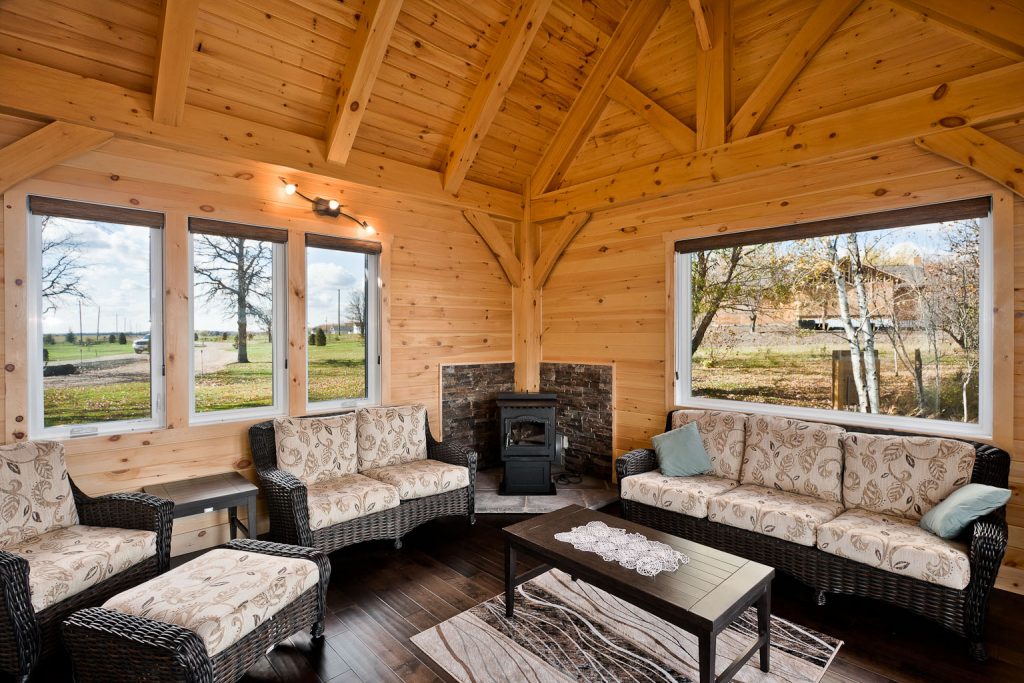
Sunroom and Garage Link
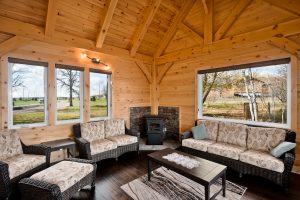
The flanking sunroom and angled garage link introduce non-orthogonal structural intersections.
Engineering measures include:
-
Reinforced ridge and valley framing
-
Shear continuity across link connection
-
Snow drift evaluation at roof convergence
The angled garage link must transfer load independently while maintaining structural continuity with the primary frame.
Environmental Load Considerations
Direct waterfront exposure introduces:
-
Wind uplift across open water
-
Snow drift accumulation
-
Freeze-thaw cycling
-
Elevated seasonal humidity
Structural countermeasures include:
-
Continuous load paths from ridge to foundation
-
Uplift-rated anchors at deck and frame supports
-
Reinforced curved brace connections
-
Ventilated roof assembly
Creep deformation in long-span beams and deck plates is incorporated into serviceability calculations.
Structural Summary
Bear Foot Island Cottage demonstrates advanced timber engineering characterized by:
-
Full interior timber frame with arcade plates and curved bracing
-
70 ft post-and-plate water-side deck
-
King posted double-curving tie entry structure
-
Extensive glazing with reinforced curved openings
-
Walk-out basement with anchored foundation system
The project integrates long-span deck performance, complex roof geometry and defined load path continuity to achieve structural resilience in a high-exposure island environment.