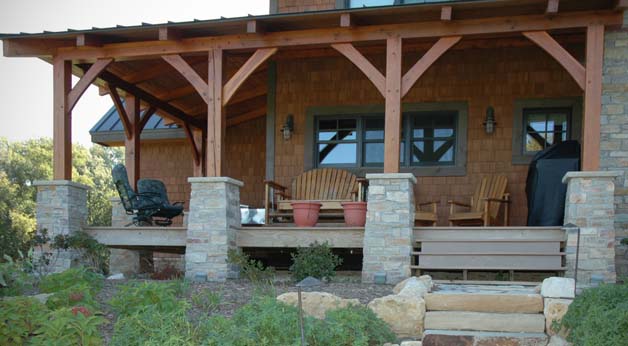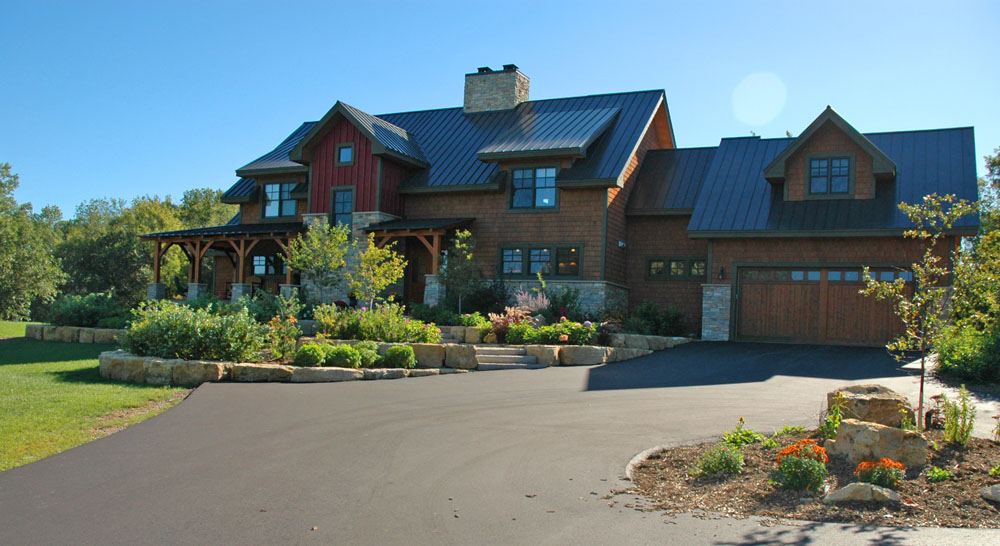
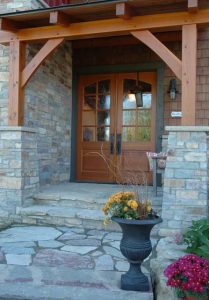
Minnesota Craftsman is designed within a landscaped residential setting that reinforces its Rustic Craftsman architectural identity. The exterior composition integrates cedar shakes, locally sourced stone and wood siding, forming a layered envelope that balances durability with material authenticity.
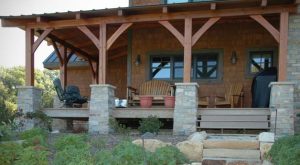
The approach to the home culminates in a double garage and a covered wrap-around veranda. A stair bump-out clad in stone, flanked by shed dormers, introduces vertical articulation while maintaining load-bearing alignment within the structural grid.
Exterior stone cladding adds significant dead load and is supported by reinforced wall assemblies with proper drainage cavities to manage moisture and freeze-thaw cycling typical of northern climates.
Nearly Full Timber Frame System in Douglas Fir
The structural core is engineered as a nearly full timber frame constructed from Douglas fir, with the exception of the master bedroom and the link to the garage, which utilize conventional framing for span efficiency and mechanical routing.
Douglas fir is selected for:
-
High bending strength
-
Strong compressive capacity
-
Predictable modulus of elasticity
-
Favorable long-term creep behavior
Primary load paths are vertically aligned from ridge through posts into foundation supports. Hybrid transitions between timber and conventional framing are reinforced at bearing interfaces to prevent differential settlement or eccentric loading.
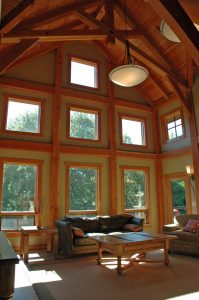
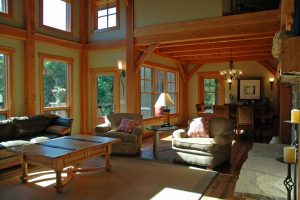
Great Room: Queen Post Bent and Scissor Brace Truss
The great room integrates two primary structural systems.
Queen Post Bent at Exterior Wall
The queen post bent located at the exterior wall transfers roof loads directly into foundation supports.
Structural behavior includes:
-
Compression along rafters
-
Tension in tie beam
-
Axial compression in queen posts
-
Shear resistance at joinery interfaces
Positioning the bent at the exterior enhances lateral stability and reduces span demand within the central volume.
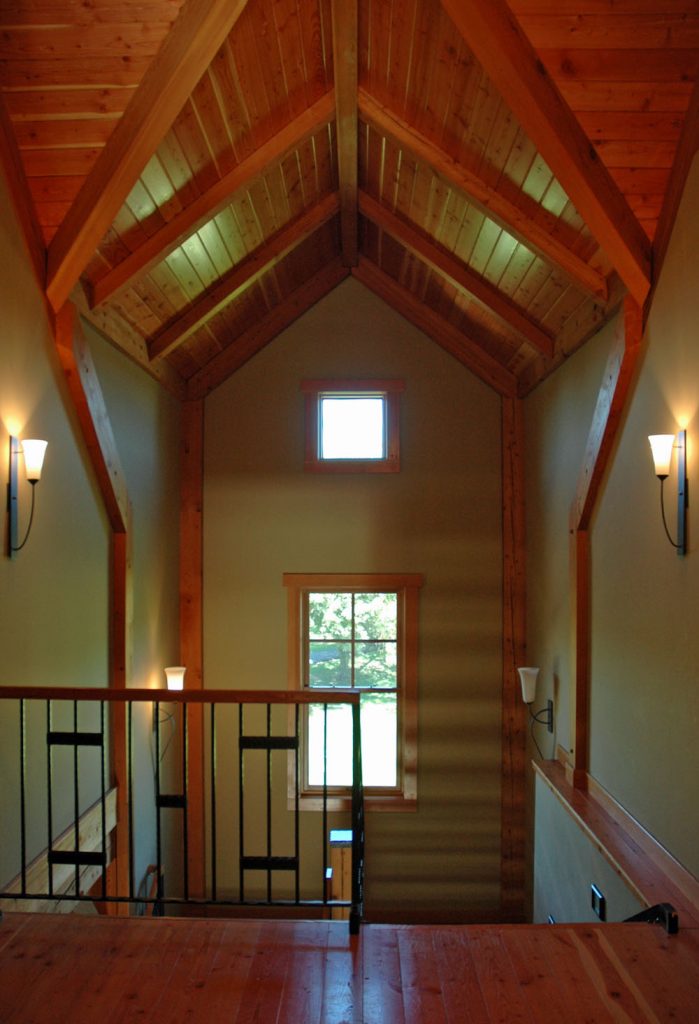
Scissor Brace Truss in Main Vault
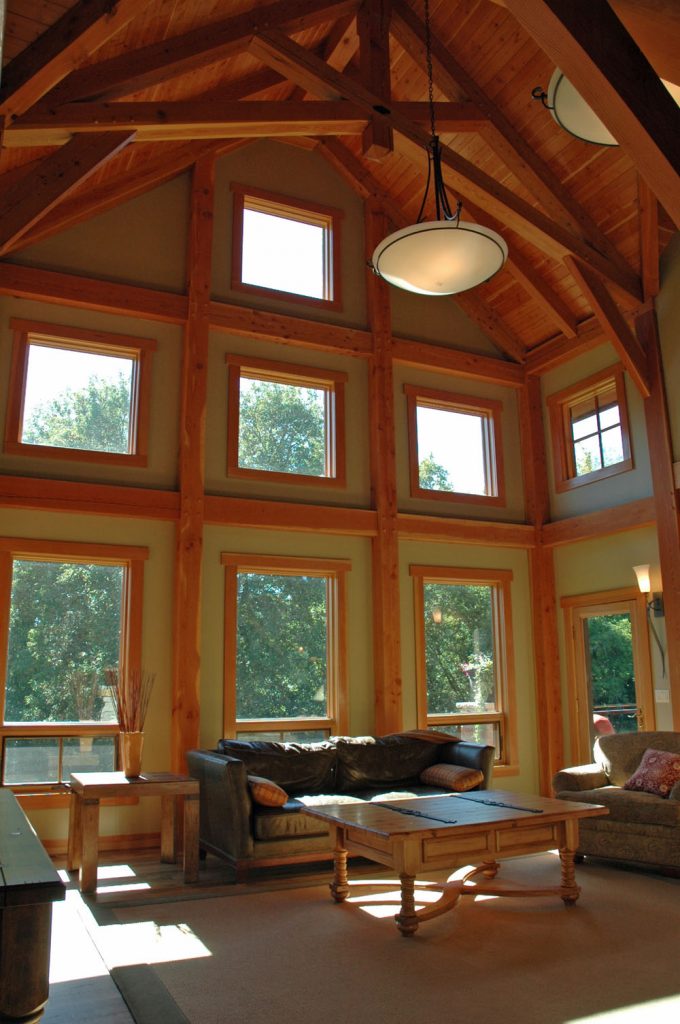
A large scissor brace truss spans the lofty interior space.
Engineering mechanics include:
-
Intersecting lower chord members resisting tension and compression
-
Reduced horizontal thrust compared to traditional tie beam systems
-
Reinforced beam-to-post connections
The scissor geometry increases ceiling height while maintaining structural efficiency.
Deflection control under snow load and long-term creep ensures glazing alignment and joint integrity.
Double-Sided Stone Fireplace and Structural Integration
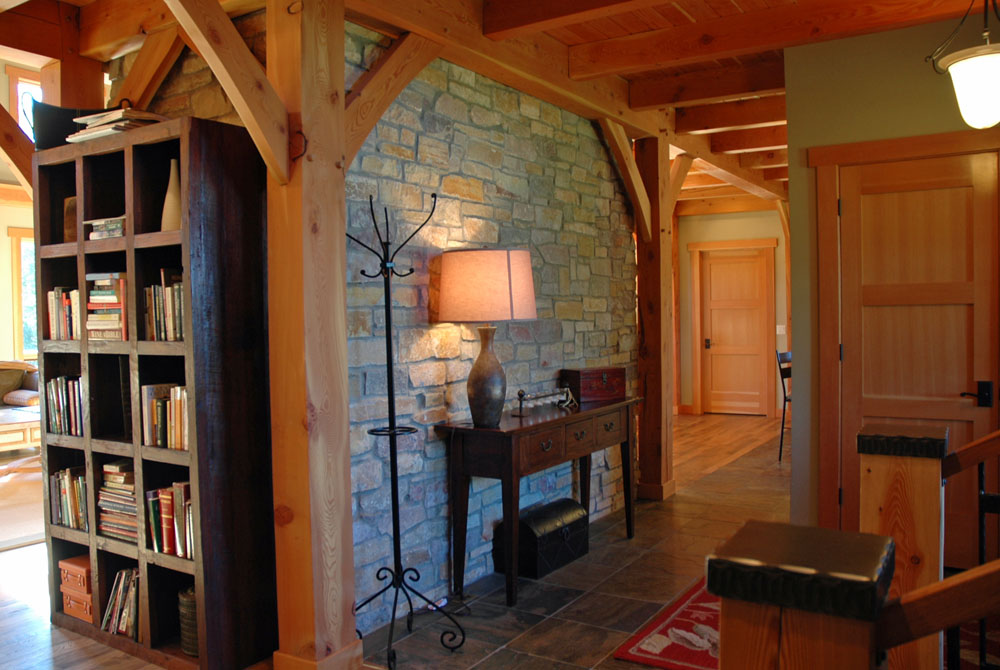
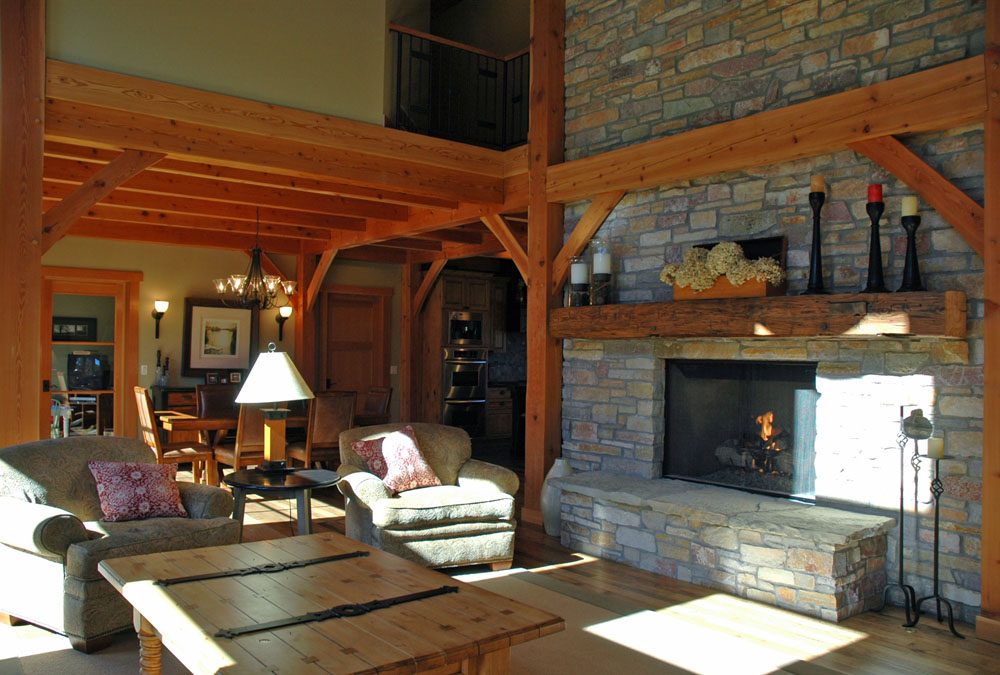
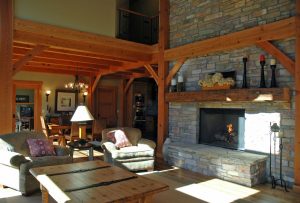
A large stone-clad double fireplace sits within the central zone, facing both the great room and the kitchen and dining area.
Engineering considerations include:
-
Reinforced floor framing beneath masonry mass
-
Thermal isolation between stone and timber elements
-
Direct load transfer into foundation
The fireplace mass introduces concentrated dead load, requiring careful alignment with structural posts.
The reclaimed timber mantle integrates mechanically into the stone assembly while maintaining separation from high-temperature zones.
Timber Floor Framing and Open Plan Configuration
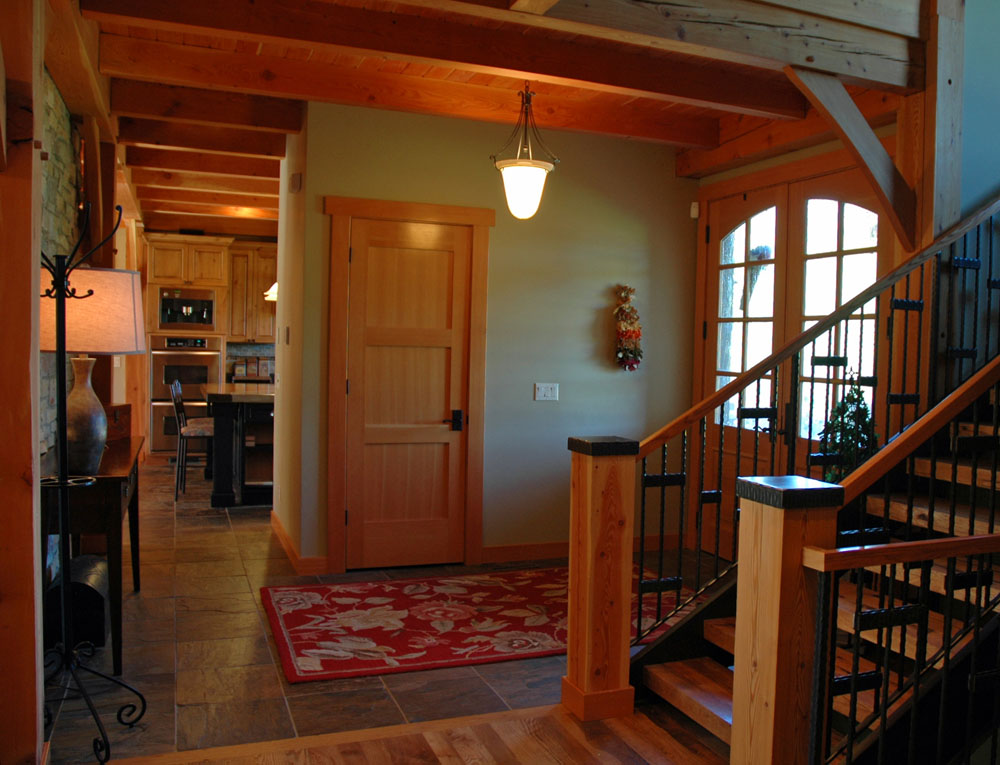
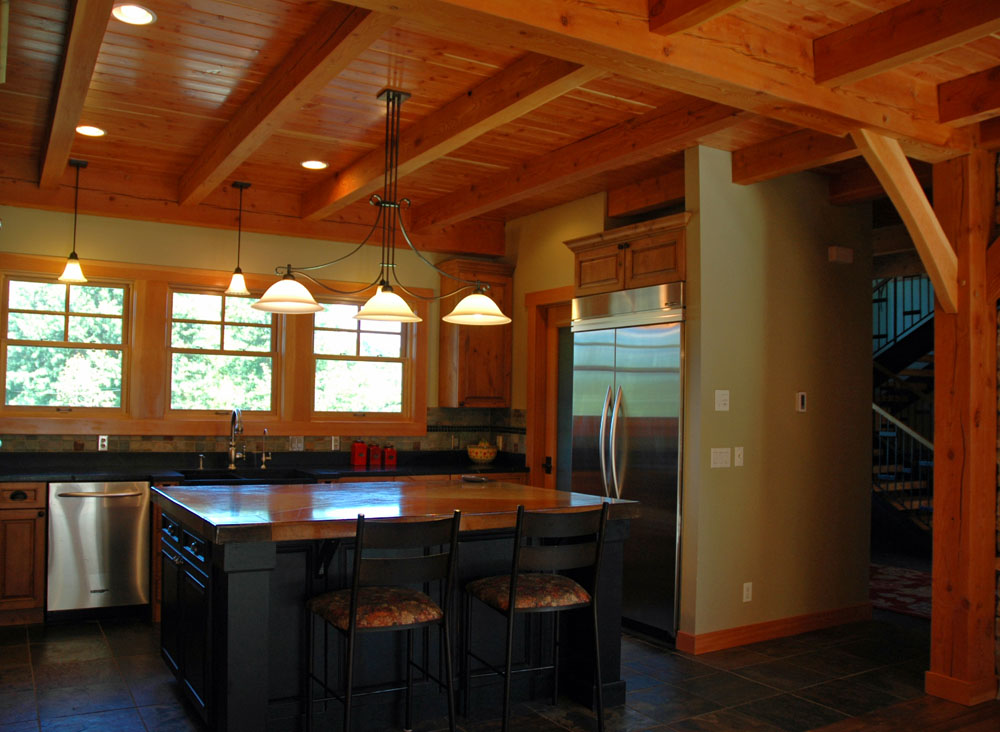
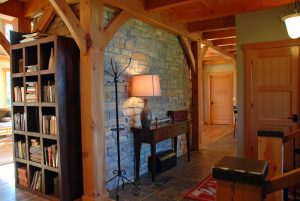
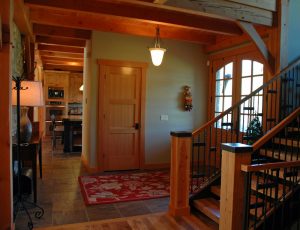
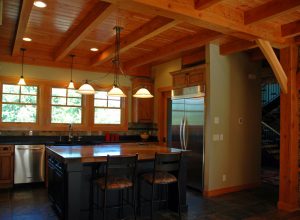
Timber floor framing extends above the dining, kitchen and entry areas. Long-span beams eliminate interior load-bearing partitions.
Engineering priorities include:
-
Bending stress evaluation for floor beams
-
Vibration control under live load
-
Alignment with vertical posts
Open concept planning increases reliance on primary beams and trusses for load distribution.
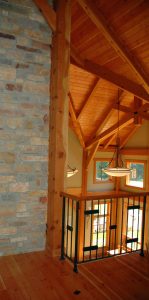
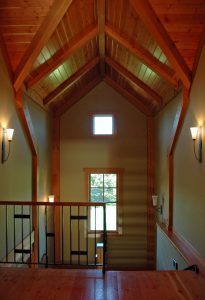
Timber Stair and Stairwell Integration
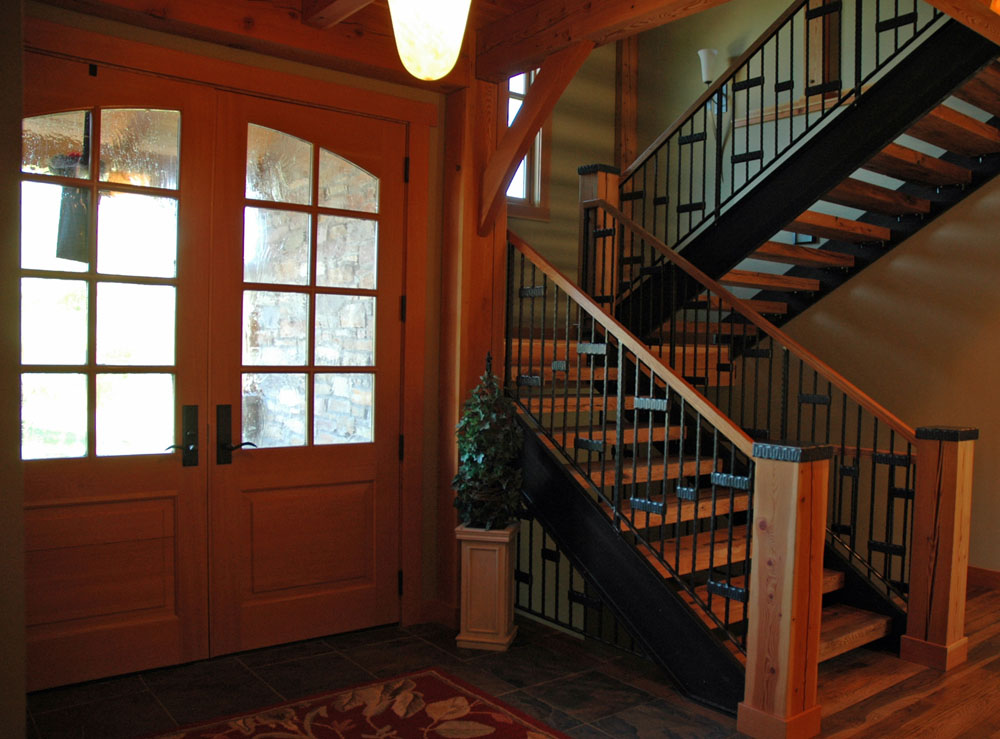
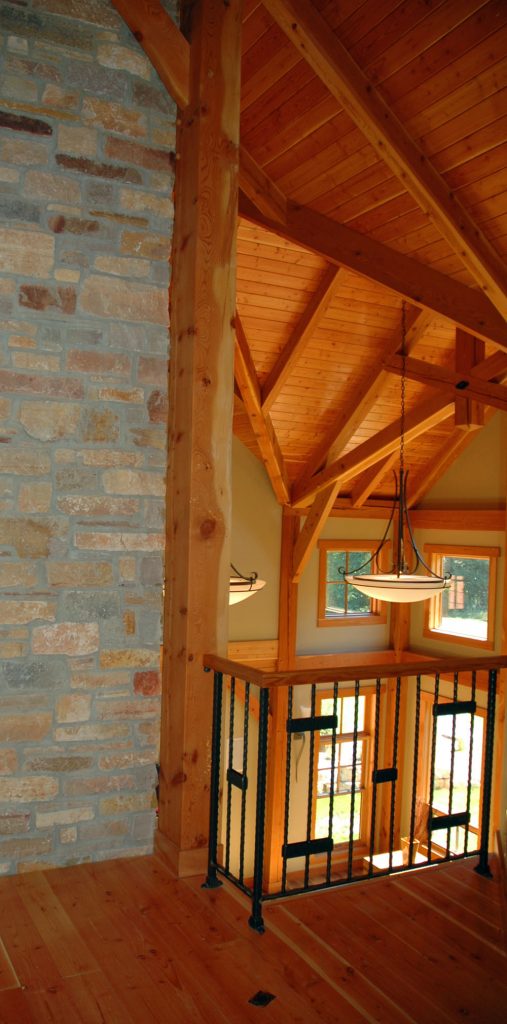
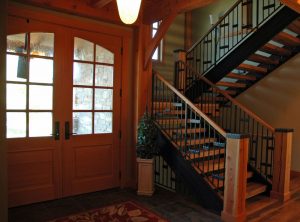
The timber staircase incorporates metal spindles and detailing, merging structural timber with industrial accents.
Structural implications include:
-
Reinforced anchorage of stringers to floor beams
-
Lateral resistance through integrated railing system
-
Guardrail load compliance
The stairwell serves as both structural and architectural focal point. Externally, the stair bump-out is clad in stone and red siding, while internally it aligns with the timber frame grid to maintain load continuity.
Curved or angled stair components require torsional resistance to prevent rotation under occupant load.
Wrap-Around Veranda and Garage Link
The covered wrap-around veranda uses a post and plate system to transfer roof load to foundation.
Engineering measures include:
-
Uplift-rated post anchors
-
Reinforced beam-to-post connections
-
Snow load evaluation at roof intersections
The link to the garage utilizes conventional framing, reducing timber demand in secondary spans while maintaining visual continuity.
Garage openings reduce shear wall capacity and are reinforced with properly sized headers.
Environmental Performance and Durability
Northern climate conditions impose:
-
Snow load accumulation
-
Freeze-thaw cycling
-
Wind uplift
-
Seasonal humidity variation
Structural countermeasures include:
-
Continuous load paths from ridge to footing
-
Reinforced scissor and queen post connections
-
Ventilated roof assemblies
-
Frost-protected foundation systems
Exterior cedar shakes and stone are detailed to prevent moisture intrusion and hydrostatic pressure buildup.
Structural Summary
Minnesota Craftsman demonstrates disciplined timber engineering within a Rustic Craftsman architectural framework:
-
Nearly full Douglas fir timber frame
-
Queen post bent aligned with exterior load path
-
Large scissor brace truss spanning the great room
-
Double-sided stone fireplace integrated structurally
-
Timber floor framing supporting open concept layout
-
Wrap-around veranda with reinforced anchorage
-
Integrated stairwell acting as structural and architectural feature
The residence achieves structural clarity, long-span performance and cohesive material expression while meeting environmental demands of a northern climate.