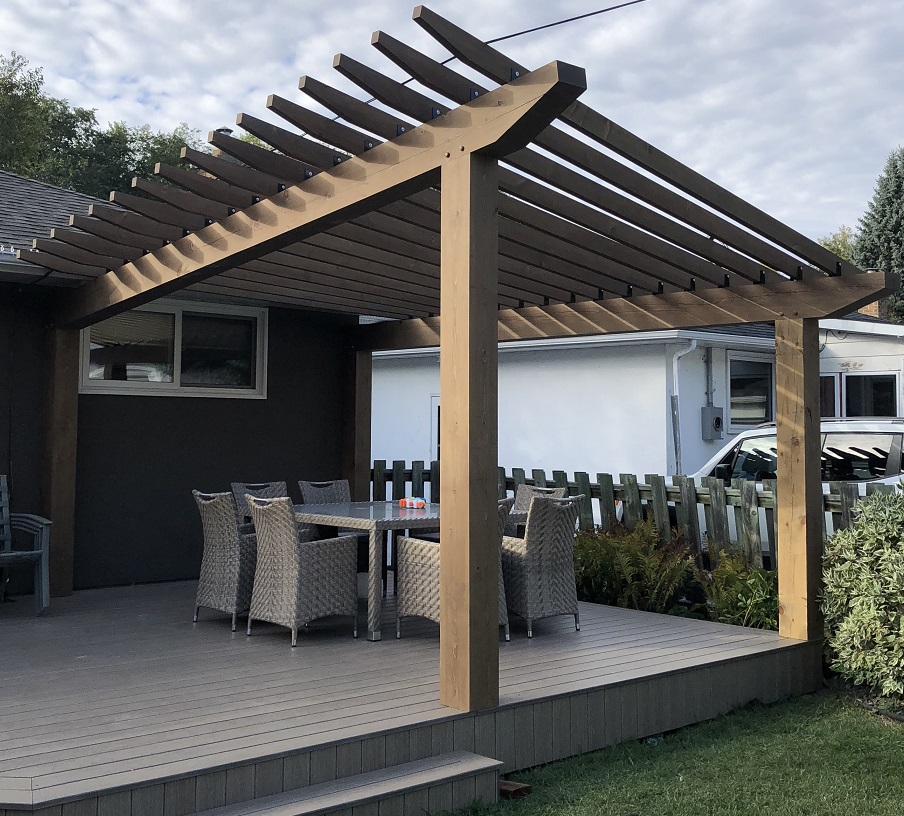


The Oslo pergola demonstrates how contemporary timber design can move beyond traditional flat roof forms to create a visually dynamic outdoor structure. Pergolas are often associated with simple horizontal beam layouts, but this project shows how innovative geometry can transform a familiar structure into a striking architectural feature within the landscape.
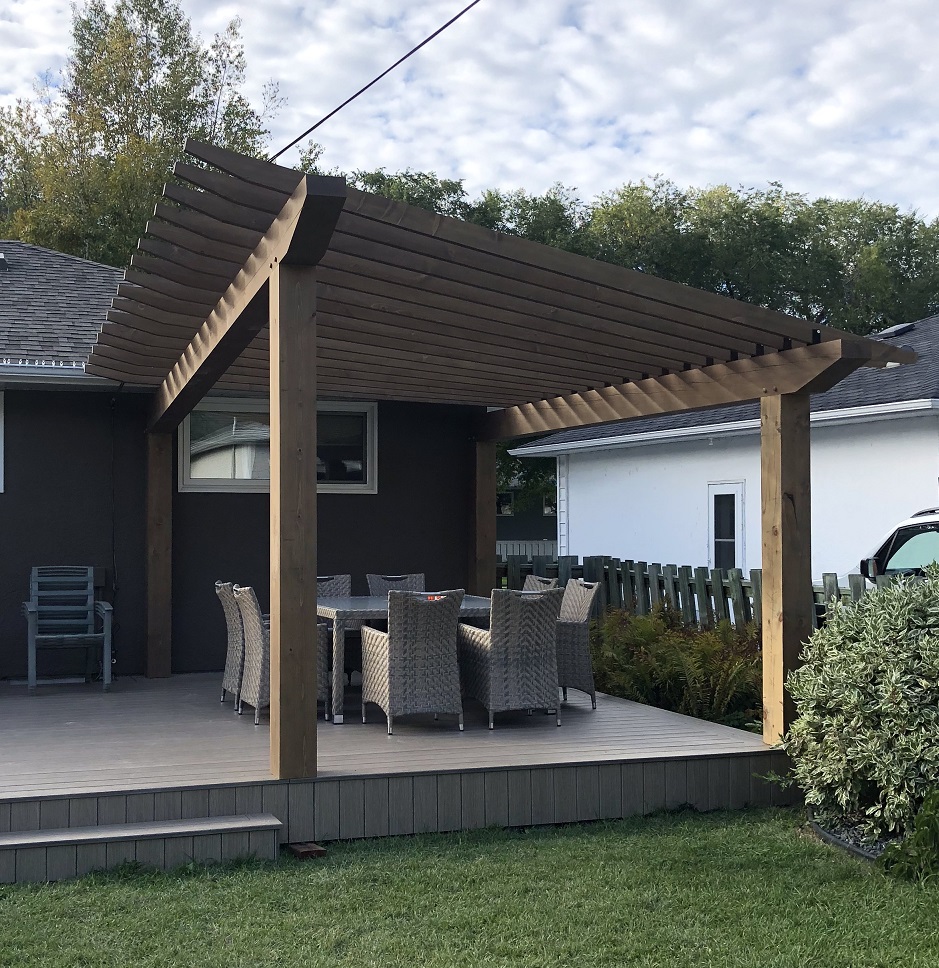
The defining element of the Oslo pergola is its avant garde roof design, which introduces movement and asymmetry into the overhead structure. While the right side eave remains on a level plane, the left eave gradually rises as it extends outward from the house. This change in elevation creates a subtle wave effect in the arrangement of the shade slats, giving the pergola a flowing roofline that shifts gently across the span of the structure.
This carefully controlled variation in height adds visual interest while maintaining the functional purpose of the pergola. The rising eave allows the structure to capture more open sky on one side while still providing effective shade coverage over the seating area below. The resulting roof profile introduces a sense of motion and lightness that distinguishes the Oslo pergola from more conventional pergola designs.
The timber frame structure provides the backbone for this unique roof geometry. Strong timber posts and beams support the changing roof plane while maintaining the open character typical of pergola structures. By using exposed timber elements, the design highlights both the craftsmanship of the frame and the precision required to achieve the shifting roof profile.
Another notable feature of the Oslo design is the use of Scandinavian inspired end profiles on the shade slats and structural beams. These carefully shaped timber ends introduce a clean and refined detail that complements the modern architectural style of the pergola. Scandinavian timber detailing often emphasizes simplicity and proportion, avoiding excessive ornamentation while still adding subtle character to the structure.
The shaped beam and slat profiles also create attractive shadow lines as sunlight passes across the structure throughout the day. These small but intentional details enhance the visual depth of the pergola while reinforcing the modern design language of the project.
The combination of a wave like roof form and Scandinavian detailing results in a pergola that feels both contemporary and carefully crafted. Instead of appearing heavy or rigid, the structure maintains an airy and sculptural presence within the outdoor space.
Projects such as the Oslo pergola highlight how modern timber pergola design can combine structural creativity with architectural elegance. By introducing subtle variations in roof geometry and refined timber detailing, the structure becomes more than a shade element. It evolves into a distinctive architectural feature that enhances the overall character of the outdoor living area.
The Oslo project stands as an example of how innovative design approaches can expand the possibilities of timber pergola construction while maintaining the warmth and natural beauty that timber structures bring to outdoor spaces.